


A puppy purchase, an unfamiliar card charge, and a delivery van might seem unrelated. The Chen and Guo fraud case brings those details together.
Its most revealing details concern what happened after money left the victims, when cash and merchandise reached addresses hundreds of miles from their owners.
Overview
Two guilty pleas covered several fraud schemes
Zhong Chen and Sijia Guo pleaded guilty to conspiracy to commit wire fraud on November 18, 2026. The schemes totaled more than $2.8 million.
One puppy payment illustrated the cash route
An older Louisiana victim sent $10,000 for a puppy in December 2023. That example sat alongside other cash shipments and separate stolen-card activity.
The immediate response follows the actual loss
Stopping an undelivered cash parcel requires a different call from challenging unauthorized card purchases. A criminal case does not replace either process.
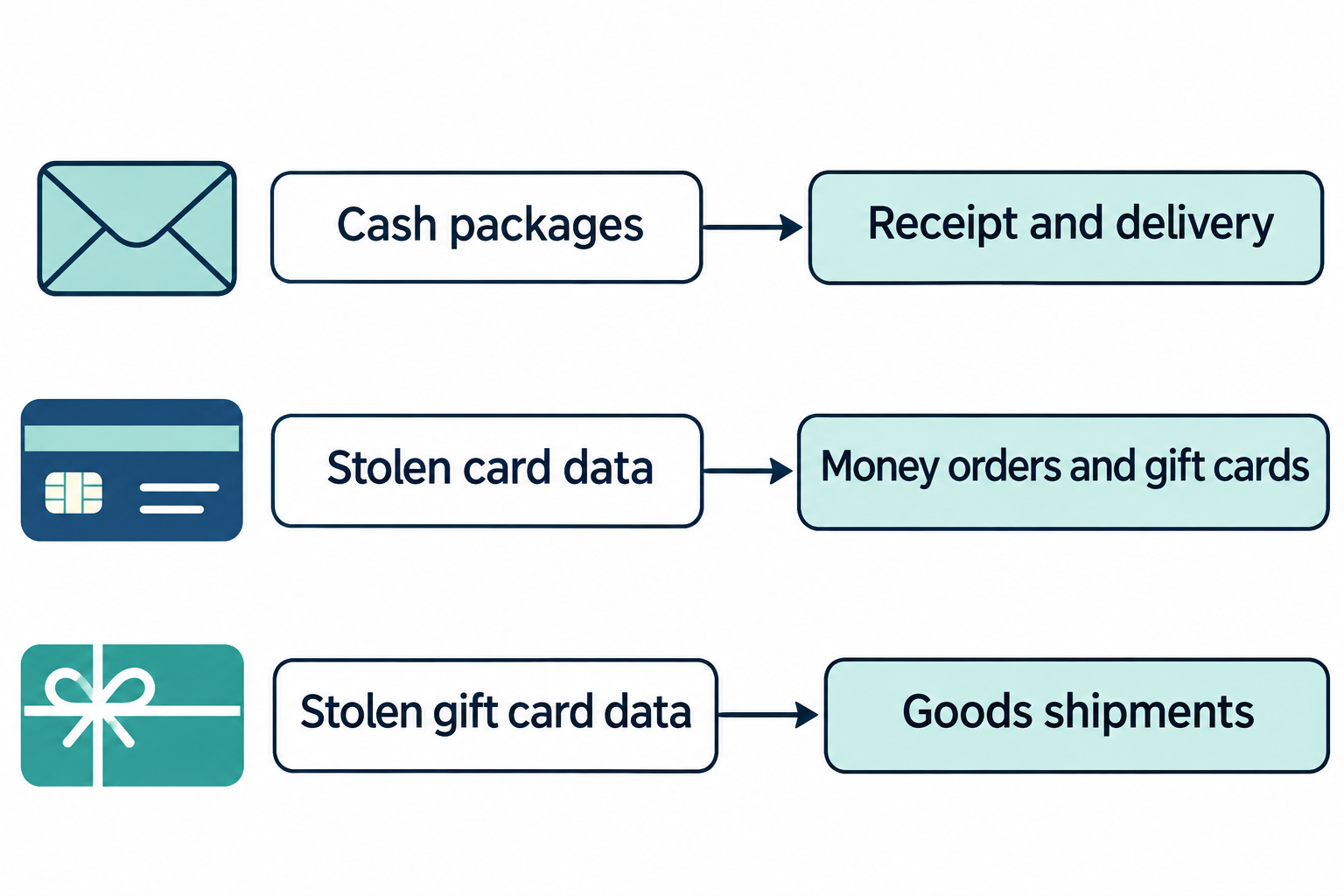
- The couple coordinated receiving and delivering packages containing victims’ money.
- Another route converted stolen payment-card data into money orders and gift cards.
- A third route brought goods purchased with stolen gift-card data to New Hampshire.
The Chen and Guo Fraud Case Involved Several Roles
The DOJ announcement identifies Chen, 43, and Guo, 32, as married Bedford residents. Both admitted participating in the wire-fraud conspiracy.
The announcement connects them with handling money and goods, using stolen cards, and communicating with other conspirators. Their participation extended beyond one victim’s purchase.
The charge carries a maximum of 20 years in prison. The actual sentences remained for the judge to determine at the scheduled proceedings.
The FBI, United States Postal Inspection Service, and Bedford Police Department led the investigation. The prosecution’s description draws together several activities involving the same couple.
Three Routes Brought Different Proceeds to the Same Operation
The routes matter because each starts with a different kind of loss. They are parallel parts of the case, rather than compulsory stages for every victim.
The lead image is a conceptual explanation of those routes. It does not reproduce an advertisement, parcel record, private conversation, or original court exhibit.
Cash packages carried money taken directly from victims
Victims across the country were tricked into sending cash to addresses the couple controlled. Prosecutors describe these victims as typically older people.
The amounts generally ranged from $5,000 to $30,000. Chen and Guo coordinated receiving the packages and delivering them onward to other conspirators.
The Louisiana example gives that description a concrete scale: an older person sent $10,000 to their Bedford home believing the payment would purchase a puppy.
That happened in December 2023, years before the guilty pleas. The loss therefore belongs to the case history, rather than an identified new puppy offer.
The account does not identify a breeder website, advertisement, puppy breed, or named seller. It also does not say the couple personally wrote the victim’s messages.
Those limits keep the finding attached to the documented conduct. Receiving this puppy payment is not evidence that every package represented another puppy purchase.
Stolen credit and debit cards funded different purchases
Another route involved stolen credit and debit cards. Chen and Guo received card data through WeChat and used cards at post offices and stores across New England.
They bought money orders and gift cards, sometimes visiting multiple locations during one day. This put stolen purchasing power into another financial form.
One documented trip occurred June 13, 2025, when the couple visited six Massachusetts post offices. They bought 16 money orders totaling $14,600 using stolen cards.
For a cardholder, that route can mean an unauthorized transaction without any conversation with the people making the purchase. Contact with a fake puppy seller is unnecessary.
The announcement describes receiving stolen information, without explaining how each card number was originally stolen. It does not establish a particular data breach or phishing message.
Stolen gift-card data became shipments of valuable goods
The third route involved goods purchased with stolen gift-card data. Criminal enterprises in China obtained gift cards and bought products, including Apple iPhones and iPads.
They shipped those purchases to New Hampshire addresses, including the couple’s residence. Prosecutors identify the state’s lack of sales tax as the reason for that destination.
Chen and Guo received and transported the resulting packages. The goods route therefore involved taking delivery of merchandise purchased through the separate gift-card theft.
This differs from the couple using stolen credit and debit cards to buy gift cards. The announcement describes both activities, without assigning every card to one continuous chain.
Someone whose gift-card value disappeared may have a different record from someone whose bank card was charged. Those different records can still concern the wider operation.
A cardholder’s statement can document unauthorized spending without revealing who originally stole the data. A cash sender’s tracking record instead documents a parcel’s route.
The figures should stay attached to their own examples
| Amount | What it describes |
|---|---|
| More than $2.8 million | The total associated with the several fraud schemes described in the plea announcement. |
| $5,000 to $30,000 | The described range of cash sent by victims to controlled addresses. |
| $10,000 | The single Louisiana puppy payment used to illustrate the cash-package route. |
| $14,600 | The total for 16 money orders purchased during the documented Massachusetts trip. |
These figures should not be added together as separate losses. The examples explain activity within the broader case, without providing a complete transaction-by-transaction accounting.
The total does not identify the couple’s personal profit or divide losses among the three routes. It cannot show which activity produced the largest share.
What Connected the Packages, Purchases, and Other Conspirators
Messages coordinated the movement after receipt
Chen and Guo used WeChat to discuss delivering cash packages and transporting fraud proceeds to other conspirators, typically in New York.
The messaging connection explains coordination between people handling different parts of the operation. It does not make the communication service itself an organizer of the fraud.
That coordination adds an onward destination to the cash story. The Bedford address was a receiving point, while the described conversations concerned further deliveries.
Delivery volume and labels gave investigators physical evidence
Surveillance documented dozens of deliveries each week to the couple’s home. The named services included FedEx, UPS, the Post Office, Amazon, and DHL.
Packages often carried fictitious names or random strings of text instead of actual recipients. That detail concerned the particular deliveries investigators observed.
It does not mean an unfamiliar label on your doorstep establishes a connection with this case. A mistaken delivery still needs verification through its actual carrier.
A search of the Bedford residence and a Manchester apartment uncovered substantial cash and boxes of valuable goods. Examples included Apple products and Coach designer handbags.
Those discoveries connect the case with physical proceeds, beyond a message on somebody’s screen. The announcement does not give a final inventory value for each location.
Delivery services and product brands had different roles
The named businesses provided delivery services or recognizable merchandise that criminals could move. Their appearance in the case does not identify them as members of the conspiracy.
For a victim, an ordinary delivery receipt may still be valuable evidence. It can document where a parcel traveled without proving the recipient’s sales story was genuine.
The practical distinction is between delivery and legitimacy: a real package network can carry money or goods connected with a fraudulent transaction.
What to Do If You Sent Cash or Discovered Card Misuse
Choose the response that matches your loss. An urgent shipment request belongs with the carrier, while unauthorized purchases belong with the affected financial provider.
-
Act on an undelivered cash shipment immediately
The FTC’s recovery guidance directs people who sent cash through the mail to contact the Postal Inspection Service promptly. Other delivery services require contacting that carrier.
Have your shipping receipt, tracking identifier, mailing date, and destination ready. Tell the carrier you were deceived into sending cash, rather than simply reporting a late delivery.
USPS offers Package Intercept for eligible domestic shipments that are neither out for delivery nor already delivered. The service involves fees and is not guaranteed.
The sender or an authorized representative must make the request. Follow the genuine carrier’s process; a stranger offering interception for a separate payment is not that process.
If tracking already says delivered, save that result and ask the carrier for available delivery documentation. Continue reporting the fraud even when interception is unavailable.
-
Report unauthorized card activity to its issuer
For credit or debit purchases you did not authorize, use the number printed on your card or the contact information inside your established banking account.
Identify the particular charges, dates, and amounts. Ask about securing the affected card, disputing transactions, and any required written follow-up or deadlines.
Do not wait to identify the person who used the information. The couple’s documented travel shows why a charge may appear far from the cardholder.
For stolen gift-card value, contact the issuer and retain the card and purchase receipt. Ask whether the activity can be reviewed and any remaining value protected.
-
Preserve purchase promises and shipment evidence together
For a supposed puppy purchase, retain the original offer, conversation, payment request, and any shipping instructions. Keep the seller’s claim separate from what the carrier actually confirmed.
Write down when the seller requested cash and what delivery was promised. A chronological account helps explain why you sent a parcel to that destination.
Match the evidence with the loss
- Cash shipments need receipts, tracking history, destination details, and the payment request.
- Card misuse needs statements, disputed transaction details, and the issuer’s case reference.
- Gift-card losses need the original card, receipt, and available account activity.
Share sensitive account details only through verified reporting channels. Publishing complete card numbers or private addresses does not improve a public warning.
-
Give investigators the facts without assuming a match
Report suspected mail-related fraud through the Postal Inspection Service’s official reporting page. Internet-enabled fraud can also be reported to the FBI’s IC3.
Describe your own payments and communications accurately, including uncertain details. Mention Chen and Guo only when you have a specific reason to suspect a connection.
A shared product brand, delivery company, or general puppy story is insufficient by itself. Investigators can compare your records with information outside your view.
-
Separate a criminal case from individual repayment
The plea announcement does not advertise a refund application or promise a payment to everyone reporting a similar experience. The headline cannot establish your repayment eligibility.
Continue the carrier’s or issuer’s process even after making a police report. Those requests serve different purposes and may require different supporting records.
Keep copies of your submissions and note the next follow-up date. A bank’s response or an interception attempt can change without changing the criminal case.
Frequently Asked Questions
Did Chen and Guo receive 20-year prison sentences?
No, the announcement describes a potential maximum penalty. Both pleaded guilty on November 18, 2026, with sentencing scheduled for March 3, 2027.
Was every cash package payment for a puppy?
The announcement gives one Louisiana puppy purchase as an example. It describes broader cash shipments from fraud victims without assigning that explanation to every package.
Did the couple operate a named puppy website?
The announcement does not identify an advertisement, breeder website, or storefront. It documents their receipt of the puppy payment and their wider coordinating roles.
Were the money orders purchased with the puppy cash?
The documented Massachusetts purchases used stolen credit and debit cards. The cash-package route is described separately, so combining them would invent an unsupported sequence.
Can a carrier retrieve cash after delivery?
Contact the carrier immediately to explain the fraud. USPS Package Intercept applies only to eligible items before the out-for-delivery or delivered stage, without guaranteed success.
Does a real delivery company make the transaction legitimate?
A carrier can deliver a parcel connected with fraud. Its tracking record describes delivery activity, rather than authenticating a seller, purchase promise, or recipient’s authority.
The Bottom Line
The Chen and Guo fraud case joins three distinct routes for stolen money and goods. One documented puppy payment illustrates only part of that activity.
Do not send cash to resolve a suspicious purchase demand. If money has already gone, pursue the actual carrier or card issuer promptly and preserve the evidence.

Join the discussion
0 commentsShare your experience or ask a question about this article.
Community experiences
Did this happen to you?
Your experience could help someone recognize the same scam. Submit a private report for our team to review.
I experienced this tooReports are reviewed before publication. Sharing publicly is always your choice.
Discussion
Start the conversation
Have a question or something useful to share? Add the first comment.