

A WhatsApp message arrives claiming a delivery driver tried to reach you but “missed you.” It includes a reference code, a link to reschedule, and the name Cleaning Superstore, presented as if it is a routine shipping update.
At a glance, it looks plausible. Delivery alerts are common, and most people are used to quick, automated messages that ask them to confirm a time or address.
But this one has a pattern that keeps repeating.
Many recipients report they never placed an order, never expected a parcel, and have no delivery scheduled at all. The message still insists a delivery attempt failed and pushes them toward a shortened or unfamiliar link, where a “redelivery fee” is requested, often small amounts like $4.96 or $9.96.
That small fee is not the point. It is the hook.
This scam is built to capture your card details and personal information, then use them for unauthorized charges and follow-up fraud. In this guide, we will break down how the Cleaning Superstore WhatsApp scam works, the warning signs that matter most, and exactly what to do if you clicked or entered any information.
Scam Overview
The “Cleaning Superstore” WhatsApp scam is a classic fake delivery message that uses a simple idea: most people have received real shipping updates before, and many people are always expecting something, even if they cannot immediately remember what.
Scammers exploit that uncertainty.
They send a WhatsApp message that looks like a normal logistics update and try to push you into a quick click before you slow down and question it.
What the message usually looks like
While wording varies, these messages tend to include the same building blocks:
- A friendly apology: “Sorry we missed you today!”
- A claim a driver tried to deliver something and could not reach you
- A “tracking” or reference code (meant to look official)
- A link to reschedule, confirm, or “fix” the delivery
- A sense of urgency, even if subtle, because deliveries feel time-sensitive
A common pattern is something like:
- “Our delivery driver attempted to reach you but failed to do so. Please use the link below to reschedule.”
The psychological trick is that it feels easier to click than to investigate.
And that is exactly what the scam relies on.
Why it feels convincing, even when it should not
Scams like this work because they blend into normal life.
People are used to:
- Automated notifications
- Short, transactional messages
- Tracking codes and delivery language
- Small fees for missed deliveries or rerouting (even if that is not how legitimate companies handle it)
The scam does not need to be perfect. It only needs to feel believable for two seconds.
If they get that two-second window, many people click.
The red flags that show it is not a real delivery message
There are several warning signs that repeatedly show up with this scam.
1) You never ordered anything
This is the biggest tell, and it is the one most victims report.
If you have no order confirmation, no email receipt, no store checkout, and no courier tracking you recognize, a “missed delivery” message is almost certainly bait.
Scammers mass-send these messages to thousands of numbers. They know a percentage of people will be unsure and click “just to check.”
2) The link is shortened or unrelated
Instead of sending you to a recognizable store domain or an official courier tracking page, the message often uses:
- Short links (for example, a shortened redirect that hides the real destination)
- Random-looking web addresses
- Domains that have nothing to do with cleaning products or delivery companies
Short links are not automatically malicious, but in this context, they are a major warning sign.
They prevent you from seeing where you are really going.
If you cannot clearly tell what website you are about to open, do not open it.
A safe way to describe what victims often see is a shortened link like:
hxxps://t[.]co/…
The point is not the exact link. The point is that the destination is hidden.
3) The message arrives from a random international number
Many reports mention numbers from country codes that do not match the recipient’s location.
You might live in the UK or the US and get a WhatsApp “delivery” message from an overseas number you have never seen before.
Legitimate delivery companies do not typically send customer delivery confirmations from random, rotating international WhatsApp numbers.
This scam often does.
4) It pushes you to enter personal information in a hurry
Once you click, many victims are taken to a fake delivery page that asks for details like:
- Full name
- Home address
- Phone number
- Email address
Then it escalates.
It asks for payment details for a small “redelivery fee” or “rescheduling fee,” often in amounts like $4.96 or $9.96.
That small amount is not the real goal.
It is the price of admission to steal your card details.
The “small fee” is the trap, not the service
The scam’s core is the redelivery fee.
It is designed to feel minor, so people do not overthink it.
Scammers know a lot of people will think:
- “It’s only $4.96, I’ll just pay it and get this sorted.”
But when you type in your card number, expiration date, and CVV, you are not paying a courier.
You are handing your card details directly to criminals.
From there, several things can happen, and none of them are good.
What scammers do after they get your card details
Once scammers capture your card information, they can use it in different ways depending on the group running the operation.
Common outcomes include:
Unauthorized charges (immediate theft)
Some scammers attempt larger charges right away.
If your bank blocks it, they may try smaller transactions first to “test” the card.
Subscription-style billing (quiet repeat charges)
Another common pattern is to enroll victims in a recurring charge that looks like a membership, a “protection plan,” or a random merchant descriptor on your statement.
Victims often notice only after days or weeks.
This is one reason the initial fee is small. It lowers your guard and increases the chance you will not immediately react.
Data harvesting (identity and delivery scams later)
Even if you do not enter card info, the scam can still be damaging.
If you enter your:
- Name
- Address
- Phone number
That data can be sold, reused, or used to target you again with more personalized scams.
For example, once scammers know your address, they can send follow-up messages that feel more “real.”
They can also attempt social engineering attacks against you, your bank, or delivery services by using your real details to sound credible.
Why WhatsApp is a favorite channel for this scam
WhatsApp is popular for scammers for a few reasons:
- Messages feel more personal than email
- People trust chat apps more than random SMS
- WhatsApp Business profiles can look official at a glance
- Many users are not used to seeing phishing on WhatsApp, so their guard is lower
- Reporting and blocking works, but scammers rotate numbers quickly
This is also why you might see bursts of the same message pattern in a short time. A campaign runs, reports spike, and then the scammers switch numbers and links.
“Cleaning Superstore” is used as a costume
The name “Cleaning Superstore” is used because it sounds plausible.
It suggests a retailer that ships physical products, which makes the delivery story feel natural.
In many cases, there is no meaningful connection between the message and any legitimate business. The scam is built to borrow credibility from a generic, believable store name.
Even if a real business exists with a similar name, that does not make the WhatsApp message real. Scammers frequently use real-sounding brand names to blend in.
The correct way to treat this is simple:
If you did not place an order, it is not your delivery.
The real damage is not just money
People often focus on the stolen money, and that matters, but there is more at risk:
- Card theft and repeated charges
- Exposure of your home address and phone number
- Increased targeting by other scammers
- Potential account takeover attempts if you reuse passwords
- Stress and time spent cleaning up the mess
That is why a “small redelivery fee” scam is not small at all.
It is a gateway.
How The Scam Works
This scam follows a predictable funnel. Once you recognize the steps, it becomes much easier to spot, and much harder to fall for.
Step 1: Scammers get or guess a large list of phone numbers
The scam begins with reach.
Scammers need volume. They send these messages in bulk because only a small percentage of recipients need to click for the campaign to be profitable.
Phone numbers are sourced in several ways:
- Data breaches and leaked databases
- Purchased marketing lists (often shady resellers)
- Scraped numbers from online profiles
- Recycled lists from older scam campaigns
They do not need to know anything about you personally at first.
They only need to reach you.
Step 2: They craft a “missed delivery” message that fits almost anyone
A missed delivery is perfect bait because it is generic.
Unlike a bank alert or a tax notice, a delivery notice does not need to match your identity or your location precisely to feel believable.
The message is written to trigger three thoughts:
- “Maybe I forgot I ordered something.”
- “Maybe someone sent me something.”
- “I should click quickly so it does not get returned.”
The tracking-style code is included to add a layer of authenticity. It is often meaningless, but it looks official.
Step 3: They send it through WhatsApp, often using rotating numbers
Many victims report messages coming from unfamiliar international numbers.
This is common because scammers:
- Rotate numbers when they get reported
- Use temporary SIMs or VoIP services
- Use compromised WhatsApp accounts
- Use WhatsApp Business tools to appear more legitimate
The goal is not long-term communication.
The goal is to get you to click right now.
Step 4: They hide the destination using a shortened or masked link
Instead of showing a clear destination (like a known courier domain), scammers often use link shorteners or redirect chains.
This gives them two advantages:
- You cannot easily judge the link by looking at it
- They can swap the final destination later without changing the original message template
It also helps them evade basic filters that might block known malicious domains.
Step 5: The fake page copies delivery language and familiar design patterns
After clicking, you are taken to a webpage designed to look like a delivery rescheduling portal.
Common elements include:
- A headline about a failed delivery attempt
- A field to enter a tracking code (sometimes pre-filled)
- A message that your parcel is “on hold”
- A prompt to confirm address details
- A “continue” button that moves you through steps
This page is engineered to feel procedural.
Step-by-step pages reduce suspicion because they feel like a normal workflow.
Step 6: They collect your personal information first
Before asking for card details, many versions of the scam ask for:
- Full name
- Address
- Phone number
- Sometimes email
This is done for two reasons:
- It makes the process feel real.
- It increases the value of the victim, even if they abandon before paying.
If you enter your address and phone number, the scammers still gained something valuable.
That information can be used for:
- More targeted scams
- Selling your data to other criminal groups
- Creating “identity bundles” that include contact and location details
Step 7: They introduce the “redelivery fee” as a small, reasonable charge
This is the moment the scam converts.
The page claims something like:
- Redelivery fee
- Rescheduling fee
- Handling fee
- Reattempt fee
The amount is often small, such as $4.96 or $9.96.
This is a calculated number.
It is low enough to feel harmless, but high enough to make the scam profitable at scale.
Many people would never type their card details for a suspicious $200 charge.
Some will do it for $4.96, especially if they think it fixes a delivery issue.
Step 8: The payment form is built to capture your card details, not process a real payment
The payment page typically requests:
- Card number
- Expiration date
- CVV
- Name on card
- Billing address
Sometimes it may also request:
- Date of birth
- A phone number “for verification”
- A one-time passcode (OTP) if your bank sends one
This is where the risk spikes.
If the scammers can get an OTP from you, they can sometimes push through a larger transaction in real time.
Even without an OTP, card details alone are enough for:
- Online purchases at merchants with weak verification
- Fraud attempts that test your card for future use
- Selling your card details to other criminals
Step 9: After the details are captured, the scam moves to one of several endings
At this point, different versions behave differently.
You might see:
A fake confirmation screen
The page pretends the redelivery is scheduled.
This reduces suspicion and delays your reaction.
An “error” that asks you to try again
Some pages claim the payment failed and request you re-enter your card details.
This can be used to:
- Confirm the information is correct
- Get a second card if you switch cards
- Capture additional data if you change fields
A redirect to a harmless site
Sometimes scammers redirect you to a normal website after capturing data, to make you think nothing happened.
The theft occurs behind the scenes.
Step 10: Your stolen details are used, reused, and sometimes shared
Once scammers have your information, they rarely stop at a single charge.
Common patterns after victims enter card details include:
- A small charge first, then larger attempts later
- Multiple charges from different merchant names
- Recurring charges that look like subscriptions
- Charges that repeat every few days instead of monthly (harder to notice)
Your personal details can also be used to craft follow-up messages like:
- “We still need to confirm your address”
- “Your parcel is waiting, final notice”
- “Your payment failed, click here again”
The scam evolves because now they know you are willing to engage.
Step 11: Victims get hit with secondary scams
Once your number is marked as responsive, you may see more scams arrive, such as:
- Bank fraud calls pretending to “help” you cancel the charge
- Fake refund scams that ask for remote access to your device
- Other delivery scams using different brand names
- Account takeover attempts if you reuse passwords elsewhere
This is why it is important to treat a single click as a signal to tighten security across your accounts.
Why this scam keeps spreading
It spreads because it is cheap to run and easy to scale.
A scammer does not need to ship anything.
They do not need customer service.
They do not need real tracking.
They only need:
- A message template
- A link
- A fake form
- Enough victims to type in card details
Even if only a tiny percentage fall for it, the campaign can still generate thousands of dollars quickly.
What To Do If You Have Fallen Victim to This Scam
If you clicked, do not panic.
What matters is what you did next, and what you do now.
Use the steps below based on how far you got.
1) If you only received the message and did not click
- Do not reply.
- Block the number in WhatsApp.
- Report the message as spam or phishing inside WhatsApp.
- Delete the chat.
That is enough.
2) If you clicked the link but did not enter any information
- Close the page immediately.
- Do not go back to it.
- Clear your browser tab history for that page if it keeps reopening.
- Keep an eye out for more messages in the next few days.
Clicking alone is usually not enough to steal money, but it can lead to more targeting.
3) If you entered your name, address, or phone number but did not enter card details
Treat this as a data exposure.
Do the following:
- Be extra skeptical of any delivery, bank, or account messages for the next few weeks.
- Watch for follow-up scams that reference your address or “parcel.”
- If you used the same password anywhere during this flow (some scams ask you to create an account), change it immediately.
Also consider tightening privacy settings on accounts where your phone number is used for login.
4) If you entered your card details (even if the site showed an error)
Act quickly. This is the highest-risk scenario.
- Call your bank or card issuer using the number on the back of your card.
- Tell them your card details were entered into a phishing page and you want to prevent fraud.
- Ask for a new card number. In many cases, the safest move is to replace the card.
- Check pending transactions and recent authorizations.
- Ask the bank to block recurring charges if any are visible.
- Enable transaction alerts (push notifications or SMS) so you see new charges instantly.
If you already see a charge, ask about:
- Disputing the transaction
- Chargeback options
- Fraud monitoring
Do not wait “to see what happens.” This is one of those situations where speed helps.
5) If you entered a one-time passcode (OTP) from your bank
If you provided an OTP, assume the scammers were attempting a real-time transaction.
- Call your bank immediately.
- Ask them to review any new transactions right now.
- Ask for the card to be frozen or closed if needed.
- Confirm no new payees, wallets, or payment tokens were added.
This is urgent because OTPs are often used to push through purchases that would otherwise fail.
6) Check your statements for repeat charges over the next 30 days
Even after a card replacement, monitor your accounts.
Some fraud can appear later, especially if:
- A subscription was created
- A merchant token was stored
- Multiple merchants were used
Look for:
- Small charges you do not recognize
- Multiple charges close together
- Merchant names that do not match anything you bought
If you see anything suspicious, report it right away.
7) Secure your WhatsApp account to reduce future risk
Scammers use WhatsApp because it is fast and personal. Make your account harder to mess with:
- Turn on WhatsApp two-step verification (a PIN).
- Review linked devices (log out of anything you do not recognize).
- Be cautious with verification codes. Never share them with anyone.
- Tell close contacts if you think your account might be targeted, especially if you receive unusual prompts.
8) If you downloaded anything or installed an app from the link
Most versions of this scam focus on card theft, but if you installed anything:
- Uninstall the app immediately.
- Run a security scan on your device using a reputable security tool.
- Check your browser extensions and remove anything unfamiliar.
- Watch for strange popups, redirects, or new permissions.
If you are unsure what was installed, it is better to remove it than to “wait and see.”
9) Document what happened
This helps with disputes and reporting.
Take screenshots of:
- The WhatsApp message
- The link (do not click it again, just capture it)
- Any pages you saw
- Any receipts or confirmation screens
- Any bank charges related to it
10) Report it in the right places
Reporting helps platforms block numbers and links faster.
- Report the sender inside WhatsApp as spam or phishing.
- Report the website to your browser’s phishing report option if available.
- If money was stolen, consider reporting to your local consumer protection or cybercrime reporting channel.
Even if you do not get a direct response, reporting helps build patterns that disrupt campaigns.
Is Your Device Infected? Run a Free Malware Scan
Slow performance, constant pop-ups, or strange behavior? These are classic signs of a malware infection. The fastest way to find out is to scan your device with Malwarebytes Free — one of the most trusted malware removal tools available.
The free version detects and removes the most common threats, including:
- Adware — the cause of those annoying pop-ups
- Browser hijackers — unwanted redirects and changed homepages
- Trojans and spyware — hidden programs stealing your data
- Potentially unwanted programs (PUPs) — software you never asked for
👉 Select your device below — Windows, Mac, or Android — then follow the simple steps to download Malwarebytes, scan your system, and remove any threats it finds. The scan usually takes 5 to 20 minutes.
Run a Malware Scan with Malwarebytes for Windows
Malwarebytes is one of the most popular and trusted anti-malware tools for Windows — and it’s completely free for removing infections. It catches threats that many antivirus programs miss, including adware, browser hijackers, and trojans. Follow the steps below to scan and clean your PC in just a few minutes.
Download Malwarebytes
Click the button below to download the latest version of Malwarebytes for Windows from the official source. The free version is all you need — it will scan your computer and remove adware, browser hijackers, and other malicious software at no cost.
Download MalwarebytesOfficial installer for Windows 11 and 10. Your download starts right away.Want real-time protection? See Malwarebytes Premium Malwarebytes Free for WindowsScans and removes malware at no cost
-
Install Malwarebytes
When the download finishes, open your Downloads folder and double-click the MBSetup file. If Windows shows a User Account Control pop-up, click “Yes” to allow the installation.
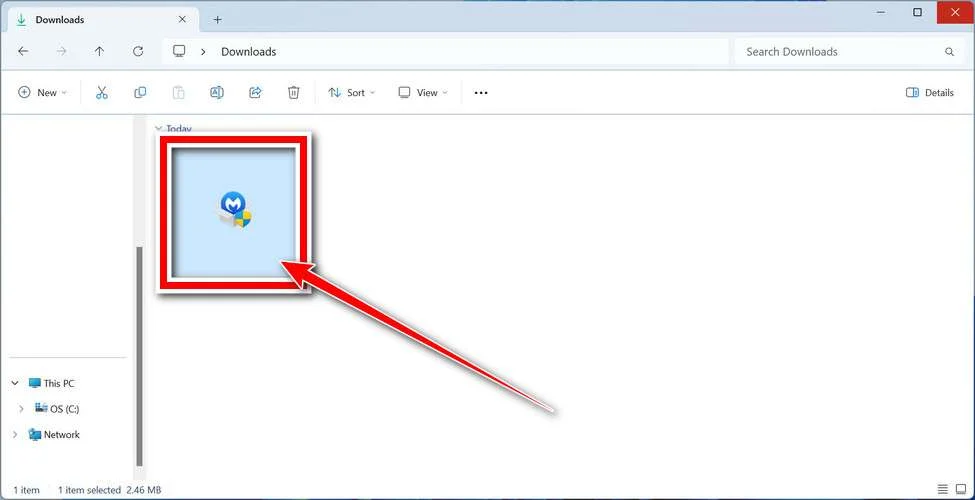
Follow the On-Screen Prompts to Install Malwarebytes
The setup wizard will walk you through a few quick screens:
-
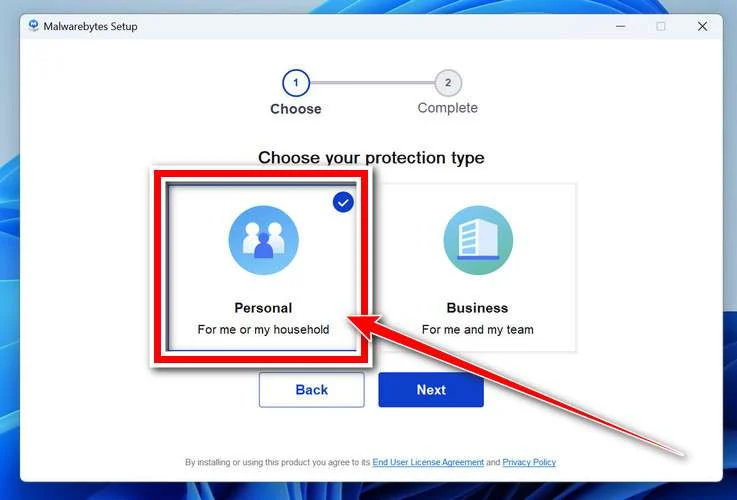
Choose where you’re installing the program — “Personal Computer” or “Work Computer” — then click Next.
-
Malwarebytes will now install on your device. This usually takes under a minute.

-
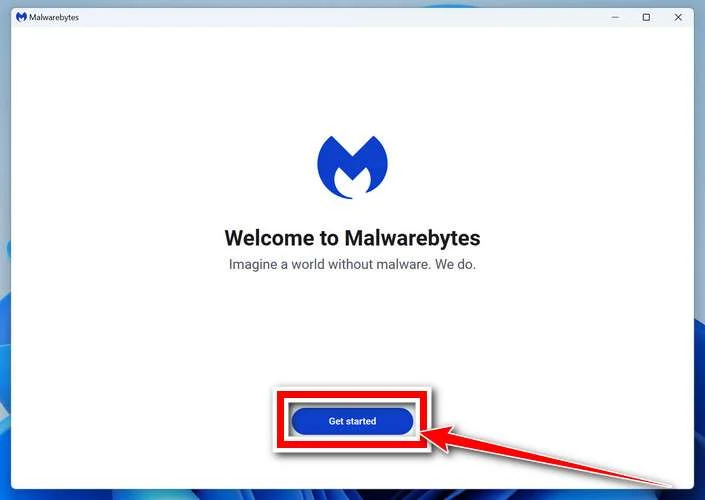
When installation is complete, the “Welcome to Malwarebytes” screen will open automatically.
-
On the final screen, click Open Malwarebytes to launch the program.

-
Enable “Scan for Rootkits”
Before scanning, turn on rootkit detection so Malwarebytes can find even the most hidden threats. Click the Settings gear icon on the left side of the screen.
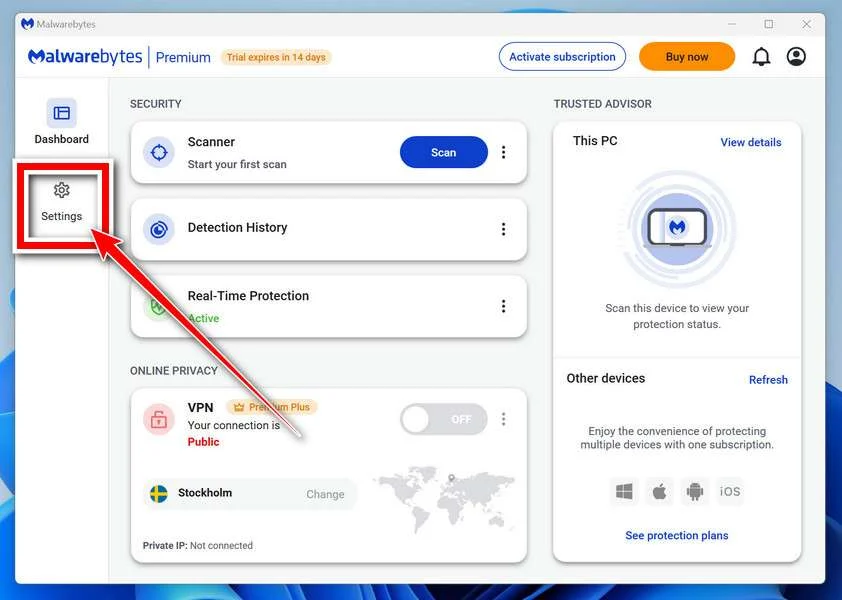
In the settings menu, find “Scan for rootkits” and click the toggle so it turns blue.

Done? Click “Dashboard” in the left pane to return to the main screen.
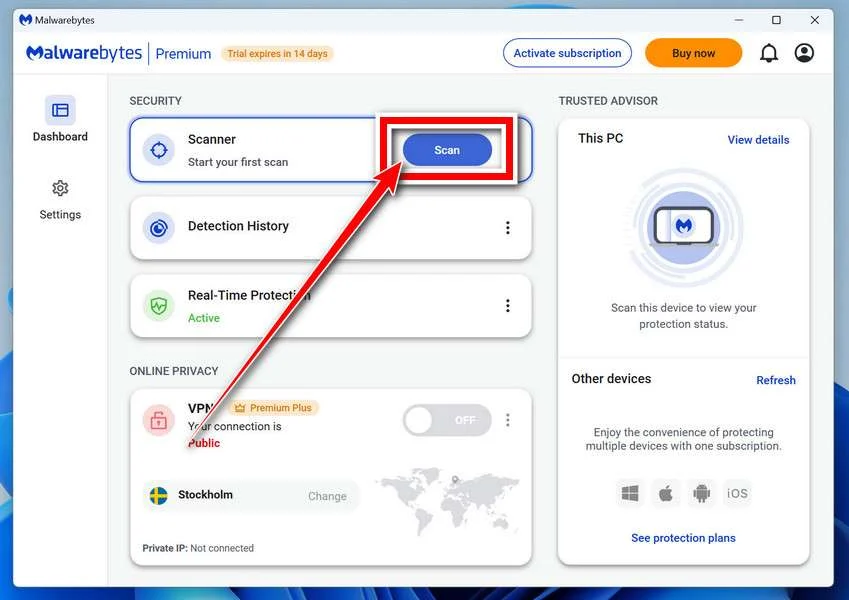
Start the Scan
Click the blue Scan button. Malwarebytes will automatically update its virus database and start checking your computer for malware.
-
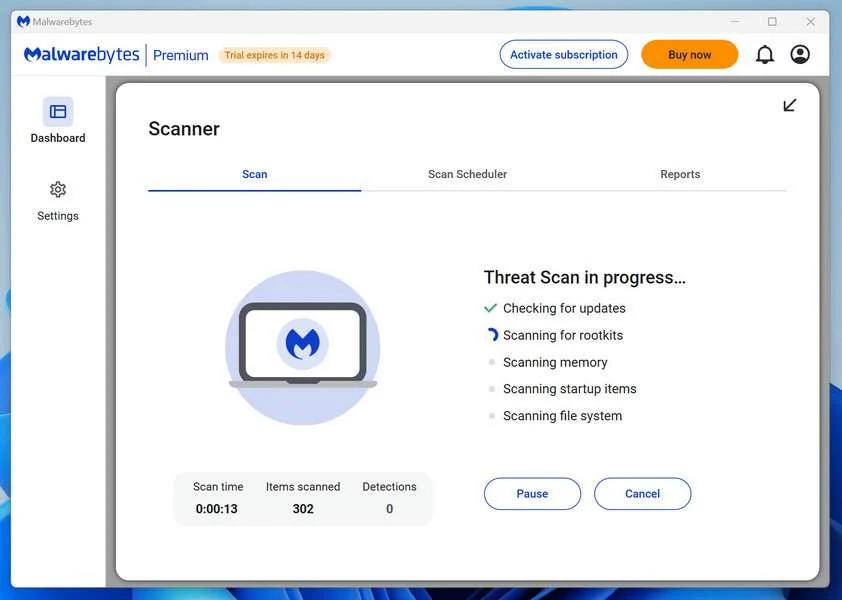
Wait for the Scan to Finish
The scan checks your entire system for browser hijackers and other malicious programs, so it can take 5 to 20 minutes depending on your computer. Feel free to do something else — just check back occasionally to see the progress.
-
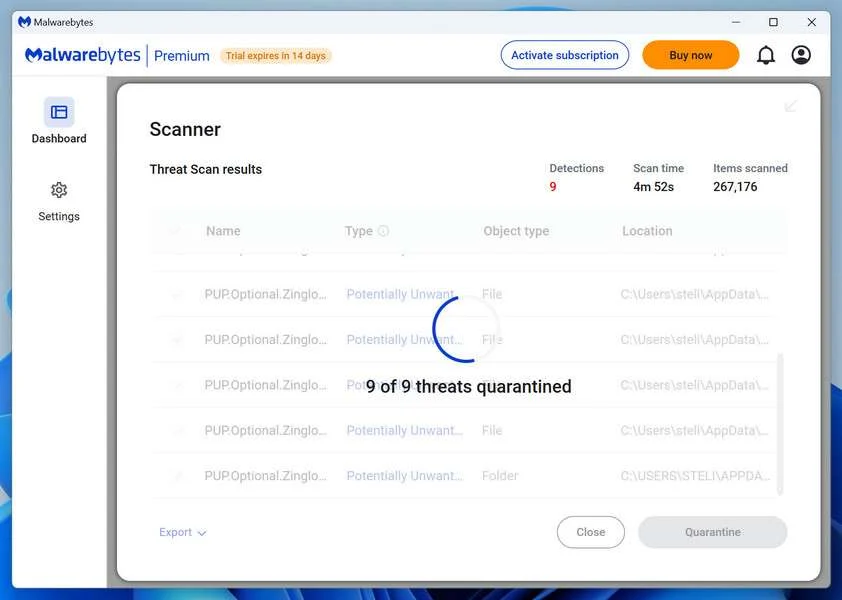
Quarantine the Detected Threats
When the scan is done, you’ll see a list of everything Malwarebytes found — malware, adware, and potentially unwanted programs. Click the “Quarantine” button to remove all of them at once.
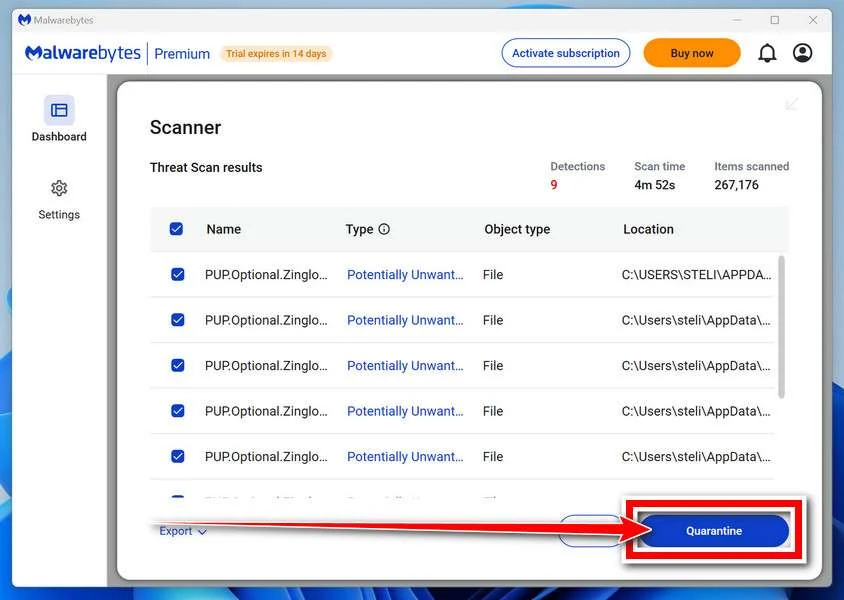
Malwarebytes will now remove the malicious files and registry entries and move them safely into quarantine.
-
Restart Your Computer
Some threats can only be fully removed after a reboot. If Malwarebytes asks you to restart, click Yes. Once you’re logged back in, Malwarebytes has finished removing the threats it found.
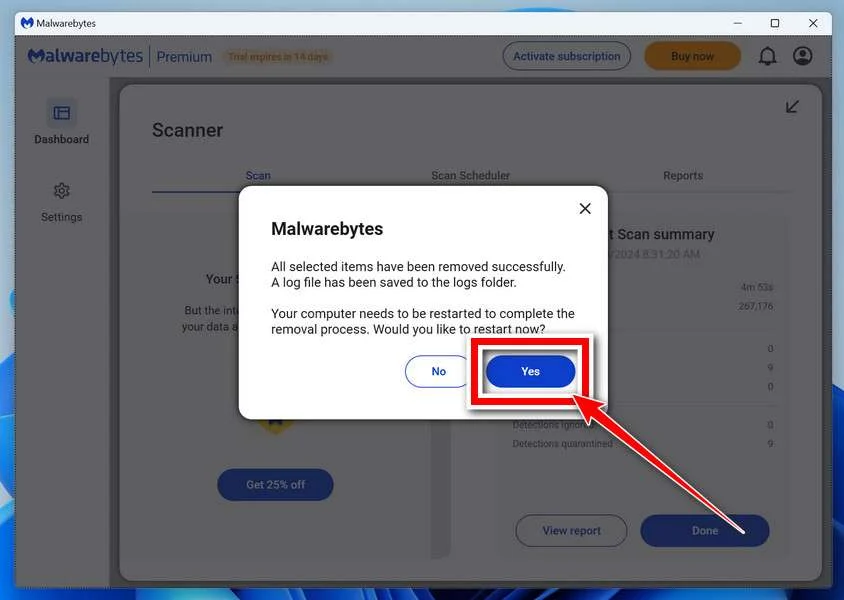
That’s it — your Windows PC is now clean of trojans, adware, and other malware, and should be back to running smoothly.
If you are still having problems with your computer after completing these instructions, then please follow one of the steps:
- Run a computer scan with ESET Online Scanner
- Ask for help in our Windows Malware Removal Help & Support forum.
Run a Malware Scan with Malwarebytes for Mac
Malwarebytes for Mac is a free on-demand scanner that removes the malware other security software tends to miss — adware, browser hijackers, and unwanted programs included. Cleaning an infected Mac with Malwarebytes has always been completely free, and it’s our go-to recommendation. Follow the steps below to scan and clean your Mac in just a few minutes.
-
Download Malwarebytes for Mac
Click the button below to download the latest version of Malwarebytes for Mac.
Download MalwarebytesOfficial installer for macOS. Your download starts right away.Want real-time protection? See Malwarebytes PremiumMalwarebytes Free for MacScans and removes malware at no cost -
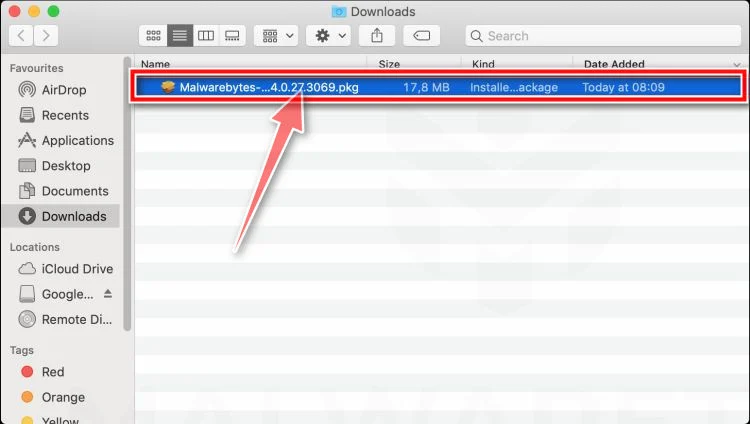
Open the Malwarebytes setup file
When the download finishes, open your Downloads folder and double-click the setup file to begin the installation.
-
Follow the On-Screen Prompts to Install Malwarebytes
The Malwarebytes for Mac Installer will guide you through a few quick screens. Click “Continue” and keep following the prompts until the installation completes.
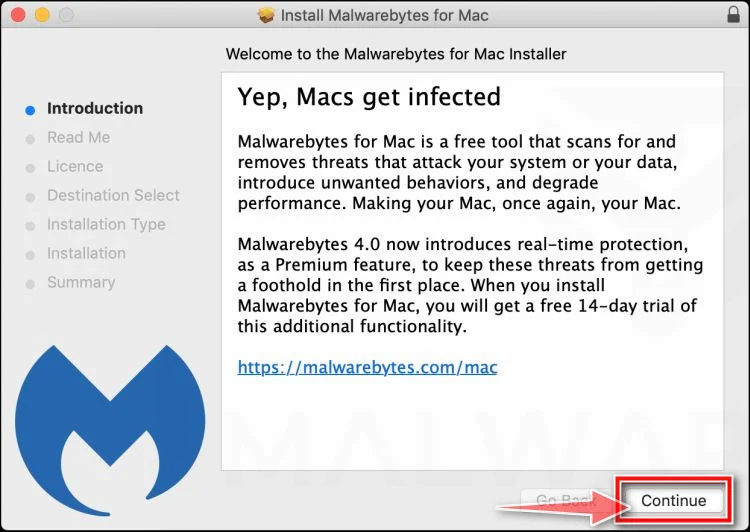
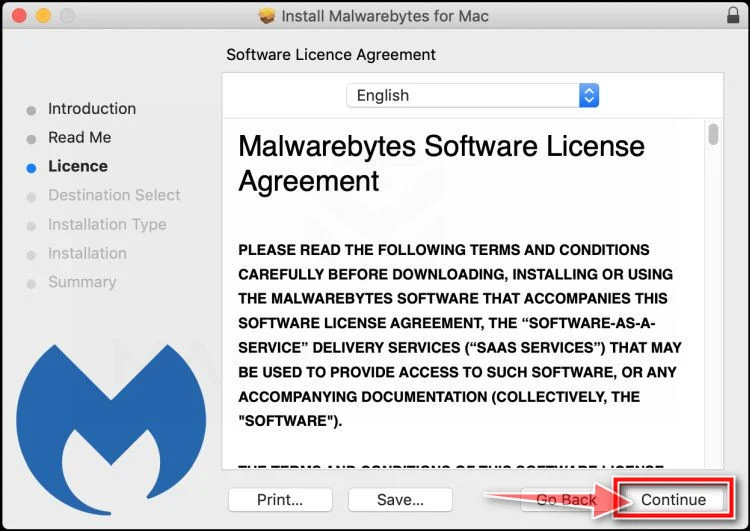
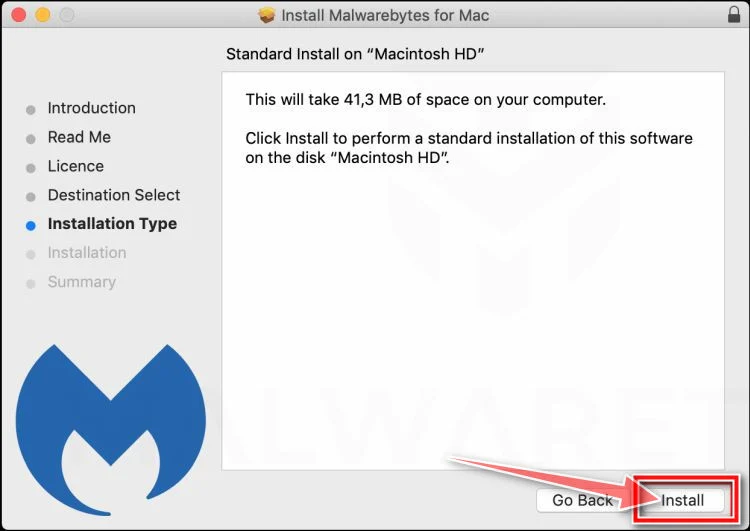
When the installation is complete, Malwarebytes opens to the Welcome to Malwarebytes screen. Click “Get started“.
-
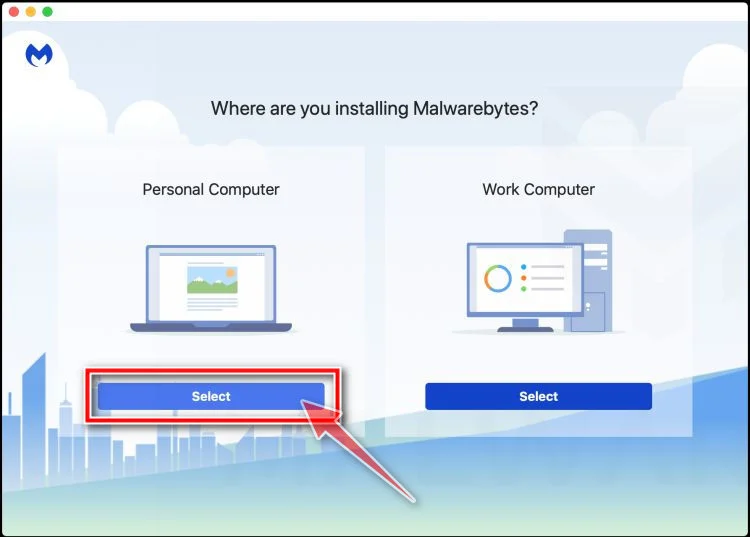
Select “Personal Computer” or “Work Computer”
Malwarebytes will ask what type of computer you’re installing it on. Click either Personal Computer or Work Computer, whichever applies.
-
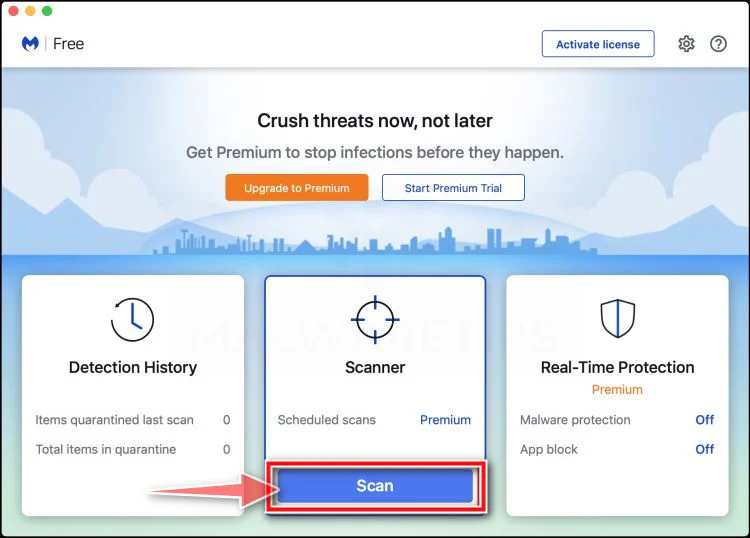
Start the Scan
Click the “Scan” button. Malwarebytes will automatically update its detection database and begin checking your Mac for malware.
-
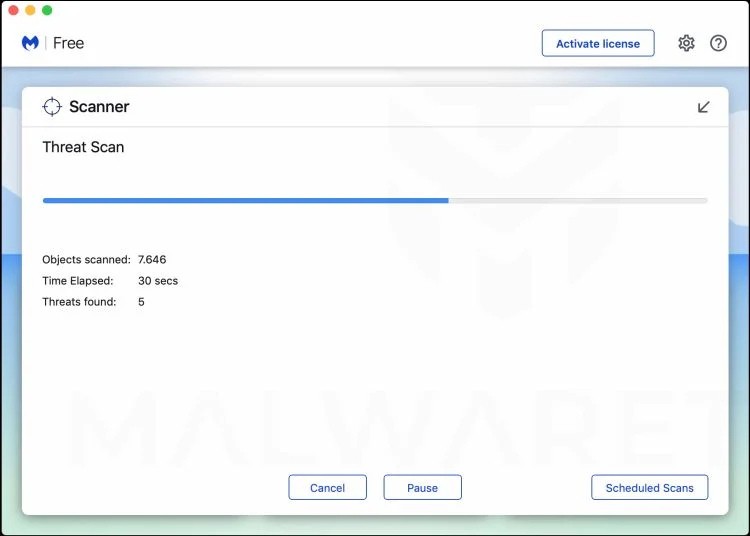
Wait for the Scan to Finish
Malwarebytes will scan your Mac for adware, browser hijackers, and other malicious programs. This can take a few minutes, so feel free to do something else — just check back occasionally to see the progress.
-
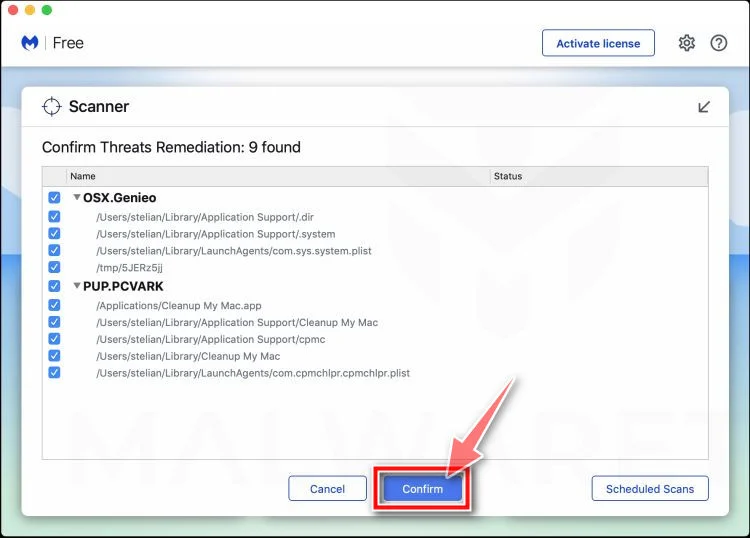
Quarantine the Detected Threats
When the scan is done, you’ll see a list of everything Malwarebytes found. Click the “Quarantine” button to remove all the threats at once.
-
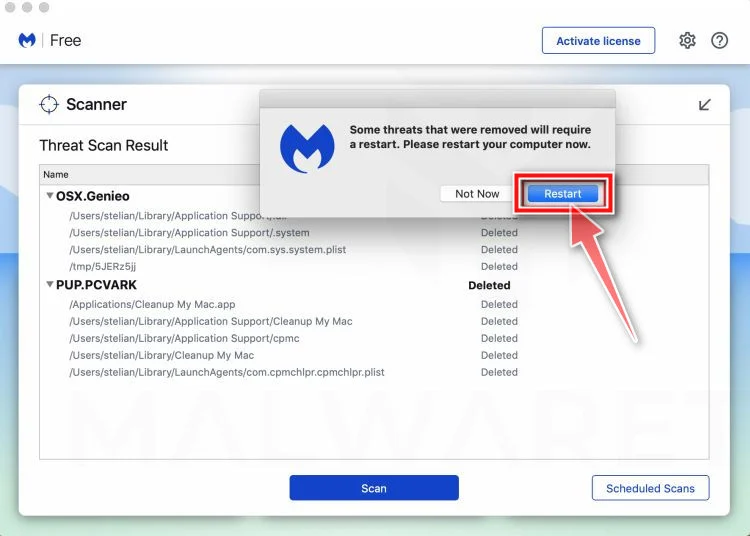
Restart Your Mac
Malwarebytes will now remove all the malicious files it found. Some threats can only be fully removed after a reboot — if Malwarebytes asks you to restart, allow it. Once you’re logged back in, your Mac is clean.
That’s it — your Mac is now free of adware, rogue browser extensions, and other potentially harmful software.
If you are still experiencing problems while trying to remove a malicious program from your computer, please ask for help in our Mac Malware Removal Help & Support forum.
Run a Malware Scan with Malwarebytes for Android
Malwarebytes for Android automatically detects and removes dangerous threats like malware and ransomware so you don’t have to worry about your most-used device being compromised. Aggressive detection of adware and potentially unwanted programs keeps your Android phone or tablet running smooth.
-
Download Malwarebytes for Android.
You can download Malwarebytes for Android by clicking the link below.
Get Malwarebytes for AndroidOpens Google Play in a new tab.Want real-time protection? See Malwarebytes Premium for AndroidMalwarebytes for AndroidScans your phone and removes malware at no cost -
Install Malwarebytes for Android on your phone.
In the Google Play Store, tap “Install” to install Malwarebytes for Android on your device.

When the installation process has finished, tap “Open” to begin using Malwarebytes for Android. You can also open Malwarebytes by tapping on its icon in your phone menu or home screen.

-
Follow the on-screen prompts to complete the setup process
When Malwarebytes will open, you will see the Malwarebytes Setup Wizard which will guide you through a series of permissions and other setup options.
This is the first of two screens that explain the difference between the Premium and Free versions. Swipe this screen to continue.
Tap on “Got it” to proceed to the next step.
Malwarebytes for Android will now ask for a set of permissions that are required to scan your device and protect it from malware. Tap on “Give permission” to continue.
Tap on “Allow” to permit Malwarebytes to access the files on your phone.
-
Update database and run a scan with Malwarebytes for Android
You will now be prompted to update the Malwarebytes database and run a full system scan.

Click on “Update database” to update the Malwarebytes for Android definitions to the latest version, then click on “Run full scan” to perform a system scan.

-
Wait for the Malwarebytes scan to complete.
Malwarebytes will now start scanning your phone for adware and other malicious apps. This process can take a few minutes, so we suggest you do something else and periodically check on the status of the scan to see when it is finished.

-
Click on “Remove Selected”.
When the scan has been completed, you will be presented with a screen showing the malware infections that Malwarebytes for Android has detected. To remove the malicious apps that Malwarebytes has found, tap on the “Remove Selected” button.

-
Restart your phone.
Malwarebytes for Android will now remove all the malicious apps that it has found. To complete the malware removal process, Malwarebytes may ask you to restart your device.
That’s it — your Android phone is now clean — no more malicious apps, adware, or browser redirects.
If you are still having problems with your phone after completing these instructions, then please follow one of the steps:
- Restore your phone to factory settings by going to Settings > General management > Reset > Factory data reset.
- Ask for help in our Mobile Malware Removal Help & Support forum.
Stay Protected: Block Ads and Malicious Sites
Now that your device is clean, keep it that way. Most infections start with a malicious ad or a fake download button — so blocking them at the source is your best defense.
We recommend AdGuard, which blocks malicious ads, phishing pages, and dangerous redirects before they can reach you.
👉 Download AdGuard and browse safely
The Bottom Line
The Cleaning Superstore WhatsApp scam is not a harmless delivery mix-up. It is a phishing trap designed to rush you into clicking a link, entering personal details, and paying a small “redelivery fee” like $4.96 or $9.96 so scammers can steal your card information.
If you received the message and you never ordered anything, trust that instinct. Do not click. Block and report it.
If you clicked or entered details, focus on what matters most: protect your card, watch for repeat charges, and tighten your account security. The faster you act, the more you can limit the damage.
FAQ
Is the Cleaning Superstore WhatsApp message legitimate?
In the reports tied to this campaign, the message is not a normal delivery update. It is a phishing attempt that uses a “missed delivery” story to push you into clicking a link and paying a small “redelivery fee” so scammers can steal card details and personal information.
Why did I get this message if I never ordered anything?
Because it is mass-sent. Scammers blast the same message to huge lists of phone numbers and rely on the fact that some people are always expecting a parcel, or will click just to check.
What is the goal of the “redelivery fee” like $4.96 or $9.96?
The fee is bait. The real goal is to capture your card number, expiration date, and CVV, then use that information for unauthorized charges, recurring billing, or selling the card details to other fraud groups.
If I clicked the link, can they steal money without me typing anything?
Usually, the damage happens when you enter information. Clicking alone is less likely to directly steal funds, but it can expose you to tracking, lead to more scam attempts, or trick you into completing the form later. If you clicked, close the page and do not go back.
What if I entered my name, address, and phone number, but not my card?
That still matters. Scammers can use those details for targeted follow-up scams, identity-focused fraud, or selling your data. Expect more convincing delivery messages, refund scams, or fake “support” calls that use your real details.
What if I entered my card details on the redelivery page?
Treat it as compromised card data. Contact your bank or card issuer right away, explain you entered your details on a phishing page, and ask to block fraud and replace the card. Then monitor for new charges and any recurring transactions.
I entered my card details but the page showed an error. Am I safe?
No. “Payment failed” screens are commonly used after the card data has already been captured. Assume the details were stolen and act the same way you would if the payment “succeeded.”
What if I shared a one-time passcode (OTP) from my bank?
That is higher risk. OTPs can be used to approve a transaction in real time. Call your bank immediately, ask them to review recent authorizations, and secure the account. If needed, have the card closed and replaced.
Why does the message use a shortened link?
Short links hide the real destination. That prevents you from spotting a suspicious domain and makes it easier for scammers to change the final landing page without changing the message template.
Why is the message coming from an international WhatsApp number?
Scammers rotate numbers and often use overseas SIMs, VoIP services, or compromised accounts. Legitimate delivery services generally do not send official “missed delivery” notices from random international WhatsApp numbers.
Can WhatsApp Business accounts be used in scams?
Yes. A WhatsApp Business profile can look credible at a glance, and scammers take advantage of that. Do not trust a message just because it looks “business-like.” Verify using official channels you already know.
How can I tell if a delivery message is real?
Use these quick checks:
- You can match it to a real order confirmation you already have (email, receipt, account order history).
- The link goes to a recognizable official domain, not a short link or random site.
- You can verify the tracking number directly on the courier’s official website or app.
- You are not being asked to pay a small fee through a random link.
Do real delivery companies ask for card details to reschedule a delivery?
In general, no. Legitimate carriers and retailers do not request card details through an unsolicited WhatsApp link to fix a missed delivery. Any request for card info to “release” or “redeliver” a parcel should be treated as suspicious.
What should I do if I keep receiving these messages?
- Block the sender and report the chat as spam or phishing in WhatsApp.
- Do not reply, even to tell them to stop.
- Consider enabling WhatsApp two-step verification (PIN).
- Be cautious of follow-up calls or texts referencing “your delivery.”
What are the most common follow-up scams after this?
Victims often report secondary attempts such as:
- Fake bank fraud calls offering to “help” cancel charges
- “Refund” scams that request remote access to your device
- More delivery texts using different company names
- Subscription charges that appear days later under unfamiliar merchant names
How long should I monitor my account after entering card details?
At least 30 days, and longer if you see any subscription-style activity. Set up instant transaction alerts so you can catch unauthorized charges quickly.

Join the discussion
0 commentsShare your experience or ask a question about this article.
Discussion
Start the conversation
Have a question or something useful to share? Add the first comment.