

The Clint Eastwood vision trick sounds like the kind of discovery you would want to send a parent before they miss it.
A few minutes, a familiar face, and the possibility of seeing clearly again. Before following that promise, there are several details worth slowing down for.
Overview
The celebrity story is not a verified medical endorsement
A recently reported promotion links Clint Eastwood to a supposed seven-minute sniper protocol for better eyesight. VisiVra is the supplement named in that campaign.
We could inspect the current product purchase route, but not authenticate the original promotional video or establish an endorsement from Eastwood or CBS.
That distinction matters. A familiar face in advertising is not proof that the person approved the message, used the formula, or demonstrated the claimed result.
Our recommendation is clear: do not buy on the strength of this celebrity vision story. The purchase pages raise additional questions that deserve written answers.
The checkout has a real, expensive purchase behind it
The route reviewed led from getvisivra.com to tryvisivra.com, then to a BuyGoods checkout. These are different roles, not interchangeable proof of who developed the supplement.
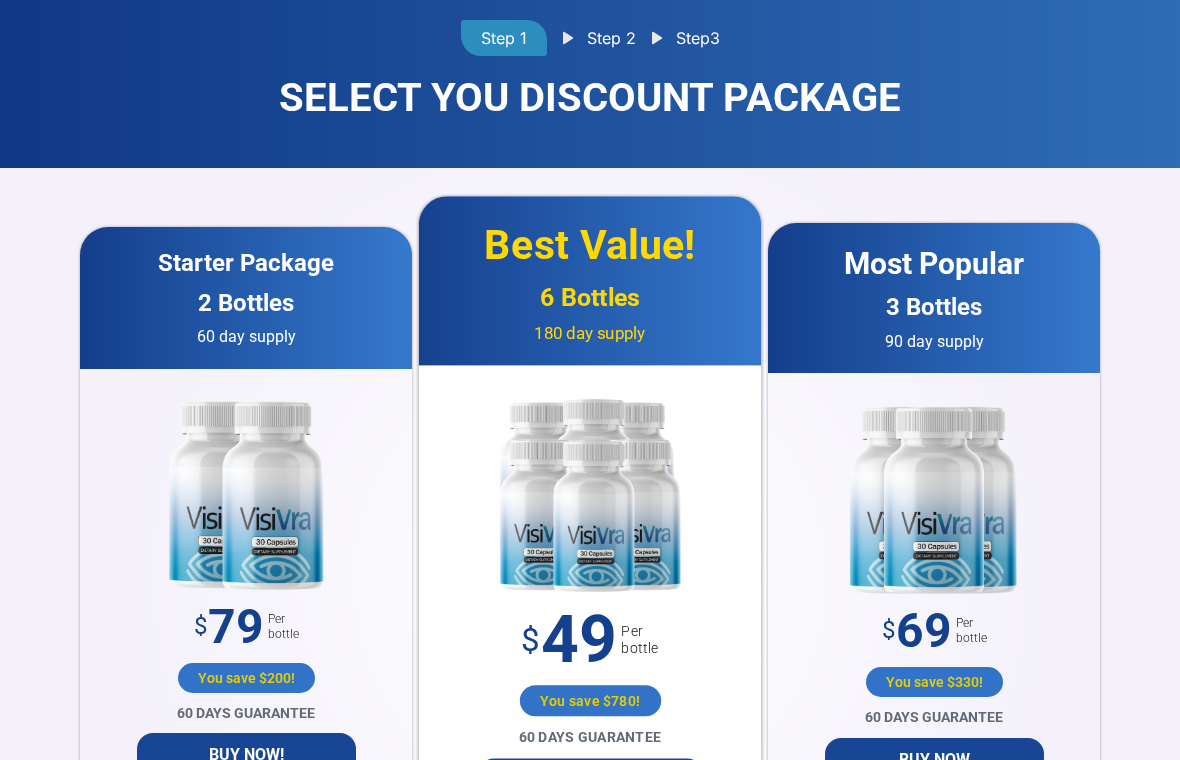
On October 4, 2026, the package page offered two bottles for $158, three for $207, or six for $294. There was no single-bottle selection there.
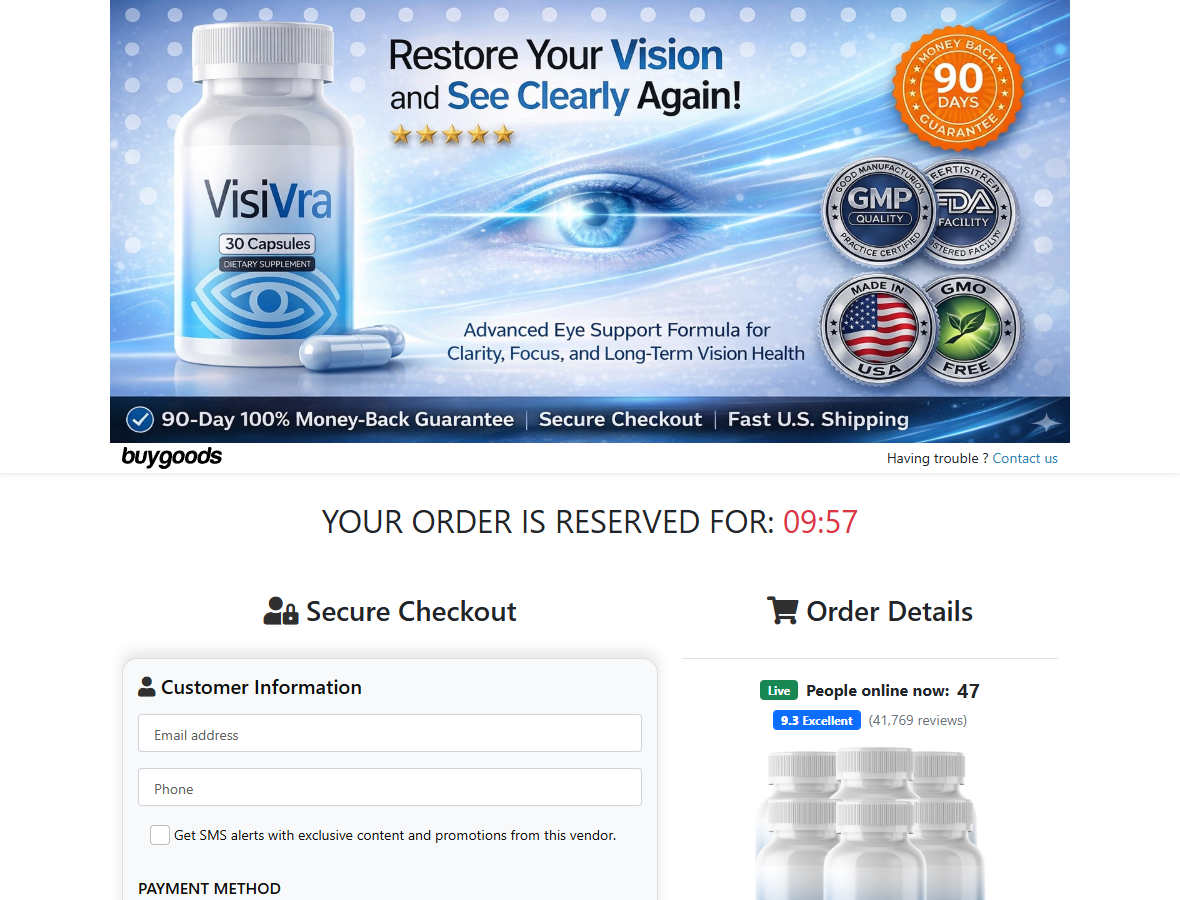
The selected six-bottle checkout displayed a $294 total. Its artwork advertised a 90-day guarantee, while the page also stated a 60-day guarantee.
This is a documented mismatch, not a minor detail when a buyer is deciding how long to try a product before requesting a refund.
What is established, and what still is not
- The reviewed sale involves a supplement purchase, not just instructions for a free vision exercise.
- The lower unit price belongs to a larger package. Six bottles at $49 each still cost $294.
- The current return policy counts 60 days from purchase and requires every bottle back, including empty bottles.
- The product terms name Vigorus in one section, although the pages sell VisiVra.
- No visible refill authorization appeared in the checkout we inspected. Automatic subscriptions are not established for this order.
We did not place an order, test the capsules, or verify the factory. This investigation concerns the marketing, documented checkout conditions, and your next decision.
Why the Seven-Minute Vision Promise Deserves Scrutiny
Someone struggling to read a medicine label is not shopping for an abstract wellness benefit. They are hoping for a practical change in daily life.
That makes a short, reassuring routine unusually persuasive. It offers an answer that feels easier than appointments, changing prescriptions, or worrying about a diagnosis.
The military-sounding sniper label adds another layer. It suggests exceptional precision without explaining what was measured, who was studied, or which eye condition supposedly improved.
A memorable name is not a treatment protocol. A legitimate medical claim should survive questions about its actual method, evidence, limitations, and intended patients.
Start with the promised result. Is the advertisement talking about temporary comfort, correcting blurred vision, reversing disease, or restoring sight that has already been lost?
Those are different claims. A sales presentation should not slide between them while leaving the viewer with the strongest impression and the smallest disclaimer.
For the celebrity element, look for an original statement on a verified channel. A clip embedded in a sales page cannot authenticate itself.
The same applies to alleged television coverage. Find the full report through the broadcaster, including its date and context, rather than trusting a borrowed-looking presentation.
Without those checks, you are paying for the advertiser’s account of what happened. You have not established that the interview, endorsement, or discovery happened at all.
How the VisiVra Sales Funnel Works
Step 1: A vision story creates a reason to keep watching
The reported hook centers on Clint Eastwood and a seven-minute sniper protocol. Its attraction is the possibility of a simple answer to a frightening problem.
Before clicking through, save the advertisement’s exact wording. A claim about restoring eyesight is more consequential than a general statement about supporting eye health.
Also record the advertiser account, destination address, and date. If the product name later changes, those details preserve the particular promotion you encountered.
Do not assume every advertisement using the same name comes from the same operator. An affiliate can control an ad while another business handles the purchase.
Step 2: Apparent authority replaces information the viewer actually needs
The reported campaign invokes recognizable public figures and television-style authority. Neither celebrity recognition nor a news-like layout tells you what is in a capsule.
Ask for the original interview before considering the purchase. Then ask whether it actually mentions the product, rather than an unrelated discussion about aging or health.
Edited footage can remove context. Artificial voices and generated video can create statements that were never made. These possibilities require verification, not visual confidence alone.
We have not independently authenticated this campaign’s original footage. Treat the claimed endorsement as unverified, and do not let it substitute for clinical evidence.
Step 3: The promised trick becomes a branded supplement decision
On the purchase route examined, the next meaningful decision was which VisiVra package to buy. The order page was selling bottles, not a free recipe.
That change deserves attention. A viewer interested in a routine may arrive at checkout without ever deciding whether the supplement itself has adequate supporting evidence.
Pause here and request the complete label, ingredient amounts, and research on the finished formula. A list of familiar nutrients does not answer those questions.
Make the seller explain how the advertised vision result connects to this exact formulation. General eye-nutrition research is not automatically a study of VisiVra.
Step 4: Per-bottle pricing makes the larger purchase look smaller
The six-bottle offer emphasized $49 per bottle. The amount due was $294, not $49. The two-bottle option cost $158 before any applicable shipping.
Buying more can reduce the unit price, but it also increases the money committed before you know whether the product suits you.
A 180-day supply creates another question when the return policy allows only 60 days from purchase. Supply length and refund time are not the same clock.
Read the final order summary yourself. If its quantity or total is not what you intended, leave the checkout instead of hoping support can fix it afterward.
Step 5: Checkout introduces different guarantee language and acceptance terms
The inspected checkout identified BuyGoods as the retailer and said the charge would appear as BuyGoods. Its terms-acceptance box was already checked.
A checked terms box is not proof of a subscription. We found no visible recurring-charge authorization in this version, so we cannot call it a confirmed refill trap.
However, the guarantee artwork said 90 days while other checkout wording said 60 days. Get the applicable deadline in writing before relying on the longer period.
The page also displayed an order-reservation countdown. A timer should not decide when you finish reviewing a $294 purchase or its refund conditions.
Step 6: A refund requires following the actual return instructions
The reviewed return policy requires contacting support, returning all bottles, and including identifying order information. Buyers pay return postage.
It counts the deadline from purchase, not delivery. Time spent waiting for shipping therefore reduces the period available after the package arrives.
A promise that you can try the product for months does not extend that written deadline. Ask which document controls your particular purchase.
Keep packaging and empty containers until the issue is resolved. Throwing them away may complicate a return that expressly asks for every bottle.
Company, Address, and Fulfillment Checks
The product brand and checkout retailer are different names
VisiVra is the product branding. The checkout identified BuyGoods as the seller for the inspected transaction. The informational site separately claimed a maker called Visivra Vision Labs.
Those labels do not establish one shared legal company. Your receipt and final purchase terms matter more than the biggest name on the bottle.
The product website’s terms also attributed intellectual property to Vigorus. That unexplained name is a reason to question the document’s accuracy.
We cannot infer that Vigorus owns VisiVra. The mismatch establishes inconsistent paperwork, not ownership, manufacturing origin, or a proven connection between other products.
The Aurora address is a fulfillment destination, not medical validation
The return page listed ShipOffers at 19655 E 35th Dr #100, Aurora, Colorado 80011. ShipOffers describes its business as product and fulfillment services.
A warehouse can receive returns and dispatch packages for different brands. It does not establish that a celebrity endorsed a supplement or that a clinical trial exists.
There is no basis here to call that address fake. There is also no basis to treat it as the office of the advertised researcher.
Use it only after obtaining current return instructions for your order. A correct warehouse address without the required order details can still create processing problems.
Published support details are not a tested refund record
The landing page listed support@visivra.com and +1 323-347-4522 for order inquiries. The inspected checkout provided a separate BuyGoods support number, 302-404-2568.
We did not call or email these contacts. A listed number does not prove responsive support, but neither can we claim it is disconnected.
When requesting help, identify the product, transaction number, quantity, and purchase date. Ask whether the recipient handles the refund or must refer it elsewhere.
A clear written answer should state the authorization process, destination, deadline, and expected refund timing. Save it before sending anything back.
The label must identify what the capsule actually contains
We did not obtain a complete, verified label or batch test for the product delivered to buyers. Ingredient amounts and manufacturing claims therefore remain unconfirmed.
Request photographs of the full Supplement Facts panel, directions, warnings, lot number, and responsible business. Advertising graphics are not a replacement for the actual container label.
A facility-registration badge does not mean the FDA approved the supplement. The FDA explains that supplements are not approved before sale.
We have no evidence that these capsules are contaminated or manufactured in China. Missing verification calls for caution, not an invented safety finding.
Eye-Nutrition Research Is Not a Seven-Minute Cure
There is legitimate research on certain eye supplements. That does not make every vision advertisement, ingredient combination, or celebrity pitch medically reliable.
The National Eye Institute’s AREDS research concerns specific formulas and defined stages of age-related macular degeneration. It does not establish a universal eyesight-restoring trick.
The studies found benefits in reducing progression risk for appropriate patients. They did not show that the formulas prevent AMD onset or treat cataracts.
That distinction is the difference between discussing nutrition with an eye specialist and buying a supposed shortcut based on a sales video.
If your vision has changed, arrange an assessment rather than waiting to see whether an unfamiliar capsule fixes it. Do not stop prescribed treatment for advertising promises.
Sudden inability to see or sudden severe eye pain requires emergency medical care. The NHS vision-loss guidance also identifies other symptoms needing prompt evaluation.
What to Do If You Ordered VisiVra
- Retrieve the complete order record.
Find the receipt, bank charge, package quantity, purchase date, and seller details. Compare the total with what you remember approving.
Save the advertisement separately. A disputed promotional claim and an incorrect order quantity are different issues, and your evidence should show which applies.
- Request cancellation or return instructions promptly.
Write to the seller identified on your receipt. State clearly whether you want an unshipped order canceled or a delivered purchase returned.
Ask for a written deadline and return authorization. Mention the 60-day versus 90-day wording if it appeared during your purchase.
- Preserve every bottle and the shipping paperwork.
The reviewed policy requests all bottles, empty or otherwise, plus the packing slip. Photograph the contents before packaging an authorized return.
Use a tracked method and retain the mailing receipt. Confirmation of delivery helps distinguish a package problem from a refund-processing problem.
- Contact the payment provider if the merchant does not resolve the issue.
Explain precisely what happened: an unauthorized charge, incorrect quantity, misleading claim, non-delivery, or unfulfilled refund. Submit the supporting record rather than only a general accusation.
Ask about applicable dispute deadlines and documentation. Do not assume that waiting for repeated seller replies preserves every payment-provider deadline.
- Monitor for additional charges without assuming a refill exists.
Check subsequent statements and your receipt for recurring terms. If another charge appears, request its authorization record and cancel any actual renewal in writing.
The version inspected did not establish automatic refills. Your own transaction record is the right place to determine whether your order differs.
- Keep your eye care separate from the purchase dispute.
Bring the actual label to an eye-care professional or pharmacist before using the supplement. Describe your symptoms and existing medicines accurately.
If the advertisement persuaded you to postpone an appointment, reschedule it. Refund discussions are not a substitute for evaluating a change in eyesight.
- Address browser exposure only if something else happened.
Viewing a checkout is not evidence that your device is infected. If you installed software or encounter persistent redirects, update Malwarebytes and run a scan.
AdGuard can help reduce unwanted advertising. Neither tool authenticates a celebrity endorsement, cancels an order, or retrieves a card payment.
Frequently Asked Questions
Did Clint Eastwood endorse the seven-minute vision trick?
We did not authenticate an original endorsement. Do not rely on a sales clip without locating a matching statement through a verified, independent source.
Is VisiVra a confirmed subscription trap?
Not in the checkout inspected. No visible automatic-refill authorization was established. Check your own receipt, renewal terms, and statements before drawing that conclusion.
Why could a VisiVra purchase cost $294?
The reviewed six-bottle bundle cost $49 per bottle, totaling $294. The advertised unit price was not the amount charged for the whole package.
Does the guarantee last 60 or 90 days?
The pages displayed both periods. The product return policy stated 60 days from purchase. Request written confirmation for your order and preserve the conflicting screenshot.
Does an FDA facility badge establish effectiveness?
No. Facility registration is not approval of a finished supplement, its advertising, or a disease-treatment claim. Ask for product-specific evidence instead.
Should I wait for the capsules before getting my eyes checked?
No. Arrange appropriate eye care for vision changes, and obtain emergency help for sudden vision loss or sudden severe eye pain.
The Bottom Line
The Clint Eastwood vision trick is not an endorsement we could authenticate. Do not use that story to justify a supplement purchase or delay eye care.
The verified concerns are concrete: expensive bundles, inconsistent guarantee periods, and mismatched terms. If you ordered, preserve the evidence and start the return process promptly.








