


Coins Retriever offers to trace and retrieve cryptocurrency after an investment scam. The pitch uses both a recovery statistic and a claim about UK legal recognition.
Those claims matter when the next page asks what you lost, who took it and how to reach you. Check who would receive that information before opening a case.

Overview
The results claims need more than a headline
The homepage says it succeeds in retrieving stolen blockchain assets nine times out of ten. The About page says its team has recovered more than $154 million.
Neither figure explains how many cases started, how a successful outcome was counted or which records show that money reached the people who lost it.
A legal credential needs the firm or solicitor behind it
Coins Retriever says the Solicitors Regulation Authority and The Law Society recognize it as a financial recovery specialist. It describes its team as SRA-regulated.
The claim does not identify the regulated firm or solicitor in that wording. A reference to the SRA is not the same as a check against its official register.
Three things to decide before opening a case
- Check whether you need help documenting a transfer, contacting your provider or obtaining legal advice.
- Ask for the identity and official regulator number of anyone claiming to act as a solicitor.
- Keep records private until you know who receives the information and what it is needed for.
Skip the Coins Retriever form. The site asks for details that can identify you and your loss, but its results and legal recognition claims do not justify that disclosure.
How Coins Retriever Moves From Its Pitch to a Case Form
Step 1: A fraud warning provides reassurance
The first screen places a warning over its own recovery sales page. It tells readers that the site will never ask for advance payment and links people toward its services.
That may sound comforting if another website just took your savings. A no-upfront-payment statement does not identify the people behind the form or validate anything else they say.
A closely matching warning appears on Allhealed Expert, down to unusual wording about the information you choose to share. The reuse is observable, but it does not establish common ownership.
Step 2: The About page makes two sweeping claims
The page pairs the legal recognition claim with a separate statement about recovering more than $154 million. The site does not show how to audit that result.
Read those claims separately. A real professional registration would identify a qualified individual or firm, but it would not independently demonstrate a history of returning that amount.
Look for a regulated firm name, a matching official entry and a way to confirm the service through the number on that entry instead of the website.

Step 3: The case form collects more than a transaction reference
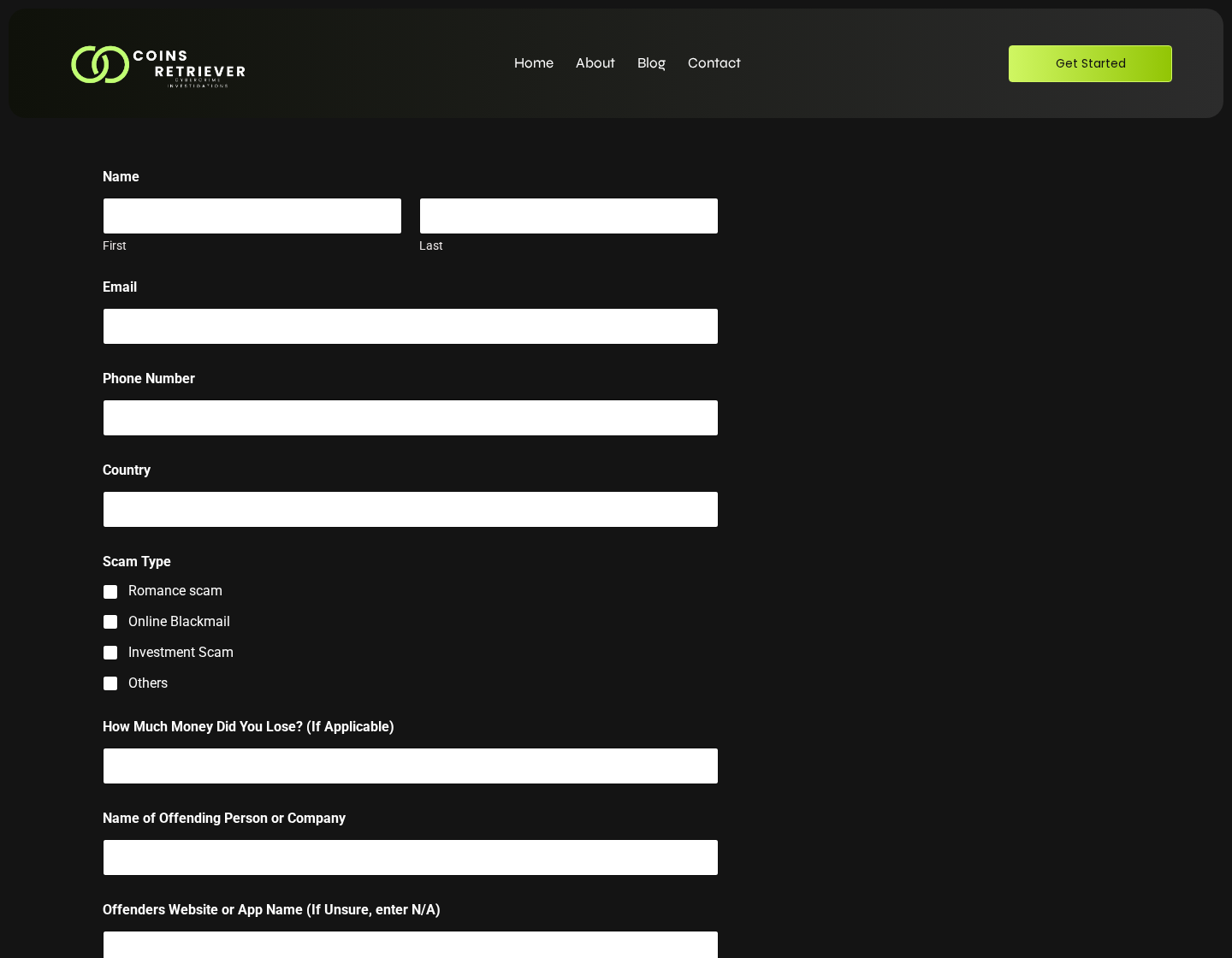
The blank form asks for first and last names, email, phone number and country. It also asks which kind of scam took place and how much was lost.
Its choices include investment scams, romance scams and online blackmail. Fields about the other person or company and its website can reveal which earlier incident is involved.
Anyone who gets that information could refer to the same loss later. Knowing the amount and broker name still would not make them a representative of your bank or exchange.
We did not send information or test a recovery. The live form shows what a visitor is asked to disclose, not who actually handles submissions behind the site.
Step 4: Check what a purported success would actually mean
Following an on-chain transfer, getting an account frozen and returning money to a victim are separate events. Ask which one is included in any reported success figure.
The homepage’s statement says assets are recovered, not just that a report is made. A screenshot of a wallet balance would not demonstrate that a client regained access.
The FBI’s advisory about crypto recovery offers explains that a private recovery service cannot issue a seizure order and that exchanges control their own freezes or respond to legal process.
Who Is Making the Legal Recognition Claim?
The website identifies a brand rather than a regulated firm
Coins Retriever presents itself as a recovery organization. The About page names two UK bodies, but the claim there does not give a regulated legal name or an SRA number.
Ask for the person’s name and the legal firm’s name separately. A consultant can work with a solicitor without being a solicitor or offering the same protections.
The SRA register is a different source from the website
The Solicitors Register lets you check people and firms the SRA regulates. Search by the regulated name or SRA number as the regulator recommends.
A match with the actual firm tells you something about the firm, not the sender who invoked its name. Compare the recorded details with the site and email.
A named association does not authorize a bank or exchange action
Recognizing an adviser and exercising legal power over a payment are different matters. A bank or exchange decides how to handle an account under its procedures and applicable law.
Ask which organization can hold the funds and whether it has acknowledged your case. A private firm’s promise is not a response from the institution with the account.
A shared warning line is not an ownership map
The similar warnings on Coins Retriever and Allhealed Expert have an unusual wording error in common. Readers may recognize the language even when the names and page designs differ.
The copied warning could come from shared text, a template or an operator. It does not identify the recipient of your form or prove shared ownership.
Verify a Claimed Solicitor Without Using the Recovery Form
Open the regulator’s site yourself and use the register’s people or firm search. Start with the SRA number if you have it and compare the name that comes back.
If you have only a trading name, request the registered name. The SRA’s guidance on bogus solicitors explains why checking an independent contact route matters.
Do not stop at a name match. Use the contact details shown by the regulator or a trusted earlier source to ask whether the person and website are connected.
No clear match is not a court finding. Do not rely on the claimed credential until the regulator or the named firm can confirm it independently.
For a proposed engagement, ask what you would receive, what would cost money and what would be handed to an exchange or lawyer. Ask who would sign the contract.
If someone sends an image of a credential rather than the name and number, do not use a link printed on the image to confirm it.
What Evidence Would Support a Recovery Success Rate?
Start with what happened to the money, not what happened to the investigation. A completed trace can identify a destination without transferring funds back to the original owner.
Ask what counts as a case in the success rate. Counting only files the provider accepts after screening is different from counting every person who fills out the form.
Nine people receiving a small amount would also be different from nine people receiving all their money. The headline does not explain whether partial returns count as successes.
The claimed $154 million raises a question about the date range and records behind the total. A number without that context cannot help predict the outcome of your case.
Someone may offer a screenshot to substantiate a payout. Ask whether it shows funds arriving in the client’s control, rather than a balance on a website.
An adviser should explain the difference between documenting a payment and recovering it. If all they offer is a trace, make sure the written agreement says so.
Do not send a transaction to see if the provider can move it. A tracing demonstration does not require access to your wallet or permission to make transfers.
If you already have a police report, keep it as your starting point. A new private reference should not replace that file or the records already collected.
Before hiring a firm, ask for a written description of the deliverable, time and fees. A professional registration and a defined scope answer different questions.
Check whether the arrangement covers a report for your use or further work with a named professional. Do not assume legal representation comes with the report.
If somebody offers you the whole sum owed on condition that you pay a new tax, don’t let the size of the promise change your verification process.
Keep the payment trail for the original incident and the recovery approach separate. That helps you recognize whether a new message simply repeats details from the first one.
Which Details Are Safe to Share With a Verified Investigator?
The provider needs to know which network the transfer used because the same asset name can appear on several networks. Your exchange’s withdrawal record normally identifies the route.
A public transaction reference can help locate the payment. It is different from a recovery phrase, which gives the holder access to wallets derived from it.
The intake form asks for names and a loss amount in the same place. Keep that information in a private copy until you confirm who would receive the combined record.
When documenting online blackmail, preserve the demand and account names. Do not post intimate evidence publicly just to show a recovery service that the incident occurred.
For a past investment fraud, save the original destination and transfer record. If a new contact claims that money is in a different account, ask for independent confirmation.
If you paid using several methods, record them separately. A card transaction and a crypto withdrawal have different providers and different routes for making a complaint.
What to Do If You Sent Information to Coins Retriever
-
Save the original link, message and any reply, then list the exact information you shared. A name and phone number call for a different response than a wallet secret.
If you only opened the form, close it without submitting and locate your provider directly. Opening the blank form does not by itself indicate a compromised account.
-
If you supplied the loss amount or old broker name, be alert to follow-up messages that repeat those facts. Verify any new caller through the organization it claims to represent.
Do not corroborate a callback by giving another detail from the earlier transaction. End the call and use the provider’s independently published contact channel.
-
If you used an exchange, find the withdrawal history and save the asset, network, transaction hash, amount and date. Give those details through its official fraud support.
Ask whether the service can investigate or record the destination. Trace information can help a report, but only the relevant provider or authorities can explain what action is available.
-
If you supplied a recovery phrase or private key, seek urgent help through your wallet provider’s trusted documentation or support. Treat that as more serious than sharing a public address.
Do not take instructions from the suspected recovery service or share the secret again. If someone asked you to connect a wallet, document any permissions you actually approved.
-
If you sent a fee, tell your provider about that payment separately from the original loss. Keep both receipts so the bank, exchange or investigator can trace each event.
Report suspected online fraud through the FBI’s IC3 portal in the United States or your regional fraud authority. Never assume a private case number is a police report.
Frequently Asked Questions
Does Coins Retriever recover cryptocurrency nine times out of ten?
That is the site’s own claim. We did not find a published breakdown that showed which clients received funds or explained how the rate was calculated.
Is the Coins Retriever recovery form an official fraud report?
No, the form is on the service’s own website. Use your local fraud authority or your payment provider to file an official report independently.
Does the website give an SRA identification number?
The About-page recognition claim does not include a number or the regulated firm name. Check the SRA’s official source before relying on the claim.
Is Coins Retriever the same group as Allhealed Expert?
The warning text is closely matched, which documents reuse. That observation does not prove the two sites belong to the same people or collect information together.
Can someone return money just by knowing the transaction hash?
A hash lets an investigator identify a transaction on the right network. It does not allow the investigator to reverse the payment or control the receiving wallet.
What if a follow-up message asks for a verification fee?
Stop the exchange and save the request for your provider or investigator. Do not pay to test whether the sender can deliver the promised result.
The Bottom Line
Do not send your loss details to Coins Retriever. The case form collects sensitive information before the recognition claim or the recovery figures can be independently confirmed.
If you responded, save the messages and contact the original payment provider directly. Do not trust a follow-up simply because it repeats facts about the loss.

Join the discussion
0 commentsShare your experience or ask a question about this article.
Community experiences
Did this happen to you?
Your experience could help someone recognize the same scam. Submit a private report for our team to review.
I experienced this tooReports are reviewed before publication. Sharing publicly is always your choice.
Discussion
Start the conversation
Have a question or something useful to share? Add the first comment.