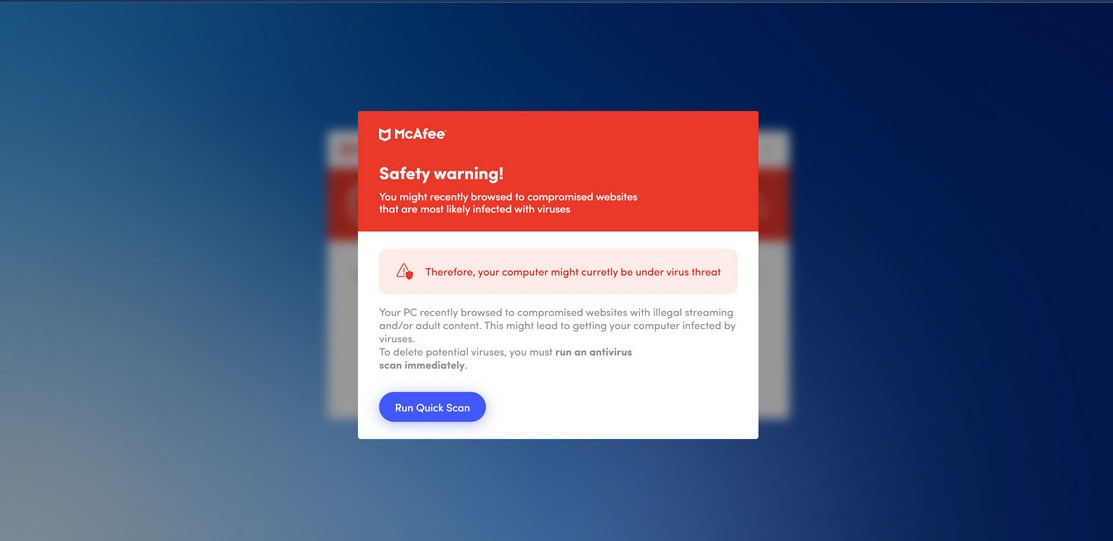
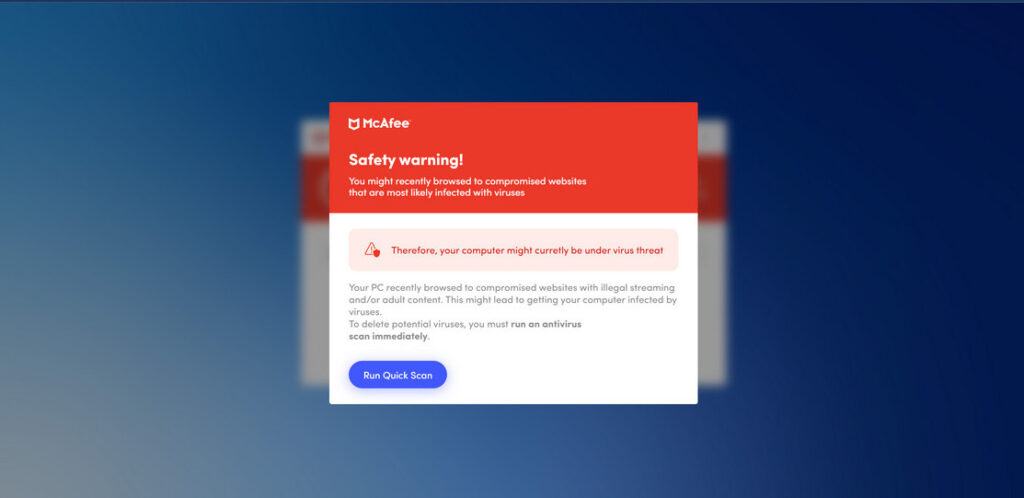
A browser tab flashes “Security Alert,” the screen darkens, and a message screams that viruses are detected and your personal data is leaking. Sometimes it looks like Windows Security. Other times it borrows McAfee, Norton, or TotalAV branding. A countdown appears. A big button says “Continue” or “Enable Protection.” In some versions, you get an email-style “Dark Web Report” claiming your private photos and videos were found online.
If you have seen these pages, you are not alone. This is a huge ecosystem of Critical Security Alert scam sites that rotate domains, recycle the same templates, and funnel victims through aggressive redirects from high-risk websites like torrents, free movie streams, and adult sites.
Most of the time, the goal is simple: make you panic and click into an antivirus subscription offer through affiliate links. But not always. Some versions shift into tech support scams, or push dangerous downloads that can actually harm your device.
This guide explains how these scam sites work, what the different variants are, and what to do if you already clicked.
Scam Overview
What “Critical Security Alert” scam sites are
“Critical Security Alert” scam sites are web pages that impersonate legitimate security warnings. They are not real Windows alerts and not real antivirus notifications. They are designed to look official while delivering a single message:
You are in danger right now, and you must act immediately.
These scams exist in many flavors, but they share the same DNA:
A frightening headline (Critical, Urgent, Data Leaking, Dark Web, Hackers)
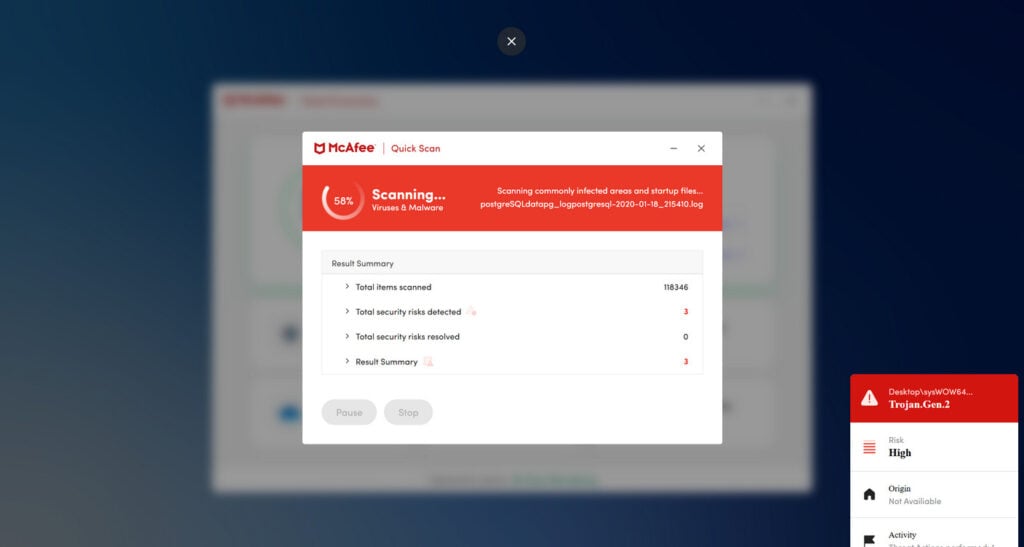
A fake detection story (viruses found, ransomware risk, private content exposed)
A monetization path (affiliate redirect, tech support call, or malicious download)
The pages often run on throwaway domains that change constantly. The same layout reappears under dozens or hundreds of new URLs.
Why you are seeing Windows-style warnings inside a browser
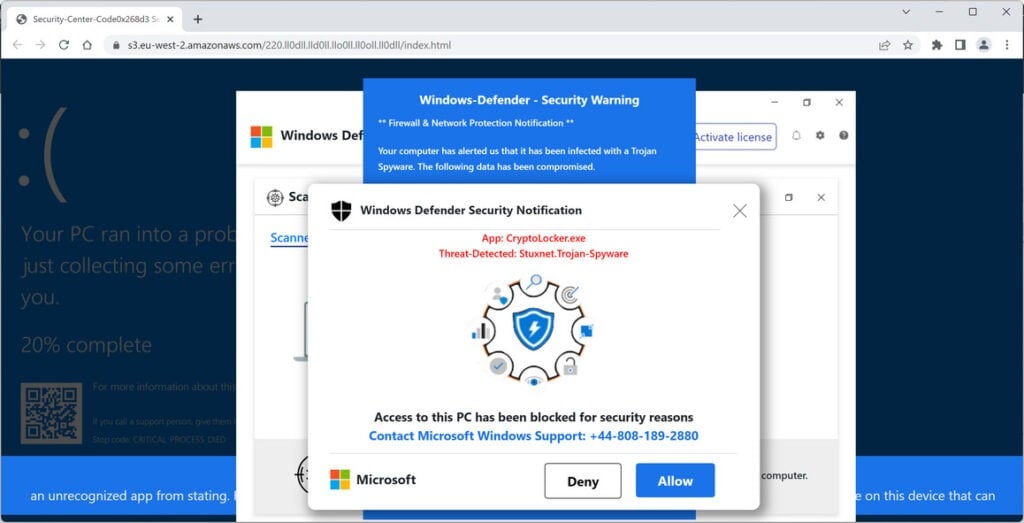
A key trick is visual mimicry. The scam page is just a website, but it is designed to resemble:
Windows Security
A system dialog window
A browser-integrated “security” prompt
Antivirus dashboard screens
Some versions even show a fake “Windows Security” header, a date in the corner, and language that sounds like it came from the operating system.
This is important to understand:
A website cannot become Windows Security.
It can only imitate it visually. That is all it needs to confuse users in a moment of stress.
Common themes and templates
You will see the same messages again and again, with small variations:
“Viruses are detected. Your personal data is leaking!”
This variant claims your phone or computer is infected and is “sending” photos, videos, contacts, and passwords to unknown servers over cellular and Wi-Fi. It often threatens that your device will be “locked soon” unless you pay.
Sometimes it includes a small monthly price like $2.50 per month to activate “antivirus & privacy service.” The small price is intentional. It feels affordable, and that reduces resistance.
“Critical Security Alert: Immediate action is required”
This version pushes a big “Continue” or “Enable Protection” button. It is built to trigger quick compliance. The longer you stay, the more it tries to escalate urgency.
“Dark Web Report” email-style scare messages
Another template pretends to be a report or warning email claiming your private media is on the dark web. It might say hundreds of photos or dozens of videos were leaked. It then offers a button like “Remove Your Media.”
The goal is the same: click, panic, pay.
Where the traffic comes from
These scams rarely rely on people searching for them. Most victims are redirected into them through:
Torrent sites and pirated download pages
Free streaming movie sites and mirror domains
Adult sites and aggressive ad networks
Fake “play” buttons and fake download buttons
Pop-under ads that open behind your main tab
Redirect chains triggered by a single click anywhere on the page
This is why people describe it as “I did nothing and it appeared.” In reality, one click on a page element triggered an ad script or redirect.
The affiliate angle: why antivirus brands show up at the end
A large portion of this ecosystem is affiliate-driven. That means the operator gets paid when a user buys a subscription through their referral link.
Here is what happens behind the scenes:
The scam page scares you into clicking.
Your click routes through a tracking URL with campaign parameters.
You land on an antivirus offer page, often with a discount.
If you purchase, the operator earns a commission.
This is why victims often report being redirected to McAfee, Norton, TotalAV, or other security products after the scare page.
Even if the final checkout is legitimate, the funnel is still deceptive because it used fake warnings and invented risk to force the click.
When it becomes more dangerous than affiliate spam
Not every “Critical Security Alert” page ends at an affiliate checkout.
Some versions pivot into higher-risk scams:
Tech support scams
Instead of sending you to a checkout page, the scam site displays a phone number and claims you must call immediately. The caller may:
pressure you into paying a “support fee”
ask for remote access
install remote tools
claim they found severe infections
demand payment via gift cards, bank transfer, or crypto
This is one of the most damaging variants because it can lead to direct financial loss and full device compromise.
Malicious downloads
Some pages push a “security” download. That download might be:
adware that floods you with more pop-ups
a browser hijacker that changes your search and homepage
spyware that steals saved passwords
a remote access tool used by attackers
These downloads are sometimes disguised as “antivirus installers” or “cleanup tools.” The branding is just a costume.
Why these scams work so well
They exploit predictable human reactions:
Fear of losing files, money, or privacy
Fear of being watched or hacked
Embarrassment, especially with “private content” themes
Urgency created by countdown timers and red warning colors
Trust borrowed from familiar brand names
Scammers do not need you to believe every detail. They just need you to click while you are stressed.
The biggest red flags
If you want a quick reality check, look for these:
The warning appears in a browser tab, not inside a real security app
The domain is random or unfamiliar
The page claims your “data is leaking” within seconds of loading
A countdown timer is present
The page asks you to click “Allow” for notifications
It threatens to lock your device unless you pay
It mixes multiple brands or uses odd phrasing like “Norton & McAfee detected”
Legitimate security tools do not behave like that.
How The Scam Works
Step 1: The redirect trap
Most victims reach these pages through an aggressive ad redirect chain.
Common patterns:
You click a play button on a “free movie” site and a new tab opens.
You click a download button on a torrent page and get bounced to another site.
You tap anywhere on a page and a pop-under loads silently behind your window.
You get a browser notification that looks like a security warning and you click it.
The scam page is rarely the first page in the chain. It is often the final landing page after multiple redirects.
Step 2: The page impersonates a trusted security brand
Once loaded, the scam page immediately tries to establish authority:
It uses Windows colors and layout to appear system-level.
It displays McAfee, Norton, or TotalAV branding to borrow trust.
It uses words like Security Center, Emergency Security, or Protection.
The purpose is to reduce skepticism before fear messaging begins.
Step 3: The scare message escalates fast
The page delivers a dramatic claim, often in bold red text:
“Viruses are detected”
“Your personal data is leaking”
“Private content found on the dark web”
“Your device is at high security risk”
It then provides a short, vivid story about what is happening to you right now.
This story is designed to feel specific:
photos and videos being uploaded
passwords being transmitted
contacts being stolen
device about to be locked
hackers watching your cursor
These details are not evidence. They are persuasion.
Step 4: The timer and urgency mechanics kick in
Many variants include a countdown timer to create pressure.
This timer is not connected to any real event. It is there to prevent you from:
closing the tab and thinking
checking your actual antivirus status
asking someone for advice
The scam wants speed. Speed reduces critical thinking.
Step 5: The “fix” is presented as a simple button click
The page then offers a very easy solution:
Continue
Enable Protection
Remove Threat
Subscribe Now
Renew Now
Remove Your Media
This step is essential. A scare without a clear next action is less effective. The button is the conversion event.
Step 6: The user is routed into one of three money paths
After clicking, the experience usually follows one of these paths.
Path A: Affiliate antivirus checkout
You are redirected to an offer page for an antivirus subscription. This might include discounts like 50% or 70% off.
The operator earns commission if you buy.
Path B: Tech support scam escalation
You are shown a phone number and told to call immediately. The call center pressures you to pay for “support” and may request remote access.
This can lead to major financial loss and account compromise.
Path C: Dangerous “security” download
You are pushed to install an app or extension. That software may be adware, spyware, or a remote access tool.
This is the path with the highest technical risk.
Step 7: Persistence through notifications or browser hijacks
Many campaigns try to stick around by pushing you to enable browser notifications.
If you click Allow, the site can send repeated alerts that look like:
antivirus expired
viruses detected
payment failed
device at risk
Those notifications can keep pulling you back into scam pages even when you are not on shady websites anymore.
If you installed an unwanted extension, it can keep opening tabs and rerouting your traffic until removed.
What To Do If You Have Fallen Victim to This Scam
1) If you only saw the page, close it safely
Close the tab, not the whole browser window if possible.
Do not click inside the page, including “Cancel” or “X” buttons inside the content area.
If the page keeps reopening, restart your browser.
2) If you clicked “Allow” on notifications, remove the permission
This is one of the most effective fixes.
Chrome
Settings
Privacy and security
Site settings
Notifications
Remove suspicious domains under Allowed
Edge
Settings
Cookies and site permissions
Notifications
Remove suspicious domains under Allow
Firefox
Settings
Privacy & Security
Notifications, then Settings
Remove suspicious domains and set to Block
Restart the browser after changes.
3) If you entered payment details, act immediately
If you typed your card number, expiration date, or CVV into any form reached from the scam:
Call your bank or card issuer immediately.
Explain you entered card details on a scam page.
Ask them to block the card and issue a replacement.
Review recent transactions and dispute anything unfamiliar.
Watch for recurring charges over the next few weeks.
4) If you purchased an antivirus subscription, verify what you bought
Sometimes the checkout is real, but the funnel was deceptive.
Check your email for a receipt and confirm the merchant name.
Go directly to the antivirus vendor’s official website by typing it into your browser.
Log into your account and check:
subscription status
auto-renew settings
cancellation options
If you did not want the purchase, contact official support and request cancellation and refund.
5) If you downloaded anything, treat it as untrusted
Disconnect from the internet.
Uninstall the downloaded program.
Remove suspicious browser extensions.
Run a full scan using a reputable security tool.
Reset your browser settings if redirects continue.
If the scam involved remote access or you suspect someone connected to your device, change passwords from a separate, clean device and consider professional help.
6) Change passwords if you entered credentials anywhere
If you typed a password during this process:
Change your email password first.
Change banking, shopping, and social media passwords next.
Enable 2FA on all key accounts.
Use unique passwords moving forward.
Email is the priority because it controls account recovery.
7) Watch for follow-up scams
After interacting with these pages, it is common to receive:
fake receipts
“payment failed” warnings
refund offers
dark web alert emails
tech support calls
Do not trust unexpected messages. Always log in directly through official websites, never through links in emails or pop-ups.
8) Report the scam
Report the site to your browser’s safe browsing reporting option.
If you can identify the ad network or platform, report the ad or redirect source.
If a legitimate brand is being impersonated, report the page to that brand’s abuse or support channel.
Reports help reduce the reach of these campaigns.
How to Remove Unwanted Apps and Malware
If you have accidentally downloaded unwanted programs or malware from a pop-up scam, you can find below a full malware removal guide.
This malware removal guide may appear overwhelming due to the number of steps and numerous programs that are being used. We have only written it this way to provide clear, detailed, and easy-to-understand instructions that anyone can use to remove malware for free. Please perform all the steps in the correct order. If you have any questions or doubts at any point, stop and ask for our assistance.
Browser hijackers, unwanted apps, and adware can infect Windows, Mac, iOS, or Android devices, so we’ve covered below all these operating systems. Depending on which operating system is installed on your device, please click on the operating system icon below and follow the displayed steps.
In this first step, we will manually check if any unknown or malicious programs are installed on the computer. Sometimes adware and browser hijackers can have a usable Uninstall entry that can be used to remove them.
Windows 11Windows 10Windows 8Windows 7
Press the Windows key + I on your keyboard to open the Settings app.
First, open Windows Settings by pressing Windows+I on your keyboard. You can also right-click your Start button and select “Settings” from the list.
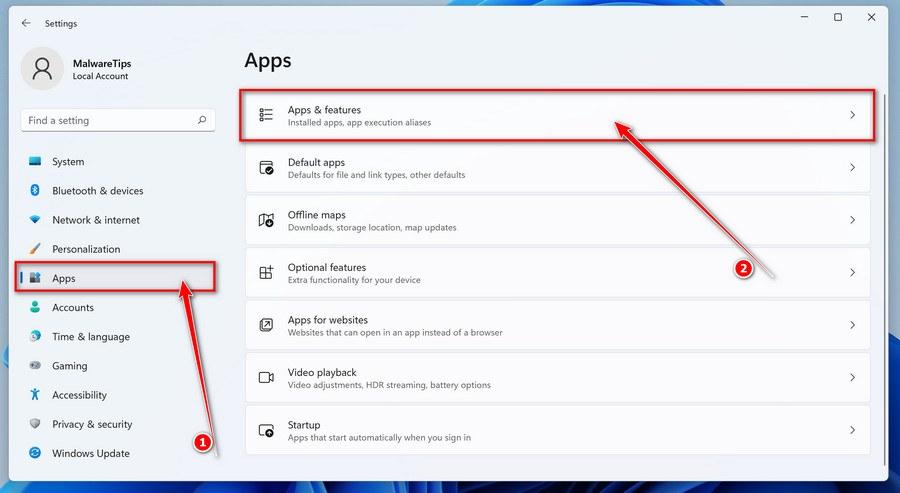
In the Settings app, click on “Apps” and then “Apps & features”.
When Settings opens, click “Apps” in the sidebar, then select “Apps & Features”.
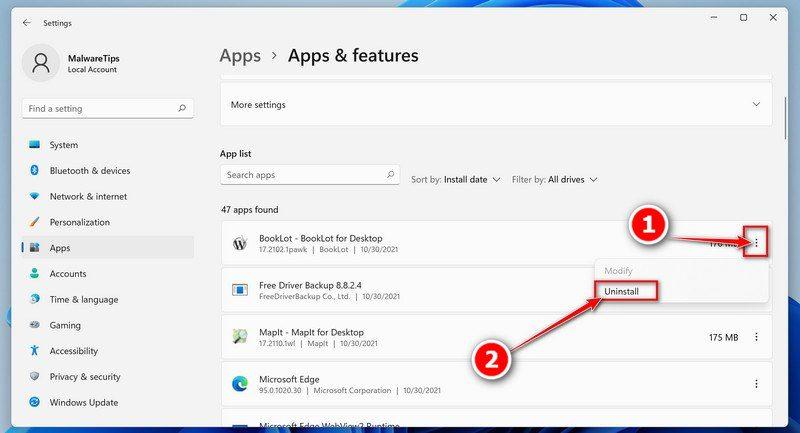
Find the malicious program in the list of installed apps and uninstall it.
In Apps & Features settings, scroll down to the app list and search for unknown or suspicious programs. To make things easier, you can sort all installed programs by their installation date. To do this, click “Sort by” and select “Install date”. Look out for any suspicious program that could be behind all the drama – anything you don’t remember downloading or that doesn’t sound like a genuine program. When you find a malicious program, click the three dots button beside it and select “Uninstall” in the menu that appears.
If you have checked your computer for malicious programs and did not find any, you can proceed with the next step in this guide.
Follow the prompts to uninstall the program.
In the next message box, confirm the uninstall process by clicking on Uninstall, then follow the prompts to uninstall the malicious program. Make sure to read all of the prompts carefully, because some malicious programs try to sneak things in hoping that you won’t read them closely.
Press the Windows key + I on your keyboard to open the Settings app.
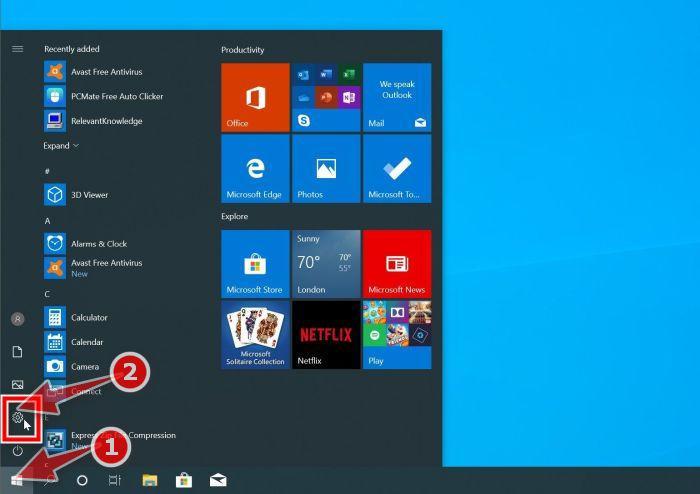
Press the Windows key + I on your keyboard to open the Settings app. You can also ope the Settings app by clicking the Start button on the taskbar, then select “Settings” (gear icon).
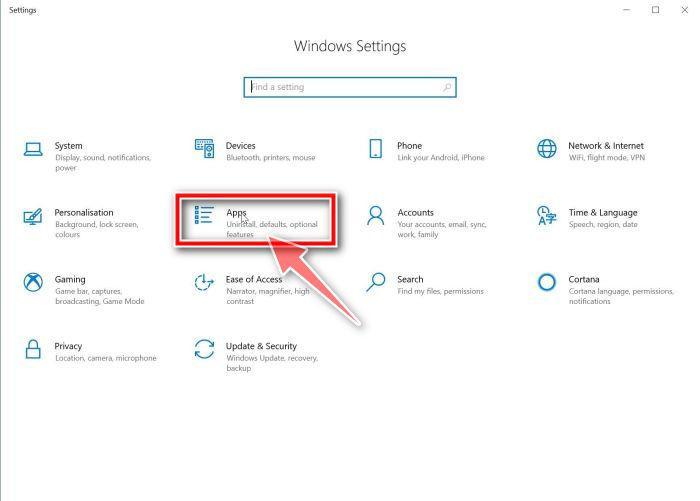
In the Settings app, click on “Apps”.
When the “Windows Settings” window opens, click on “Apps“. By default, it should open “Apps and Features” but if it doesn’t, select it from the list on the left.
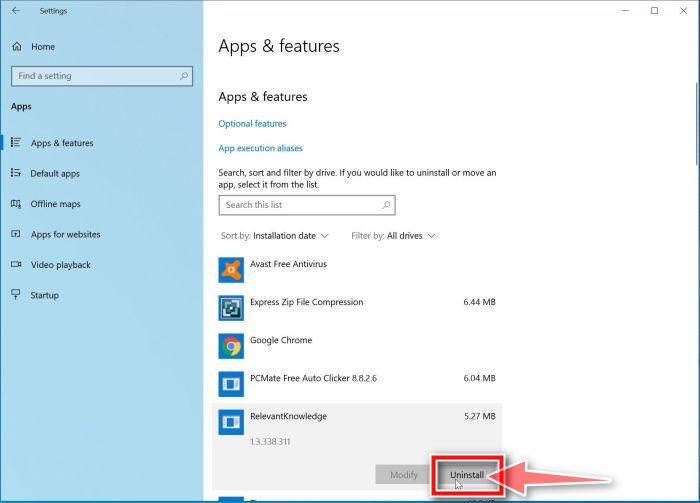
Find the malicious program in the list of installed apps and uninstall it.
In Apps & Features settings, scroll down to the app list and search for unknown or suspicious programs. To make things easier, you can sort all installed programs by their installation date. To do this, click “Sort by” and select “Install date”. Look out for any suspicious program that could be behind all the drama – anything you don’t remember downloading or that doesn’t sound like a genuine program. When you find a malicious program, click on it and select “Uninstall” in the menu that appears.
If you have checked your computer for malicious programs and did not find any, you can proceed with the next step in this guide.
Follow the prompts to uninstall the program.
In the next message box, confirm the uninstall process by clicking on Uninstall, then follow the prompts to uninstall the malicious program. Make sure to read all of the prompts carefully, because some malicious programs try to sneak things in hoping that you won’t read closely.
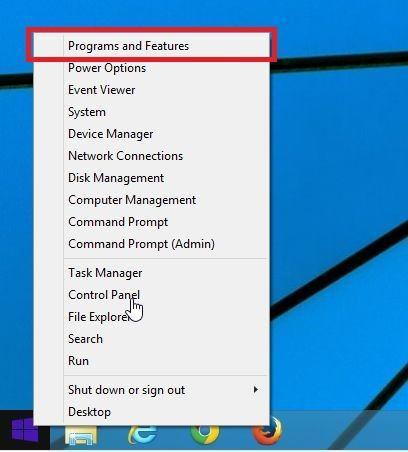
Go to “Program and Features”.
Right-click on the Start button in the taskbar, then select “Programs and Features”. This will take you directly to your list of installed programs.
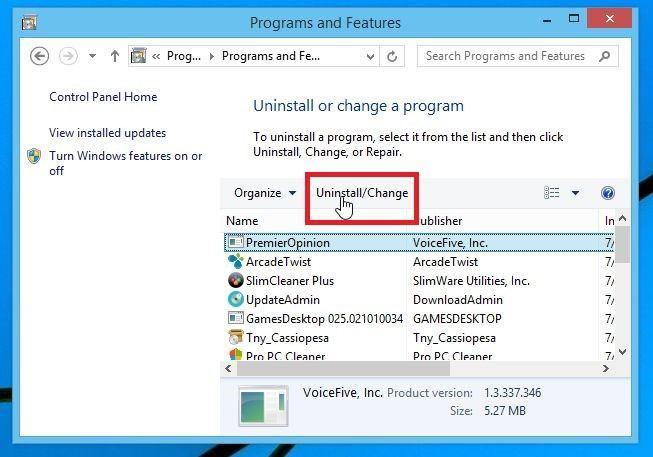
Search for malicious program and uninstall it.
The “Programs and Features” screen will be displayed with a list of all the programs installed on your computer. Scroll through the list until you find any unknown or suspicious program, then click to highlight it, then click the “Uninstall” button.
Look out for any suspicious program that could be behind all the drama – anything you don’t remember downloading or that doesn’t sound like a genuine program.
If you have checked your computer for malicious programs and did not find any, you can proceed with the next step in this guide.
Follow the on-screen prompts to uninstall malicious program.
In the next message box, confirm the uninstall process by clicking on Yes, then follow the prompts to uninstall malicious program. Make sure to read all of the prompts carefully, because some malicious programs try to sneak things in hoping that you won’t read closely.
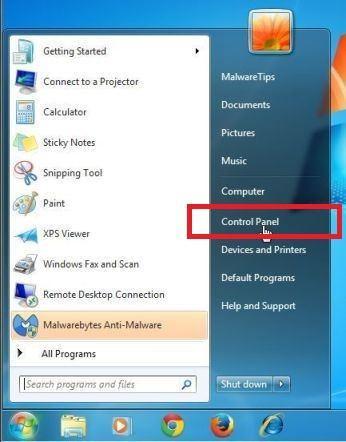
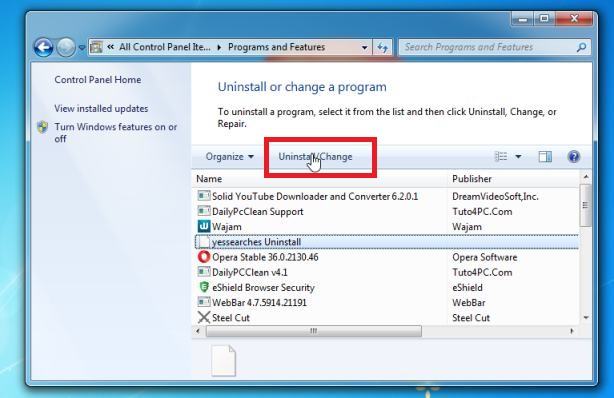
Open the “Control Panel”.
Click on the “Start” button, then click on “Control Panel“.
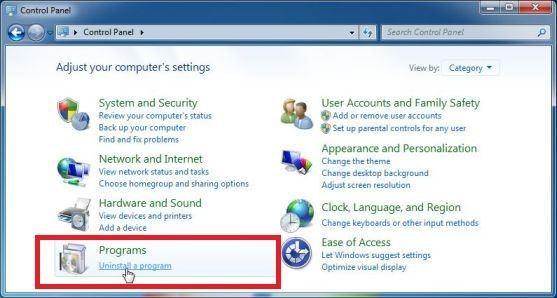
Click on “Uninstall a Program”.
When the “Control Panel” appears, click on “Uninstall a Program” from the Programs category.
Search for malicious programs and uninstall them.
The “Programs and Features” screen will be displayed with a list of all the programs installed on your computer. Scroll through the list until you find any suspicious or unknown program, then click to highlight it, then click the “Uninstall” button. Look out for any suspicious program that could be behind all the drama – anything you don’t remember downloading or that doesn’t sound like a genuine program.
If you have checked your computer for malicious programs and did not find any, you can proceed with the next step in this guide.
Follow the on-screen prompts to uninstall malicious program.
In the next message box, confirm the uninstall process by clicking on Yes, then follow the prompts to uninstall malicious program. Make sure to read all of the prompts carefully, because some malicious programs try to sneak things in hoping that you won’t read closely.
If you are experiencing difficulty while attempting to uninstall a program, you can use Revo Uninstaller to completely remove the unwanted program from your computer.
Now that the malicious programs have been removed from your computer, we can proceed with the next step in this guide.
STEP 2: Reset browsers back to default settings
In this step, we will remove spam notifications, malicious extensions, and change to default any settings that might have been changed by malware. Please note that this method will remove all extensions, toolbars, and other customizations but will leave your bookmarks and favorites intact. For each browser that you have installed on your computer, please click on the browsers tab below and follow the displayed steps to reset that browser.
ChromeFirefoxMicrosoft EdgeInternet Explorer
Reset Chrome for Windows to default settings
We will now reset your Chrome browser settings to their original defaults. This will reset your startup page, new tab page, search engine, and pinned tabs. It will also disable all extensions and clear temporary data like cookies. Your favorites, history, and saved passwords will not be cleared.
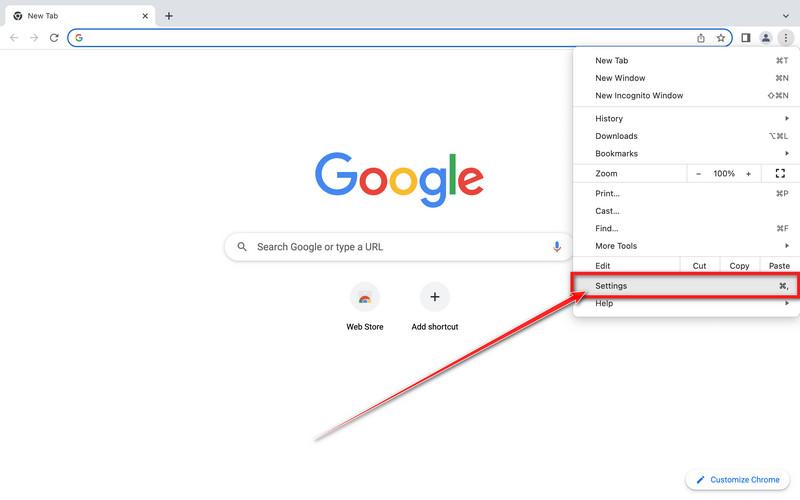
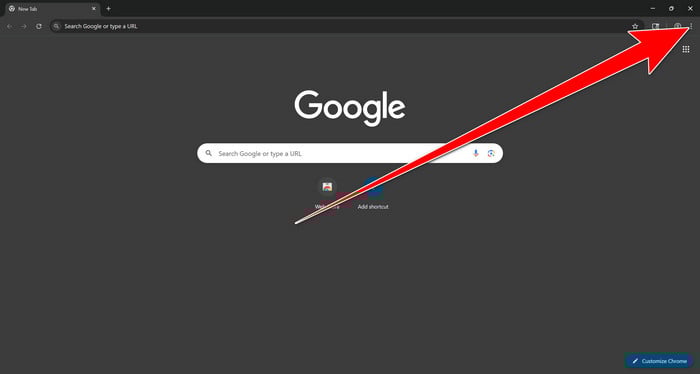
Open the Chrome menu
In the top-right corner of Chrome, click the three-dot (⋮) icon to open the menu.
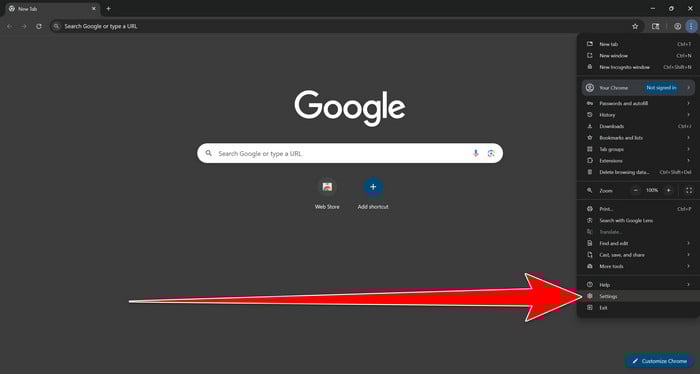
Go to Settings
From the menu, select Settings.
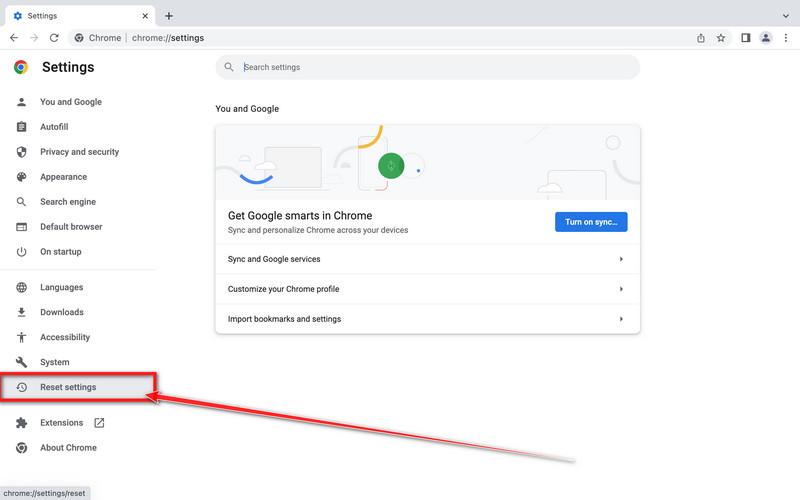
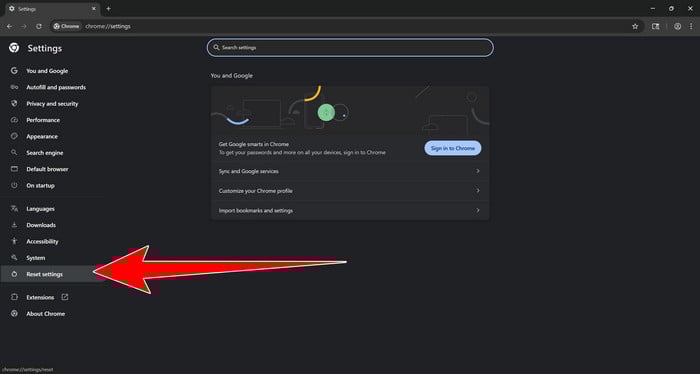
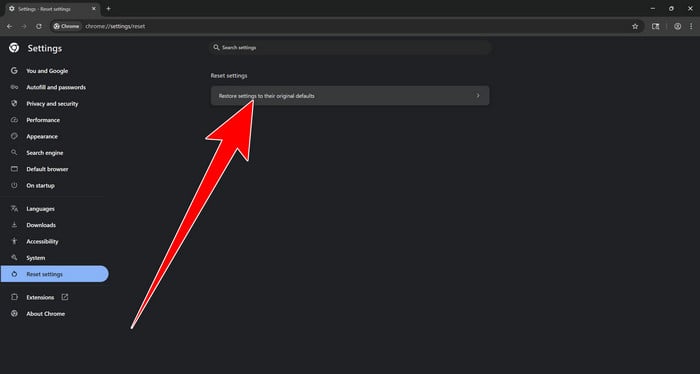
Select “Reset settings”
In the left sidebar, scroll down and click Reset settings.
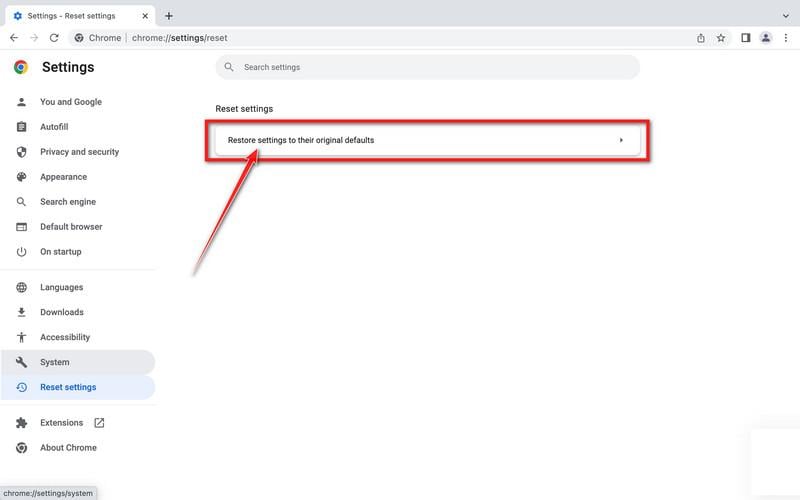
Choose “Restore settings to their original defaults”
Click the Restore settings to their original defaults option.
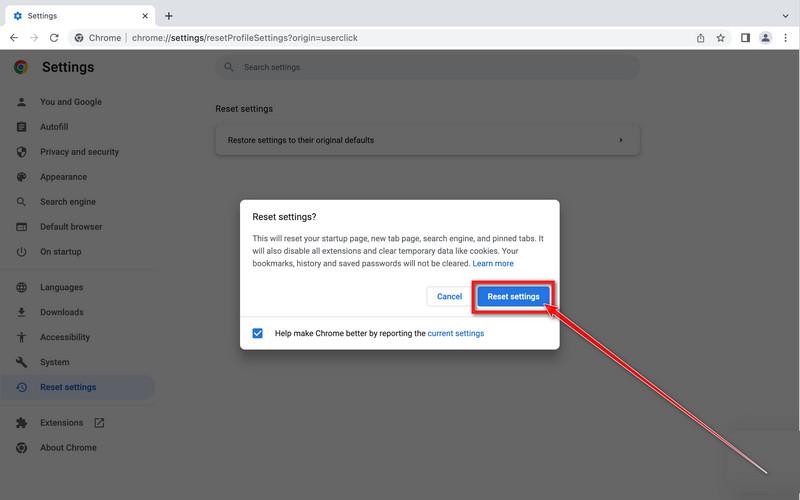
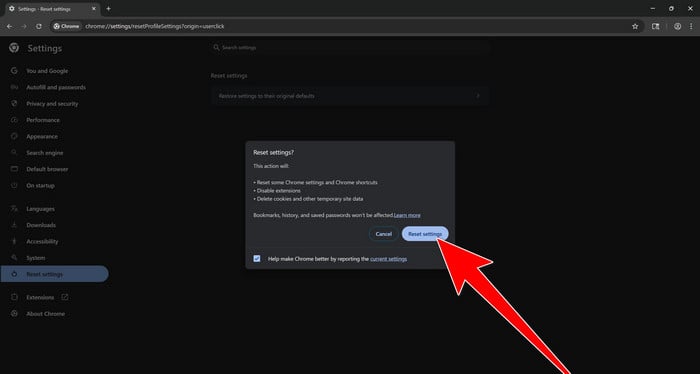
Confirm the reset
In the dialog that appears, click Reset settings to restore Chrome to its default state. Bookmarks, history, and saved passwords will remain, but extensions will be disabled and temporary data cleared.
Reset Firefox for Windows to default settings
We will now reset your Firefox browser settings to their default. The reset feature fixes many issues by restoring Firefox to its factory default state while saving your essential information like bookmarks, passwords, web form auto-fill information, browsing history, and open tabs.
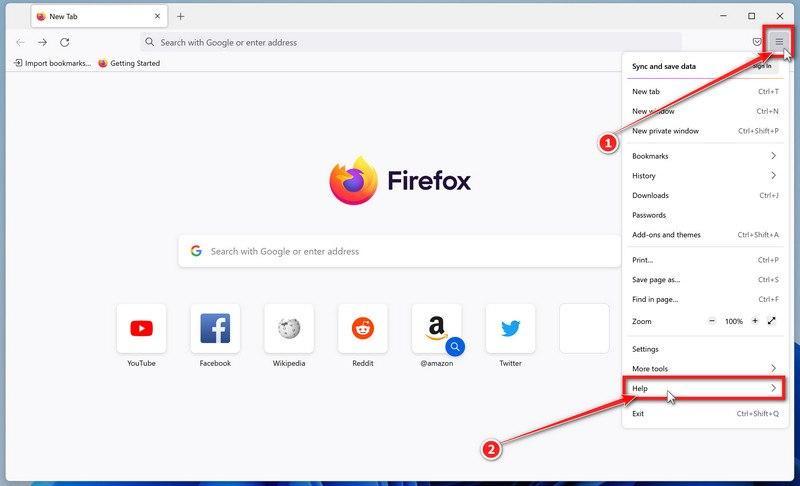
Click the three horizontal lines in the top-right corner and then click on “Help”.
Click on Firefox’s main menu button, represented by three horizontal lines. When the drop-down menu appears, select the option labeled “Help“.
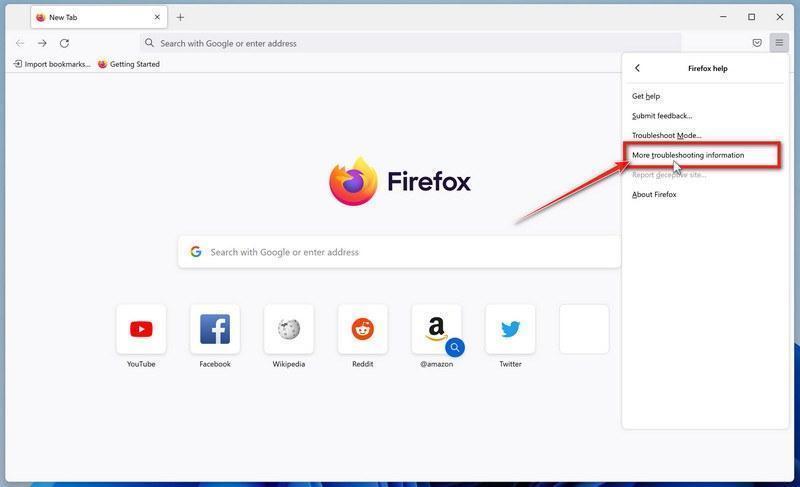
Click “More troubleshooting information”.
From the Help menu, click on “More troubleshooting information“.
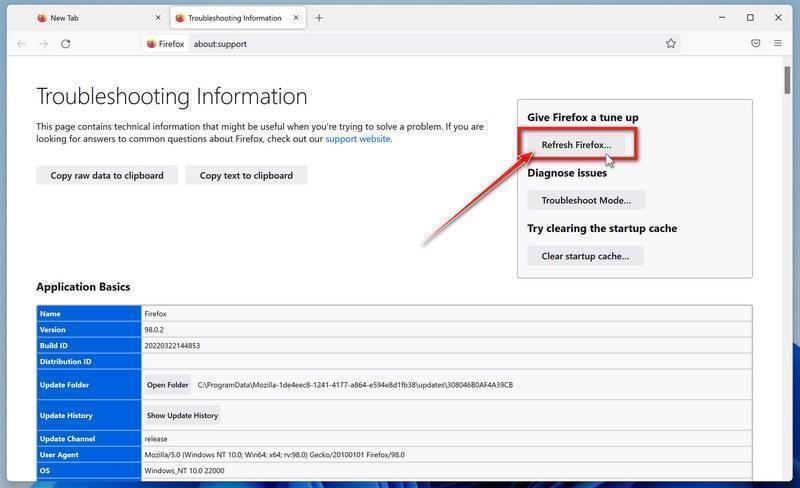
Click on “Refresh Firefox”
When the “Troubleshooting Information” page opens, click on the “Refresh Firefox” button.
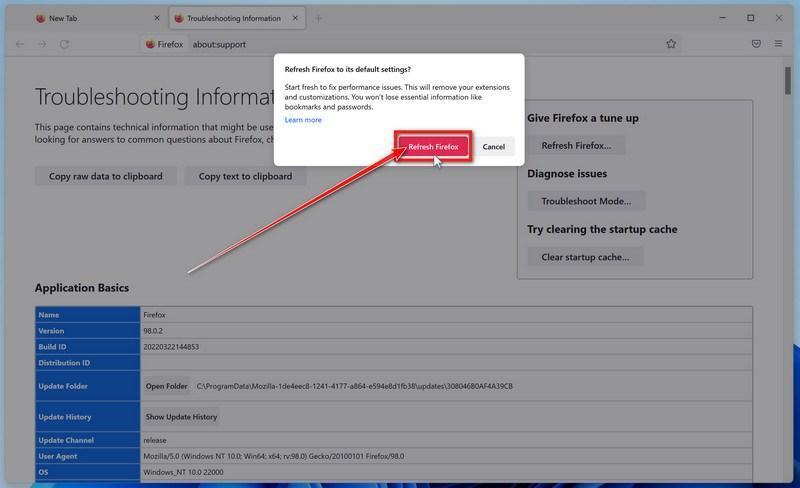
Confirm that you want to reset your browser settings.
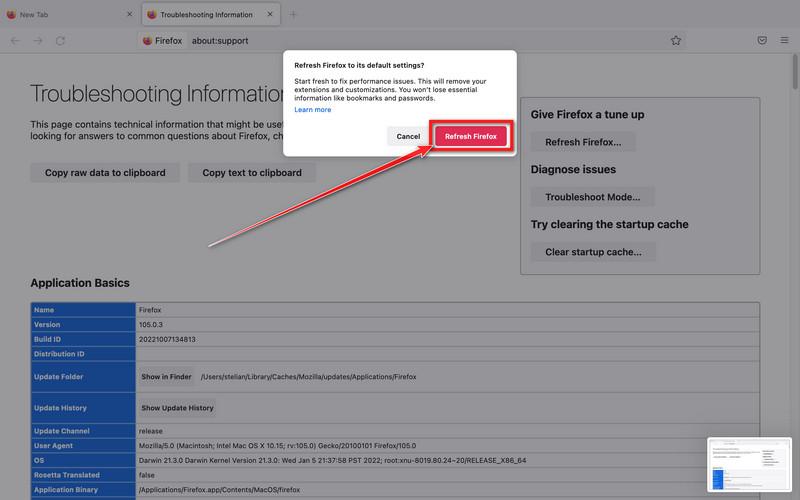
To finish the reset process, click on the “Refresh Firefox” button in the new confirmation window that opens.
Click “Finish”.
Firefox will now close itself and will revert to its default settings. When it’s done, a window will list the information that was imported. Click on “Finish“.
Your old Firefox profile will be placed on your desktop in a folder named “Old Firefox Data“. If the reset didn’t fix your problem you can restore some of the information not saved by copying files to the new profile that was created. If you don’t need this folder any longer, you should delete it as it contains sensitive information.
Reset Microsoft Edge to default settings
We will now reset your Microsoft Edge browser settings to their default. This will reset your startup page, new tab page, search engine, and pinned tabs. It will also disable all extensions and clear temporary data like cookies. Your favorites, history, and saved passwords will not be cleared.
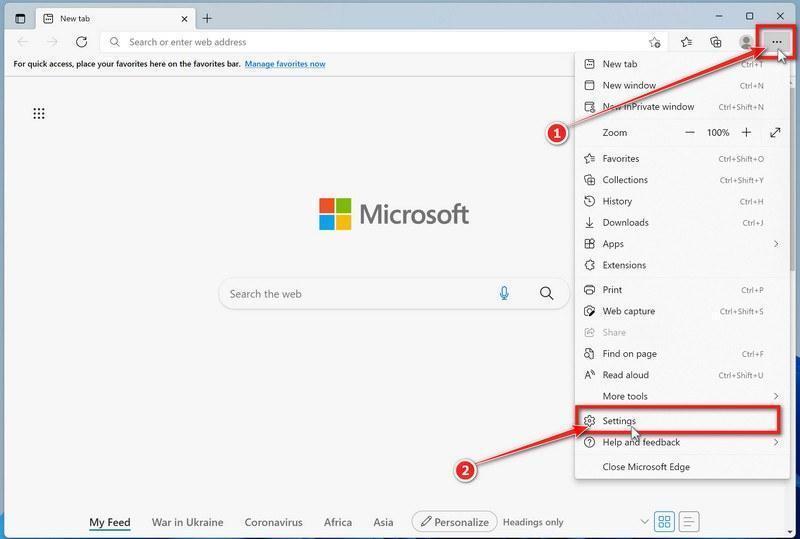
Click the three dots in the top-right corner and then click on “Settings”.
In the top right corner, click on Microsoft Edge’s main menu button, represented by three horizontal dots. When the drop-down menu appears, click on “Settings“.
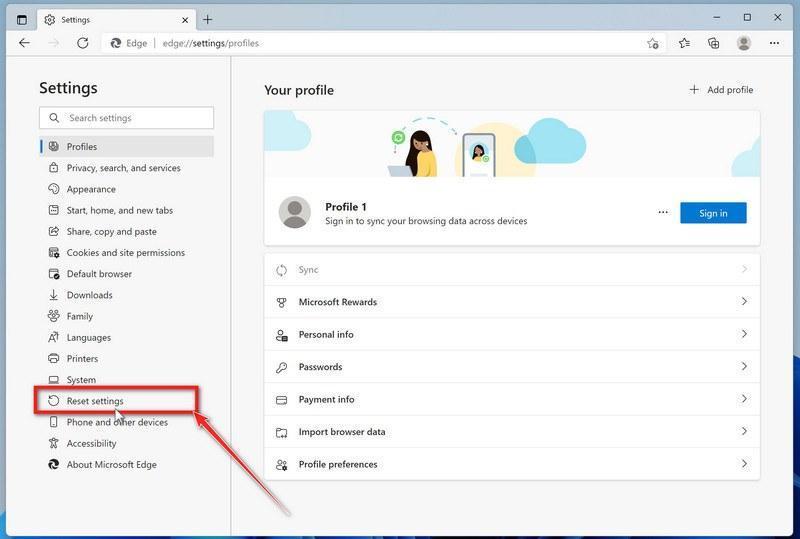
Click on “Reset Settings”.
On the left side of the window, click on “Reset Settings“.
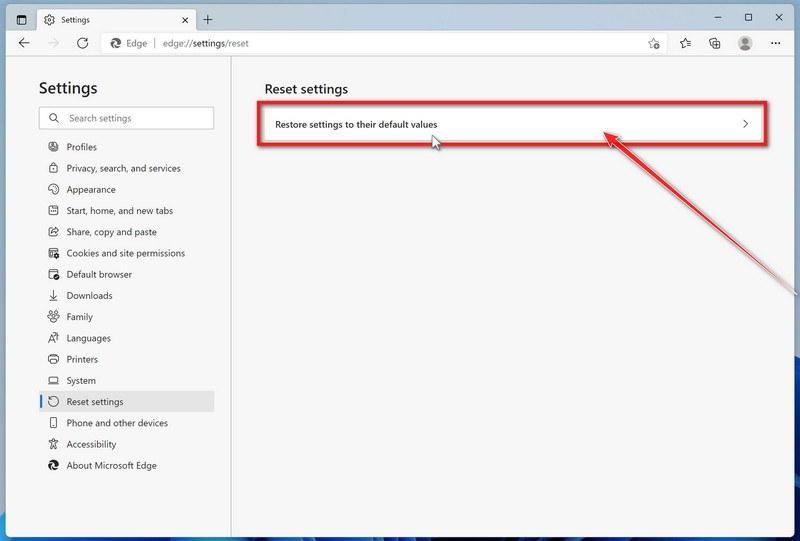
Click on “Restore settings to their default values”.
In the main window, click on “Restore settings to their default values“.
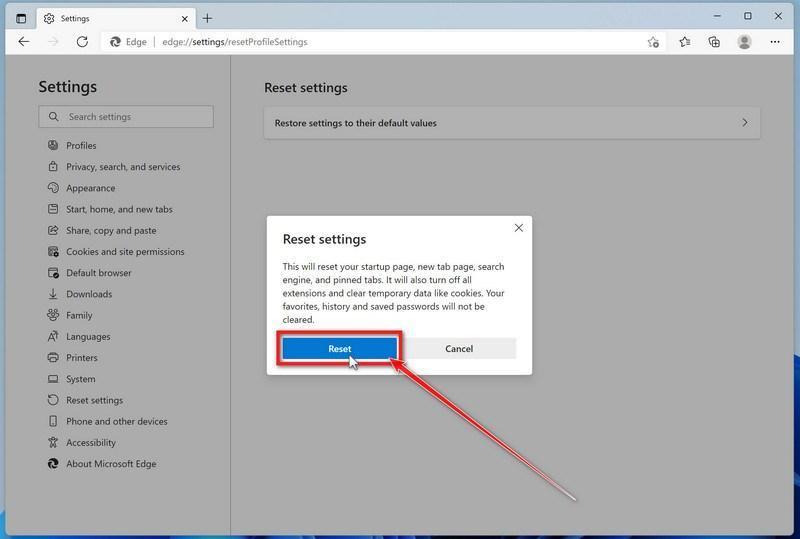
Click “Reset”.
A confirmation dialog should now be displayed, detailing the components that will be restored to their default state should you continue with the reset process. To complete the restoration process, click on the “Reset” button. Microsoft Edge will now erase all your personal data, browsing history, and disable all installed extensions. Your bookmarks, though, will remain intact and still be accessible.
Reset Internet Explorer to default settings
We will now reset your Internet Explorer browser settings to their default. You can reset Internet Explorer settings to return them to the state they were in when Internet Explorer was first installed on your computer.
Go to “Internet Options”.
Open Internet Explorer, click on the gear icon in the upper-right part of your browser, then select “Internet Options“.
Select the “Advanced” tab, then click “Reset”
In the “Internet Options” dialog box, select the “Advanced” tab, then click on the “Reset” button.
Click on “Reset”.
In the “Reset Internet Explorer settings” section, select the “Delete personal settings” checkbox, then click on the “Reset” button.
Click on “Close”.
When Internet Explorer has completed its task, click on the “Close” button in the confirmation dialogue box. Close your browser and then you can open Internet Explorer again.
STEP 3: Use Malwarebytes Anti-Malware to remove malware and unwanted programs
In this third step, we will install Malwarebytes to scan and remove any infections, adware, or potentially unwanted programs that may be present on your computer.
Malwarebytes stands out as one of the leading and widely-used anti-malware solutions for Windows, and for good reason. It effectively eradicates various types of malware that other programs often overlook, all at no cost to you. When it comes to disinfecting an infected device, Malwarebytes has consistently been a free and indispensable tool in the battle against malware. We highly recommend it for maintaining a clean and secure system.
Download Malwarebytes
Download the latest version of Malwarebytes for Windows using the official link below. Malwarebytes will scan your computer and remove adware, browser hijackers, and other malicious software for free.
(The above link will open a new page from where you can download Malwarebytes)
Install Malwarebytes
After the download is complete, locate the MBSetup file, typically found in your Downloads folder. Double-click on the MBSetup file to begin the installation of Malwarebytes on your computer. If a User Account Control pop-up appears, click “Yes” to continue the Malwarebytes installation.
Follow the On-Screen Prompts to Install Malwarebytes
When the Malwarebytes installation begins, the setup wizard will guide you through the process.
You’ll first be prompted to choose the type of computer you’re installing the program on—select either “Personal Computer” or “Work Computer” as appropriate, then click on Next.
Malwarebytes will now begin the installation process on your device.
When the Malwarebytes installation is complete, the program will automatically open to the “Welcome to Malwarebytes” screen.
On the final screen, simply click on the Open Malwarebytes option to start the program.
Enable “Rootkit scanning”.
Malwarebytes Anti-Malware will now start, and you will see the main screen as shown below. To maximize Malwarebytes’ ability to detect malware and unwanted programs, we need to enable rootkit scanning. Click on the “Settings” gear icon located on the left of the screen to access the general settings section.
In the settings menu, enable the “Scan for rootkits” option by clicking the toggle switch until it turns blue.
Now that you have enabled rootkit scanning, click on the “Dashboard” button in the left pane to get back to the main screen.
Perform a Scan with Malwarebytes.
To start a scan, click the Scan button. Malwarebytes will automatically update its antivirus database and begin scanning your computer for malicious programs.
Wait for the Malwarebytes scan to complete.
Malwarebytes will now scan your computer for browser hijackers and other malicious programs. This process can take a few minutes, so we suggest you do something else and periodically check the status of the scan to see when it is finished.
Quarantine detected malware
Once the Malwarebytes scan is complete, it will display a list of detected malware, adware, and potentially unwanted programs. To effectively remove these threats, click the “Quarantine” button.
Malwarebytes will now delete all of the files and registry keys and add them to the program’s quarantine.
Restart your computer.
When removing files, Malwarebytes may require a reboot to fully eliminate some threats. If you see a message indicating that a reboot is needed, please allow it. Once your computer has restarted and you are logged back in, you can continue with the remaining steps.
STEP 4: Use HitmanPro to scan your computer for badware
In this next step, we will scan the computer with HitmanPro to ensure that no other malicious programs are installed on your device.
HitmanPro is a second-opinion scanner that takes a unique cloud-based approach to malware scanning. HitmanPro scans the behavior of active files and also files in locations where malware normally resides for suspicious activity. If it finds a suspicious file that’s not already known, HitmanPro sends it to its clouds to be scanned by two of the best antivirus engines today, which are Bitdefender and Kaspersky.
Although HitmanPro is shareware and costs $24.95 for 1 year on 1 PC, there is no limit on scanning. The limitation only kicks in when there is a need to remove or quarantine detected malware by HitmanPro on your system and by then, you can activate the one-time 30-days trial to enable the cleanup.
Download HitmanPro.
You can download HitmanPro by clicking the link below.
HITMANPRO DOWNLOAD LINK (The above link will open a new web page from where you can download HitmanPro)
Install HitmanPro.
When HitmanPro has finished downloading, double-click on “hitmanpro.exe” (for 32-bit versions of Windows) or “hitmanpro_x64.exe” (for 64-bit versions of Windows) to install this program on your computer. In most cases, downloaded files are saved to the Downloads folder.
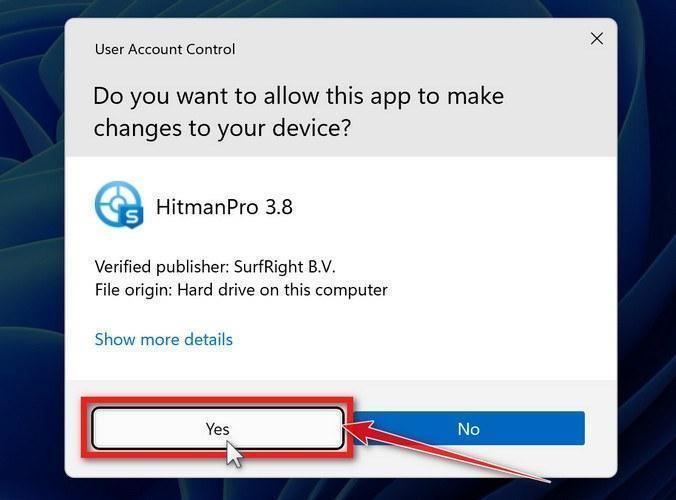
You may be presented with a User Account Control pop-up asking if you want to allow HitmanPro to make changes to your device. If this happens, you should click “Yes” to continue with the installation.
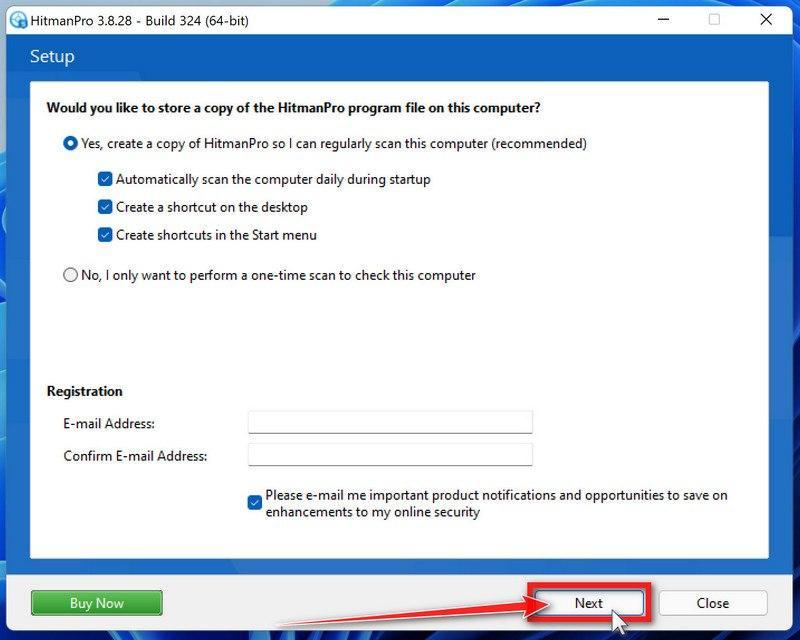
Follow the on-screen prompts.
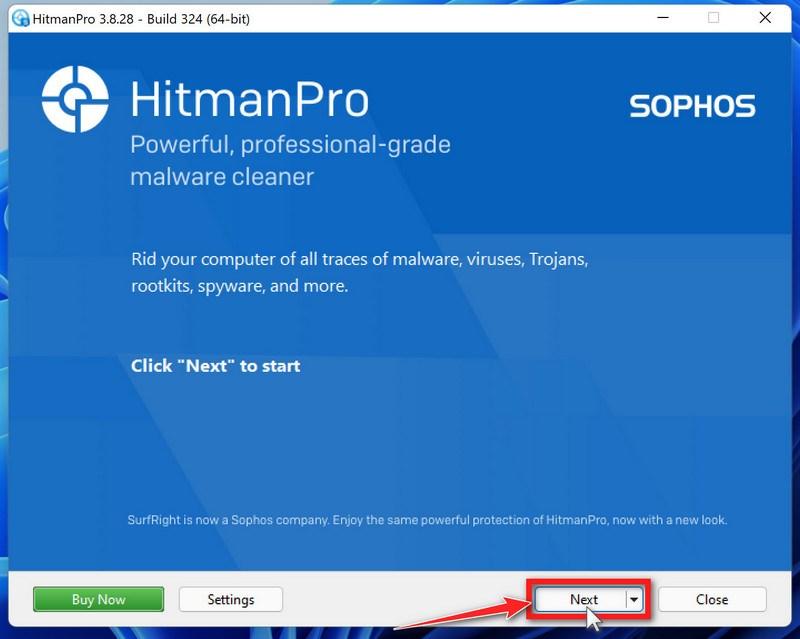
When HitmanPro starts you will be presented with the start screen as shown below. Click on the “Next” button to perform a system scan.
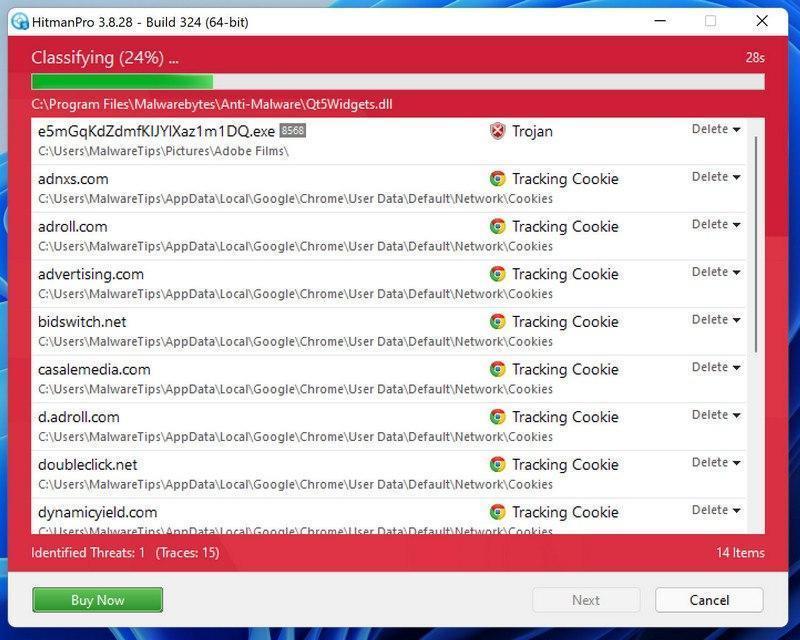
Wait for the HitmanPro scan to complete.
HitmanPro will now begin to scan your computer for malicious programs.
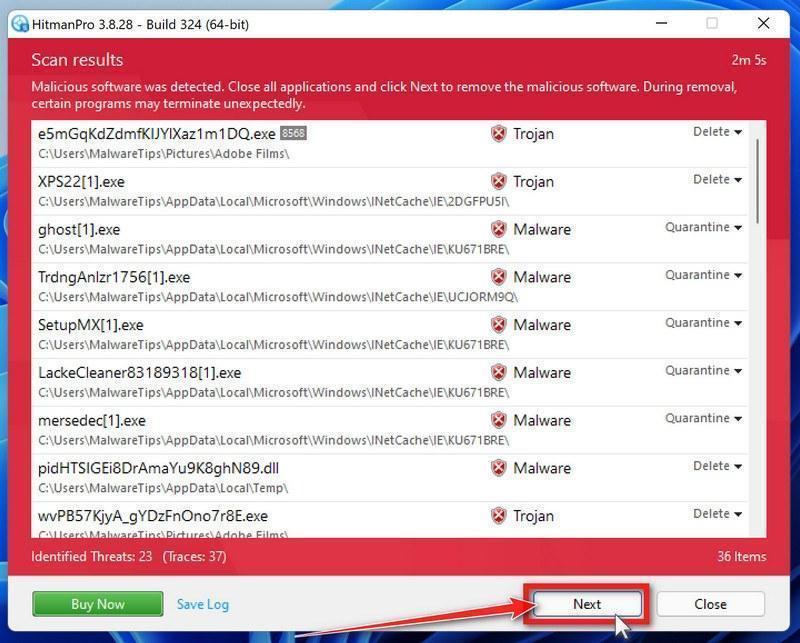
Click on “Next”.
When HitmanPro has finished the scan, it will display a list of all the malware that it has found. Click on the “Next” button to have HitmanPro remove the detected items.
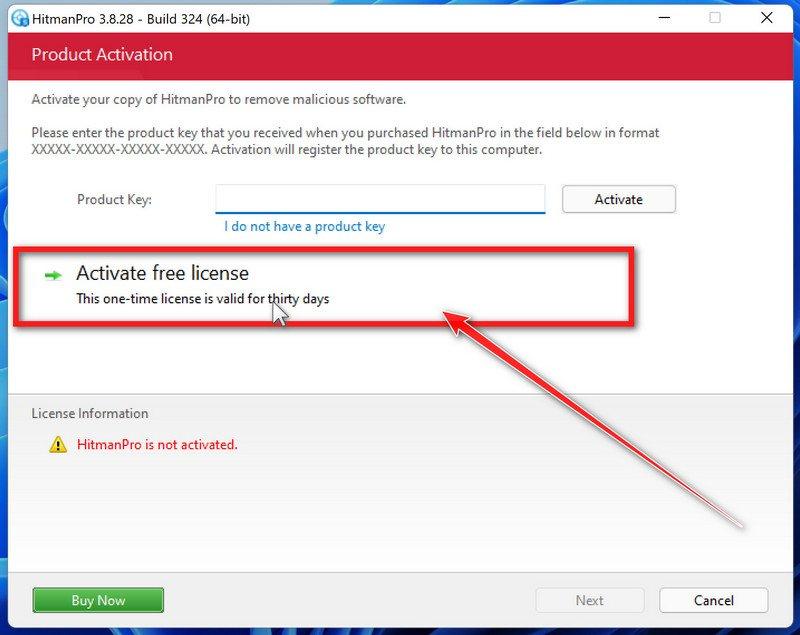
Click on “Activate free license”.
HitmanPro may now require to activate the free 30-days trial to remove the malicious files. To do this, click on the “Activate free license” button to begin the free 30 days trial and remove all the malicious files from your computer.
When the malware removal process is complete, it will display a screen that shows the status of the various programs that were removed. At this screen, you should click on the Next button and then if prompted you should click on the Reboot button. If HitmanPro does not prompt you to reboot, please just click on the Close button.
STEP 5: Use AdwCleaner to remove adware and malicious browser policies
In this final step, we will use AdwCleaner to remove the malicious browser policies that were set by browser hijackers on your computer and delete malicious browser extensions.
AdwCleaner is a free popular on-demand scanner that can detect and remove malware that even the most well-known anti-virus and anti-malware applications fail to find. This on-demand scanner includes a lot of tools that can be used to fix the side effects of adware. browser hijackers and other malware.
Download AdwCleaner.
You can download AdwCleaner by clicking the link below.
ADWCLEANER DOWNLOAD LINK (The above link will open a new web page from where you can download AdwCleaner)
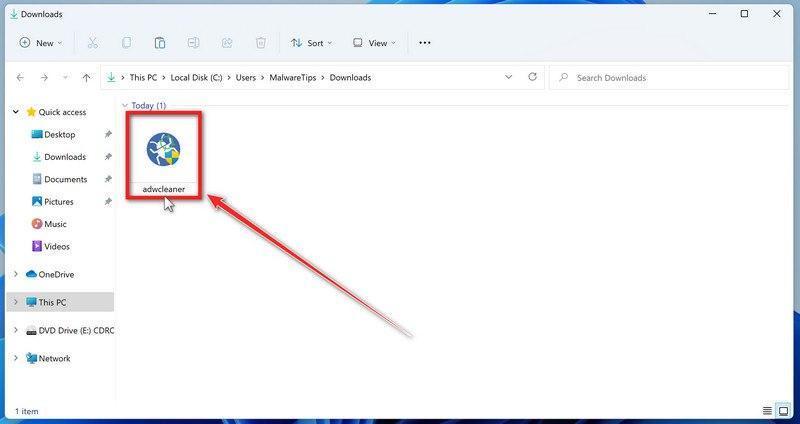
Double-click on the setup file.
Double-click on the file named “adwcleaner_x.x.x.exe” to start AdwCleaner. In most cases, downloaded files are saved to the Downloads folder.
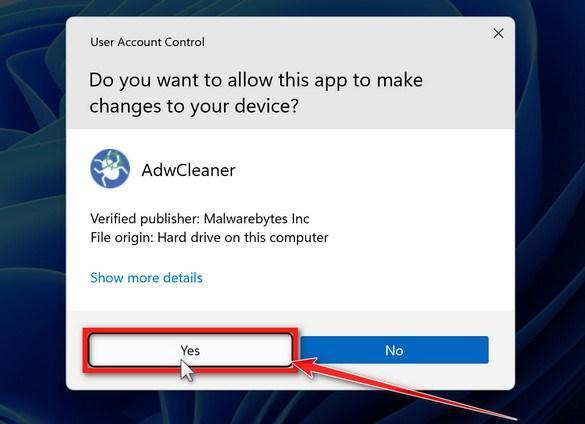
AdwCleaner program will now open and you will be presented with the program’s license agreement. After you read it, click on the I agree button if you wish to continue. If Windows prompts you as to whether or not you wish to run AdwCleaner, please allow it to run.
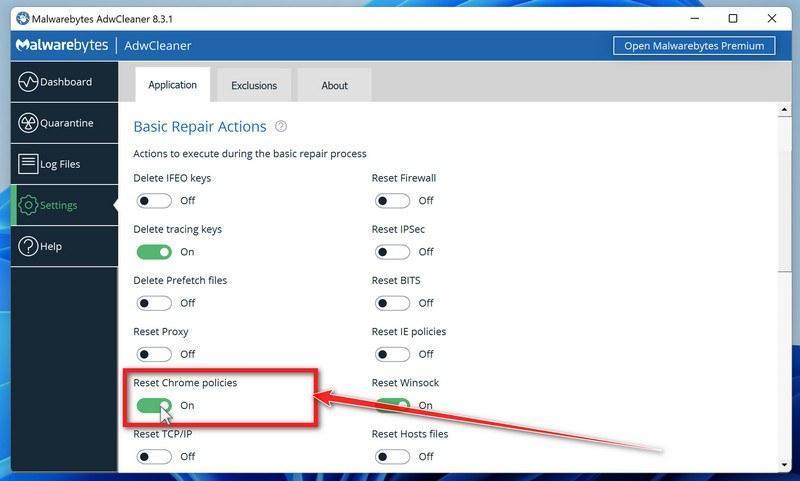
Enable “Reset Chrome policies” to remove malicious browser policies.
When AdwCleaner starts, on the left side of the window, click on “Settings” and then enable “Reset Chrome policies“.
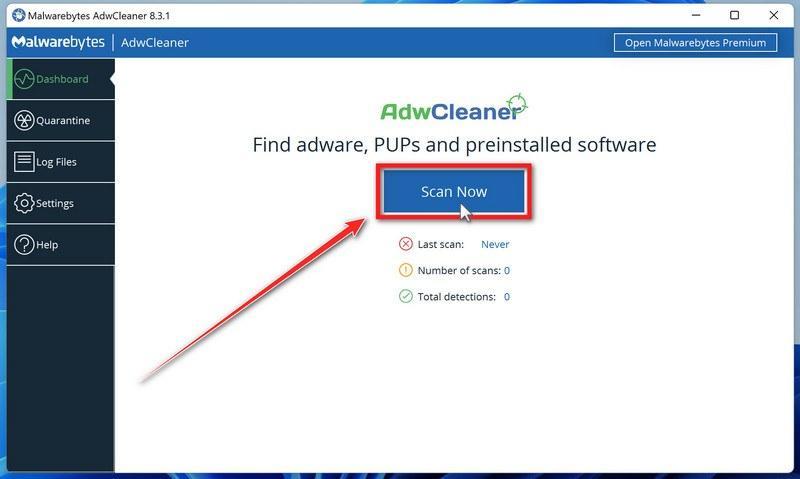
Click on the “Scan” button.
On the left side of the AdwCleaner window, click on “Dashboard” and then click “Scan” to perform a computer scan.
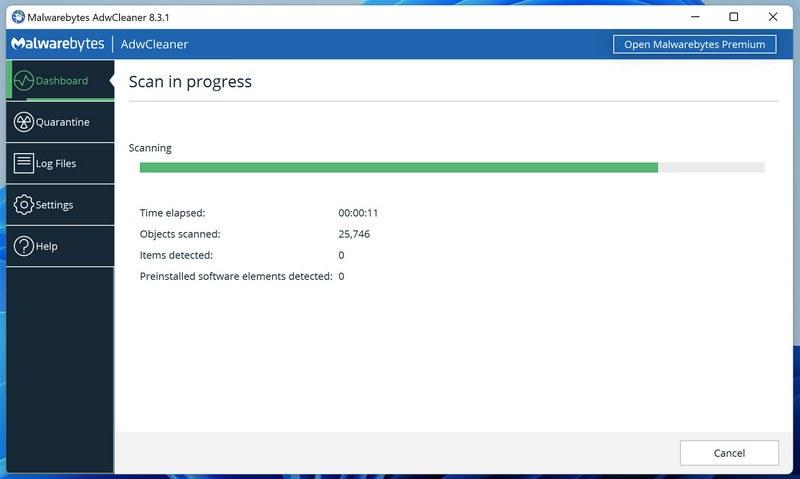
Wait for the AdwCleaner scan to finish.
AdwCleaner will now scan your computer for malware. This process can take a few minutes.
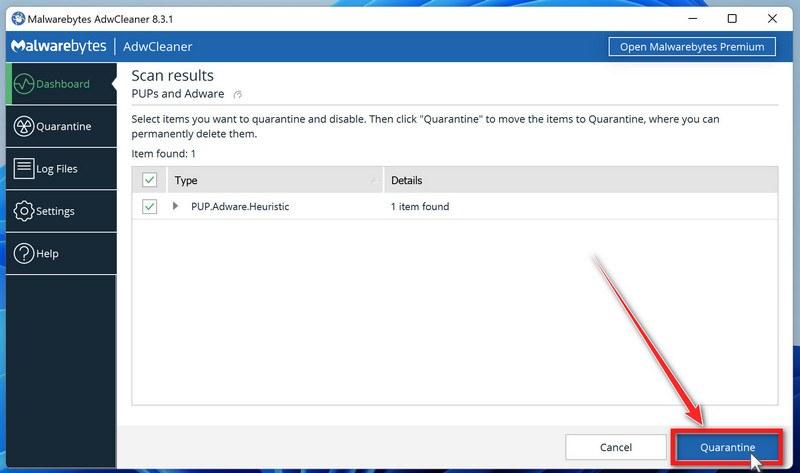
Click on “Quarantine” to remove malware.
When the AdwCleaner scan is completed it will display all of the items it has found. Click on the “Quarantine” button to remove the malicious programs from your computer.
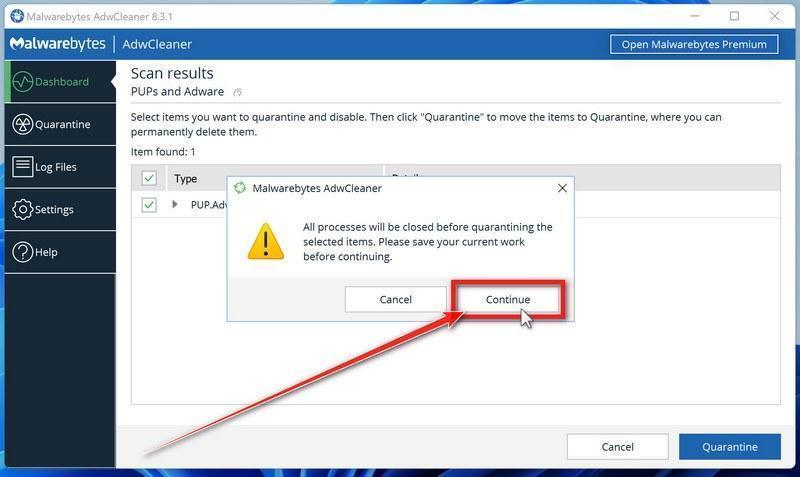
Click on “Continue” to remove the malicious programs.
AdwCleaner will now prompt you to save any open files or data as the program will need to close any open programs before it starts to clean. Click on the “Continue” button to finish the removal process.
AdwCleaner will now delete all detected malware from your computer. When the malware removal process is complete, you may be asked to restart your computer.
Your computer should now be free of Unwanted Apps and Malware and other malware.
If your current antivirus allowed this malicious program on your computer, you may want to consider purchasing Malwarebytes Premium to protect against these types of threats in the future. If you are still having problems with your computer after completing these instructions, then please follow one of the steps:
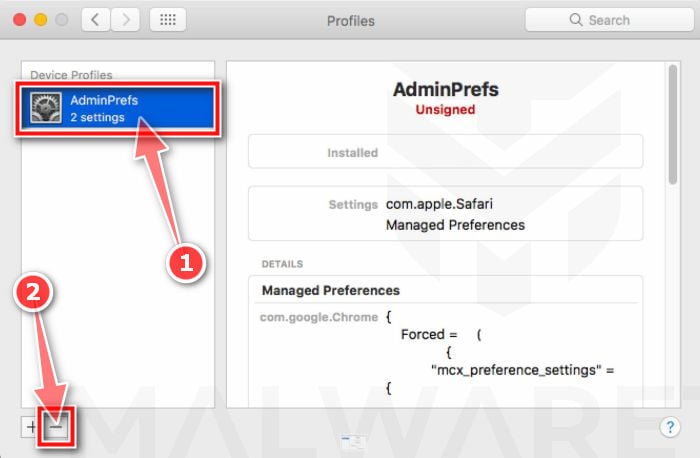
Profiles are used by IT admins in businesses to control the behavior of their Macs. These profiles can configure a Mac to do many different things, some of which are not otherwise possible. When it comes to home users, adware and browser hijackers are using the configuration profile to prevent users from removing malicious programs from the computer. This also prevents the user from changing that behavior in the browser’s settings.
In this first step, we will check your computer to see if any configuration profiles are installed. To do this, follow the below steps:
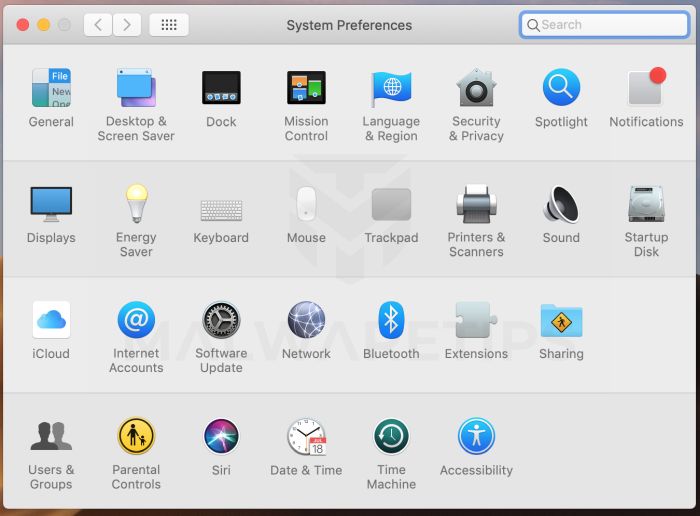
Open “System Preferences”
From the Apple menu, select System Preferences.
Search for “Profiles”
When the System Preferences window opens, search for the Profiles icon.
If there isn’t a Profiles icon, you don’t have any profiles installed, which is normal and you can continue with the next steps.
Remove the malicious profiles
If there’s a Profile icon, click on it and select any suspicious profile that you want to remove, and then press the – (minus) button. Click Remove to remove the profile.
STEP 2: Delete malicious apps
In this second step, we will try to identify and remove any malicious apps and files that might be installed on your computer. Sometimes redirects or adware programs can have usable Uninstall entries that can be used to remove these programs.
Quit the malicious programs
On the Apple menu bar, in the top-right corner, if you see any unknown or suspicious icon, click on it and then select Quit.
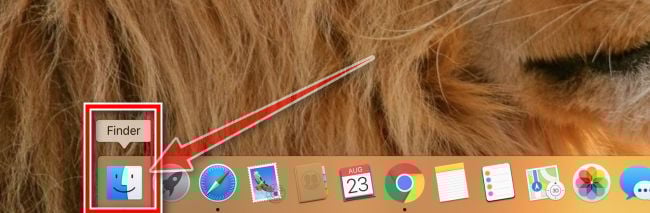
Open “Finder”
Click the Finder application on your dock.
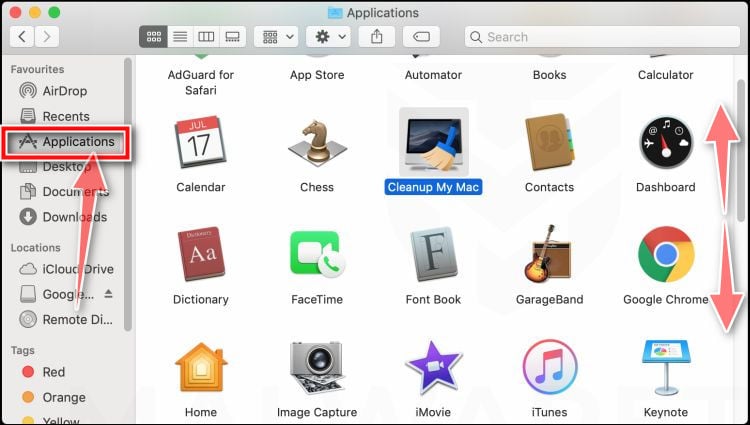
Click on “Applications”
In the Finder left pane, click on “Applications“.
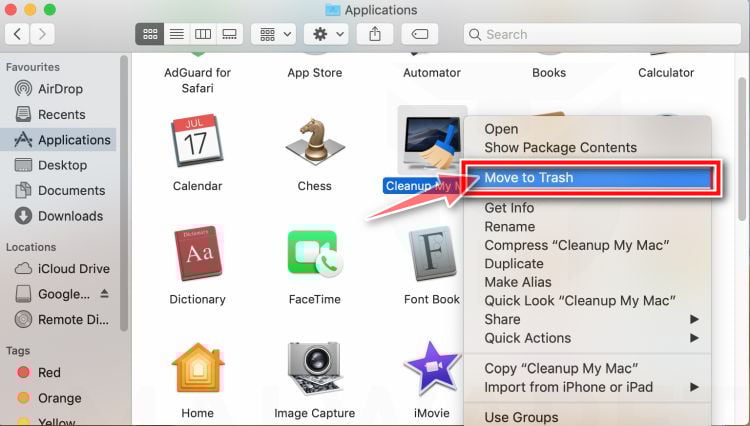
Find and remove the malicious app.
The “Applications” screen will be displayed with a list of all the apps installed on your device. Scroll through the list until you find the malicious app, right-click it, and then click “Move to Trash”.
Look out for any suspicious program that could be behind all the drama – anything you don’t remember downloading or that doesn’t sound like a genuine program. Here are some known malicious programs: SearchMine, TakeFresh, TopResults, FeedBack, ApplicationEvents, GeneralOpen, PowerLog, MessengerNow, ImagePrime, GeneralNetSearch, Reading Cursors, GlobalTechSearch, PDFOnline-express, See Scenic Elf, MatchKnowledge, Easy Speedtest, or WebDiscover.
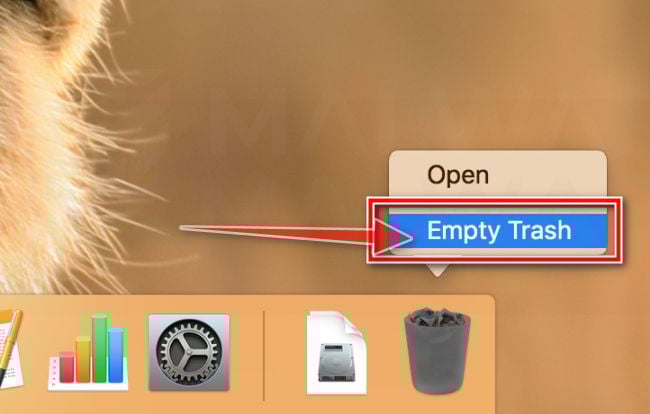
Click “Empty Trash”
On the dock, right-click on the trash icon and select “Empty Trash”. Doing so deletes the Trash’s contents, including the program that you just sent to the Trash.
Find and remove the malicious files
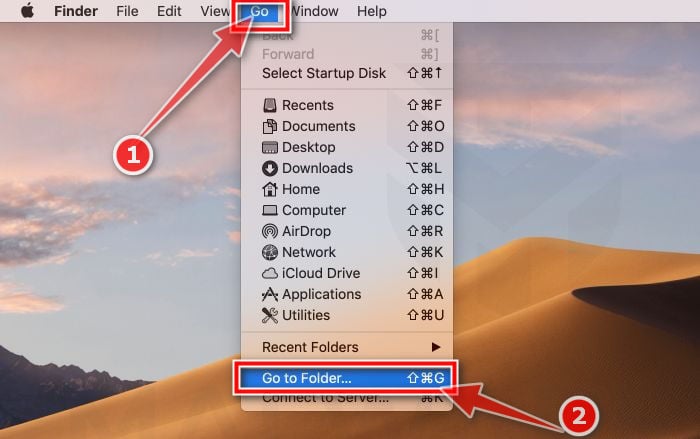
Click the desktop to make sure you’re in the Finder, choose “Go” then click on “Go to Folder“.
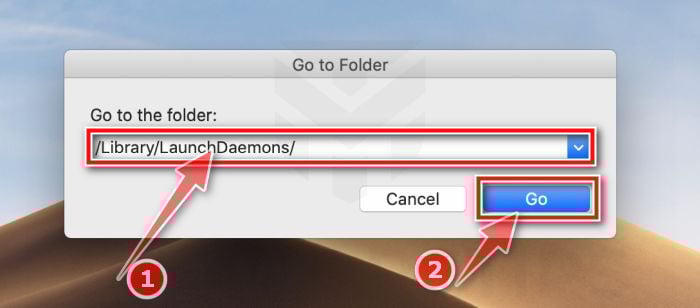
Type or copy/paste each of the below paths into the window that opens, then click Go.
/Library/LaunchAgents
~/Library/LaunchAgents
/Library/Application Support
/Library/LaunchDaemons
Look out for any suspicious files that could be behind all the drama – anything you don’t remember downloading or that doesn’t sound like a genuine program. These are some known malicious files: “com.adobe.fpsaud.plist” “installmac.AppRemoval.plist”, “myppes.download.plist”, “mykotlerino.ltvbit.plist”, or “com.myppes.net-preferences.plist”. When you find a malicious file move it to the Trash.
STEP 3: Reset browsers back to default settings
In this third step, we will remove spam push notifications and malicious extensions, and change to default any settings that might have been changed by malware. For each browser that you have installed on your computer, please click on the tab below and follow the displayed steps to reset that browser.
Safari BrowserChrome for Mac BrowserFirefox for Mac Browser
Remove malicious extensions and settings from Safari
To remove malware from Safari we will check if there are any malicious extensions installed on your browser and what settings have been changed by this malicious program.
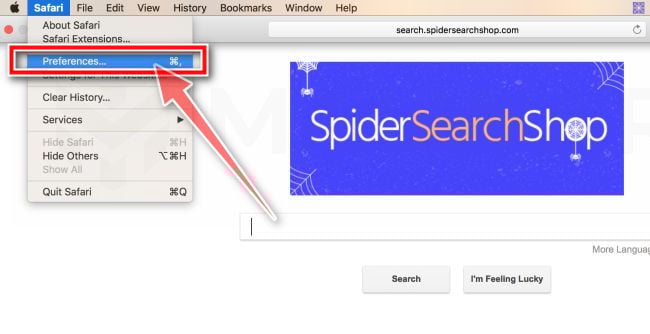
Go to Safari’s “Preferences”.
On the menu bar, click the “Safari” menu and select “Preferences”.
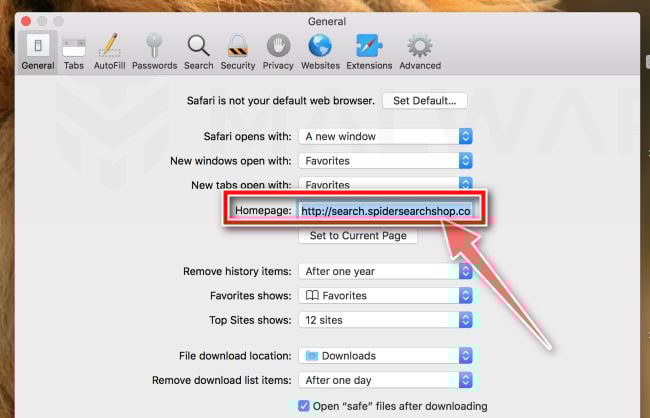
Check Homepage.
This will open a new window with your Safari preferences, opened to the “General” tab. Some browser hijackers may change your default homepage, so in the Homepage field make sure it’s a web page you want to use as your start-up page.
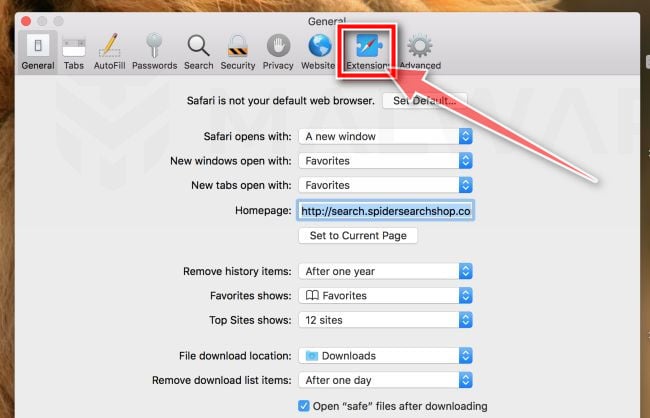
Click “Extensions”
Next, click on the “Extensions” tab.
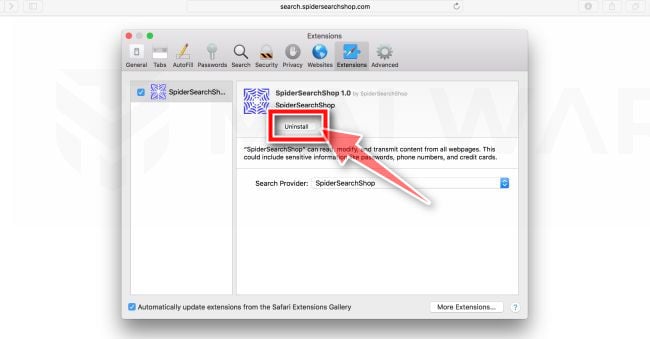
Find and uninstall malicious extensions.
The “Extensions” screen will be displayed with a list of all the extensions installed on Safari. Look out for any suspicious browser extension that could be behind all the drama – anything you don’t remember downloading or that doesn’t sound like a genuine extension. By default, there are no extensions installed on Safari so it’s safe to remove an extension
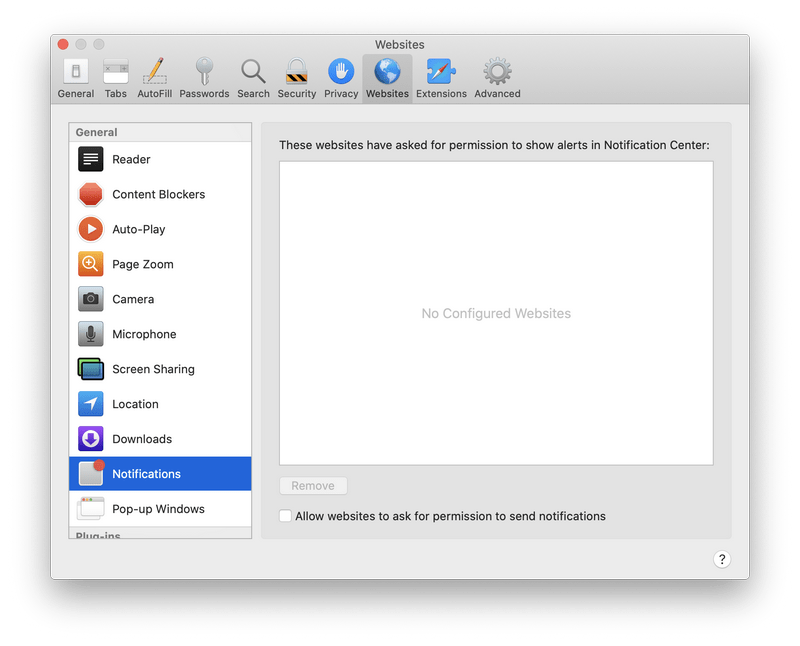
Remove spam notifications ads
Click Preferences, click Websites, then click Notifications. Deselect “Allow websites to ask for permission to send push notifications”.
Remove all data stored by websites on your computer.
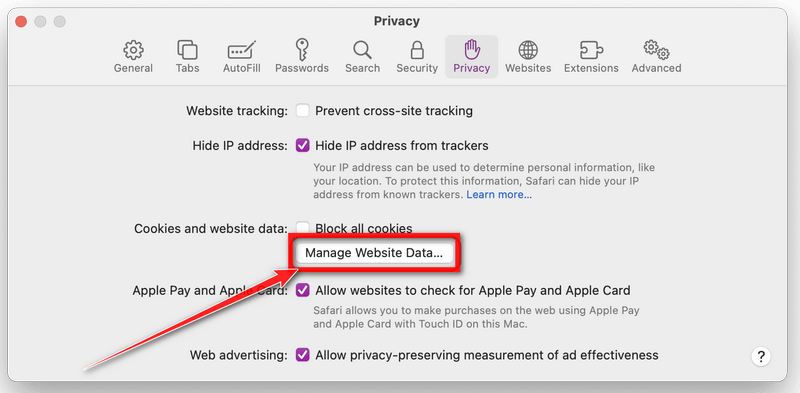
In the Safari menu, choose “Preferences…”, select “Privacy” at the top of the new window that appears, and then click the “Manage Website Data” button.
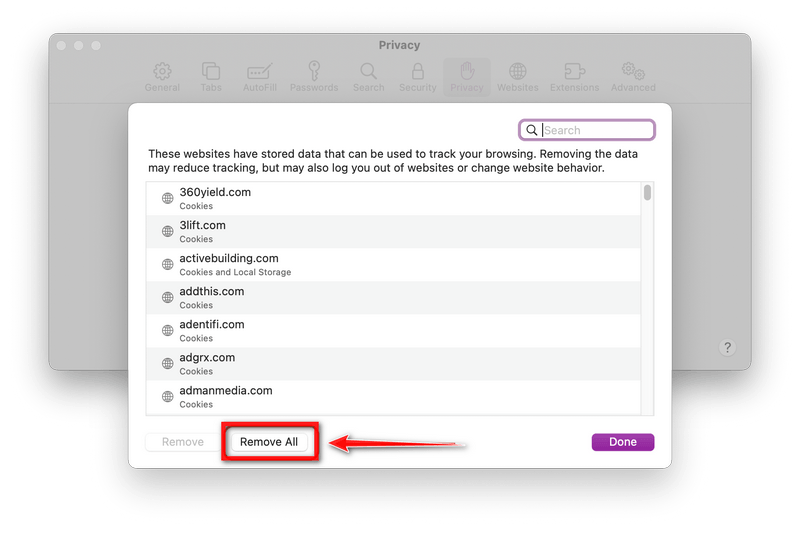
In the next dialog box, click “Remove All“. It will ask you if you are sure you want to remove all data stored by websites on your computer. Select “Remove Now” to clear data that could be used to track your browsing.
Empty Safari Caches.
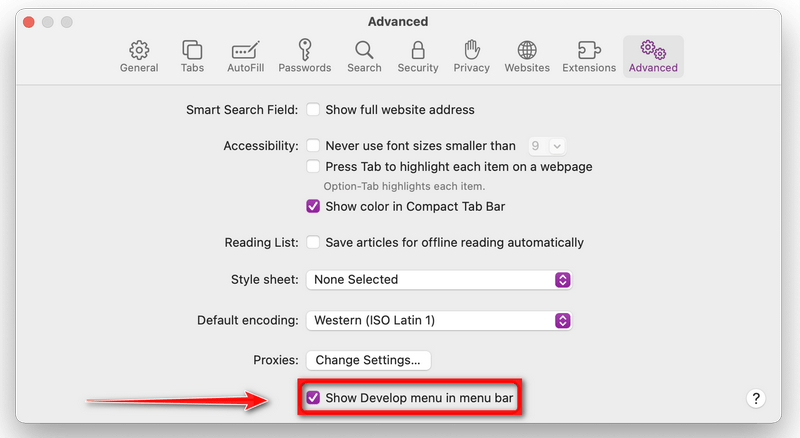
From your Safari menu bar, click Safari and select Preferences, then select the Advanced tab. Enable the checkbox to “Show Develop menu in menu bar“.
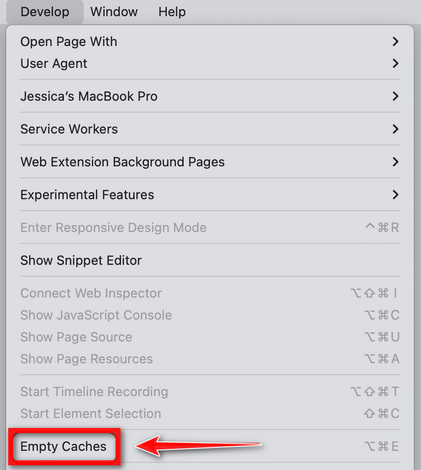
From the menu bar select Develop, then click on Empty Caches as seen in the image below.
Remove malware from Chrome for Mac
To remove malware from Chrome for Mac we will reset the browser settings to their default. Doing these steps will erase all configuration information from Chrome such as your home page, tab settings, saved form information, browsing history, and cookies. This process will also disable any installed extensions. All of your bookmarks, though, will be preserved.
Click on the three dots at the top right and go to Settings.
Click on Chrome’s main menu button, represented by three dots at the top right corner. Now click on the menu option labeled Settings as shown by the arrow in the picture below, which will open the basic settings screen.
In the left sidebar, click on the “Reset and Cleanup” option.
In the left sidebar, click on “Reset and clean up“.
Click “Reset settings to their original defaults”.
Now click on the “Reset settings to their original defaults”. link as shown in the image below.
Click “Reset Settings” button.
A confirmation dialog should now be displayed, detailing the components that will be restored to their default state should you continue with the reset process. To complete the restoration process, click on the “Reset Settings” button.
(Optional) Reset Chrome Data Sync.
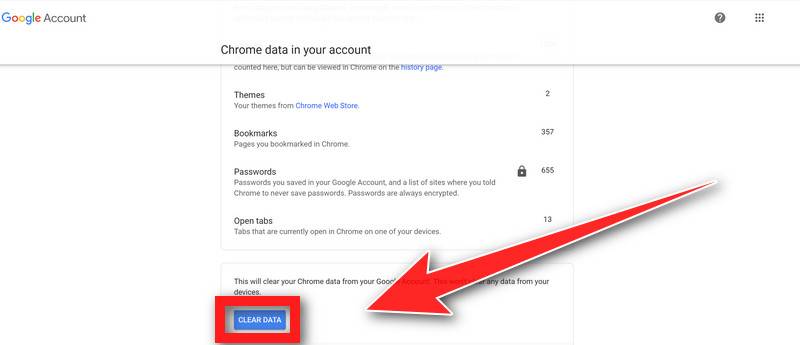
In case a malicious extension reinstalls itself even after performing a browser reset, you have an additional option to reset the data sync for your browser. To do this, navigate to chrome.google.com/sync and click on the Clear Data button.
Remove malware from Firefox for Mac
To remove malware from Firefox for Mac we will reset the browser settings to its default. The reset feature fixes many issues by restoring Firefox to its factory default state while saving your essential information like bookmarks, passwords, web form auto-fill information, browsing history, and open tabs.
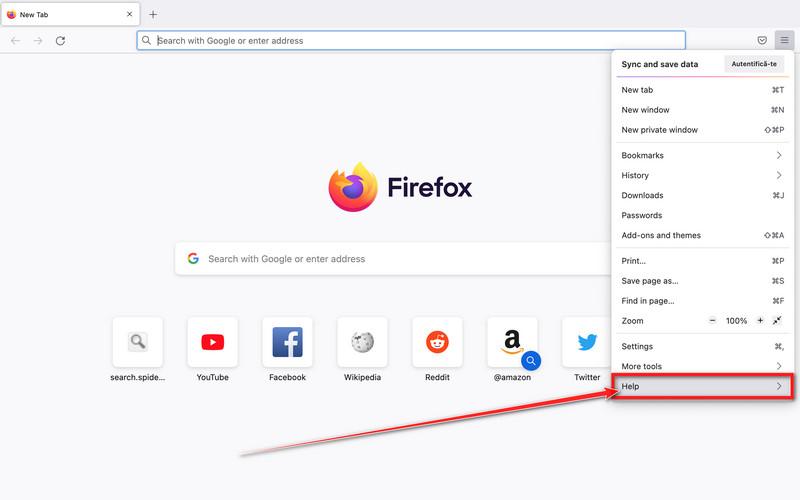
Go to the “Help” menu.
Click on Firefox’s main menu button, represented by three horizontal lines. When the drop-down menu appears, select the option labeled “Help“.
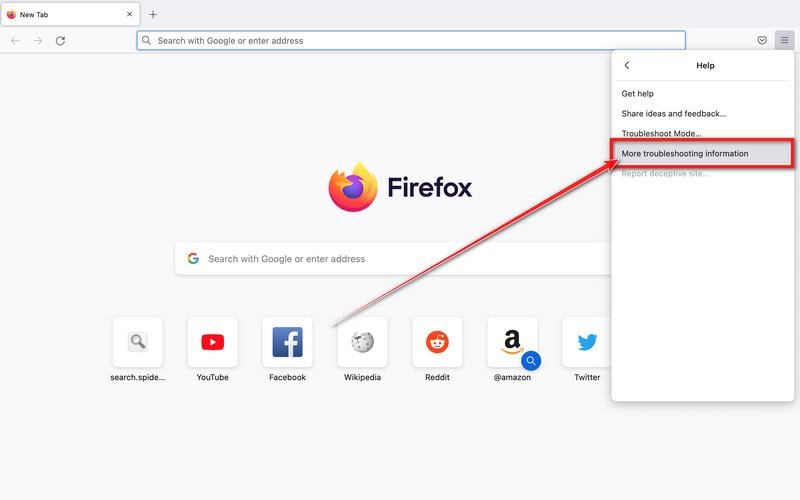
Click “Troubleshooting Information”.
Next click on the “Troubleshooting Information” option as indicated by the arrow in the image below. This will bring you to a Troubleshooting page.
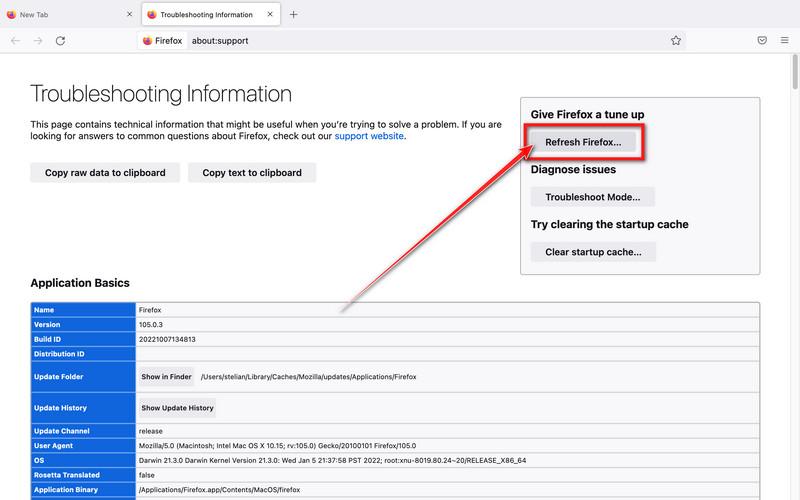
Click on “Refresh Firefox”
Click the “Refresh Firefox” button in the upper-right corner of the “Troubleshooting Information” page.
Confirm.
To continue, click on the “Refresh Firefox” button in the new confirmation window that opens.
Click on “Finish”.
Firefox will close itself and will revert to its default settings. When it’s done, a window will list the information that was imported. Click on the “Finish“.
Your old Firefox profile will be placed on your desktop in a folder named “Old Firefox Data“. If the reset didn’t fix your problem you can restore some of the information not saved by copying files to the new profile that was created. If you don’t need this folder any longer, you should delete it as it contains sensitive information.
STEP 4: Run a scan with Malwarebytes for Mac to remove malware
In this final step, we will scan the computer with Malwarebytes for Mac to find and remove any malicious programs that might be installed on your Mac.
Malwarebytes for Mac is an on-demand scanner that can destroy many types of malware that other software tends to miss without costing you absolutely anything. When it comes to cleaning up an infected device, Malwarebytes has always been free, and we recommend it as an essential tool in the fight against malware.
Download Malwarebytes for Mac.
You can download Malwarebytes for Mac by clicking the link below.
When Malwarebytes has finished downloading, double-click on the setup file to install Malwarebytes on your computer. In most cases, downloaded files are saved to the Downloads folder.
Follow the on-screen prompts to install Malwarebytes.
When the Malwarebytes installation begins, you will see the Malwarebytes for Mac Installer which will guide you through the installation process. Click “Continue“, then keep following the prompts to continue with the installation process.
When your Malwarebytes installation completes, the program opens to the Welcome to Malwarebytes screen. Click the “Get started” button.
Select “Personal Computer” or “Work Computer”.
The Malwarebytes Welcome screen will first ask you what type of computer are you installing this program, click either Personal Computer or Work Computer.
Click on “Scan”.
To scan your computer with Malwarebytes, click on the “Scan” button. Malwarebytes for Mac will automatically update the antivirus database and start scanning your computer for malware.
Wait for the Malwarebytes scan to complete.
Malwarebytes will scan your computer for adware, browser hijackers, and other malicious programs. This process can take a few minutes, so we suggest you do something else and periodically check on the status of the scan to see when it is finished.
Click on “Quarantine”.
When the scan has been completed, you will be presented with a screen showing the malware infections that Malwarebytes has detected. To remove the malware that Malwarebytes has found, click on the “Quarantine” button.
Restart computer.
Malwarebytes will now remove all the malicious files that it has found. To complete the malware removal process, Malwarebytes may ask you to restart your computer.
Your computer should now be free of Unwanted Apps and Malware and other malware.
If your current antivirus allowed a malicious program on your computer, you might want to consider purchasing the full-featured version of Malwarebytes Anti-Malware to protect against these types of threats in the future. If you are still experiencing problems while trying to remove a malicious program from your computer, please ask for help in our Mac Malware Removal Help & Support forum.
Remove Unwanted Apps and Malware from Android
Remove Unwanted Apps and Malware from Android
To remove Unwanted Apps and Malware from your phone or tablet, follow these steps:
In this first step, we will check if any malicious apps are installed on your phone. Sometimes browser hijackers or adware apps can have usable Uninstall entries that can be used to remove these apps.
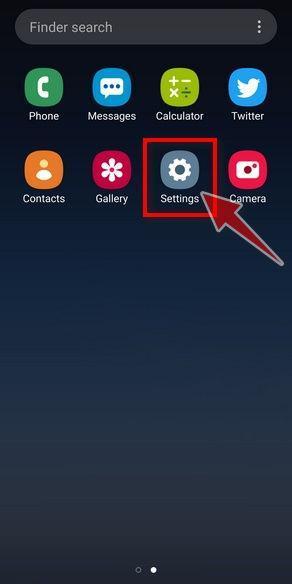
Open the “Settings” menu.
Tap on the “Settings” app from your phone menu or home screen.
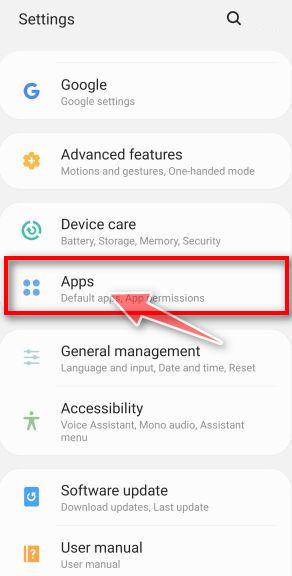
Tap on “Apps”.
When the “Settings” menu opens, tap on “Apps” (or “App Manager”) to see all the installed applications on your phone.
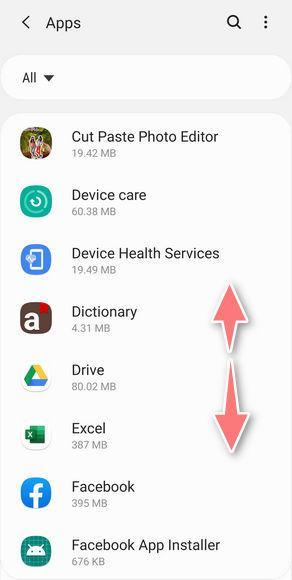
Find the malicious app.
The “Apps” screen will be displayed with a list of all the applications that are installed on your phone. Scroll through the list and look out for any suspicious app that could be behind all the drama – anything you don’t remember downloading or that doesn’t sound like a genuine program. Most often, cyber criminals hide malware inside video or photo editing apps, weather apps, and camera apps.
Uninstall the malicious app
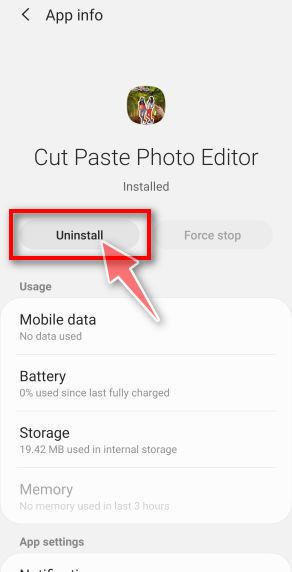
When you find a suspicious or malicious app, tap on it to uninstall it. This won’t start the app but will open up the app details screen. If the app is currently running press the “Force stop” button, then tap on “Uninstall”.
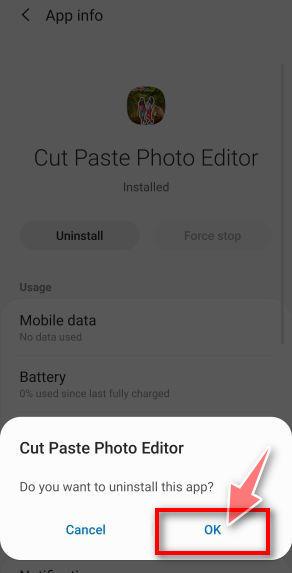
A confirmation dialog should be displayed to confirm you want to uninstall the app, tap on “OK” to remove the malicious app from your phone.
STEP 2: Reset browsers back to default settings
In this second step, we will reset your browser to its default settings to remove spam notifications, unwated search redirects, and restore its factory settings
Resetting the browser settings to their default it’s an easy task on Windows or Mac computers; however, when it comes to Android, this can’t be done directly because it’s not an option built-in into the browser settings. Restoring the browser settings on Android can be done by clearing the application data. This will remove all the cookies, cache, and other site settings that may have been saved. So let’s see how we can restore your browser to its factory settings.
Chrome for AndroidFirefoxOperaSamsung Internet BrowserMicrosoft Edge
Remove malware from Chrome for Android
To reset Chrome for Android to its default settings, follow the below steps:
Open the “Settings” menu.
Tap on the “Settings” app from your phone menu or home screen.
Tap on “Apps”.
When the “Settings” menu opens, tap on “Apps” (or “App Manager”) to see all the installed applications on your phone.
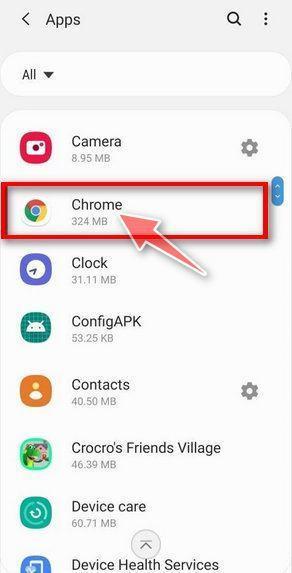
Find and tap on Chrome.
The “Apps” screen will be displayed with a list of all the apps installed on your phone. Scroll through the list until you find the Chrome app, then tap on it to open the app’s details.
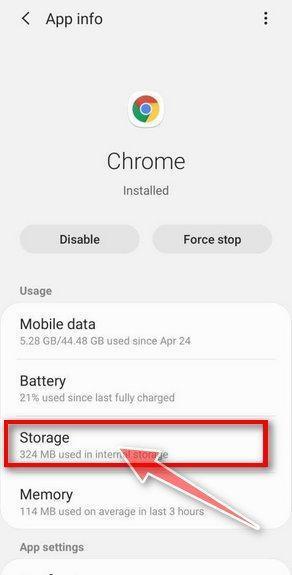
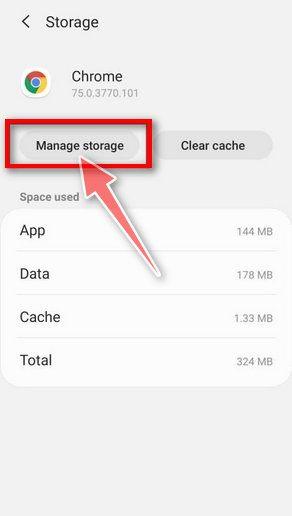
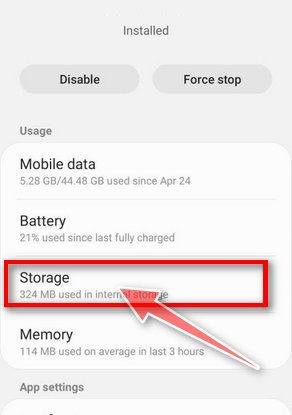
Tap “Storage”.
When Chrome’s app info menu is displayed, tap on “Storage“.
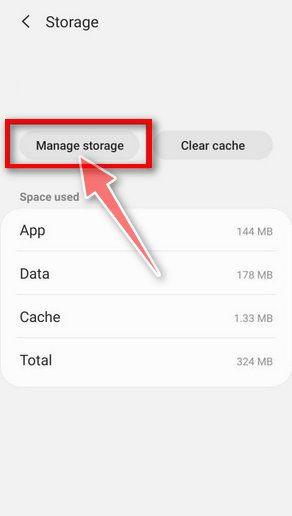
Tap “Manage Space”.
Under the storage settings, you will get two options — Manage Space and Clear Cache. Tap on “Manage Space“.
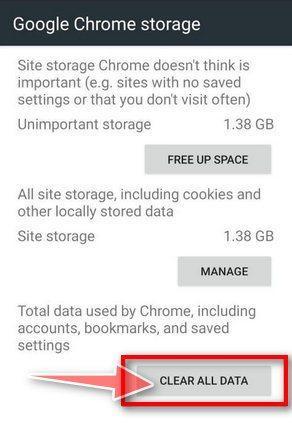
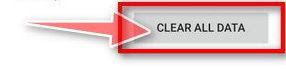
Tap “Clear all data”.
Tap “Clear all data” to delete all Chrome’s data including accounts, bookmarks, and your settings to reset the default settings.
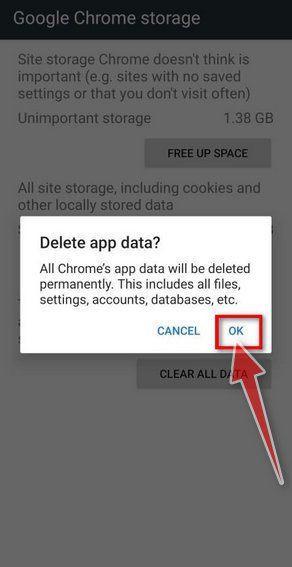
Confirm by tapping “Ok”.
A confirmation dialog should now be displayed, detailing the components that will be restored to their default state should you continue with the reset process. To complete the restoration process, tap “Ok“.
Remove malware from Firefox for Android
To reset Firefox for Android to its default settings, follow the below steps:
Open the “Settings” menu.
Tap on the “Settings” app from your phone menu or home screen.
Tap on “Apps”.
When the “Settings” menu opens, tap on “Apps” (or “App Manager”) to see all the installed applications on your phone.
Find and tap on Firefox.
The “Apps” screen will be displayed with a list of all the apps installed on your phone. Scroll through the list until you find the Firefox app, then tap on it to open the app’s details.
Tap “Storage”.
When Firefox’s app info menu is displayed, tap on “Storage“.
Tap “Manage Space”.
Under the storage settings, you will get two options — Manage Space and Clear Cache. Tap on “Manage Space“.
Tap “Clear all data”.
Tap “Clear all data” to delete all Firefox data including accounts, bookmarks, and your settings to reset the default settings.
Confirm by tapping “Ok”.
A confirmation dialog should now be displayed, detailing the components that will be restored to their default state should you continue with the reset process. To complete the restoration process, tap “Ok“.
Remove malware from the Opera browser
To reset the Opera browser to its default settings, follow the below steps:
Open the “Settings” menu.
Tap on the “Settings” app from your phone menu or home screen.
Tap on “Apps”.
When the “Settings” menu opens, tap on “Apps” (or “App Manager”) to see all the installed applications on your phone.
Find and tap on Opera.
The “Apps” screen will be displayed with a list of all the apps installed on your phone. Scroll through the list until you find the Opera app, then tap on it to open the app’s details.
Tap “Storage”.
When Opera’s app info menu is displayed, tap on “Storage“.
Tap “Manage Space”.
Under the storage settings, you will get two options — Manage Space and Clear Cache. Tap on “Manage Space“.
Tap “Clear all data”.
Tap “Clear all data” to delete all Opera’s data including accounts, bookmarks, and your settings to reset the default settings.
Confirm by tapping “Ok”.
A confirmation dialog should now be displayed, detailing the components that will be restored to their default state should you continue with the reset process. To complete the restoration process, tap “Ok“.
Remove malware from Samsung Internet Browser
To reset the Samsung Internet Browser to its default settings, follow the below steps:
Open the “Settings” menu.
Tap on the “Settings” app from your phone menu or home screen.
Tap on “Apps”.
When the “Settings” menu opens, tap on “Apps” (or “App Manager”) to see all the installed applications on your phone.
Find and tap on Samsung Internet Browser.
The “Apps” screen will be displayed with a list of all the apps installed on your phone. Scroll through the list until you find the Samsung Internet Browser app, then tap on it to open the app’s details.
Tap “Storage”.
When the Samsung Internet Browser’s app info menu is displayed, tap on “Storage“.
Tap “Manage Space”.
Under the storage settings, you will get two options — Manage Space and Clear Cache. Tap on “Manage Space“.
Tap “Clear all data”.
Tap “Clear all data” to delete all Samsung Internet Browser’s data including accounts, bookmarks, and your settings to reset the default settings.
Confirm by tapping “Ok”.
A confirmation dialog should now be displayed, detailing the components that will be restored to their default state should you continue with the reset process. To complete the restoration process, tap “Ok“.
Remove malware from Microsoft Edge for Android
To reset the Microsoft Edge for Android to its default settings, follow the below steps:
Open the “Settings” menu.
Tap on the “Settings” app from your phone menu or home screen.
Tap on “Apps”.
When the “Settings” menu opens, tap on “Apps” (or “App Manager”) to see all the installed applications on your phone.
Find and tap on Microsoft Edge.
The “Apps” screen will be displayed with a list of all the apps installed on your phone. Scroll through the list until you find the Microsoft Edge app, then tap on it to open the app’s details.
Tap “Storage”.
When the Microsoft Edge’s app info menu is displayed, tap on “Storage“.
Tap “Manage Space”.
Under the storage settings, you will get two options — Manage Space and Clear Cache. Tap on “Manage Space“.
Tap “Clear all data”.
Tap “Clear all data” to delete all Microsoft Edge’s data including accounts, bookmarks, and your settings to reset the default settings.
Confirm by tapping “Ok”.
A confirmation dialog should now be displayed, detailing the components that will be restored to their default state should you continue with the reset process. To complete the restoration process, tap “Ok“.
STEP 3: Use Malwarebytes for Android to remove malicious apps
In this final step, we will install Malwarebytes for Android to scan and remove malicious apps from your phone or tablet.
Malwarebytes for Android automatically detects and removes dangerous threats like malware and ransomware so you don’t have to worry about your most-used device being compromised. Aggressive detection of adware and potentially unwanted programs keeps your Android phone or tablet running smooth.
Download Malwarebytes for Android.
You can download Malwarebytes for Android by clicking the link below.
In the Google Play Store, tap “Install” to install Malwarebytes for Android on your device.
When the installation process has finished, tap “Open” to begin using Malwarebytes for Android. You can also open Malwarebytes by tapping on its icon in your phone menu or home screen.
Follow the on-screen prompts to complete the setup process
When Malwarebytes will open, you will see the Malwarebytes Setup Wizard which will guide you through a series of permissions and other setup options. This is the first of two screens that explain the difference between the Premium and Free versions. Swipe this screen to continue. Tap on “Got it” to proceed to the next step. Malwarebytes for Android will now ask for a set of permissions that are required to scan your device and protect it from malware. Tap on “Give permission” to continue. Tap on “Allow” to permit Malwarebytes to access the files on your phone.
Update database and run a scan with Malwarebytes for Android
You will now be prompted to update the Malwarebytes database and run a full system scan.
Click on “Update database” to update the Malwarebytes for Android definitions to the latest version, then click on “Run full scan” to perform a system scan.
Wait for the Malwarebytes scan to complete.
Malwarebytes will now start scanning your phone for adware and other malicious apps. This process can take a few minutes, so we suggest you do something else and periodically check on the status of the scan to see when it is finished.
Click on “Remove Selected”.
When the scan has been completed, you will be presented with a screen showing the malware infections that Malwarebytes for Android has detected. To remove the malicious apps that Malwarebytes has found, tap on the “Remove Selected” button.
Restart your phone.
Malwarebytes for Android will now remove all the malicious apps that it has found. To complete the malware removal process, Malwarebytes may ask you to restart your device.
Your phone should now be free of Unwanted Apps and Malware and other malware.
If your current antivirus allowed a malicious app on your phone, you may want to consider purchasing the full-featured version of Malwarebytes to protect against these types of threats in the future. If you are still having problems with your phone after completing these instructions, then please follow one of the steps:
Restore your phone to factory settings by going to Settings > General management > Reset > Factory data reset.
In this first step, we will clean your Safari browser by using the built-in “Clear History and Website Data” feature. “Clear History and Website Data” allows you to delete the browsing history and website data that is stored on your device. This can include information such as the websites you have visited, your search history, and any data that has been stored by websites you have visited, such as cookies and cache.
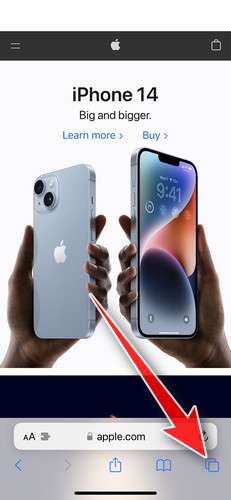
Do not tap on the malicious browser window or pop-ups. Instead, tap on the tab icon located in the lower right corner of the screen, as shown in the image below.
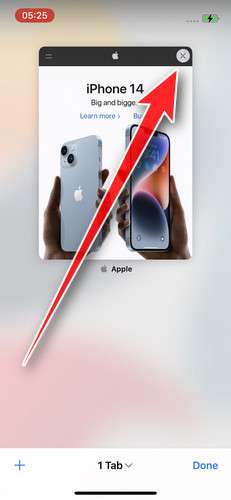
Tap the X button on the tab or swipe up to safely close it.
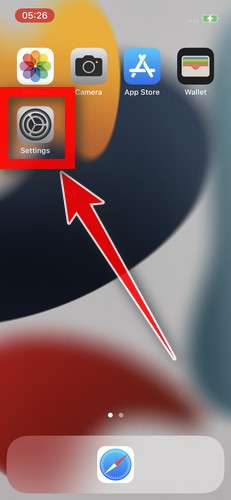
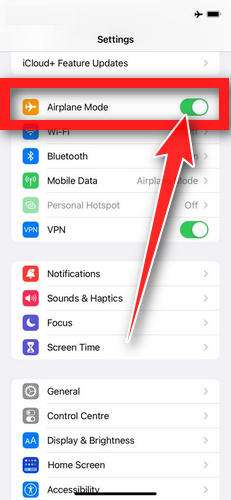
Tap the Settings app.
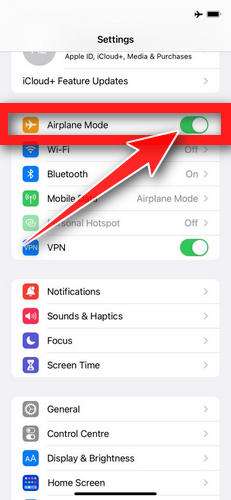
Toggle on Airplane Mode to temporarily disconnect your phone from the internet and block unwanted access.
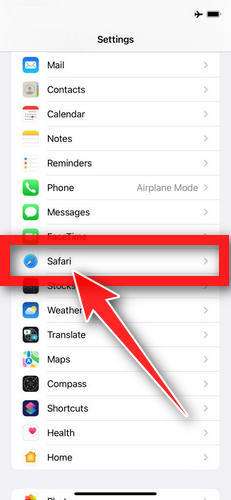
Scroll down and tap Safari.
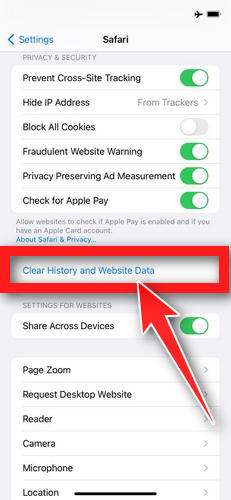
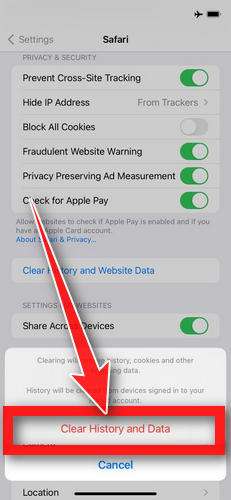
Tap Clear History and Website Data.
Confirm that you want to clear the history and data by tapping “Clear History and Data” in the pop-up window.
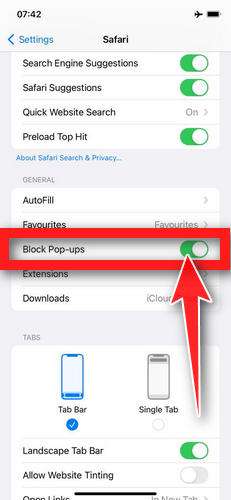
While in Safari settings, make sure to toggle on Block Pop-ups and Fraudulent Website Warning.
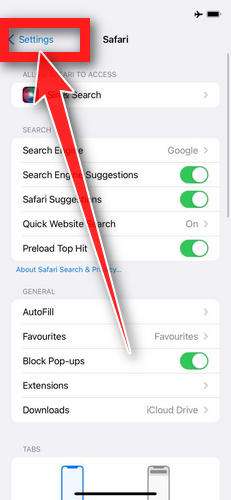
Tap on Settings in the upper-left corner to return to the main Settings menu.
Toggle Airplane Mode back off to re-connect your phone to the internet.
STEP 2: Delete unwanted apps
In the next step, we will remove any potentially unwanted apps that may be installed on your iPhone. If you have downloaded an app after being redirected to the App Store by suspicious websites, it is recommended to delete it.
On the home screen, tap and hold on the app icon until all of the icons start to wiggle.
Tap the “X” button that appears on the top left corner of the app icon.
Confirm that you want to delete the app by tapping “Delete”.
That’s it, your iPhone should be clean and you can continue browsing the Internet. We recommend that you install an ad blocker like AdGuard to block the malicious ads.
If you continue to have malware related issues with your device after completing the above steps, we recommend to take one of these actions:
Critical Security Alert scam sites are built to hijack your attention and your emotions.
They impersonate Windows Security and well-known antivirus brands, claim your data is leaking or your private content is exposed, then pressure you into clicking a button that leads to an affiliate offer, a tech support trap, or a dangerous download.
If you see one, do not engage with it. Close the tab and clean up notification permissions. If you entered payment details or downloaded software, take immediate steps to protect your accounts and device.
The most important rule is simple:
Real security warnings come from your operating system or installed security software, not from random websites that appear while you browse.
Frequently Asked Questions
What are “Critical Security Alert” scam sites?
They are fake warning pages that imitate Windows Security or antivirus brands like McAfee, Norton, or TotalAV. They use scary messages to push you into clicking, paying, calling a number, or downloading something.
Are these warnings coming from Windows Security?
No. If the warning appears inside a browser tab and the website address is unfamiliar, it is not a real Windows alert. It is a web page pretending to be one.
Why do the pages say “Viruses are detected” or “Your personal data is leaking”?
Those messages are scripted fear tactics. The site is not scanning your device. It is trying to pressure you into acting fast.
Can a website actually scan my computer or phone for viruses?
No. A website cannot perform a real antivirus scan of your device. Any “scan” shown in a browser page is fake.
Why do these scams mention McAfee, Norton, or TotalAV?
Because those brands are well-known. Scammers use familiar names to look legitimate and increase clicks. Many campaigns redirect to antivirus offers through affiliate links to earn commissions.
Are these scams always affiliate redirects, or can they be worse?
They can be worse. Some versions lead to tech support scams (phone numbers and remote access), while others push malicious downloads or browser extensions.
Why do I keep seeing these alerts even after closing the page?
Common reasons include:
You clicked “Allow” on browser notifications
A shady browser extension is installed
Adware is causing repeated redirects
You are revisiting the same high-risk websites that trigger the redirects
What should I do if I clicked “Allow” on notifications?
Remove the site from your browser’s notification permissions (Chrome, Edge, Firefox), then restart the browser. This usually stops the spam immediately.
What if I entered my credit card details on one of these pages?
Contact your bank or card issuer right away, cancel or replace the card, and monitor for unauthorized or recurring charges.
What if I downloaded something from the warning page?
Disconnect from the internet, uninstall the downloaded program, remove suspicious browser extensions, and run a full malware scan with a trusted security tool.
Thomas is an expert at uncovering scams and providing in-depth reporting on cyber threats and online fraud. As an editor, he is dedicated to keeping readers informed on the latest developments in cybersecurity and tech.


 Remove Unwanted Apps and Malware from Windows
 Remove Unwanted Apps and Malware from Mac
 Remove Unwanted Apps and Malware from Android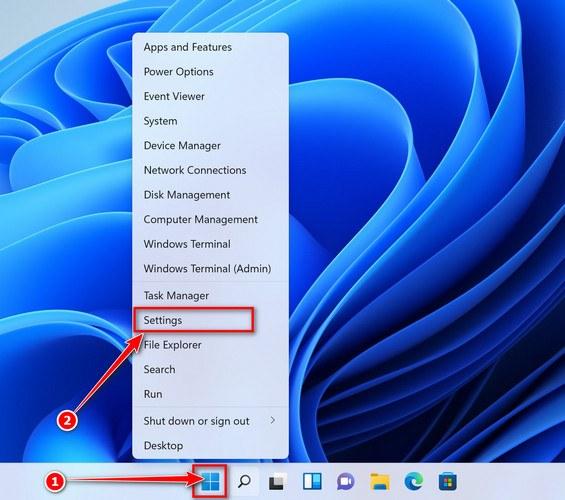
 If you have checked your computer for malicious programs and did not find any, you can proceed with the next step in this guide.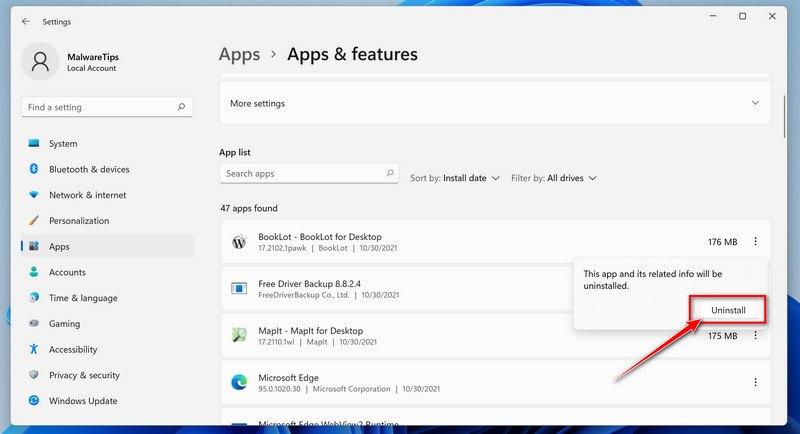
 If you have checked your computer for malicious programs and did not find any, you can proceed with the next step in this guide.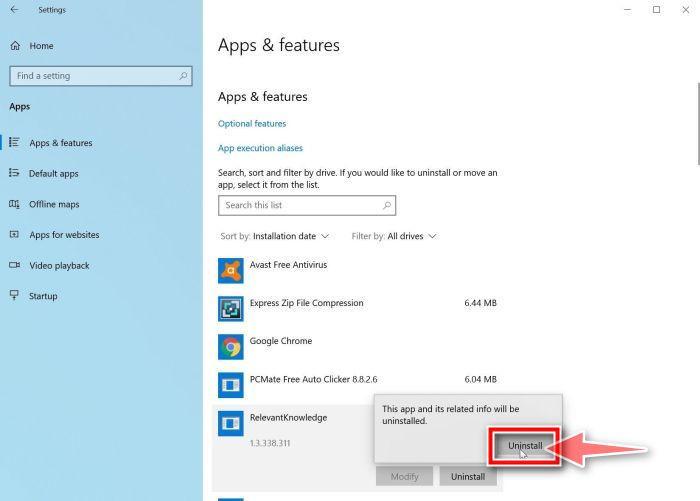













 HITMANPRO DOWNLOAD LINK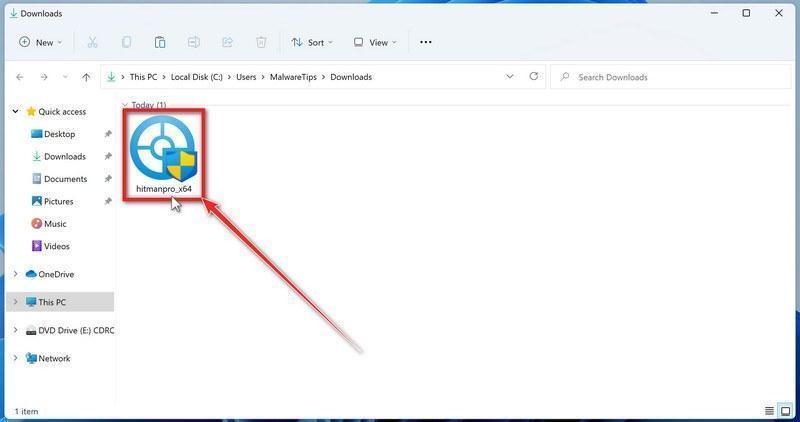

 If there isn’t a Profiles icon, you don’t have any profiles installed, which is normal and you can continue with the next steps.