

CROAIE Meglutide Oral Liquid is being promoted all over social media as a revolutionary weight-loss breakthrough — a miracle supplement that allegedly burns fat, curbs hunger, and improves metabolism without diet or exercise. With flashy before-and-after photos, “doctor endorsements,” and incredible transformation stories, it’s easy to see why this product has gone viral.
But is this really a medical miracle, or is it just another clever scam?
This in-depth investigation reveals how the CROAIE Meglutide Oral Fluid scam works, what red flags to watch out for, and what to do if you’ve already fallen for it. Read on before you make a purchase you’ll regret.
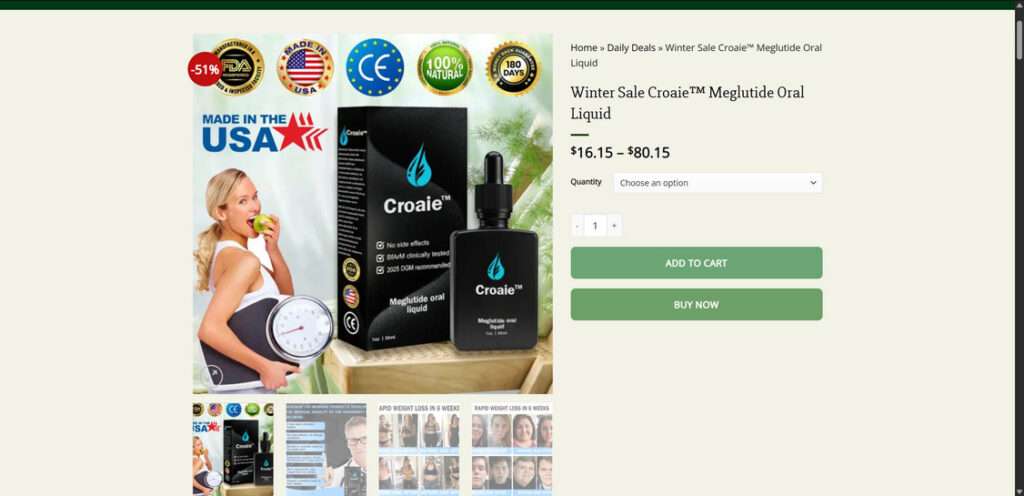
What Is CROAIE Meglutide Oral Fluid and Why Is It Suspicious?
At first glance, CROAIE Meglutide Oral Liquid looks like the latest breakthrough in fat-loss science. It claims to mimic the effects of the prescription drug Semaglutide (known for its use in Ozempic and Wegovy) but without the side effects or high costs. Promoted as a “plant-based alternative,” this over-the-counter oral fluid supposedly delivers rapid fat burning, appetite suppression, and metabolic improvements — all in a single daily drop.
But despite the high-end marketing, here’s what buyers need to know:
1. It Is NOT Real Meglutide or Semaglutide
The product name misleadingly implies that it contains a form of Meglutide, a fictional spin on Semaglutide. However, no peer-reviewed medical studies, ingredient disclosures, or clinical trials validate this. Semaglutide is a regulated prescription medication. No legal or proven oral liquid version of it exists over the counter.
2. No Clinical Evidence Supports Its Claims
While the website references an 11-country study and awards from pharmaceutical authorities, no such studies can be found in scientific databases or medical journals. There is no mention of CROAIE™ in FDA databases, PubMed, or even credible health news outlets.
3. Fake Doctor Endorsements and Testimonials
The supposed medical expert “Dr. Georg W. Ziegenhorn” has no presence in any verified medical registry. The testimonials and transformation photos shared on the site are either generic stock images or artificially generated, as confirmed by reverse image searches.
4. No Real Company or Manufacturer
The product offers no legitimate company information — no business registration, physical address, or working customer support. The website is filled with medical-sounding jargon and glossy imagery, but it hides behind a private domain registration and a vague “shipping from America” label.
5. Dangerous Marketing Claims
The site pushes the product as a cure-all for obesity, hormonal issues, diabetes, thyroid disorders, and even autoimmune diseases. These claims are not only unproven but dangerously misleading, especially for vulnerable individuals seeking serious medical solutions.
How the CROAIE Meglutide Scam Works
This scam follows a multi-stage playbook used by many health supplement frauds, targeting consumers via emotional triggers and urgency tactics.
Step 1: Social Media and Influencer Ads
The scam begins with paid ads on Facebook, TikTok, and Instagram. These ads:
- Show dramatic before-and-after photos
- Feature a “doctor” recommending the product
- Claim it’s safer and more effective than Ozempic or injections
- Use phrases like “miracle drop,” “burn fat in sleep,” or “backed by science”
The visuals and wording are designed to grab attention and encourage impulse clicks.
Step 2: Misleading Product Landing Page
Once clicked, the ad leads to a carefully designed product page. It appears medical, with:
- Images of scientific labs and clinical equipment
- “Doctor-recommended” and “FDA-registered” badges
- Fake reviews and success stories
- Transformation journeys like “Lea Hoffmann lost 40kg in 6 weeks”
All of this is engineered to build trust and make the supplement seem legitimate.
Step 3: Urgency Tactics to Force a Quick Purchase
Common urgency elements include:
- “Only 5 bottles left at this price”
- “Winter sale ends in 10 minutes”
- “Over 100 people are viewing this page”
These tactics are used to prevent buyers from taking time to research.
Step 4: Unclear Checkout Process
The product is often priced at a “discounted” rate, such as $39 or $49, but many customers are:
- Enrolled in hidden subscription plans
- Charged more than expected
- Billed recurring charges without consent
There are no clear refund or cancellation policies.
Step 5: Fake Shipping and Delivery
Some users report receiving generic, unbranded liquid supplements weeks later. Others never receive anything at all. The packaging lacks ingredient disclosures, safety labels, or FDA compliance statements.
Step 6: No Way to Reach Customer Service
Once the product is purchased:
- Emails go unanswered
- Phone numbers don’t work
- The website may disappear entirely after a few months
This makes it nearly impossible for consumers to cancel or get their money back.
What To Do If You’ve Been Scammed by CROAIE™ Meglutide
If you believe you’ve fallen victim to this scam, here are the steps you should take immediately:
1. Dispute the Charges
- Contact your credit card company or bank to file a chargeback.
- Explain that the product is fraudulent and was marketed deceptively.
- Block the vendor from making future charges to your card.
2. Save All Documentation
- Save screenshots of the product page and checkout screen.
- Print or download your receipt, emails, and tracking info (if any).
- Keep a record of communication attempts with the seller.
3. Report the Scam to Authorities
- Federal Trade Commission (FTC): reportfraud.ftc.gov
- Better Business Bureau (BBB): bbb.org/scamtracker
- Internet Crime Complaint Center (IC3): ic3.gov
These agencies track and shut down fraudulent online businesses.
4. Warn Others Online
Share your experience on:
- Trustpilot
- Reddit (especially r/scams and r/loseit)
- Facebook comment threads under CROAIE ads
- Product review websites
Public awareness can help others avoid the same mistake.
5. Avoid Using the Product
Do not consume unregulated supplements — especially those claiming to mimic prescription medications. The ingredients are unverified and could be harmful.
6. Watch for Identity or Data Theft
If you provided personal information, such as your address or phone number:
- Monitor your bank accounts for suspicious activity
- Consider placing a fraud alert on your credit report
- Change your passwords if you used any account during checkout
Frequently Asked Questions (FAQ)
Is CROAIE Meglutide Oral Liquid FDA approved
No. Despite claims on the product page, CROAIE is not FDA approved or evaluated. The use of terms like “FDA-registered laboratory” is misleading and does not imply actual regulatory approval.
Does CROAIE contain real Semaglutide or GLP-1 compounds
No. CROAIE is not a medically approved formulation of Semaglutide or GLP-1 receptor agonists. These compounds require a prescription and cannot legally be sold in over-the-counter oral liquids without FDA regulation and oversight.
Are the clinical trials and doctor endorsements real
No clinical trial supporting CROAIE has been published in peer-reviewed journals. The cited doctor, Georg W. Ziegenhorn, has no verifiable medical credentials or publications associated with this product.
Can CROAIE actually cause rapid fat burning without exercise
There is no scientific evidence proving that CROAIE burns fat without diet or physical activity. Claims of 100g fat loss per day from a single drop are biologically implausible and unsupported by clinical research.
Is it safe to consume CROAIE Meglutide Oral Liquid
The safety of this product is unknown. Because the ingredients are not verified by independent labs or regulated by health authorities, there may be risks of allergic reactions, side effects, or contamination.
Why is CROAIE only available through certain websites
CROAIE is sold via pop-up websites and not through trusted platforms like Amazon, Walmart, or licensed pharmacies. This is a tactic used by scam products to avoid scrutiny and returns.
What should I do if I was charged multiple times
If you were charged more than once or enrolled in a subscription without consent, contact your credit card company to dispute the charges. Request a chargeback due to deceptive marketing.
How can I report the CROAIE scam
Report the scam to the Federal Trade Commission (FTC) at reportfraud.ftc.gov, the Better Business Bureau (BBB) at bbb.org/scamtracker, and the Internet Crime Complaint Center (IC3) at ic3.gov. You can also warn others by posting public reviews online.
Will I be able to get a refund
Most customers report that the vendor does not respond to refund requests. If you made the purchase with a credit card, your best option is to pursue a chargeback through your financial institution.
Are there real alternatives to CROAIE for weight loss
Yes. If you’re considering weight loss support, speak to a licensed healthcare provider. Medications like Semaglutide (Ozempic, Wegovy) are FDA-approved and only available via prescription. Avoid unregulated supplements claiming similar effects without medical oversight.
The Bottom Line
CROAIE™ Meglutide Oral Liquid is not a clinically tested or medically approved weight-loss solution. It is a highly deceptive scam that:
- Makes fake medical claims
- Misleads customers about ingredients and results
- Uses fake doctors, testimonials, and photos
- Tricks buyers into recurring charges
- Offers no real customer support or transparency
If you’re serious about weight loss, consult a licensed healthcare professional. There are safe, FDA-approved medications and evidence-based programs available — none of which involve mystery drops or miracle cures.
Final tip: Always research supplements before buying. Look for third-party testing, verified company information, and real reviews from independent sources.

Join the discussion
0 commentsShare your experience or ask a question about this article.
Discussion
Start the conversation
Have a question or something useful to share? Add the first comment.