

From social media ads to pop-up websites, Raindew™ Turmeric & Emu Oil Skin Antibacterial Gel is being sold as a natural miracle product that removes skin tags, warts, and blemishes in just a few days — no surgery, no pain, and no scars. Its formula claims to harness turmeric, emu oil, and enzymes to gently and permanently eliminate unwanted skin growths.
Sounds too good to be true?
That’s because it probably is.
In this detailed breakdown, we’ll expose the Raindew skin gel scam, explain how it works, and provide step-by-step guidance if you’ve already been duped. Whether you’re considering this product or trying to get your money back, this guide will give you everything you need to know.
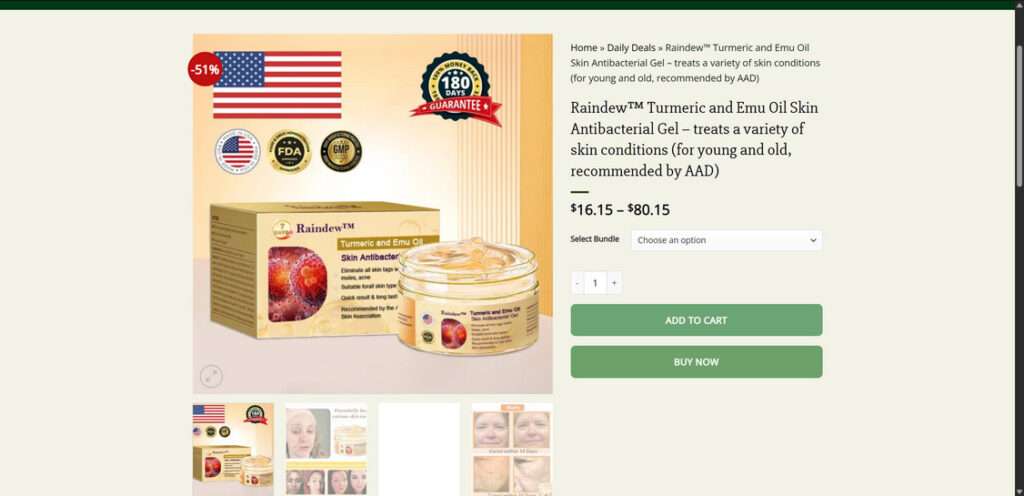
Scam Overview: What Is Raindew™ Turmeric & Emu Oil Gel Really Offering?
Raindew™ is marketed as an “award-winning” topical skincare solution designed to target skin tags, warts, and other skin imperfections. Its active ingredients include turmeric, emu oil, and phospholipase A2 — all touted as natural, safe, and effective.
The website makes bold claims:
- “Removes skin tags in 7 days without pain or scarring”
- “Clinically tested and dermatologist-approved”
- “Used by over 9 million people with a 96.8% success rate”
- “Winner of the Pharmacy Times Excellence Award”
But a closer investigation reveals a disturbing lack of evidence, transparency, and legitimacy behind these statements.
No Clinical Evidence or Medical Backing
The so-called clinical trial cited on the product page doesn’t exist in any recognized medical journal. No links are provided, and no verifiable source confirms the participation of “over 2,000 users.” Claims of dermatologist approval are not backed by named professionals or organizations.
Fake Awards and Recognitions
Raindew™ claims to be a recipient of the 2023-2024 “Pharmacy Times Excellence Award.” This award does not appear in official Pharmacy Times records. No reputable skincare industry body acknowledges this product or its manufacturer.
Suspicious Website and Hidden Ownership
The site that sells Raindew™ lacks basic transparency. There’s no:
- Business address
- Company registration details
- Real customer service email or phone support
The domain is privately registered and appears to be operated by a temporary drop-shipping entity — a common pattern among fraudulent ecommerce operations.
Customer Complaints and Missing Orders
Independent reviews tell a different story. Verified buyers report:
- Never receiving the product
- Being charged more than the advertised amount
- Difficulty contacting support
- No visible results or even adverse skin reactions
How the Raindew™ Scam Works
Raindew’s operation follows a now-familiar structure used by many health and beauty product scams. Here’s how it unfolds from the first click to financial loss.
Step 1: Targeted Ads on Social Media
You’ll first encounter Raindew™ through Facebook, TikTok, or YouTube ads promising “natural skin tag removal” without surgery. These ads use emotional triggers like:
- “Finally, a painless way to eliminate skin imperfections”
- “Doctors are shocked by this natural skin-healing secret”
- “Over 9 million users can’t be wrong”
Step 2: A Fake Medical-Looking Landing Page
Clicking the ad takes you to a sales page that mimics a medical blog or wellness site. The page is filled with:
- Unverifiable user testimonials
- Doctor-style endorsements (without credentials)
- Photos of dramatic before-and-after results
- Pseudo-scientific ingredient explanations
You’ll see trust badges like “FDA Compliant” or “GMP Certified” — but these don’t link to any real certifications or third-party testing results.
Step 3: Urgency and Limited-Time Offers
To push you to act quickly, the site uses:
- Countdown timers
- “Only 5 units left in stock” messages
- Flash sales or “Buy 2, Get 1 Free” offers
These are psychological tricks to create urgency and discourage further research.
Step 4: The Checkout Trap
Once you click to purchase:
- The checkout form hides terms and conditions
- You may be unknowingly enrolled in a subscription plan
- Refund policies are vague or non-existent
- The final charge may exceed what was displayed
In many cases, buyers report additional hidden charges weeks later, often for auto-shipped “refills” they never requested.
Step 5: Low-Quality or No Product Delivery
If the product arrives at all, it usually:
- Comes in generic packaging
- Has no safety seals or ingredient labels
- Fails to produce results
- Causes irritation or allergic reactions
Some buyers report receiving nothing at all — just a charge on their credit card and radio silence from customer service.
Step 6: Vanishing Support and Websites
When users attempt to get support:
- The site may have shut down
- Emails bounce or go unanswered
- The company name disappears or is replaced with a new brand
These scams often “rebrand” and relaunch under a new name using the same exact product, images, and ad scripts.
What To Do If You’ve Been Scammed by Raindew
If you’ve purchased Raindew™ or suspect you’re part of this scam, here are the immediate steps to take:
1. Dispute the Charge
- Contact your credit card company or bank immediately
- Explain the situation and request a chargeback for fraud or deception
- Provide screenshots and email documentation to support your case
2. Block Future Transactions
- Ask your card issuer to block further charges from the same vendor
- Monitor your account for recurring or unauthorized activity
3. Save Everything
- Keep order confirmation emails
- Take screenshots of the product page and checkout terms
- Record any communication (or lack thereof) with the company
4. Report the Scam
Report the scam to these agencies:
- FTC (U.S.) – reportfraud.ftc.gov
- BBB Scam Tracker – bbb.org/scamtracker
- IC3 (Internet Crime Complaint Center) – ic3.gov
- Econsumer.gov – for international victims
5. Share Your Experience Publicly
Post reviews on:
- Trustpilot
- Reddit (e.g., r/scams, r/skincareaddiction)
- ScamAdviser
- Facebook or YouTube comment threads where the product is advertised
This helps others avoid falling into the same trap.
6. Avoid Using the Product
Do not use the product if you have any allergies or pre-existing skin conditions. Due to lack of regulation and unclear ingredients, it could cause irritation, infections, or worse.
Consult a licensed dermatologist before applying any unverified skincare gel or cream to your skin.
Frequently Asked Questions (FAQ)
Is Raindew Turmeric & Emu Oil Gel FDA approved
No. Raindew is not FDA approved. The product may use phrases like “FDA-compliant ingredients,” but this does not mean it has been tested or authorized by the U.S. Food and Drug Administration.
Does Raindew really remove skin tags and blemishes in 7 days
There is no scientific evidence or peer-reviewed research proving that Raindew can safely or effectively remove skin tags or other blemishes within 7 days. The claims are unverified and likely exaggerated.
Are the clinical trials and awards real
No. The clinical trial and Pharmacy Times Excellence Award mentioned on the product page are not verifiable. These are common tactics used in product scams to falsely build trust.
Is Raindew safe to use on sensitive skin
Without a verified ingredient list or testing data, the safety of Raindew for sensitive skin cannot be confirmed. Some users have reported irritation, and individuals with allergies or skin conditions should avoid unverified products.
Why isn’t Raindew sold by trusted retailers like Amazon or Walmart
Legitimate retailers typically require quality assurance, third-party verification, and clear labeling. Products like Raindew often bypass these requirements by selling exclusively through temporary, unregulated websites.
Can I get a refund after buying Raindew
Most users report difficulty obtaining refunds. Customer service is often unresponsive, and return policies are vague or hidden. If you purchased the product, your best option is to request a chargeback from your bank or credit card provider.
Is Raindew part of a subscription scam
Some buyers report unauthorized recurring charges after making a purchase. These auto-renewal plans are typically hidden in the fine print and can be hard to cancel once they begin.
What should I do if I’ve already bought Raindew
Contact your bank to dispute the charge and block future transactions. Save all receipts, take screenshots of the website, and report the scam to consumer protection agencies like the FTC and BBB.
How can I report the Raindew scam
You can report it to the Federal Trade Commission at reportfraud.ftc.gov, the Better Business Bureau at bbb.org/scamtracker, and the Internet Crime Complaint Center at ic3.gov. You can also leave public reviews to warn others.
What are safer alternatives for skin tag or wart removal
Always consult a licensed dermatologist before attempting to remove skin growths. There are clinically tested treatments and procedures available that are safe, effective, and supervised by professionals.
The Bottom Line
Raindew™ Turmeric and Emu Oil Skin Antibacterial Gel is not a medical breakthrough. It is the latest in a growing wave of unregulated, overhyped skincare scams that use flashy marketing, fake science, and urgency tactics to lure in unsuspecting buyers.
Here’s what we know:
- There is no proof Raindew™ works as advertised
- Testimonials and awards are fabricated or untraceable
- Buyers report missing products, hidden charges, and no refunds
- The brand operates with zero accountability, often under rotating store names
If you’re looking for real skin solutions, consult a medical professional and stick to products backed by clinical research and transparent manufacturing practices.

Join the discussion
0 commentsShare your experience or ask a question about this article.
Discussion
Start the conversation
Have a question or something useful to share? Add the first comment.