

If you’ve recently stumbled across flashy ads on Facebook, TikTok, or YouTube showcasing an adorable, AI-powered dachshund toy dog named Dachy 2.0, you’re not alone. The videos are captivating: lifelike plush pups that wag their tails, tilt their heads, and even respond to touch like a real dog. The promise? A futuristic pet companion without the mess, shedding, or responsibility of a real animal. The reality? A growing number of customers are reporting that they were scammed. Instead of receiving a sophisticated AI-powered dachshund, they end up with a cheap toy worth just a few dollars, with no resemblance to what was advertised. Refunds are nearly impossible, leaving many victims frustrated and misled.
In this article, we will break down the Dachy 2.0 AI-Powered Dachshund Toy Scam in detail. We’ll explore how the scam works, the deceptive tactics used, and most importantly, what you should do if you’ve already fallen victim. Our goal is to equip you with the knowledge to recognize, avoid, and report such scams, while helping you understand how these fraudulent operations exploit consumer trust.
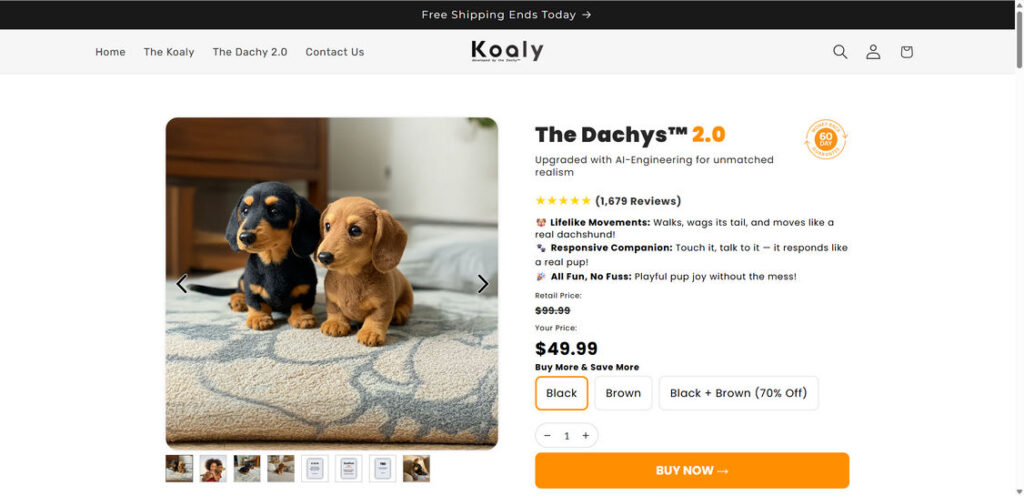
Scam Overview
The Dachy 2.0 scam is a classic example of deceptive e-commerce marketing, amplified by the power of social media advertising. Let’s break down the key elements of this fraudulent scheme:
1. The Product Illusion
The advertisements show extremely realistic dachshund toy dogs. They appear almost indistinguishable from real puppies in photos and videos, with promises of advanced AI technology. According to the marketing claims:
- Dachy 2.0 can walk, wag its tail, tilt its head, and mimic the behavior of a real dachshund.
- The toy responds to touch and even “interacts” with its owner.
- It’s marketed as safe, non-toxic, stress-free, and designed with advanced micro-motors and sensors.
The problem? None of these features exist in the product that customers actually receive.
2. Manipulative Marketing Language
The scam preys on emotions, using phrases such as:
- “You will fall in love instantly.”
- “The most realistic plush ever made.”
- “Try risk-free for 60 days.”
Such wording is carefully chosen to create urgency and emotional connection, pushing consumers to purchase quickly without doing research.
3. False Social Proof
The websites selling Dachy 2.0 often display:
- Fake 5-star reviews supposedly from “verified customers.”
- Fabricated celebrity endorsements.
- Logos of major media outlets like BuzzFeed or Wired falsely suggesting they covered the product.
None of these claims are verified. The reviews are typically AI-generated or copied, and the media mentions are entirely fake.
4. The Pricing Trap
The websites list a fake “retail price” (e.g., $99.99), then claim a massive discount (down to $49.99 or lower). They further push bundles like “Black + Brown Dachy for 70% off.” This psychological tactic convinces buyers they’re getting a rare deal.
5. The Actual Product Shipped
Reports from customers reveal that instead of the high-tech AI dachshund shown in ads, what arrives is:
- A low-quality, generic plush toy or plastic dog.
- Worth between $2–$3 wholesale from Chinese marketplaces like AliExpress.
- No movement, no AI, no lifelike features.
6. Refund and Support Deception
Victims attempting refunds face multiple barriers:
- The company ignores refund requests.
- Return addresses point to obscure international locations, making returns expensive or impossible.
- Customer service responses, if any, are automated and unhelpful.
7. Advertising Platforms Involvement
The scam relies heavily on targeted ads on Facebook, TikTok, and YouTube. These platforms allow sellers to reach millions of unsuspecting viewers with eye-catching videos. Because the ads are designed to look like viral product showcases, people click, buy, and only later realize they were misled.
In short, Dachy 2.0 is not an innovative AI toy but a fraudulent scheme exploiting viral marketing and consumer trust.
How the Scam Works
To better understand how the Dachy 2.0 scam operates, let’s walk through the full process step by step:
Step 1: Eye-Catching Ads
Scammers run viral-style videos on Facebook, TikTok, Instagram, and YouTube. These ads:
- Show lifelike footage of real dachshunds or CGI-enhanced models.
- Include emotional hooks, such as children playing with the toy or lonely adults finding companionship.
- Use phrases like “Limited stock!” and “Free shipping ends today.”

Step 2: Fake Online Storefront
Clicking the ad takes buyers to a professional-looking e-commerce site with:
- High-quality photos of the dogs (often stolen or AI-generated).
- Fake reviews claiming parents, children, and pet lovers adore the product.
- Countdown timers and “stock running low” warnings to pressure fast purchases.
Step 3: Psychological Manipulation
The scam uses multiple triggers:
- Scarcity: “Only 5 left in stock!”
- Urgency: “Free shipping ends today.”
- Social Proof: Fake 5-star reviews and celebrity tweets.
- Authority Bias: Claims that outlets like BuzzFeed or Parents Magazine featured the toy.
Step 4: Payment Processing
Victims pay around $49.99–$79.99, often with “discounted bundles.” Payments go through third-party processors, often located overseas, making chargebacks more complex.
Step 5: Shipping Delay Excuse
After purchase, customers receive vague shipping updates. Many report delays of 2–4 weeks. This stalling tactic is meant to:
- Make returns harder (due to 30-day policies).
- Prevent immediate chargeback disputes.
Step 6: Cheap Product Delivery
Eventually, a package arrives. Instead of an AI dachshund:
- Victims get a small, poorly-made plush toy.
- Some receive low-quality plastic dogs that don’t move at all.
- The item has no resemblance to the advertised product.
Step 7: Refund Roadblocks
When customers complain:
- They are told to return the product at their own expense, often to an address in China.
- Refunds are denied due to “policy violations.”
- Emails go unanswered or bounce.
Step 8: Repeat Ads and New Storefronts
Once enough negative reviews accumulate, scammers shut down the website and reopen under a new brand name, continuing the cycle.
This cycle demonstrates how organized and calculated these scams are, and why so many unsuspecting buyers fall into the trap.
What to Do If You Have Fallen Victim to the Dachy 2.0 Scam
If you’ve already purchased a Dachy 2.0 and realized you were scammed, here are the steps you should take:
1. Stop Further Payments
- If you subscribed or signed up for recurring charges, contact your bank or credit card company immediately to block future transactions.
2. Request a Chargeback
- File a dispute with your bank or credit card provider. Provide evidence, including:
- Screenshots of the advertisement.
- Product descriptions from the website.
- Photos of the item you actually received.
- Clearly state that the product was “not as described.”
3. Report the Scam
- To Your Bank: Ensure fraud prevention teams are aware.
- To Consumer Protection Agencies: For example:
- U.S. buyers: Federal Trade Commission (FTC).
- U.K. buyers: Action Fraud.
- EU buyers: European Consumer Centre.
- To Ad Platforms: Report the scam ads on Facebook, TikTok, or YouTube.
4. Warn Others
- Leave honest reviews online.
- Share your experience in scam awareness forums.
- Help prevent others from falling victim.
5. Monitor Your Accounts
- Watch your credit card and bank statements for unusual charges.
- Scammers sometimes attempt to reuse payment information.
6. Learn and Stay Informed
- Familiarize yourself with common scam tactics.
- Be cautious with deals that look “too good to be true.”
Taking swift action increases the chance of recovering your money and helps shut down fraudulent sellers faster.
Frequently Asked Questions (FAQ) About the Dachy 2.0 Scam
What is the Dachy 2.0 scam?
The Dachy 2.0 scam is an online shopping fraud where sellers advertise a lifelike “AI-powered dachshund toy dog” that allegedly walks, wags its tail, and responds like a real puppy. In reality, customers often receive a cheap $2–$3 stuffed toy shipped from China that has no movement, no AI features, and no resemblance to the product shown in ads. Refunds are typically denied, making it a classic bait-and-switch scam.
How do scammers advertise Dachy 2.0?
Scammers use aggressive paid ads on Facebook, TikTok, Instagram, and YouTube to market Dachy 2.0. The ads often feature stolen videos and staged demonstrations showing ultra-realistic toy dogs that appear to walk, blink, or wag their tails. These misleading promotions are designed to create urgency and encourage impulse purchases, often with fake discounts like “70% off today only.”
Is Dachy 2.0 really AI-powered?
No. Despite the claims of “AI-engineering,” “smart motion tech,” or “touch-response sensors,” the product does not contain any artificial intelligence. Customers report receiving a static plush toy with no electronics or motion features. The “AI-powered dachshund” is simply a marketing gimmick to justify an inflated price.
How much does the Dachy 2.0 toy cost?
The advertised price is usually between $49.99 and $99.99, depending on bundle deals promoted on scam websites. However, the actual product delivered is worth only a few dollars, and is often identical to low-quality toys sold on wholesale platforms like AliExpress for $2–$3 per unit.
What do customers actually receive after ordering Dachy 2.0?
Instead of a lifelike robotic puppy, buyers usually receive:
- A small, cheaply made plush toy
- No motion sensors, no AI features, no wagging tail
- Poor stitching, synthetic fur, and plastic eyes
- Packaging that suggests it was shipped from a bulk warehouse in China
Can you get a refund for Dachy 2.0?
In most cases, no. Victims report that refund requests are either ignored, denied, or redirected through endless customer service loops. Some scam sellers even demand the buyer return the toy to China at their own expense, which costs more than the toy itself. This tactic effectively prevents refunds.
Is the Dachy 2.0 website legitimate?
The websites selling Dachy 2.0 are often temporary, copy-paste storefronts with names like Koaly, TheDachy.com, or other variations. They use fake reviews, stolen stock photos, and fabricated celebrity endorsements. These sites usually disappear after a few months and reappear under a new name, making them highly unreliable.
How can I recognize if Dachy 2.0 ads are a scam?
Warning signs include:
- Overly polished promotional videos with unrealistic product demonstrations
- Claims of “AI-powered” movement with no technical details
- Heavy discounts (e.g., 70% off for a limited time)
- Fake customer reviews and celebrity quotes
- No clear company address or verifiable contact details
The Bottom Line
The Dachy 2.0 “AI-powered dachshund toy” is not what it seems. Behind the heartwarming ads lies a classic dropshipping scam. Victims pay premium prices expecting advanced robotic pets but instead receive worthless plush toys worth a few dollars. Refunds are nearly impossible, and scammers continuously rebrand to avoid accountability.
If you encounter Dachy 2.0 ads, do not purchase. If you’ve already fallen victim, act quickly: request chargebacks, report the scam, and warn others. The more consumers push back, the harder it becomes for these fraudulent operations to thrive.
Remember, when shopping online—especially from ads on social media—always research before buying. Scams like Dachy 2.0 succeed only because they exploit trust, emotions, and urgency. Staying vigilant protects not only your wallet but also others from falling into the same trap.

Join the discussion
0 commentsShare your experience or ask a question about this article.
Community experiences
Did this happen to you?
Your experience could help someone recognize the same scam. Submit a private report for our team to review.
I experienced this tooReports are reviewed before publication. Sharing publicly is always your choice.
Discussion
Start the conversation
Have a question or something useful to share? Add the first comment.