


If you are expecting a parcel from overseas, a note about import charges may sound like ordinary delivery business. You may already be watching the tracking page.
This email deserves a separate check before you use the payment link.
Overview
The email gives you a reason to pay before delivery
The DHL Express import duty and tax payment email scam poses as a customs notice. It says a shipment is on its way but charges remain outstanding.
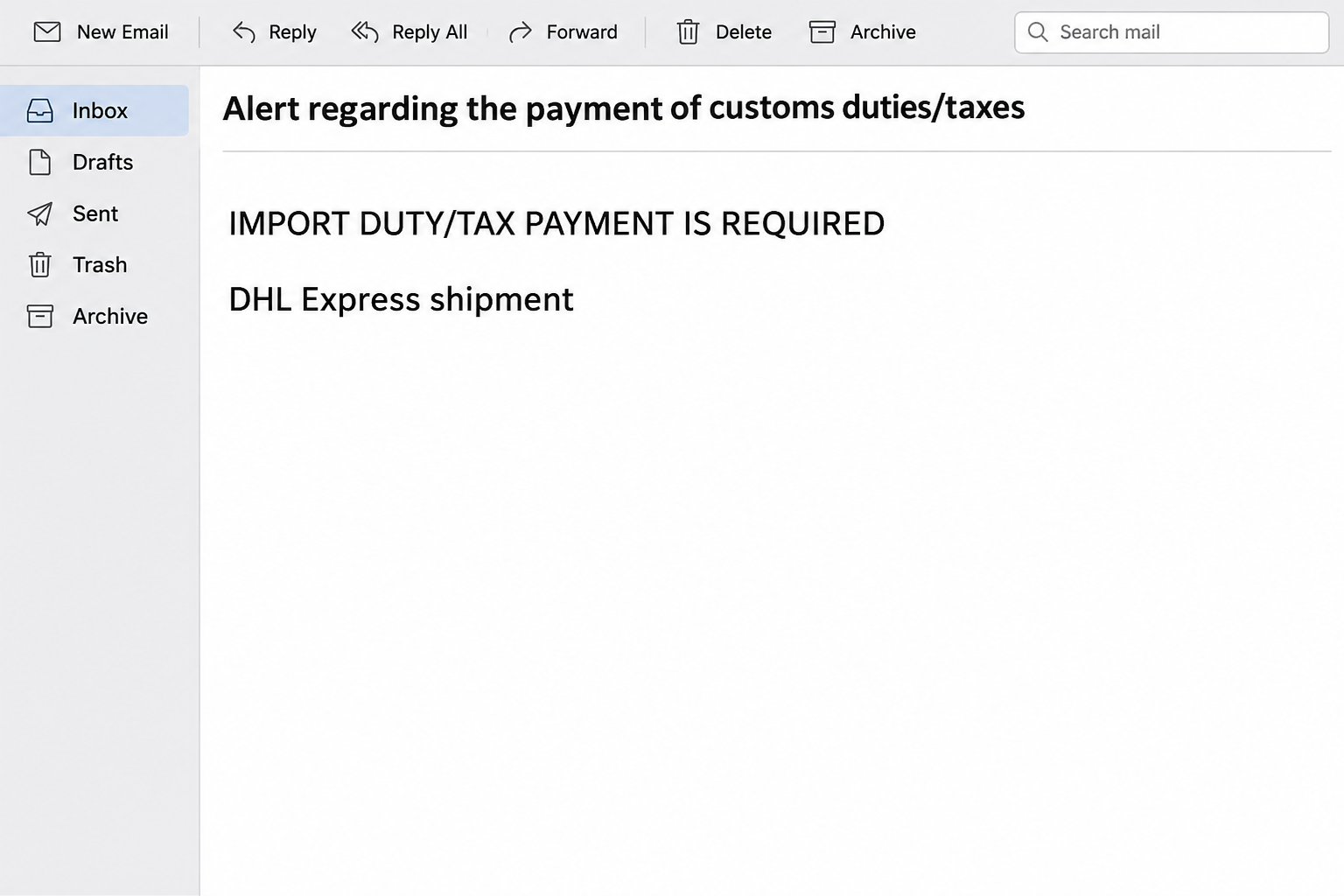
The subject mentions customs duties or taxes. The email claims DHL Express will advance the charge and asks you to pay online before the shipment can be delivered.
It also offers to show a calculation and related documents. That makes the request sound like there is a complete customs file behind the payment button.
The image recreates the opening message without a checkout or any working link. It does not establish that any particular package or charge exists.
Real import fees make this claim harder to dismiss
Customs duties and taxes can be real costs on genuine international shipments. DHL’s fraud awareness page even describes genuine customs payment requests sent by email or text.
That does not make every message asking for duty legitimate. The useful test is whether the carrier can confirm the charge for your shipment through its own channels.
Shipping and import terms can differ. The seller may cover duties in advance, or the recipient may owe certain charges when an item arrives.
If you are already expecting to pay some import costs, check what the seller said about who pays. Then reconcile the amount with the carrier, not with an email alone.
The reported destination cannot settle a real customs bill
The reported link was associated with a copied DHL payment page, not an independently verified DHL route. The destination was unavailable at inspection, so its exact fields cannot be confirmed.
Payment details are the apparent target, not a documented theft from a particular card. The sample does not establish that a shipment was held or that anyone paid.
- Check your tracking reference in the seller’s order history or a shipping record you already trust.
- Ask the carrier about the package and charge from its official customer service route.
- Compare the charge with your purchase terms, especially if the order said import taxes were included.
- Treat a submitted payment card or bank approval as its own event to report promptly.
For a real shipment issue, the carrier can explain what is outstanding and how to act. An unknown page does not get to establish that the fee exists.
How the DHL Express Customs Payment Scam Works
Step 1: You are asked to picture a parcel already in transit
The language starts with a shipment on its way rather than an unexpected sale. That suits the experience of anyone who recently bought something across a border.
The message does not have to match every order detail to feel timely. A reader expecting several items may supply the missing connection without realizing it.
Compare the allegation with a specific order instead of guessing which parcel it means. A friend’s gift or a business shipment can still be checked through the sender.
If you manage incoming orders at work, ask which department booked the shipment. Accounts payable should not assume a warehouse employee authorized a charge just because an email says DHL.
Step 2: Customs terminology turns a payment into a delivery task
People know parcels can sit while someone resolves paperwork. The message uses that possibility to make paying now feel like the simplest way to keep the delivery moving.
The claim that the carrier already paid an authority sounds relevant. An email using actual customs language can still fail to establish the shipment to which the charge belongs.
In a real transaction, the seller, carrier or broker should be able to explain how the package and bill connect. Ask for a record through channels you can verify.
If the amount differs from what was included at checkout, ask for a breakdown. A valid question about taxes does not require entering a card number to obtain an answer.
Step 3: The message offers documents and payment through the same route
People may click because they want to see how a charge was calculated, not because they have decided to pay. The reported message uses the same linked route.
That matters because a request for independent evidence should not trap you inside the alleged payment flow. Use established tracking or the carrier’s own support before testing any buttons.
A page can copy the familiar color and company name without being connected to the carrier. A real-looking line item is still something displayed by the page owner.
Do not enter test details or open the alleged documents to compare layouts. The safest route to an actual customs breakdown is through the authenticated shipment or verified support.
Step 4: A convincing payment screen can ask for more than a fee
Reports associated the link with a counterfeit DHL payment route. The sample does not verify a particular card form, completed charge or additional verification step.
If a similar page requests card details, the risk is not confined to the amount it displays. The card can be exposed even if the payment appears to fail.
Read any authorization’s payee and amount inside your real banking app. Do not approve it merely because a courier message said you should expect a request.
A genuine payment route may include a code or app prompt. Initiate that payment through the route you verified, never through an unconfirmed link to test whether it works.
Step 5: You can still resolve a real shipment after leaving the page
A false request and a genuine duty bill can arrive around the same time. Avoid the fraudulent route while checking what actually applies to your package.
Use the tracking number from the seller’s order record and confirm the carrier named there. A shipment can switch carriers, so verify who currently handles it.
If you cannot match the notice to an order, do not pay it on the chance that a parcel exists. Ask known senders whether anything was shipped first.
If a carrier says the package is waiting for a payment, obtain its instructions independently. Leave the original email out of the transaction rather than returning to it.
What to Do if You Have Fallen Victim to This Scam
-
Close the suspicious page before checking the shipment.
If you only read or visited, avoid following the link again to look for a total. Check your real order and carrier accounts independently.
If the page showed a successful or failed payment, make a note of what it said. The bank’s actual activity record is more useful than either screen.
Do not send a verification code to anyone claiming to sort out the delivery. A carrier inquiry and a bank authorization are different actions.
-
Contact your card issuer if you entered payment details.
Use the phone number on the card, your verified banking app or another established contact. Explain that the card was entered into a suspected courier impersonation page.
Ask whether a temporary lock or replacement is appropriate. If there is a charge or pending authorization, explain what you approved and what you did not.
If your business card was involved, report it to the person managing that card too. They may have a separate procedure for contacting the issuer.
-
Review the financial record without paying twice.
Check the card or bank account for a merchant name, amount and timestamp you recognize. Preserve those records before removing messages or clearing screenshots.
A legitimate carrier bill still needs separate verification if your card is exposed. Do not repeat the payment merely because the first page showed an error.
Ask the issuer how to report or dispute an unauthorized charge. Give them the details from their own account record where available.
-
Identify any address or credentials you shared.
A home address, account password and card number pose different problems. Make a private list so you can tell the relevant provider what the form received.
Replace a submitted password through the service you actually use. If you reused it elsewhere, prioritize those accounts and check any sign-in approval you gave.
If someone follows up using your delivery address, do not let the correct detail convince you they represent DHL. Use the carrier’s verified contact details instead.
-
Find out whether there is a package to deal with.
Trace the shipment from the merchant, sender or logistics record. Ask about the actual duty amount, the party that pays and what the genuine carrier needs.
For a business import, involve the buyer or broker who handles that order. They can identify whether the invoice and shipping terms support the requested charge.
If the seller promised duties were included, discuss it with the seller rather than paying an unverified collector. Keep a copy of the terms or order confirmation.
-
Preserve the message and report the impersonation.
Save the arrival time, subject and any charge information privately. Use the real carrier’s reporting guidance rather than sending the evidence back to the original correspondent.
Report the email through your mail provider after preserving what the bank or carrier may need. Avoid distributing the payment link to other recipients.
If a new contact claims they can reverse the fee for another payment, check with the issuer first. A genuine dispute does not begin with an unsolicited recovery payment.
When Duties Were Supposed to Be Included
Look for the actual order breakdown, not just the product price. Shipping, sales tax and import duty can appear as different charges with different parties responsible.
Ask the seller what it meant if it said import charges were included. A promise on a shop page and the carrier’s record should describe the same shipment.
A recipient may be asked to confirm who is responsible when paperwork is incomplete. Give that question to verified customer service or your broker, without sharing card details by email.
If no carrier or merchant can connect the notice to a shipment you recognize, do not make a standby payment. There is no need to purchase a promise of delivery.
If a real shipment has several numbers
A store’s order number may differ from a carrier’s waybill. Use the seller’s records to connect the two rather than guessing that an email concerns the newest order.
The correct number also helps when several items were shipped separately. Ask which package the fee covers before you treat an entire order as delayed.
A charge can be legitimate without applying to the parcel you first had in mind. Verify the carrier handling that specific item and what evidence connects it to the bill.
Once you find the genuine route, keep its confirmation. A reliable receipt gives you something useful to show the merchant or carrier if the delivery is still delayed.
Frequently Asked Questions
Does DHL ever email about import duties?
DHL says it can request genuine customs duties and taxes by email or text. That makes independent confirmation especially important when you receive an unexpected notice.
Use the tracking details from a trusted source, then contact DHL directly about the specific bill. Do not let the email decide where you pay.
What is different about this particular DHL email scam?
The reported message is centered on customs duties and a supposed advance to the authorities. The outside payment route is the risk, rather than a request to collect a parcel.
The name and terminology can sound familiar without giving you a trustworthy way to look up the account. Check the package before treating the charge as yours.
Does a real tracking number make a notice safe?
A tracking number can help you find an order independently. It cannot establish who sent a separate email or who receives a payment on the page it links to.
If the number matches, check the fee through the genuine carrier. If the carrier cannot confirm it, do not pay merely because the parcel already exists.
What if the payment screen did not finish?
If you entered card details, contact the issuer even if the final button failed or no charge appears. The absence of a receipt does not settle what was received.
Give the issuer the sequence and amount, if shown. Check its advice before accepting a second payment request or responding to somebody offering a refund.
What if I opened the message without entering anything?
Reading the notice does not show a card was exposed. If you opened a link, note whether anything downloaded or whether you granted permissions.
Check the shipment through independent tracking and report the message if appropriate. A known payment or credential disclosure calls for more immediate follow-up than an unread notice.
Should I pay a real duty charge after ignoring this message?
Use the genuine payment route only after the confirmed carrier links the charge to your shipment. Ignoring the fake email does not cancel any legitimately payable fee.
If responsibility is unclear, ask the merchant or broker before paying. Make that decision based on verified records rather than the urgency of this email.
The Bottom Line
Do not pay import duty through this DHL impersonation email. A real customs charge can exist, but you should be able to check it through the carrier and shipment records.
If you entered card details or confirmed a payment, contact your issuer promptly. Keep the payment investigation separate from any legitimate delivery question.

Join the discussion
0 commentsShare your experience or ask a question about this article.
Community experiences
Did this happen to you?
Your experience could help someone recognize the same scam. Submit a private report for our team to review.
I experienced this tooReports are reviewed before publication. Sharing publicly is always your choice.
Discussion
Start the conversation
Have a question or something useful to share? Add the first comment.