

Few health stories are more persuasive than a specialist who supposedly suffered the same symptoms as you. The Dr. Richard Terrier tinnitus pitch leans into exactly that connection.
It offers a story about lost silence, a medical discovery, and an unexpected route to recovery. The important question is what remains when you check the details.
Overview
The specialist is presented as both researcher and patient
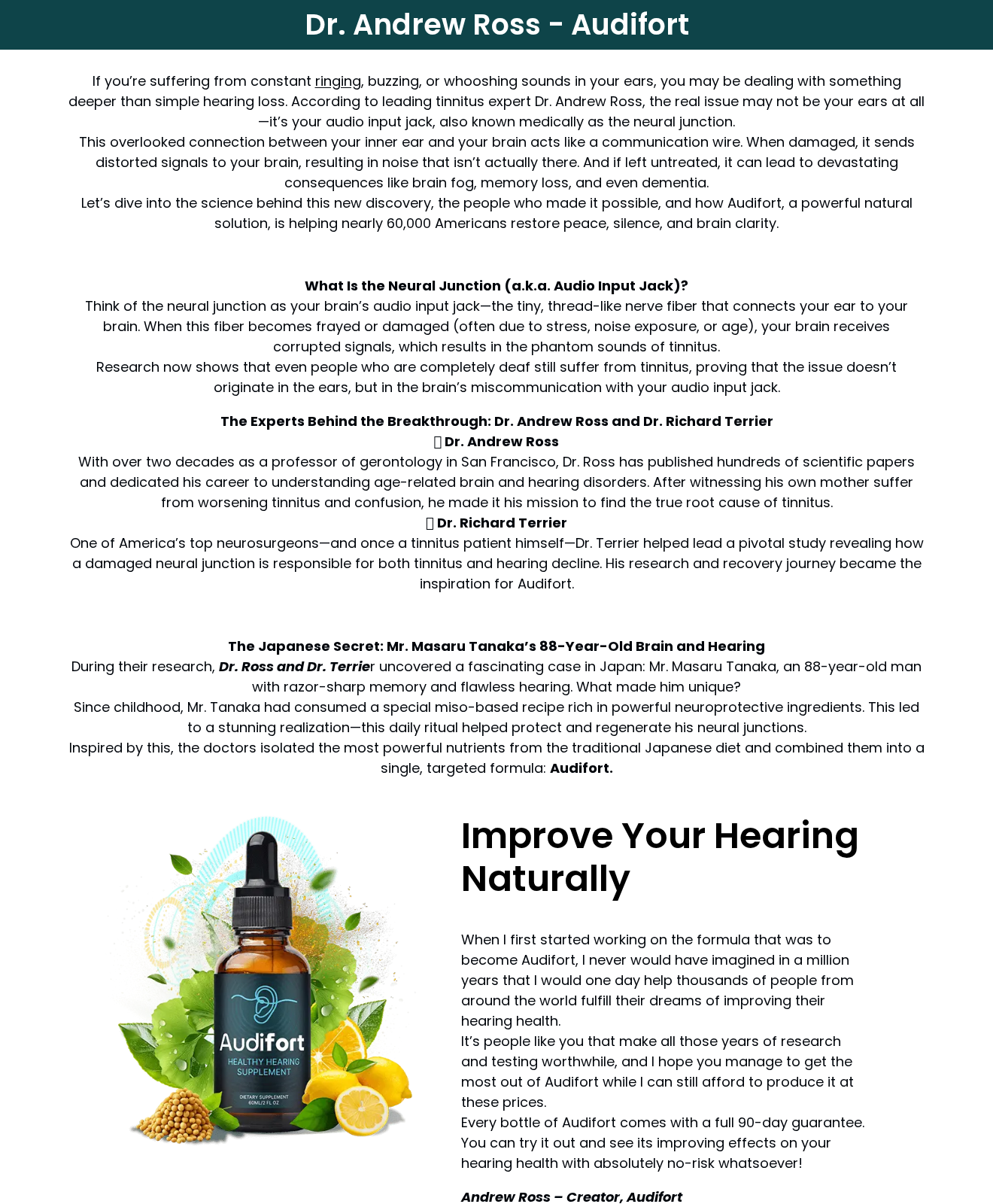
The promotion describes Dr. Richard Terrier as a leading U.S. neurosurgeon who once experienced tinnitus himself. That dual role gives the sales story an emotional advantage.
He supposedly understands both the science and the frustration. Readers are encouraged to see the proposed solution as a personal breakthrough, rather than an ordinary advertisement.
However, the webpages making those claims are promoting a supplement. Their account of his recovery is not an independently authenticated medical record.
The claimed discovery becomes a neural-repair protocol
Terrier is linked with Dr. Andrew Ross in a story about damaged connections between the ear and brain. A Japanese dietary routine supplies the next piece.
The narrative eventually points to Audifort. The purchase therefore depends on several claims being accepted together: the specialist, the diagnosis, the discovery, and the bottled treatment.
Before trusting that chain, you should be able to identify:
- The hospital or professional record belonging to the specialist shown.
- The study he supposedly led and the patients it examined.
- The evidence linking the advertised formula to measurable hearing improvement.
- The complete label of the product actually offered for sale.
- The return deadline, even if the suggested treatment period lasts longer.
The promotion has not established those clinical foundations
The inspected pages did not supply a dependable hospital affiliation or research trail that authenticates Terrier’s advertised role. A confident biography cannot replace that information.
Nor does the offer establish that the finished supplement delivers the promised neural repair. A biological explanation and a product trial are not interchangeable.
Don’t mistake this sales story for a medical consultation. It has not provided the clinical foundations needed to guide treatment.
How the Dr. Richard Terrier Tinnitus Story Leads to a Sale
Step 1: The former-patient story creates a personal bond
The strongest hook is not the bottle. It is the idea that a highly qualified specialist was trapped by the same ringing or buzzing as the viewer.
That makes ordinary skepticism feel almost unfair. If the presenter suffered and recovered, asking hard questions can seem like doubting a sympathetic person’s experience.
But a commercial recovery story still needs verification. Relevant details include a real professional identity, an attributable account, and evidence of what treatment produced the improvement.
Without those foundations, the emotional connection is doing the work that clinical evidence should do. You are being asked to identify with the story before checking it.
Step 2: A prestigious title stands in for an identifiable practice
Calling someone a top neurosurgeon implies years of specialist training and a professional history. Those claims should be checkable outside a supplement’s promotional pages.
A hospital profile, licensing record, or relevant published work can help establish who a clinician is. A website repeating the same biography is not equivalent.
The inspected accounts did not provide the concrete identifiers needed to make that connection reliably. The claimed status remains part of the pitch, not an authenticated qualification.
This is not an accusation against every person with a matching name. It is a warning about relying on this particular promotional identity to make a health decision.
Step 3: A research partnership makes the theory feel corroborated
Terrier’s story is paired with Andrew Ross’s account of neural damage. Two apparent experts can make the explanation feel independently confirmed.
Yet two names inside one promotional narrative are not two independent medical opinions. Their relationship, research, and findings still need an outside record.
The Japanese miso story then provides an appealing solution: ingredients from a traditional routine supposedly become a concentrated way to repair the ear-brain connection.
That is a substantial leap. A dietary anecdote cannot demonstrate that a specific bottled formula restores hearing, and a partnership story cannot supply the missing experiment.
Step 4: Scientific terms turn into treatment expectations
The promotion describes stages such as nourishing a damaged connection, reducing inflammation, and encouraging regeneration. Each stage sounds plausible when read as a short biological explanation.
What is missing is evidence that these stages actually occur in people taking the advertised product, at its actual dose, with meaningful and reliably measured results.
A sentence saying an ingredient supports nerves does not show that it repairs the cause of a particular person’s tinnitus. The patient’s diagnosis cannot be skipped.
The narrative also makes conventional care look inadequate by comparison. Do not reject an assessment or useful management option because a sales page promises a more complete answer.
Step 5: A concentrated solution becomes a bottle package
The buyer reaches an Audifort order page with multiple-bottle options. The promise is no longer simply learning about a doctor’s experience or a traditional recipe.
The page highlights six ingredients while describing a blend of more than 20. Buyers need the complete label and amounts, not an assumed formula assembled from promotional descriptions.
The offer also recommends consistent use for four months or longer while advertising a 90-day guarantee. Waiting for that full suggested period can outlast the advertised refund window.
A recommendation to keep taking a product does not extend your return rights. Decide whether you want the order while the applicable cancellation and return deadlines remain open.

Why a Recovery Story Is Not a Clinical Trial
Personal recovery accounts can be sincere and still fail to establish a treatment’s effect. Symptoms can change for reasons a testimonial does not identify.
A useful trial asks a different question: what happened to comparable people receiving the actual intervention, compared with an appropriate control?
That requires a defined formula, dose, patient population, outcome measure, and follow-up period. It also requires accounting for adverse effects and changes in other treatment.
The inspected promotion does not furnish that chain for the claimed Terrier protocol. Instead, the reader moves between an expert story, ingredient explanations, and an order invitation.
References to universities or scientific journals do not close the gap. A paper about auditory pathways can be genuine without testing this product or endorsing its creator.
Check what the paper actually studied. Laboratory work, an animal experiment, and a human supplement trial answer different questions and should not be treated as equivalent.
Even a clinical study needs to match the claim. Improving a questionnaire score would not automatically demonstrate restored hearing or repaired nerve structures.
You shouldn’t have to become a hearing researcher to decide whether to buy a bottle. If the seller cannot substantiate its promised results, walk away.
Questions the Claimed Specialist Should Be Able to Answer
Where does this clinician practice? Which institution confirms the advertised position? What is the title of the study linking his protocol to the product?
Those are ordinary verification questions, not hostile demands. An advertisement using a specialist’s authority should make the supporting information easier to find, not harder.
Ask whether the product was tested as sold. If the response points only to a general ingredient paper, it has not answered the question.
Likewise, ask whether any published researcher approved the commercial interpretation. Naming an institution’s work does not mean that institution developed or endorsed the supplement.
A refund promise is not the answer to any of these questions. It concerns what happens after a purchase, not whether the treatment claim was demonstrated.
Do not send private medical records to an unknown promoter to obtain proof of their credentials. They should be able to identify their public professional record first.
Nor should a sales representative be treated as your clinician because they can repeat the protocol. Your medical history and symptoms deserve assessment by an appropriately qualified professional.
What to Know About the Bottle and the Return Window
Audifort is marketed as a liquid dietary supplement taken orally. The word drops does not mean the contents should be put into your ears.
Read the actual package instructions and warnings. If information is missing, contradictory, or different from the promotion, pause rather than improvising how to use it.
The order page says it requires one payment, with no later payments needed. Automatic refills were not demonstrated for this exact offer.
A one-time price only answers the billing question. It doesn’t demonstrate that the proposed treatment will help, or make a refund automatic.
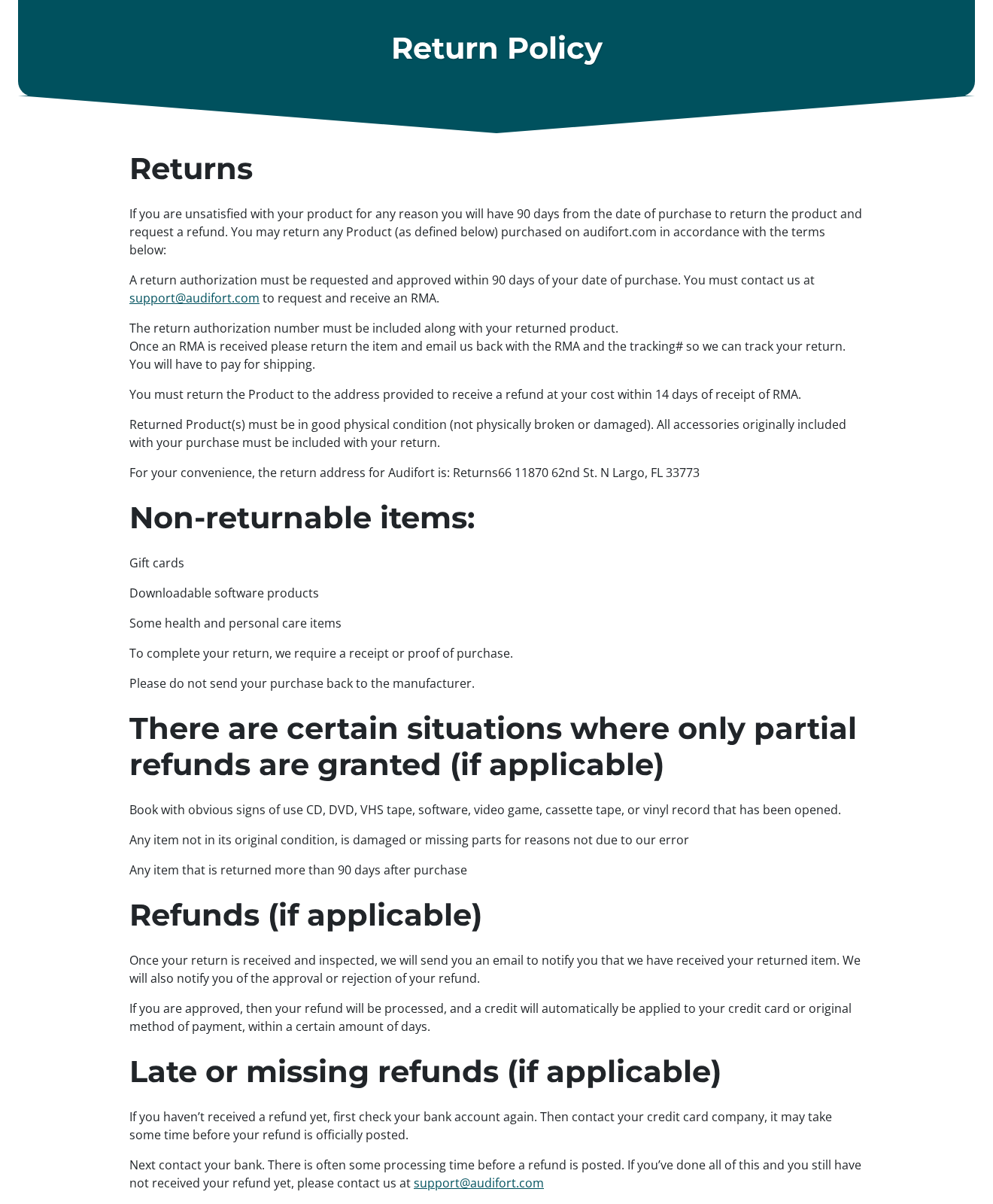
The published return rules require authorization within 90 days of purchase and a return within 14 days after authorization. Customers cover the postage.
They also include a sale-item exclusion, despite the discounted offer. Obtain a written explanation of which conditions apply, including whether opened bottles qualify for your particular order.
Keep a copy of that answer. A general statement that you have nothing to lose is less useful than an order-specific deadline, address, and approved refund amount.
Choose Hearing Care Instead of a Sales Diagnosis
Tinnitus is a symptom, not a diagnosis you can reliably complete from a promotional video. Different people can experience similar sounds for different reasons.
The NIDCD describes hearing evaluations and management approaches, including sound-based and behavioral options. It says supplements advertised as tinnitus cures have not been proven effective.
That does not mean you must accept distress without help. It means the next useful step is assessment and a management plan, not an unverified repair story.
Describe what you hear, when it started, whether it affects one or both ears, and any associated hearing changes. Give the clinician your medication and supplement list.
Sudden hearing changes deserve prompt attention. Do not wait for an order to arrive or a marketing timetable to run out before seeking advice.
You can also ask for a second qualified opinion if previous care has been frustrating. Another professional assessment is different from trusting someone whose credentials the advertisement cannot substantiate.
What to Do if the Richard Terrier Pitch Led You to Order
- Build a record of your particular offer.
Keep the webpage, product name, number of bottles, payment confirmation, and any messages promising recovery. Include the supposed specialist’s name and the page address.
Do not rely on a later version of the website. Your own saved material helps explain what influenced the purchase and which agreement you accepted.
- Ask the merchant to stop an unwanted shipment.
Use the receipt’s verified support route and state the cancellation request directly. Ask whether the whole order, including extras, has been stopped.
Keep the response and refund reference. If dispatch has already occurred, request the applicable return process rather than buying more products to obtain assistance.
- Check the actual label before taking anything.
Photograph the bottle, ingredients, warnings, and lot details. Show them to a pharmacist or clinician if you take medicines or have a health condition.
Do not put an oral supplement into your ears or increase the serving to imitate a promised protocol. A prerecorded pitch is not individualized medical guidance.
- Resolve the guarantee conditions early.
Request the RMA, complete address, required items, and final refund deadline. Ask specifically about the discounted purchase and any opened-bottle conditions.
Retain your tracking receipt and photographs of what you returned. The suggested four-month routine is not a reason to ignore the shorter published guarantee.
- Deal with unexpected billing separately.
Compare every charge with the confirmed order. If a later payment is claimed to be recurring, ask for the agreement authorizing it and cancel any unwanted plan.
Explain unauthorized or incorrect transactions to your payment provider promptly. Avoid broad accusations when your receipt and the merchant’s response can establish the precise issue.
- Keep a legitimate care plan moving.
Arrange an evaluation for persistent symptoms and seek timely help for concerning changes. Do not stop prescribed medication because a promoter criticizes conventional care.
If you experienced a possible supplement reaction, obtain medical advice and provide the product details. Preserve the bottle information while handling the purchase dispute.
Frequently Asked Questions
Is Dr. Richard Terrier a verified neurosurgeon behind this treatment?
The inspected promotional accounts did not authenticate that specific professional identity, hospital affiliation, or research role. Do not treat the sales biography as a verified specialist consultation.
What is the Japanese miso connection in this story?
Promotional pages attribute the discovery to a Japanese man’s dietary routine. They do not demonstrate that recreating it or buying a supposed concentrate repairs hearing.
Has the advertised neural-repair protocol been demonstrated?
The inspected pages did not provide a finished-product clinical trial demonstrating the promised repair and hearing outcomes. Ingredient explanations do not supply that missing evidence.
Are Audifort drops meant to go into the ears?
The advertised product is an oral dietary supplement. Follow the actual label and never assume that hearing-related drops should be used inside the ear.
Should I wait four months before requesting a refund?
No. The offer’s suggested use period does not extend its published 90-day guarantee. Check your deadline and request applicable instructions while you still have time.
Does the guarantee prove the medical claims are reliable?
No. Refund conditions and clinical effectiveness are separate matters. A seller can offer a return policy without demonstrating that a treatment works.
The Bottom Line
Do not order a tinnitus treatment on the Richard Terrier neural-repair story. The promoted specialist’s authority and the claimed bottled treatment have not been adequately substantiated.
If you already purchased, preserve the offer and seek cancellation or authorized return instructions before the deadline. For the hearing problem itself, use qualified care rather than the sales narrative.

Join the discussion
0 commentsShare your experience or ask a question about this article.
Discussion
Start the conversation
Have a question or something useful to share? Add the first comment.