

The tinnitus presentation sounds personal. A researcher named Dr. Andrew Ross says a family struggle sent him looking for answers that ordinary hearing advice had missed.
If constant ringing has worn you down, that story can be difficult to ignore. Before trusting the man behind it, look closely at what supports his promises.
Overview
The pitch sells a medical authority before it sells a bottle
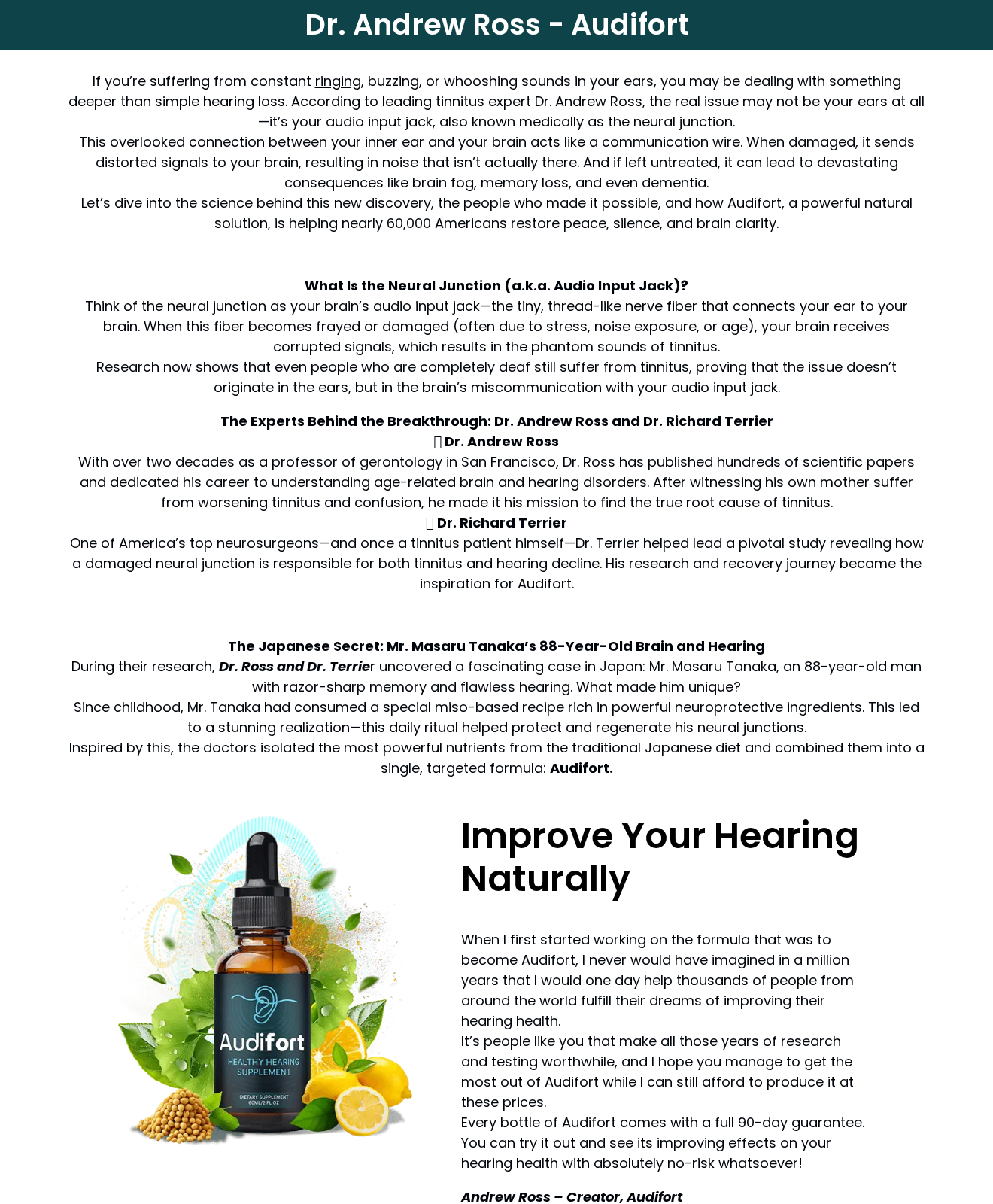
Dr. Andrew Ross is presented in tinnitus marketing as a longtime gerontology professor and researcher. His supposed breakthrough involves repairing a damaged connection between the ear and brain.
The story eventually promotes Audifort. This article concerns the claimed expert and treatment narrative, not every seller or product with a similar name.
The central question is whether the reassuring biography and scientific language provide a dependable reason to buy. A white coat, by itself, cannot answer that.
The credential details do not match the scale of the claims
The promotional pages describe an impressive academic career, including numerous papers. They do not provide the straightforward institutional and publication details needed to authenticate that biography.
Another page expands the story with books and research connections. Repeating a biography on a second website is not independent confirmation of its accuracy.
The essential checks are specific:
- Which university employed the person shown in the presentation?
- Which publications establish his work on the advertised treatment?
- Was the finished supplement tested in people with tinnitus?
- Does the evidence support the advertised outcome, rather than a theory about hearing?
- Do the purchase and refund terms match the presentation’s reassurance?
One assurance is plainly misleading
The original andrewross-audifort.com page labels the supplement FDA Approved. That is not how dietary supplements are approved for sale in the U.S.
This is more than an incomplete biography. It is a misleading regulatory assurance placed beside a health product, where shoppers may interpret it as proof of effectiveness.
An impressive story is not enough to choose a tinnitus treatment. The missing credentials and misleading approval assurance are reasons to walk away.
How the Dr. Andrew Ross Tinnitus Pitch Works
Step 1: A familiar symptom makes the story feel relevant
The opening describes ringing, buzzing, and other sounds that interfere with daily life. Someone already struggling to sleep may recognize the experience immediately.
The narrative then reaches beyond the sound itself. It connects the ear problem to concentration, memory, and frightening future health consequences.
That changes the emotional stakes. A viewer who wanted relief can begin feeling that buying the proposed solution is necessary to protect their future.
Tinnitus can be distressing, but a sales presentation cannot diagnose what is causing your symptoms. Its description of a familiar problem does not validate its proposed cure.
Step 2: The professor biography supplies credibility
Ross is described as having spent more than two decades teaching gerontology in San Francisco. The marketing also claims an extensive scientific publishing record.
Those are credentials that should leave a checkable trail. A university name, faculty record, identifiable papers, and relevant professional qualifications would let a reader evaluate them.
Instead, the inspected pages rely heavily on statements about the biography. They ask you to accept the authority before they provide the means to authenticate it.
A real researcher with the same name would not automatically validate the presentation. The record must match the individual shown, the institution claimed, and the work being advertised.
Step 3: A simple wiring metaphor becomes a diagnosis
The marketing calls the supposed problem a damaged neural junction or audio input jack. The language makes a complicated hearing condition sound like one broken connection.
It is an appealing explanation because a broken wire suggests an obvious repair. Once the viewer accepts that model, a supplement described as repairing it feels logically necessary.
But an easy metaphor is not a clinical finding. The brain’s involvement in tinnitus does not demonstrate that an oral botanical blend can repair the advertised damage.
You need evidence for the full claim: the diagnosed problem, the specific intervention, and a meaningful improvement in comparable patients. The metaphor skips those steps.
Step 4: The Japanese discovery gives the promise a memorable origin
The pages introduce an elderly Japanese man and a traditional miso-based routine. This story becomes the bridge between the claimed discovery and a concentrated commercial formula.
A striking personal example can be memorable without being reliable research. Someone’s reported hearing or longevity cannot identify which ingredient caused it.
Nor does extracting ingredients from a food tradition establish that a bottled blend recreates the same effects. Amounts, preparation, safety, and patient outcomes still need testing.
The story also changes what the viewer is buying. Curiosity about a traditional practice becomes an order for a supplement, rather than the simple explanation initially expected.
Step 5: Approval language and reviews make the decision feel safer
The FDA Approved wording appears alongside other quality assurances. Nearby ratings and success claims add to the impression that the difficult questions have already been answered.
The FDA explains that it does not approve dietary supplements for safety and effectiveness before marketing. Manufacturing standards do not turn a supplement into an approved tinnitus treatment.
A rating displayed by a sales page is also not a clinical study. Before treating it as independent customer evidence, ask who collected it and how purchases were verified.
These assurances should be examined separately. A real payment service, manufacturing claim, or customer rating cannot establish that the professor’s treatment story is medically sound.
Step 6: The story becomes a multi-bottle purchase
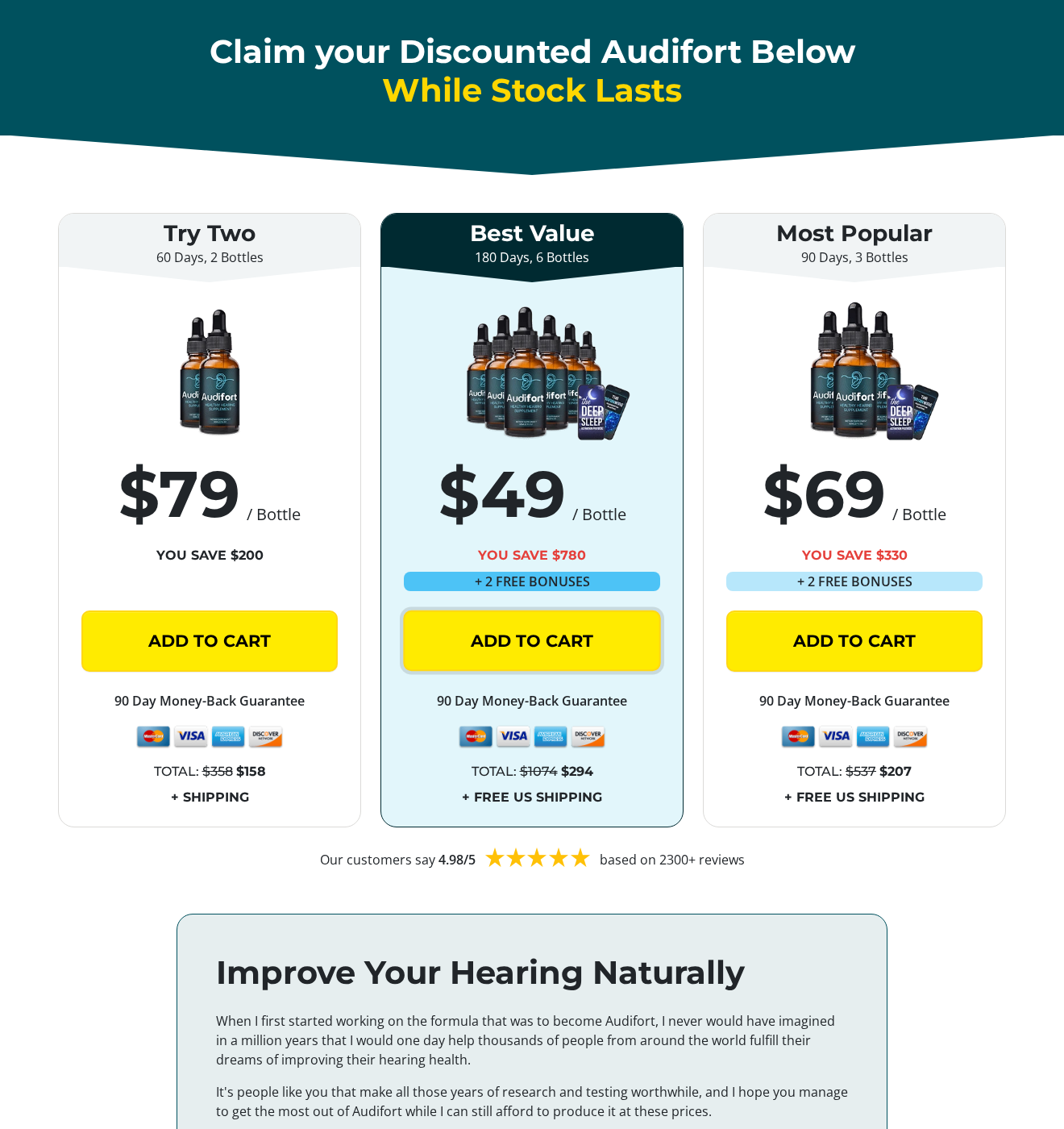
The linked Audifort order page offers two bottles for $158, three for $207, or six for $294. Shipping is additional on the two-bottle card.
These are package totals, not the smaller per-bottle figures highlighted in the offer. A larger supply commits more money before the buyer knows whether it suits them.
The page expressly describes a one-time payment without future payments. Save that promise with your receipt, and question any later charge you did not authorize.
The more immediate risk is purchasing a health promise that the credential and treatment evidence do not support. A one-time charge can still be a poor purchase.
What Would Actually Verify the Claimed Expert?
A credible medical biography should let you leave the sales funnel and check it somewhere independent. More promotional pages repeating the name do not accomplish that.
Start with the institution the presentation claims. Look for a matching faculty profile or research record maintained by that institution, rather than a page selling the supplement.
Then examine the work itself. A paper title, author list, journal, and publication date are more useful than a broad statement about hundreds of scientific papers.
The research must also concern the relevant treatment. A genuine publication about aging or auditory biology would not automatically establish the supplement’s effectiveness.
Book claims should be equally checkable through titles, publishers, and authorship. An impressive number of readers is not a substitute for identifying the books.
The inspected promotional biography did not supply a dependable chain connecting those accomplishments to the person and treatment shown. That is reason enough not to rely on it.
This does not identify unrelated people named Andrew Ross as wrongdoers. Keep the question attached to this particular promotional identity, not everyone who shares the name.
Real Tinnitus Research Does Not Prove This Bottle Works
The ear and brain are both involved in hearing. Referring to neural pathways can therefore sound scientific even when the product claim goes far beyond the cited concept.
The NIDCD’s tinnitus information discusses multiple contributing factors and management approaches. It does not validate this professor narrative or endorse the supplement.
Research identifying a possible mechanism is an early part of understanding a condition. It is not the same as testing a finished treatment in patients.
For a meaningful product study, the actual formula and dose matter. So do the comparison group, duration, measured outcomes, side effects, and whether the results were replicated.
Ingredient studies cannot quietly stand in for that evidence. Even an ingredient with a plausible biological action may not produce the advertised benefit in a multi-ingredient supplement.
The biography pages emphasize ginkgo, NAC, and lion’s mane. The offer’s highlighted list instead names maca, grape seed, green tea, capsicum, gymnema, and GABA.
The offer mentions more than 20 ingredients, so different highlights do not prove those first ingredients are absent. They show why a complete current label matters.
Most importantly, seeking legitimate hearing care is not admitting defeat. Evaluation can identify problems and management options that a prerecorded sales presentation cannot assess.
The Guarantee Needs to Be Read Before You Order
The offer promotes a 90-day guarantee, but the linked return policy adds requirements that matter to anyone expecting an effortless refund.
It requires a return authorization requested and approved within 90 days of purchase. It also asks for the product back within 14 days after receiving that authorization.
The buyer pays return shipping. The page lists Returns66, 11870 62nd St. N, Largo, FL 33773 as a return destination.
There is another conflict to resolve: the offer advertises discounted packages, while the policy says sale items cannot be refunded. Ask which rule applies to your purchase.
These published conditions are not evidence that every refund is refused. They are a warning that the broad guarantee does not explain the complete process.
Do not wait for a long promised treatment period to finish before checking your deadline. Keep the receipt, packaging, and correspondence while there is still time to act.
What to Do if You Ordered After Seeing the Andrew Ross Pitch
- Preserve the exact promises that influenced you.
Save the presentation address, credential claims, approval badge, package selection, and receipt. Keep screenshots with the page address visible.
Your records should distinguish what the advertisement promised from what the order confirmation actually sold. That difference can matter in a refund or billing dispute.
- Request cancellation promptly if the order has not shipped.
Use the contact information on your receipt. State clearly that you want the order canceled and ask for written confirmation of the amount refunded.
Do not rely on a message saying your request was received. Ask whether dispatch has actually been stopped and whether any optional products remain on the order.
- Keep hearing decisions separate from the advertisement.
Arrange appropriate care for persistent symptoms. Sudden hearing changes or other concerning symptoms should not wait while you experiment with an unfamiliar supplement.
Bring the actual label to a pharmacist or clinician if you are considering taking it, particularly if you use medication. Do not replace prescribed treatment.
- Get the applicable return instructions in writing.
Ask for authorization, the complete destination, required contents, and the deadline governing your order. Specifically ask how the sale-item exclusion fits the advertised guarantee.
Photograph the bottles and parcel before sending them. Retain tracking, proof of delivery, and the return authorization rather than relying on a verbal promise.
- Check the charge against the payment agreement.
The inspected offer says one-time payment. If another charge appears, request the authorization for that transaction and challenge any billing you did not agree to.
Review the full statement descriptor and date. Do not assume a second charge is legitimate simply because it resembles the original merchant entry.
- Escalate an unresolved problem with a clear record.
If the seller does not honor the applicable agreement, ask your card issuer or payment provider about its dispute procedure and deadlines.
Provide the receipt, saved claims, cancellation request, and return evidence. Describe the specific problem accurately, and ignore anyone demanding an advance recovery fee.
Frequently Asked Questions
Is the Dr. Andrew Ross tinnitus expert independently verified?
The inspected promotional pages did not authenticate the claimed academic biography with matching institutional records and identifiable publications. They should not be treated as independent proof.
A real person sharing the name does not settle the issue. The qualifications must belong to the individual and treatment presented in this campaign.
Does the FDA Approved badge prove Audifort treats tinnitus?
No. Dietary supplements are not preapproved by the FDA for safety and effectiveness. The badge is a misleading assurance, not evidence of an approved tinnitus treatment.
Is the neural-junction explanation an established cure?
The marketing’s wiring analogy does not establish a cure. Understanding a possible role for neural pathways is different from proving that this supplement repairs them.
Does a Japanese miso story prove the formula is effective?
No. A personal story about diet and hearing cannot demonstrate what caused an outcome or whether a concentrated blend reproduces it.
Will ordering automatically enroll me in monthly refills?
The inspected order page expressly says the payment is one-time. Automatic refills were not established, so save the terms shown on your own checkout.
What should I do first if I already paid?
Find the receipt and contact the order’s support team promptly. Request cancellation or the correct return authorization, and preserve the promises that led you to buy.
The Bottom Line
Do not buy a tinnitus treatment on the strength of this Andrew Ross story. The academic trail is unverified, the treatment proof is missing, and the approval assurance misleads.
If you already ordered, secure your records and request cancellation or written return instructions now. Keep legitimate hearing care moving instead of waiting on the promotional promise.

Join the discussion
0 commentsShare your experience or ask a question about this article.
Discussion
Start the conversation
Have a question or something useful to share? Add the first comment.