

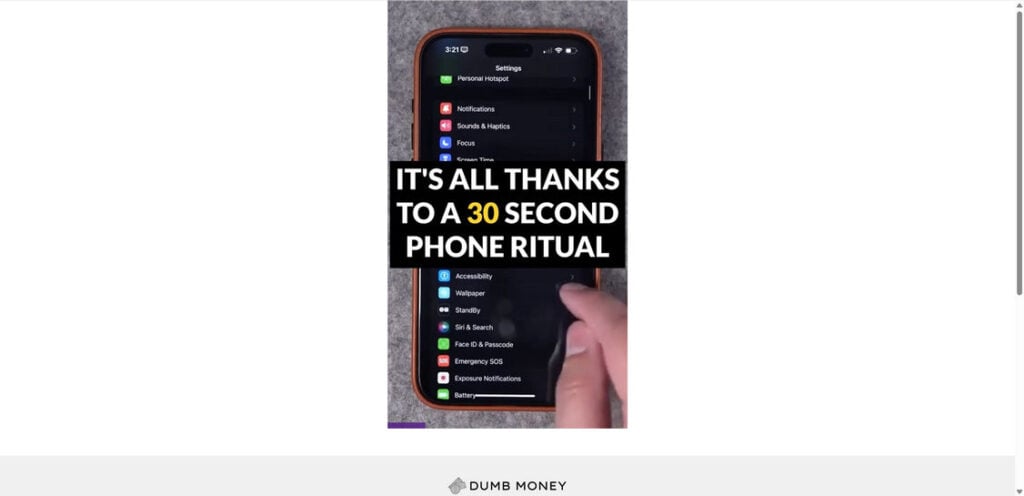
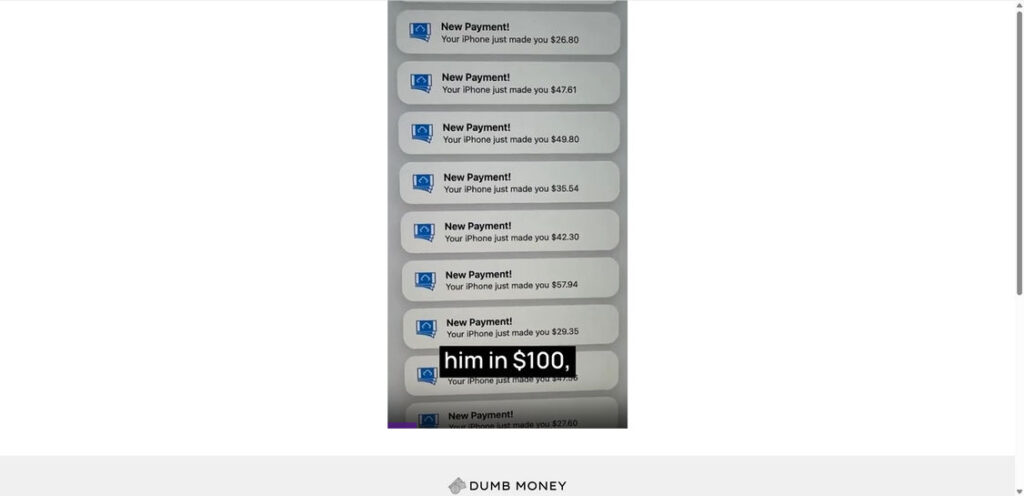
You’ve probably seen the ads — dramatic stories, emotional music, and bold promises that a “30-second phone ritual” can earn you thousands of dollars a month. One ad shows a cracked iPhone receiving payment after payment. Another features seniors supposedly making $500/day by simply tapping on their phones. All of them link to something called the Dumb Money System.
If your gut tells you it sounds too good to be true, trust it. What’s being sold is not a miracle system, but a marketing ploy built on hype, fake urgency, and a recycled scam template. In this article, we’ll expose how the Dumb Money system really works, why it’s dangerous, and what you can do if you’ve already fallen victim.
Scam Overview: What Is the Dumb Money System?
The Dumb Money System is marketed as a revolutionary way to earn passive income through what it calls a “30-second phone ritual.” Promising effortless cash flow, this system is pushed through ads that feature emotionally charged stories, dramatic success testimonials, and manipulative sales tactics. But beneath the glossy exterior lies a classic digital scam.
Here’s a breakdown of the key red flags:
1. Exaggerated Claims Without Proof
The Dumb Money pitch includes bold promises: make $10,000/month with no experience, no selling, no inventory, and no tech skills. These numbers are meant to catch your attention — and lower your defenses. The reality? There’s no verifiable evidence of anyone making this kind of money with this system. The “proof” provided in the ads and on the site consists of staged screenshots and vague testimonials, often without full names or verifiable identities.
2. Emotionally Manipulative Marketing
The sales funnel begins with an emotionally-driven video. A senior citizen, a struggling mom, or a laid-off worker is shown receiving a mysterious phone notification. Moments later, a stranger steps in and tells them about the Dumb Money system. This storyline is repeated across multiple variations of the ad. The aim is to create trust through relatability, and urgency through fear of missing out.

3. Fake Scarcity and Urgency
Another tactic the scammers use is the classic countdown — “Watch this before it disappears!” or “This video may be taken down at any moment!” The goal is to rush you into acting without giving you time to research. In reality, the site and video are permanently hosted and run as long as people are clicking through and buying.
4. Generic Content You Can Find for Free
After purchase, users are typically given access to a poorly designed members’ area filled with basic, outdated guides about affiliate marketing, social media sharing, or other basic internet strategies. These are not proprietary systems. They’re widely available — and free — on YouTube, Reddit, or blogs.
5. Anonymous Creator: “Matt Scott”
The system is supposedly created by someone named Matt Scott — a figure who doesn’t exist outside the Dumb Money ecosystem. There are no LinkedIn profiles, interviews, or social footprints. This lack of transparency is a major red flag. Legitimate entrepreneurs in this space typically have a verifiable presence.
6. No Refund or Support
Despite a vague mention of a 60-day refund policy, many users have reported that their refund requests go unanswered. The contact details provided are often fake or lead to dead-end email addresses.
7. Recycled Scam Template
This scam bears a striking resemblance to previous online scams like WiFi Profits, Cash App System, and 1K A Day Fast Track. They use the same sales playbook: emotionally manipulative storytelling, exaggerated earnings, and vague claims about “secret systems” and “AI-powered tools.”

In short, Dumb Money is not a real income solution. It is a sales funnel designed to extract money from unsuspecting users.
How the Scam Works
The Dumb Money scam follows a precise psychological formula, from first contact to final purchase. Here’s how the process unfolds:
Step 1: Targeted Clickbait Ads
You first encounter the scam through an ad on social media — TikTok, Facebook, Instagram, or YouTube. These ads often show a cracked phone screen with fake payment notifications or feature an elderly person discovering the “ritual.”
The captions are loaded with bait:
- “Do this for 30 seconds a day and earn $500.”
- “You won’t believe what this senior discovered.”
- “This was on the news — but no one’s talking about it.”

Step 2: Landing Page With Fake Verification
Clicking the ad brings you to a page like getdumbmoney.com. Before you can view the content, you’re prompted with a fake CAPTCHA — a “Verify you’re not a robot” screen that does nothing except create a false sense of security.
Step 3: The Long, Empty Sales Video
Next, you’re forced to sit through a 25–30 minute sales video. This video is filled with:
- Repetitive emotional storytelling
- Claims of secret income loopholes
- Name-drops of ChatGPT and other buzzwords
- Mention of people making thousands with no experience
Critically, the video never explains what the system actually is. You’re left waiting for real information that never comes.
Step 4: The Hard Sell and Fake Scarcity
Eventually, you’re shown a button to “Access Dumb Money Now.” You’re told this offer is limited and might disappear soon. The narrator urges you to act fast before the “big companies” shut it down. Again, this is fabricated urgency designed to push emotional purchasing.
Step 5: Digistore24 Checkout
Clicking the button leads to a checkout page hosted on Digistore24. The price? $67, billed as a one-time investment. Digistore24 handles the transaction but is not responsible for the legitimacy of the product. They are simply the payment processor.
Step 6: Access to Useless Content
After purchase, you’re granted access to the Dumb Money members’ area. This typically contains:
- Generic PDF guides
- Outdated video tutorials
- Overviews of basic affiliate marketing
- Tips you could find in 10 seconds on Google
There’s no proprietary system, no app, no tool, and certainly no AI assistant that earns you passive income. The “ritual” is just a marketing hook.
Step 7: No Refund, No Support
If you try to get a refund, you’re met with silence. Many buyers report that support emails bounce or are ignored. The refund guarantee, like everything else, is a false promise.
What to Do If You Fell for the Dumb Money Scheme
If you’ve already purchased the Dumb Money system, don’t panic. Here’s a step-by-step guide on what to do next:
1. Request a Refund Through Digistore24
- Visit Digistore24 Support
- Enter your purchase details (email, order number)
- File a refund request within 60 days of purchase
- If they ignore you, escalate through their support form
2. Dispute the Charge With Your Bank or Credit Card
- Contact your bank or credit card company
- Explain that you were misled by a fraudulent product
- Provide documentation/screenshots if possible
- Ask for a chargeback citing misleading advertising
3. Report the Scam to Consumer Authorities
- FTC Complaint Assistant (US): https://reportfraud.ftc.gov
- Better Business Bureau: https://www.bbb.org/
- Internet Crime Complaint Center (IC3): https://www.ic3.gov
4. Warn Others by Posting a Review
- Post honest reviews on Trustpilot, Reddit, or scam-tracking forums
- Include screenshots, receipts, and your experience
- Use keywords like “Dumb Money System scam” to help others find your warning
5. Install Antivirus and Scan Your Device
- Some scam sites include tracking scripts
- Use antivirus software to scan your device
- Clear browser cookies and change your passwords
6. Avoid Similar Offers in the Future
Stay away from ads that:
- Use emotionally charged stories
- Offer overnight wealth
- Include timers or “restricted access”
- Require payment before explaining how it works
Frequently Asked Questions About the Dumb Money Scam
What is the Dumb Money System?
The Dumb Money System is a misleading online course marketed as a “30-second phone ritual” that supposedly generates passive income. In reality, it’s a repackaged scam that sells outdated affiliate marketing tips under the guise of a breakthrough method.
Is the Dumb Money “30-second phone ritual” real?
No, it is not. There is no legitimate “ritual” that earns money automatically using just your phone. The term is a marketing gimmick designed to attract clicks and create hype around a low-quality product.
How does the Dumb Money scam work?
It starts with emotional ads claiming anyone can make $10,000/month with no skills. Users are funneled through a fake verification screen and a long, vague sales video, then redirected to buy a $67 course on Digistore24. The course contains no real system—just generic advice available for free online.
Who is Matt Scott from Dumb Money?
“Matt Scott” appears to be a fictional persona used to narrate the sales video. There is no verifiable information about him online. The lack of transparency is a major red flag and a hallmark of scam operations.
Is Dumb Money affiliated with ChatGPT or any real AI tools?
No. Although the ad scripts sometimes reference ChatGPT or “AI income tools,” these claims are deceptive. There is no connection between OpenAI, ChatGPT, or any real AI software and the Dumb Money System.
Can I get my money back after buying the Dumb Money system?
Possibly. If you purchased it via Digistore24, you can try to request a refund through their support page. However, many users report issues getting a response or receiving their money back, so results may vary.
What do you actually get after paying for Dumb Money?
Buyers report receiving access to a members’ area filled with basic PDFs and low-quality videos covering generic topics like affiliate links, referral apps, and social sharing tips. There is no unique strategy or automation tool as promised.
How do I report the Dumb Money scam?
You can report it to:
- The FTC (https://reportfraud.ftc.gov)
- Your local consumer protection agency
- Trustpilot or scam-reporting forums to warn others
Are there legitimate ways to make money online?
Yes. Real online income methods include freelancing, affiliate marketing (done ethically), content creation, remote jobs, and e-commerce. However, they all require time, learning, and effort. Be skeptical of any system that promises fast, easy cash with no work involved.
The Bottom Line
The Dumb Money “30-second phone ritual” is not a shortcut to financial freedom. It’s a recycled scam wrapped in shiny packaging — designed to manipulate your emotions, drain your wallet, and waste your time.
If someone really had a foolproof system to make thousands a month using a phone, they wouldn’t be selling it for $67. They’d be using it — not advertising it.
Be cautious, be skeptical, and always research before investing in any “too good to be true” opportunity. Real success takes effort, not shortcuts.
And remember: If it sounds too good to be true, it probably is.

Join the discussion
0 commentsShare your experience or ask a question about this article.
Discussion
Start the conversation
Have a question or something useful to share? Add the first comment.