


Easy Denture advertises a set of replacement teeth you can fit at home. The price looks inviting, especially if you’re comparing it with a quote from a dental office.
Look closer at what’s in the box and what happens if it doesn’t fit. Those details matter more than the picture of a finished smile.
Overview
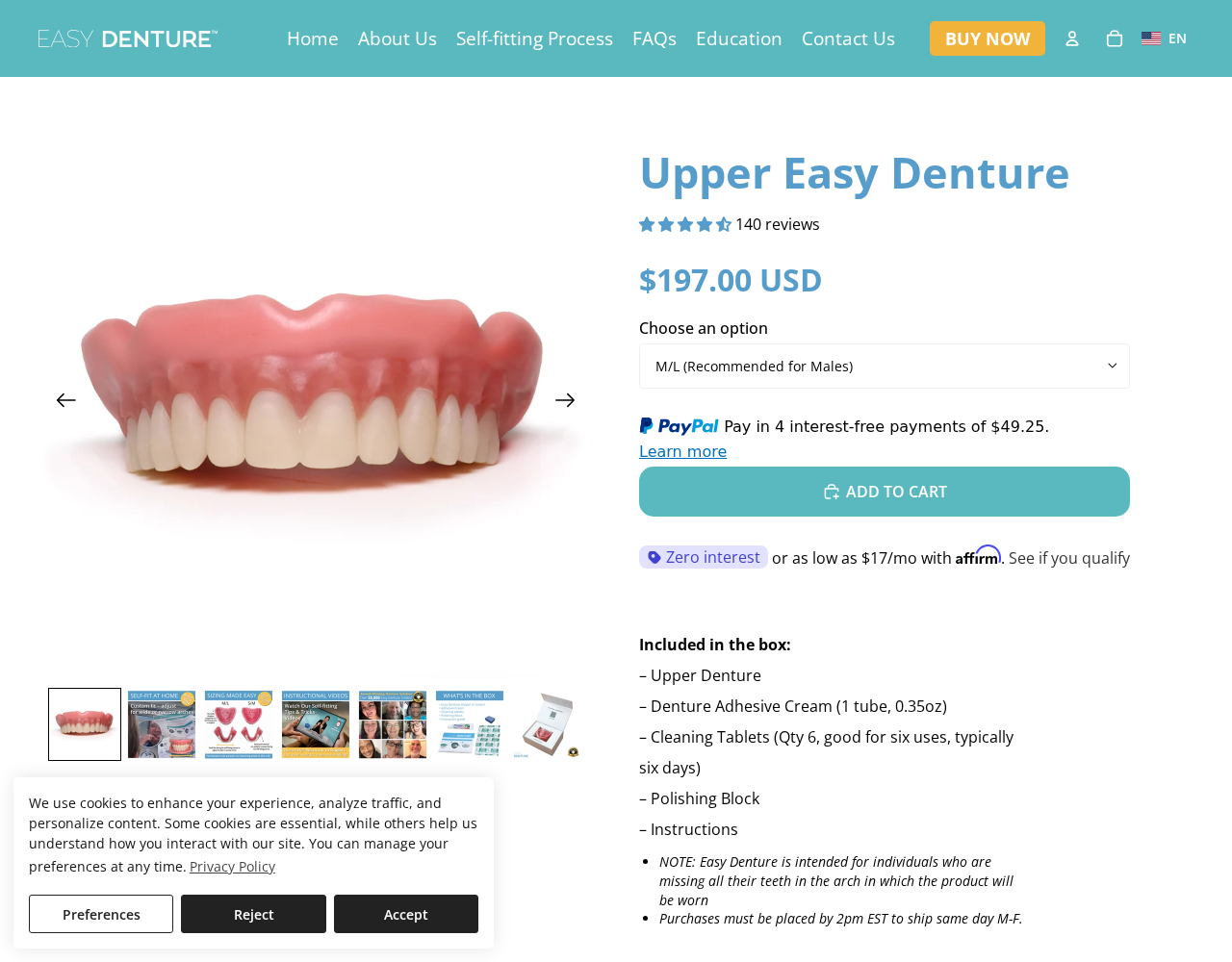
$197 buys one arch, not a full set
Easy Denture sells a preformed, self-fitting plate for the upper or lower jaw. The upper listing shows $197, and the seller’s FAQ quotes $394 for one upper and one lower.
The listing specifies a fully toothless arch where the plate will sit. That makes it a different purchase from a partial denture meant to fill gaps around remaining teeth.
- One kit contains one plate for the selected arch.
- The listing includes starter adhesive, cleaning tablets, a polishing block and instructions.
- The selected size is a starting point, not a professional measurement of your mouth.
- A return for poor fit after opening is not promised by the seller’s published policy.
Self-fitting is not the same as professional fitting
The plate is designed to soften for home fitting, then set again. You are shaping a prefabricated item, not having a denture made from an examination, mold or scan.
The company’s printed instructions warn that differences in tissue and bone shape can prevent a good fit. They also advise against wearing the product if it doesn’t fit.
A real listing still leaves the buyer with fit risk
We found a named seller, a live listing and written instructions. Those are useful facts. They don’t tell you whether this plate will stay in place or feel comfortable.
Don’t order based on the price alone. If you need a dependable fit or already have pain, loose dentures or recent dental work, ask a dentist about your options.
What You’re Buying With Easy Denture
The direct upper listing shows a molded gum-colored plate with teeth already in place. Its product options concern size, while the lower plate is a separate item.
Home fitting is the main difference. The manufacturer describes softening the plate so its shape can be adjusted. That doesn’t turn a size selector into a dental assessment.
The seller calls the process simple. Its fitting instructions distinguish upper and lower fitting, warn about hot water, and say fit isn’t guaranteed for everyone.
If you already have the kit, use the instructions for your exact product and ask a dentist before trying to fix a painful or unstable fit.
Look at which arch the listing covers. Someone without upper teeth is making a different decision from someone missing a few teeth on both sides.
If you’re replacing only the upper plate, ask how it will meet the lower teeth or denture. A product image doesn’t show what happens when your jaws close.
Likewise, a photograph can show a convincing smile without showing how well the plate stays put while someone talks or eats. Appearance and function are separate questions.
The box includes starter supplies, not a lifetime supply of tablets or adhesive. The price of the plate isn’t an estimate of everything you might spend using it.
Read the warning before treating it as a daily replacement
The manufacturer’s instructions describe daytime use and say not to sleep with the plate in. A convenient fit process doesn’t remove restrictions on how it’s meant to be worn.
The instructions also warn against wearing the device if you don’t get a good fit. That warning matters when the sales page presents the same kit as a long-term option.
Check who can help if the first attempt feels wrong. A fitting guide can’t tell you why your gums are sore or what needs adjusting.
For someone buying a backup, a useful question is whether it will be ready when the regular denture breaks. An unopened spare is not already shaped or fitted.
How the $197 Price Compares With the Real Decision
When $197 is advertised next to a full smile, it’s easy to assume that covers the whole mouth. The brand’s FAQ makes clear the price is per arch.
Two arches at the listed prices total $394 before any applicable shipping or tax. That is the comparison to make if you need both, not $197 against a two-arch quote.
The upper listing shows installment options. An installment is part of the purchase price, not the cost of the whole plate. Check the total before choosing how to pay.
A dentist’s quote may cover more than acrylic. Ask whether it includes assessment, impressions or scans, fitting, adjustments and follow-up. Compare the services as well as the appliances.
The NHS explanation of dentures describes measuring the mouth and making a mold or scan before fitting. It also distinguishes complete plates from partial dentures that replace selected teeth.
If your denture broke, get a repair or replacement quote before assuming you must start from scratch. A dentist can assess whether a repair makes sense.
If you recently had teeth removed, ask about an immediate denture and follow-up. The NHS notes that the mouth can change as it heals, and the plate may need adjustment.
Ask your dentist to separate the cost of repairing an existing plate from making a new one. The lowest online price is less useful if you’re comparing different work.
If a quote includes appointments after fitting, ask how many and what they cover. You want to know what happens if the plate rubs or becomes loose after delivery.
Also check whether the clinic can offer a staged treatment plan, or whether a local dental school or community clinic can evaluate your options. Availability and costs vary.
Those questions help you avoid paying twice: first for something that does not fit, then for the clinical work you were trying to avoid.
What FDA Registration Does and Doesn’t Tell You
Easy Denture uses the words FDA registered in its sales materials. Its FAQ describes an approval process in the same answer, making two different regulatory concepts easy to confuse.
The FDA’s explanation of registration and listing is clear: registration and listing do not establish that a facility or device has FDA approval, clearance or authorization.
A separate FDA entry also illustrates why the product name matters. The K213175 record names No Stress Impress, an impression material, not the Upper Easy Denture sold for $197.
Don’t use an impression-material record as a verdict on a finished denture. If a seller claims clearance, ask for a record matching the exact product and use.
The distinction works both ways. Registration wording alone doesn’t show that a product is counterfeit or illegally marketed. Compare the specific claim with the record it cites.
Neither a listing nor an award answers whether a plate fits your mouth. A buyer deciding about pain, chewing or existing dental work needs advice based on their own situation.
Seller, Returns and Similar-Looking Denture Offers
Find the seller on the receipt, not just the brand in the ad
The brand’s FAQ and fitting documents identify Sonrisa, LLC. The FAQ gives a Wilmington, North Carolina contact address. That is a contact detail, not a verified factory or return destination.
A marketplace reseller can use a different return policy. Before ordering, find out whose name appears on the receipt and who accepts a damage or warranty claim.
There are also similarly named offers. Our TrueEase Dentures investigation concerns a different offer. Similar promises about avoiding the dentist don’t establish that the seller or product is the same.
Opening the seal changes what you can send back
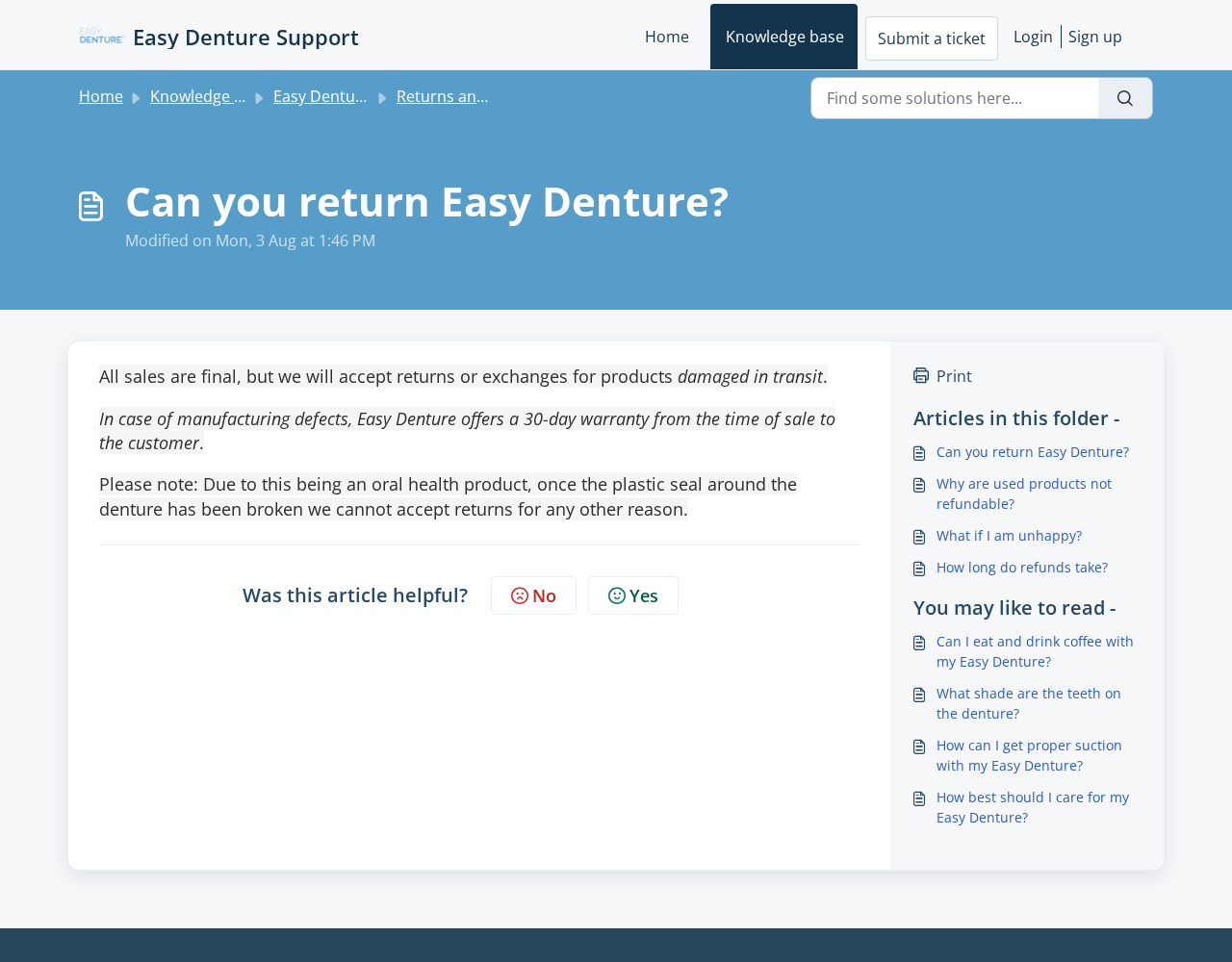
The seller’s return help page says sales are final, with an exception for items damaged in transit. It also limits returns after the seal is broken.
Poor fit is the obvious problem with a self-fitting plate. It is also the problem you may only discover after opening it, when the policy says most returns are unavailable.
Don’t assume you can fit the plate, wear it and return it if you dislike the result. Ask how the seller handles poor fit before opening.
Damage, a manufacturing defect and poor fit are different claims
The same support page describes a 30-day manufacturing-defect warranty measured from the sale. It does not present that warranty as a 30-day home trial or a guarantee of comfort.
If the parcel arrives damaged, photograph it before breaking the seal. If it contains the wrong arch or size, compare the label with your receipt and contact the seller.
Do not assume a partial payment plan changes return eligibility. If your receipt shows a third-party payment provider, confirm any approved refund with both the seller and that provider.
Read the warranty start date carefully. Thirty days from sale gives you less time to report a possible defect than thirty days from the day you first use the plate.
Record when you received and opened the package. If you notice a damaged tooth or crack, keep the packaging, photos and purchase confirmation rather than discarding them after contacting support.
Get the return address in writing before shipping. The address printed in a contact section might not be the destination for returns, especially when a retailer handled the order.
Customer reviews describe experiences, not a fit rate
On the brand’s Trustpilot profile, one reviewer described paying for a plate they couldn’t fit. Another reported a simple return despite disliking the shade and number of teeth.
Another reviewer said the ad looked like Easy Denture but linked to another seller. That’s a reason to check your receipt, not evidence against the direct store.
The experiences aren’t interchangeable. A review about adhesive, a return through a retailer and a report about a lookalike ad cannot tell you how often the direct kit fits.
Look for details that match your purchase: upper or lower, seller name, and whether the reviewer opened or used the kit. A star rating can’t make those distinctions.
On the seller’s listing, reviews sit beside the variant picker. Even a review that praises the exact product won’t tell you whether the buyer started with a similar mouth shape.
When a review says support made an exception, ask for that exception in writing for your own order. Another buyer’s refund isn’t an extension of the published warranty.
Keep a copy of the listing you ordered from. A marketplace page can change while the receipt still shows the variant and seller you actually selected.
What to Do If You Ordered Easy Denture
-
Confirm which seller took your payment. Save the ad, the final order summary and the receipt. Check the selected arch, size and quantity against the shipment.
-
Check the parcel before breaking the seal. If something is missing, wrong or damaged, photograph the packaging and product label. Ask the seller for written instructions.
-
Don’t continue wearing a painful or unstable plate. Arrange a dental check. Bring the denture and packaging so the dentist can see what you used.
-
Describe the problem accurately when you request help. A damaged shipment, possible defect, poor fit and wrong item each need different evidence. Keep replies and any return authorization.
-
Ask the payment provider about unresolved charges or missing goods. Share the receipt, tracking and written correspondence. Describe what happened rather than assuming a refund is automatic.
If you haven’t opened the parcel and aren’t sure it’s right for you, stop there. The fact that it arrived quickly is no reason to give up your remaining options.
If you need a solution soon, ask about an interim plate, repair or adjustment. Even a temporary option is worth assessing for fit if you’ll wear it daily.
Frequently Asked Questions
Does $197 cover both upper and lower Easy Dentures?
No. The direct listing shows $197 for one upper plate. The FAQ quotes $394 for one upper and one lower. Check any shipping or tax before you pay.
Is Easy Denture for people missing just a few teeth?
The direct listing specifies an arch where all teeth are missing. If you still have teeth in that arch, ask a dentist about partial dentures or other suitable options.
Can I return it if it doesn’t fit after I open it?
The published direct-sale policy does not promise that. It separates transit damage and manufacturing defects from other returns after the seal is broken.
Does FDA registered mean the device is FDA approved?
No. The FDA says registration and listing are not approval, clearance or authorization. A product-specific claim should be checked against a record for the exact device.
Can a stock size tell me if it will fit?
No. A size is a starting point, not a measurement of your bite, gums or jaw. The manufacturer’s instructions say some people won’t get a good fit.
What if the denture slips or hurts?
Don’t keep wearing an ill-fitting plate. See a dentist if it slips, clicks, causes pain or seems damaged, and bring the device so they can assess it.
The Bottom Line
Easy Denture is a real self-fit kit, but the $197 price buys one arch and the direct policy does not offer an open-box trial for fit.
Don’t order it instead of a dental assessment. If you already bought it, check the seal and order details before opening. Seek dental advice if the fit is poor.

Join the discussion
0 commentsShare your experience or ask a question about this article.
Discussion
Start the conversation
Have a question or something useful to share? Add the first comment.