

Small translation gadgets promise an appealing shortcut: speak naturally, press a button, and understand almost anyone without studying another language.
Enence packages that idea inside a pocket-sized device, but the buying decision involves more than the polished demonstration shown in its advertising.
Overview
What Enence is selling
Enence is a handheld translator marketed for travel, family conversations, work, and everyday situations where two people do not share a language.
The seller advertises support for dozens of languages and presents the device as easier than repeatedly typing phrases into a smartphone.
However, Enence is not a self-contained universal interpreter. Its operation depends on a paired phone, the Enence application, and an internet connection.
What this investigation found
The product appears to be a real electronic device, and this review did not find evidence that every Enence order is fictitious.
The concerns involve inflated comparison prices, aggressive bundles, app dependence, broad marketing language, and return conditions that may surprise buyers.
Enence’s own legal terms also say most goods are manufactured in China, despite advertising designed to make the device feel specialized and exclusive.
The practical risk in one minute
This is best treated as a commercial-risk purchase, not automatically labeled a confirmed scam. Buyers should examine the complete transaction before paying.
- The translator requires a compatible smartphone, its application, and connectivity.
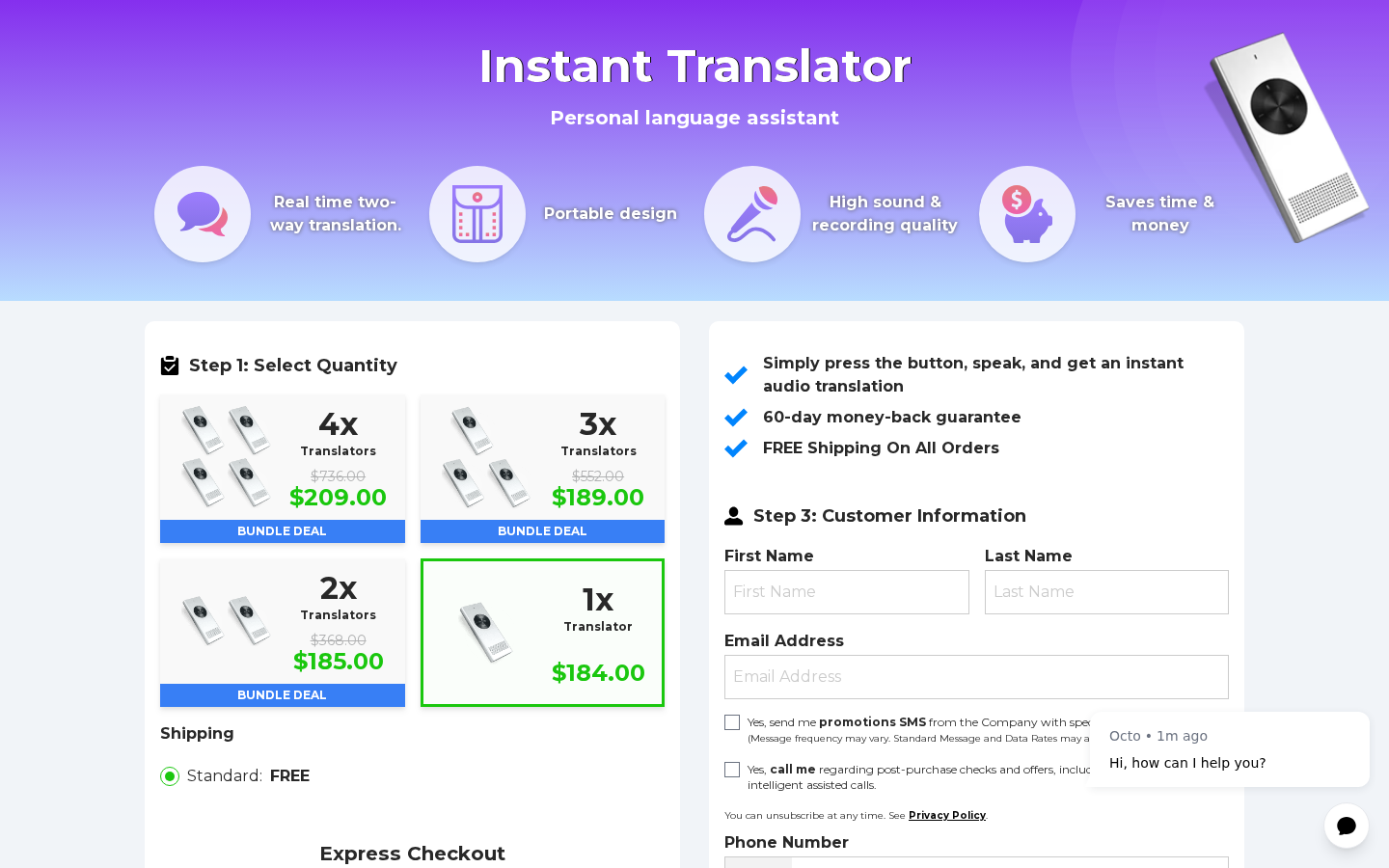
- The order page pushes multi-unit packages beside large crossed-out prices.
- Returns require prior contact, authorization, careful packaging, and customer-paid postage.
- The company’s terms distinguish its office address from fulfillment locations.
- Published customer feedback may not represent every negative experience submitted.
How the Enence Sales Funnel Works
Step 1: A simple demonstration creates the impression of instant translation
Advertising normally begins with a frustrating travel moment, followed by a quick demonstration where the device appears to remove the language barrier immediately.
That presentation focuses on the pleasant outcome. It gives much less attention to pairing, permissions, connectivity, supported phones, or the underlying application.
Viewers may therefore picture a standalone translator that works anywhere, even though the device relies on other technology to complete the translation.
The distinction matters during international travel. Mobile data charges, weak hotel Wi-Fi, or restricted connectivity can change how useful the device feels.
Step 2: The landing page turns convenience into urgency
Once a shopper visits the Enence page, the presentation emphasizes ease, confidence, and avoiding embarrassing misunderstandings abroad.
Large discounts and limited-time language encourage a fast decision before the visitor compares the product with established translation applications or competing devices.
This emotional sequence is common in direct-response retail. First create discomfort, then present one product as the immediate and unusually affordable answer.
Urgency does not prove fraud, but it can discourage the careful comparison that an unfamiliar electronic purchase deserves.
Step 3: The offer emphasizes bundles rather than one ordinary purchase
The order page offers one, two, three, or four translators. The larger packages receive stronger visual treatment and apparently deeper per-unit savings.
A shopper who intended to test one device may start comparing packages instead of asking whether the device suits their phone and travel needs.
Crossed-out reference prices make the current amount appear exceptional. They do not establish that substantial numbers of buyers routinely paid the higher amount.
Always calculate the actual cart total, shipping, taxes, protection plans, and any optional accessories before judging the advertised discount.
Step 4: Checkout collects payment before real-world limitations become obvious
Product pages can make translator hardware look independent, while setup instructions reveal the continuing role of a smartphone and the Enence application.
That is important because buyers may already own a phone capable of translating speech through well-known applications without purchasing separate hardware.
The device may still provide a convenient physical button. Convenience, however, should not be confused with unique translation technology inside the gadget.
Before checkout, compare supported languages, offline availability, privacy permissions, app reviews, and compatibility with your exact phone model.
Step 5: Delivery begins a short evaluation window
When the parcel arrives, the customer must install the application, pair the device, permit microphone access, and test it under realistic conditions.
A quiet room is not enough. Useful testing includes background noise, different accents, longer sentences, weak connections, and the languages actually needed.
Customers should preserve the box, accessories, labels, inserts, and order confirmation while evaluating performance. Discarding packaging can complicate a later return.
Record the delivery date and photograph everything received. Those details help establish whether a return request began within the seller’s stated period.
Step 6: A disappointing purchase becomes a return-process problem
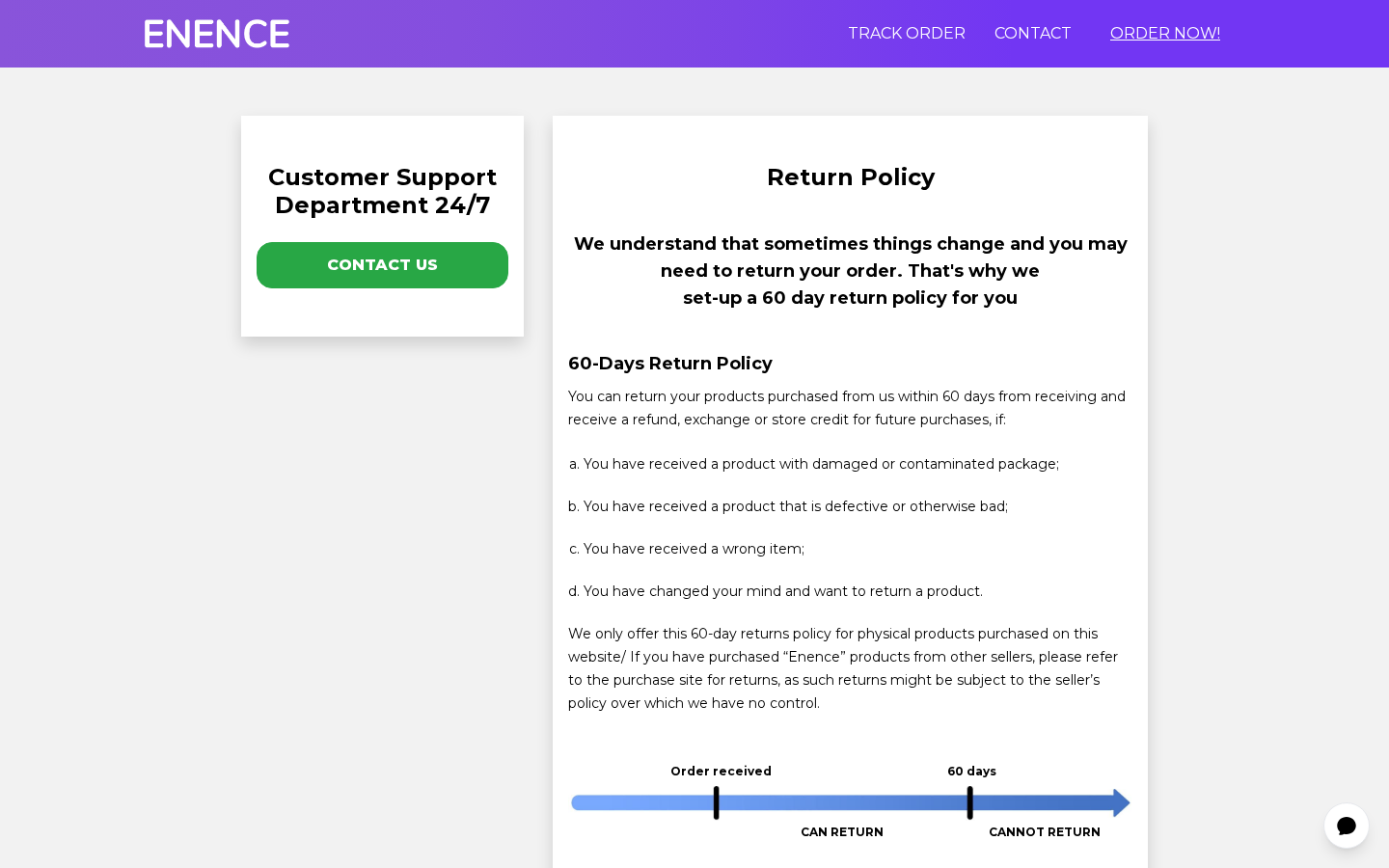
Enence advertises a 60-day return policy, but the customer cannot simply mail the product to any address appearing on the website.
The policy directs buyers to contact support, obtain return authorization, and use the address provided for that particular return.
Return postage is generally the customer’s responsibility. Items are expected to be undamaged and in original packaging, creating potential disputes after ordinary testing.
A refund promise is only as useful as its conditions, response times, traceable address, and the customer’s ability to prove timely compliance.
What Enence Can and Cannot Realistically Do
A dedicated button may feel convenient
Some travelers dislike unlocking a phone, opening an application, selecting languages, and positioning the screen during every short conversation.
A paired handheld controller can make that interaction more direct. For certain users, the physical format may be the product’s most meaningful benefit.
That benefit is personal rather than revolutionary. It does not automatically make translations more accurate than the connected software producing them.
Anyone comfortable using a smartphone should compare the device with free or established translation applications before spending money.
Translation accuracy still has limits
Machine translation can handle simple directions, prices, greetings, and common travel requests, yet struggle with slang, technical language, humor, or ambiguity.
Medical, legal, immigration, financial, and emergency conversations should never rely entirely on a consumer gadget without verification from a qualified interpreter.
A smooth advertisement cannot demonstrate every language pair, accent, noise level, or sentence structure a buyer may encounter.
Testing the exact languages you need is more informative than counting the total languages printed in promotional copy.
Internet and application dependence changes the value
The need for a connected phone means Enence is not replacing the smartphone. It is adding another object, battery, pairing step, and application.
Travelers should check data access at their destination and whether the service functions behind hotel portals, restricted networks, or expensive roaming plans.
They should also consider what happens if the application becomes unavailable, loses compatibility, or changes its privacy practices.
These are ordinary questions for app-dependent hardware, but the sales presentation may not place them beside the largest purchase button.
Pricing and Bundle Claims Deserve a Closer Look
Crossed-out prices are marketing references
A high crossed-out amount creates an anchor. The current price then looks inexpensive, even when the shopper has not researched comparable translator hardware.
The useful comparison is not the seller’s reference amount. It is the final delivered price versus credible alternatives offering similar functions.
Search for the model’s specifications, ports, battery capacity, application requirements, warranty, and independent demonstrations using ordinary speech.
Do not let a claimed percentage saving replace those comparisons. A discount can be mathematically large while the underlying value remains uncertain.
More units do not solve product uncertainty
Multi-unit packages are presented as family gifts or better value, but they multiply the consequences if the product disappoints.
Four discounted translators still cost more than one. Returning several units may also produce more postage, packaging, and refund friction.
A cautious buyer would test one unit before considering additional purchases. The funnel encourages the opposite behavior at the earliest point of uncertainty.
Never assume unopened extra units can be returned without conditions. Read the policy that applies on the purchase date and save a copy.
Company, Address, and Fulfillment Checks
The legal entity named in the terms
The English terms reviewed for this article name EcomLT LLC and list an office address in Franklin, Tennessee.
A legal name is more useful than a product brand because it can be compared with the receipt, card statement, support replies, and dispute records.
Buyers should save the version of the terms displayed before payment. Online legal pages can change after an order is placed.
If the billing descriptor differs, ask support to explain the relationship before the transaction becomes harder to identify.
An office is not necessarily the return warehouse
Enence’s legal language distinguishes company details from fulfillment locations and tells customers not to send returns without receiving instructions.
This arrangement is common in international e-commerce. It also means an address in a footer may not accept a customer’s parcel.
Mailing merchandise to the wrong location can delay delivery, invalidate tracking expectations, or give the seller grounds to reject the return.
Obtain the return address in writing, confirm the authorization number, and use a tracked service with retained proof of contents.
Manufacturing disclosures require careful wording
The company’s terms state that most goods are manufactured in China. That statement does not identify the exact factory producing every individual Enence unit.
It does undermine any impression that the translator must be rare, locally engineered hardware available only through a special campaign.
China manufactures both excellent and poor electronics. Country of origin alone does not establish quality, safety, or dishonesty.
The meaningful issue is traceability: model identification, compliance markings, warranty responsibility, software support, and consistent specifications.
Support and review practices affect confidence
Enence publishes customer comments, but its own review explanation says negative submissions are not usually published, despite collecting both positive and negative feedback.
That policy makes the displayed review balance less informative. A curated page should not be treated like an independent sample of customer experiences.
Before buying, send support a specific compatibility question and evaluate whether the answer is prompt, clear, and responsive to the actual question.
Save every reply. Written support records become valuable if product descriptions, delivery promises, or return instructions later conflict.
How to Evaluate the Device Before Paying
- Confirm that your exact phone and operating-system version support the required application.
- Determine whether your needed languages work online, offline, or only under particular connectivity conditions.
- Compare the delivered total with reputable translator devices and the translation tools already on your phone.
- Read the current return policy, then save screenshots showing the deadline and product-condition requirements.
- Choose one unit instead of a large bundle when you have never tested the product.
- Pay by credit card or another method offering a documented dispute process.
- Decline optional extras that do not add clear value to your specific purchase.
- Preserve packaging and test the device immediately after delivery.
These checks do not guarantee satisfaction, but they replace advertising assumptions with questions that can be answered before money changes hands.
A seller that stands behind its product should be able to explain compatibility, total costs, and return logistics without vague or contradictory responses.
What to Do If You Already Ordered Enence
- Save the complete transaction record. Keep the order page, confirmation, invoice, card descriptor, delivery tracking, legal terms, and advertisements that influenced your decision.
- Review the quantity and total immediately. If the cart contains more units or extras than intended, contact support in writing before fulfillment begins.
- Test cautiously and promptly. Preserve every box and accessory while checking pairing, languages, accuracy, microphone behavior, and connectivity under realistic conditions.
- Request return authorization in writing. Ask for the correct warehouse address, deadline, authorization number, acceptable condition, and expected refund amount.
- Use tracked return shipping. Photograph the device, serial markings, packaging, parcel, and label, then retain the carrier receipt and delivery confirmation.
- Challenge an unresolved billing problem. If documented promises are not honored, provide your card issuer or payment service with a concise timeline and supporting records.
- Monitor the payment method. Watch for unexpected charges, although this investigation found bundle pressure rather than evidence of a recurring Enence refill program.
Describe the problem accurately when requesting help. A compatibility dispute, unwanted quantity, delayed parcel, and unauthorized charge require different evidence and remedies.
Do not threaten support or send repeated conflicting requests. One organized message with dates, photographs, and the desired resolution is usually more effective.
Frequently Asked Questions
Is Enence Translator a confirmed scam?
This investigation found a real product offer, not enough evidence to declare every transaction fraudulent. The significant concerns are marketing, bundles, limitations, and returns.
Does Enence work without a smartphone?
The reviewed setup information indicates that the translator uses a compatible smartphone and the Enence application. Buyers should verify current requirements before ordering.
Can Enence translate without internet access?
Do not assume complete offline operation. Ask support about the exact languages and functions available offline, then obtain the answer in writing.
Is Enence made in the United States?
The seller’s terms say most goods are manufactured in China. Check the device label and packaging for the origin of the particular unit received.
Can I return Enence after testing it?
The policy advertises 60 days but includes authorization, packaging, condition, and postage requirements. Contact support before returning anything and preserve proof.
Why does Enence offer several units at once?
Bundles increase the order value while advertising a lower per-unit price. They also increase the buyer’s exposure if performance or compatibility disappoints.
The Bottom Line
Enence may provide a convenient physical control for phone-based translation, but it is not the independent language breakthrough its advertising can appear to suggest.
The biggest buyer risks are app dependence, persuasive bundle pricing, selective review presentation, and a return process requiring careful documentation and customer-paid shipping.
Compare one delivered unit with trusted alternatives, save every policy, and purchase only if its modest convenience justifies the price and return burden.








