

Massachusetts drivers may have recently received a misleading text about unpaid vehicle tolls requiring urgent payment. But beware – this is a sneaky scam aiming to expose you to identity theft and financial fraud.
This comprehensive guide will uncover how the Ezdrivematoll.com scam text operates, reveal telltale signs of their deception, and most importantly, equip you to protect yourself. Don’t fall victim to their trickery.
An In-Depth Look at the Ezdrivematoll.com Scam Targeting MA Drivers
In recent weeks, numerous Massachusetts drivers have received extremely deceptive text messages falsely claiming their vehicle has outstanding EZDriveMA toll fees requiring immediate payment. The texts convey urgency, warning recipients they must pay through the provided website link right away to avoid additional late fees being added.
However, it is vital to understand these are complete scams. The texts do not actually originate from the real EZDriveMA electronic toll collection system. Any links, phone numbers, or payment instructions contained in the messages are entirely fraudulent, with the sole intent of stealing personal and financial information from victims.
Unfortunately, this scam has already fooled many innocent Massachusetts motorists who believed the toll notices were legitimate. The texts appear convincingly real upon first glance. The scammers utilize the EZDriveMA name, official branding elements, and threatening language about legal consequences or financial penalties related to the fabricated unpaid tolls. This tricks unsuspecting people into thinking the messages are valid.
In reality, once individuals input their private data and credit card information, the criminals steal it to commit identity theft, drain bank accounts, and leave victims struggling to undo the damage. Many only discover they were scammed after noticing fraudulent charges and activity indicating their identities were misused.
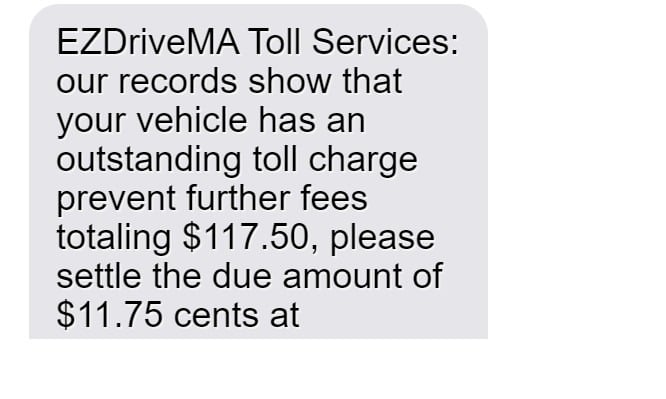
Here’s an example of the misleading texts Massachusetts drivers may receive:
“EZDriveMA Toll Services: our records show that your vehicle has an outstanding toll charge prevent further fees totaling $117.50, please settle the due amount of $11.75 cents at https://ezdrivematoll.com”
This urgent call-to-action is intended to fool recipients into believing immediate payment must be made. But in reality, the scammers simply want your personal and financial details for criminal purposes.
The website URL imitates the real EZDriveMA site, but actually routes to a fraudulent payment portal completely controlled by scammers. Any information entered will be stolen and used illegally.
Sadly, toll bill scams like this have been surging nationwide as well, frequently targeting drivers in states like New York, Florida, Texas, Ohio, Pennsylvania, and more. Scammers capitalize on fears of legal consequences, financial penalties, or credit damage to trick unsuspecting people.
Use caution with any questionable texts pressuring quick payment of supposed toll fees. Look for red flags like grammatical errors, unusually low amounts, threats, and requests for unnecessary personal data. Protect yourself by never providing your information through random communications. Verify the validity of any bills directly through official channels before taking action. Avoid falling victim to this deceitful technique scammers use against Massachusetts motorists. Don’t let them fool you.
How Scammers Carry Out the Ezdrivematoll.com Scam in MA
Here’s an in-depth look at how scammers execute this toll road ruse:
Step 1: You Receive the Deceptive Text
You’ll get a text stating:
“EZDriveMA Toll Services: our records show that your vehicle has an outstanding toll charge prevent further fees totaling $117.50, please settle the due amount of $11.75 cents at https://ezdrivematoll.com”
It looks real, mentioning EZDriveMA and claiming urgent payment must be made. But it’s fabricated.
Step 2: You Visit the Fake Website
Wanting to promptly settle what appears to be a real bill, most people will click through to https://ezdrivemas.com.
But in reality, this site is a complete scam made to imitate a legitimate payment portal. It is run entirely by crooks seeking your data.
Step 3: You Enter Your Personal and Payment Information
On the site, you’ll be prompted to enter details like full name, license number, phone, email, home address, and date of birth.
You’ll also be pushed to submit credit card information like card number, expiry, and CVV code supposedly to pay the fabricated toll fees.
Step 4: Your Information is Stolen
Once submitted, the scammers immediately steal all the personal and financial data entered on the fraudulent website. They can then use it to commit identity theft or make unauthorized charges to your card.
Step 5: You Suffer Financial Loss and Identity Theft
As a result, you may experience stolen money, fraudulent charges on your card, damage to your credit, inability to access your own accounts, and major hassle recovering from extensive identity theft.
5 Telltale Signs to Spot These MA Toll Scam Texts
While these texts appear legit at first glance, there are red flags to watch for:
- You don’t recognize the phone number – Legit contacts come from recognized numbers.
- Threats about fees or legal action – Official companies won’t randomly threaten you about money owed.
- Very low toll amount – Most real unpaid toll charges greatly exceed $10-20.
- Request for unnecessary personal information – Legitimate toll agencies already have your vehicle details.
- Website URL looks suspicious – Scam sites mimic real URLs but are slightly different.
Being aware of these signs helps you identify and avoid providing your information to these deceitful texts claiming you owe immediate toll payment. Protect yourself.
What to Do if You Already Provided Your Information
If you entered any personal or financial details, take these steps right away:
- Contact your bank and credit card company if you shared payment info. They can freeze your card, refund fraudulent charges, and send a new card number.
- Place an initial 90-day fraud alert on your credit reports and review for any suspicious activity indicating stolen identity.
- Reset all account passwords that may be compromised if you entered your email or phone number. Enable two-factor authentication where possible.
- Consider signing up for identity theft protection services that actively monitor your credit and personal info across the web.
- Report the scam to the FTC to join tracking and prevention efforts. Warn others in your community about the Ezdrivematoll.com texts.
- Block the phone number that sent the scam text to avoid additional messages, but keep a copy of the text as evidence first.
How to Avoid Falling Victim to Toll and Fee Scams
Here are tips to protect yourself moving forward:
- Be suspicious of any texts claiming you owe money, especially from unknown numbers. Verify bills directly with the company.
- Double check website URLs for subtle differences from the real site, like extra letters or misspellings.
- Never provide personal or financial information through random texts, calls, or emails. Only submit it through official company websites/portals after verifying legitimacy.
- Contact toll operators directly using official contact info from their real website if you have questions about possible unpaid toll notices. Don’t rely on inbound communications.
- Legitimate toll agencies allow you to link bank accounts to automatically pay bills instead of demanding card details directly.
Stay vigilant against questionable texts pressuring urgent payment of supposed toll bills. Verify before providing any information or payment to avoid being scammed.
FAQs: How to Identify and Avoid the Deceptive Ezdrivematoll.com Toll Scam Text
1. I received a text about unpaid MA tolls. Is it real?
No, this is most likely the scam. Never submit personal or payment details through these random texts, as they intend to steal your information.
2. How can I tell if an EZDriveMA toll text is fake?
Watch for these red flags:
- You don’t recognize the sender phone number.
- There are grammar/spelling errors or threats of fees.
- The toll amount seems unusually low.
- It requests unnecessary personal information.
- The website URL looks suspicious.
3. What happens if I enter my information on their site?
Scammers will steal your personal and financial details to commit identity theft and drain your bank accounts through credit card fraud.
4. I entered my details. What should I do now?
Immediately contact your bank if you shared payment information. Also place fraud alerts on your credit, monitor your credit reports, change account passwords, and consider enrolling in identity theft protection services.
5. How can I stop these scam EZDriveMA texts?
Block the sender’s number through your smartphone’s call/text blocking settings. But keep copies of the messages as evidence before blocking.
6. Does EZDriveMA operate all of MA’s toll roads?
No. EZDriveMA manages the MassDOT toll roads, but there are some other limited tolls not under their system. Any texts from unknown numbers about MA tolls should raise red flags.
7. How can I safely pay a real EZDriveMA bill?
If you verify you actually owe legitimate tolls, pay through the official EZDriveMA website’s payment portal or mail a check. Never settle supposed bills through random texts/calls.
8. Where should I report EZDriveMA toll scams?
Contact EZDriveMA Customer Service, the MA AG’s office, Federal Trade Commission (FTC), and your phone carrier.
9. What happens if I ignore a real EZDriveMA bill?
You may face additional fees and penalties, but first verify if any notices are real or scam texts by contacting EZDriveMA directly. Never assume texts are legitimate.
The Bottom Line
The Ezdrivematoll.com scam text aims to trick Massachusetts drivers by falsely claiming urgent outstanding EZDriveMA toll fees. Use caution with threatening payment demands via text and confirm bills directly with toll agencies before providing any details or payment. Protect yourself from toll invoice deception.

Join the discussion
0 commentsShare your experience or ask a question about this article.
Discussion
Start the conversation
Have a question or something useful to share? Add the first comment.