


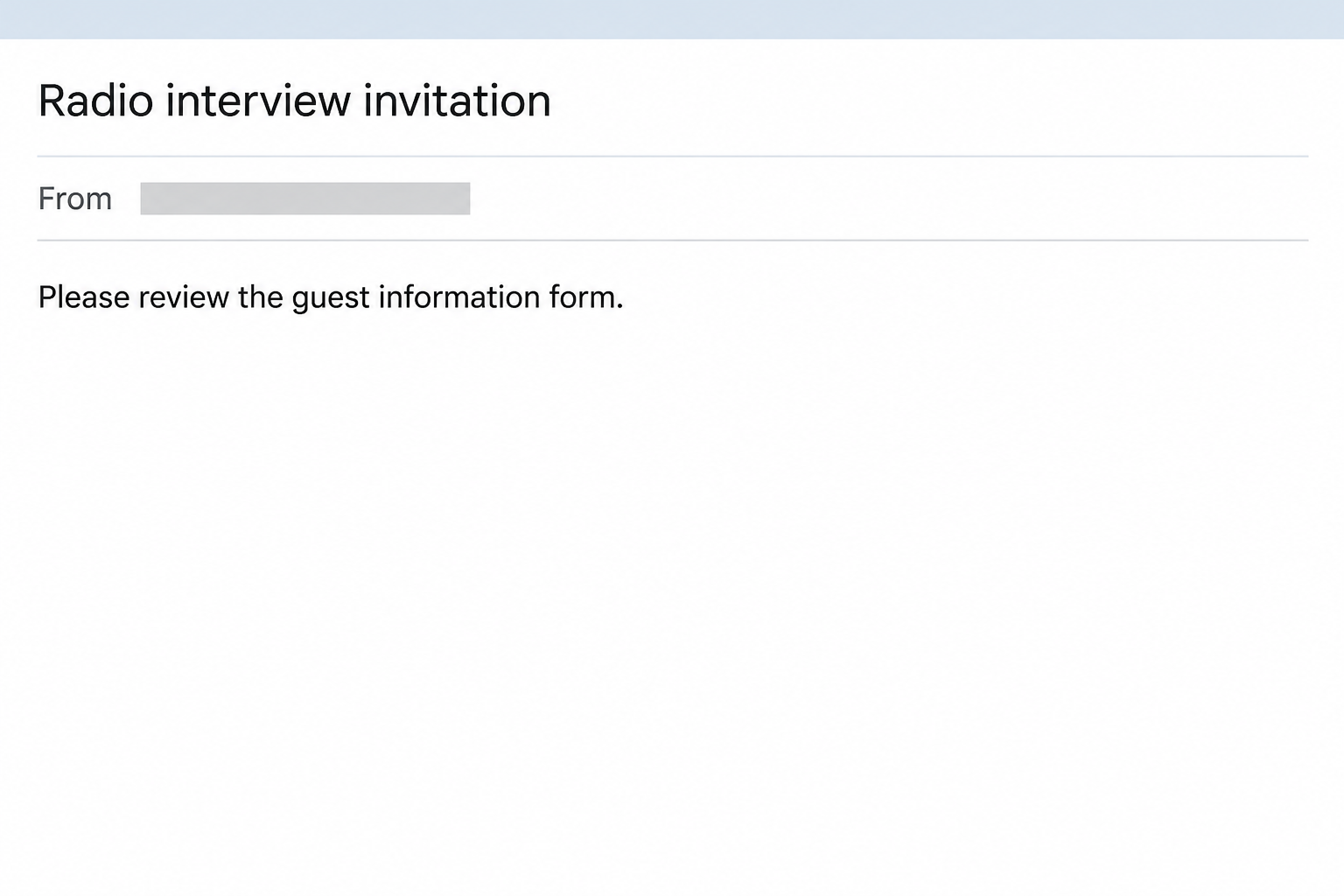
Brigid Delaney got an email from someone claiming to be Australian radio host Sally Sara. The sender wanted to interview her about a book she’d published years earlier.
The note described the invitation as a follow-up. Delaney couldn’t remember a first conversation, and the email address made her look twice.
Overview
An interview offer that turned into paperwork
A fake ABC radio interview scam can start with a flattering invitation. A familiar presenter or program name makes it easier to take the offer seriously.
In a first-person Guardian account, Delaney said the sender claimed to be Sara, wanted to discuss her book, and referred to a prior conversation that hadn’t happened.
The message came from a Gmail account rather than an ABC address. When Delaney replied, she was sent pages of forms she believed were intended to collect her personal information.
Her account doesn’t reproduce the fields or say she submitted the forms. It describes suspicious paperwork, not an established theft of her information.
The broadcaster confirms fake interview offers
The Australian Broadcasting Corporation’s own scam warning confirms that emails have impersonated its presenters, producers, staff and programs. Some offer interviews or other editorial appearances in return for payment.
That warning concerns the broader fraud pattern. It doesn’t say Delaney was asked to pay by the sender using Sara’s name, and her article doesn’t report that either.
Sara and the ABC are the identities being borrowed. You can keep the possibility of a real interview open by checking the invitation directly with the broadcaster.
What you need to confirm before you respond
- The broadcaster can confirm the program and the person who is booking guests.
- The invitation describes a real appearance you can verify without following links or using numbers from the message.
- Requests for documents or payment match a genuine, independently confirmed process, rather than a condition added by the sender.
The clue may be an earlier call you don’t remember. Check a detail like that instead of assuming you forgot to answer an email.
How the Fake Radio Interview Scam Works
Step 1: The sender offers a chance to talk about your work
An invitation can feel credible because it mentions a real book, project or area of expertise. That only shows the sender knows which work to discuss.
Delaney said the message named her 2009 book, which made it personal. She also knew the program well enough to question why it would feature that particular book.
A legitimate producer can want to revisit an old subject. Rather than dismissing the offer or trusting it on that basis, check whether the show is working on that segment.
For someone who doesn’t often get press attention, a message like this can feel too promising to ignore. You can take it seriously without treating it as verified.
Step 2: The email suggests the conversation is already underway
A follow-up usually refers to something that already happened. In this case, the reader was told there had been a conversation, although she hadn’t spoken with Sara about the interview.
Check your own correspondence if a message says you or your representative already agreed. Ask that person separately if they recognize the request before sending anything else.
Don’t let an unexpected mention of a previous discussion make you feel you owe an immediate response. A genuine producer can tell you who originally contacted you and when.
The sender address is another clue, especially if it doesn’t match a broadcaster’s published guidance. But an address that looks convincing does not replace confirmation through a separate route.
Step 3: The reply moves into a form or a fee
After Delaney replied to the message, the sender provided forms. The invitation now involved doing something with information she hadn’t expected to supply.
The ABC describes a separate payment version, where an alleged presenter or producer offers an appearance in exchange for money. The broadcaster says these offers aren’t genuine ABC activity.
A legitimate guest may be asked for a bio, pronunciation or availability. Check whether the booking is confirmed and the detail is necessary.
Pause if the request expands to sensitive identifying information, banking details or payment to secure an editorial interview. Check the new request even if the invitation seemed plausible.
Step 4: The booking still has no independent confirmation
The person who emailed you may provide a second contact or a form that appears to confirm what they said. Those references still come from the same unverified invitation.
Use the broadcaster’s own help or contact page to check. Give them the program and subject line, then ask what evidence they need.
If there’s no immediate confirmation, you can leave the purported booking on hold. You don’t need to meet a deadline set only by someone whose role you haven’t verified.
If you sent money or information, stop there. Don’t trust a second message promising to undo the payment or cancel the paperwork.
How to Verify a Real Media Booking
Use the program’s normal contact route
Find the show yourself and locate its producer or the broadcaster’s official contact page. Don’t use a signature block or an address pasted into the invitation as the only source.
Ask whether the program actually invited you, which producer is coordinating it, and how they want guests to supply information. One short confirmation can settle several questions at once.
If the invitation came through an agent or publicist, call that person at a number you already use. Ask what was forwarded and whether the outlet confirmed it directly.
A broadcaster may take time to reply. Keep the invitation pending rather than sending a form to make sure you don’t miss an unverified opportunity.
If the producer hasn’t picked a recording date, ask who is coordinating the segment. An uncertain schedule doesn’t prevent the program from confirming it invited you.
Match the request to what an interview actually needs
An editorial interview may require contact details, a short biography or scheduling information. You shouldn’t assume a longer form is genuine just because it has boxes for those details too.
If the team needs an unusual document, ask why and whether a less sensitive option would work. Use only the verified broadcaster’s submission route.
Ask the real outlet to describe its process without opening the stranger’s attachment. You don’t need to inspect an unverified form to check the invitation.
If a producer says they don’t need the form you’ve received, don’t send even a partial copy to the original address. It won’t help resolve the legitimate booking.
Separate editorial coverage from a paid placement
A business can sell advertising or sponsorship without offering independent editorial coverage. If someone says an interview is paid promotion, ask who is selling it and what is actually included.
That distinction doesn’t make a fake ABC fee legitimate. The ABC explicitly warns people to treat money requests for its interviews, appearances and editorial opportunities as suspicious.
An invoice with a recognizable show name doesn’t prove the show issued it. Verify the person sending it and the payee without relying on the sender’s instructions.
What to Check If Someone Else Handles Your Bookings
Tell your publicist which program contacted you
An author or speaker may not see every email their publicist receives. Ask whether the name, program and proposed topic match an assignment already on the calendar.
If a booking was discussed earlier, refer to the original verified thread instead of joining the new one. Ask the contact you already know to confirm any change in plans.
If the invitation names a representative you don’t work with, don’t ask the sender to explain your relationship. Verify the person independently or leave the request unanswered.
Check any new request before it reaches an assistant
A team may assume the guest checked a forwarded form. Add a note that the booking isn’t verified so no one treats the forward as approval.
Don’t sign in through an unverified scheduling link. Ask the real producer to confirm the meeting through a calendar or service you already trust.
Keep payments separate from anything that gets called a release or media kit. An appearance can have real editorial terms, but the document’s title doesn’t explain an unexpected fee.
Preserve the legitimate opportunity if there is one
Ask the broadcaster whether a producer reached out through another channel. If it confirms the booking, ask how to continue without using the original email.
If no one recognizes the booking, warn your team. Describe the sender and request without forwarding a live link.
Use a monitored inquiry address for future bookings. A shared record helps your team distinguish an ongoing interview from an unexpected note in a personal inbox.
What to Do If You Have Fallen Victim to This Scam
Stop replying and preserve the original invitation
Keep the subject line, sender address, any messages and file names. If you haven’t opened a form, you don’t need to open it now to make a report.
If you kept screenshots, don’t share versions showing your identification or banking details. Preserve those privately for the organization handling your case.
Check the booking with the broadcaster
Use the ABC’s contact route from its official scam advisory, or find the confirmed outlet independently for another broadcaster. Explain who the message purported to represent.
If the broadcaster confirms it was not their invitation, report the sender through your email service. Keep a copy of the thread so you can recognize related messages.
Contact the bank if you sent money or financial details
Explain whether you made a payment, gave card details or accepted a bank prompt. Use the number on your card or an official channel, not an invoice contact.
Ask the bank what it can block, whether it can recover the payment and which reference to keep. Don’t send a second payment to unlock a promised refund.
Protect any accounts or documents you disclosed
If you entered a password, change it from the legitimate service and review sessions. If you sent identity documents, ask what monitoring or replacement steps fit the document.
Australia’s cyber security guidance on identity theft explains where to get help. Tell your agent or employer if you also disclosed information belonging to them.
Warn colleagues and report the incident when appropriate
If you forwarded the invitation to other contributors, let them know what you verified. Give them a genuine contact route rather than forwarding the suspicious link again.
Use Scamwatch to report an Australian scam. For incidents involving identity theft or other cybercrime, use the reporting routes linked from the ABC advisory.
Frequently Asked Questions
Would the ABC charge me for a genuine interview?
The ABC says its genuine approaches do not ask for payment. Contact the broadcaster directly if someone claims a fee is required for an editorial appearance.
If you were offered advertising instead, verify the offer through the outlet’s own sales channel. Don’t use that distinction to excuse a surprise fee from an unverified producer.
Does a Gmail address prove an interview request is fake?
An unfamiliar or personal address is a reason to check, not a verdict by itself. Freelance producers and independent podcasts can have different email arrangements from a broadcaster.
For an invitation claiming to be from a particular program, verify the person through the program’s own contact route. That matters more than how the address looks.
What if the invitation names my book or quotes my work?
The details may be accurate and still be public. A person can know what you’ve written without having any relationship with the broadcaster they name.
Look for confirmation from the actual program rather than using the accuracy of the compliments as proof. Be especially careful if praise is followed by an unexpected requirement.
Do legitimate programs ever send guest forms?
Some teams send questionnaires so they can prepare an interview. Confirm who is collecting the information and what is needed before you fill in any form.
A request for your availability is different from a request for proof of identity or a bank login. Treat sensitive fields as a separate decision.
What if I replied but didn’t open the form?
A reply doesn’t mean you handed over everything the sender asked for. It may tell them your address is active, so be alert for further requests.
Stop the exchange and check whether your signature disclosed anything private. If you shared credentials or documents in the reply, take the appropriate recovery action for those details.
What if the sender uses a real presenter’s name and photo?
Recognizable names and photos can be copied from public pages. Their presence doesn’t show the person sent or approved the email.
Check the booking through the real broadcaster before relying on the name. If they can’t confirm it, don’t pay or supply sensitive information.
The Bottom Line
Don’t pay or complete a sensitive form for a media booking you can’t verify. A real program can confirm an invitation without sending you back to the original email.
If you’ve already shared documents, payment details or a password, stop the exchange and act on what you disclosed. Contact the relevant bank, account provider or broadcaster directly.

Join the discussion
0 commentsShare your experience or ask a question about this article.
Community experiences
Did this happen to you?
Your experience could help someone recognize the same scam. Submit a private report for our team to review.
I experienced this tooReports are reviewed before publication. Sharing publicly is always your choice.
Discussion
Start the conversation
Have a question or something useful to share? Add the first comment.