


The email says your book has finally earned royalties. It gives you a sales figure, a payment amount and one last piece of paperwork to complete.
For Australian author Jon Cocks, that paperwork came with a price. Before paying it, he had to find out whether the requirement even existed.
Overview
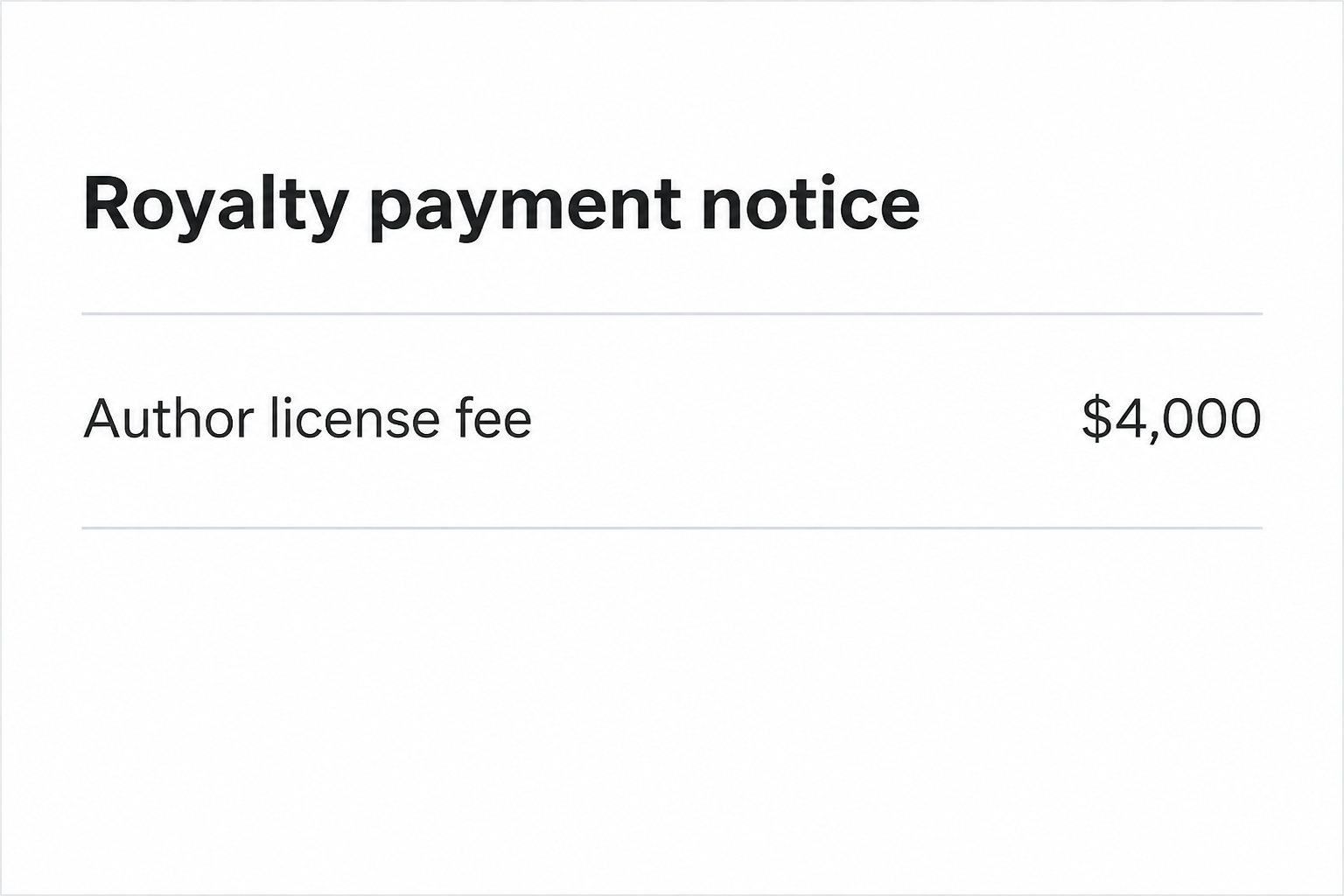
A $4,000 license was supposed to release a royalty check
The fake US author’s license scam asks a writer to buy a credential before receiving book royalties. It turns a payment the writer expects into one the writer must make.
The Guardian reported that Cocks received a supposed royalty notice after paying for publishing and placement services. The author had been trying to reach readers in the United States.
A follow-up document made to look as if it came from Barnes & Noble claimed 258 copies had sold and $4,399 was due. It asked for a paid-up license number.
The supposed license carried a $4,000 price tag. The message threatened to send the royalties elsewhere. Neither the reported sales nor the claimed earnings were verified.
Barnes & Noble told Cocks that the offer to place his book in stores for payment wasn’t legitimate, The Guardian reported.
What a real publishing requirement looks like
A platform can ask for identity, payment or tax information. Check what it actually requires by signing in at an address you found independently.
Barnes & Noble Press explains the process for authors outside the United States. Its published guidance discusses account and tax information, not buying a license to become entitled to royalties.
The US Copyright Office explains that protection generally starts when an original work is recorded in a tangible form. Registering copyright is separate from releasing book earnings.
Compare the claim with three independent records
- Your agreement says who owes the royalties and which sales or reporting period they cover.
- Your publisher or sales account shows a statement you can reach without using the email’s link.
- The platform or government agency named in the demand can confirm any legitimate requirement through its own published process.
If those records don’t match the message, leave the money where it is. A letter’s logo and precise arithmetic cannot establish that the claim is real.
How the Fake Author’s License Scam Works
Step 1: The writer has a reason to expect progress
The request may follow editing, printing or promotional work a writer already paid for. At that point, a message about bookstore placement can sound like part of the same project.
Cocks had paid $6,700 for services connected to the promised US placement, according to The Guardian. The later license demand was a separate request, not part of that amount.
When someone you’ve been working with says your title has started selling, it is natural to look for results. Ask for sales you can trace back to your own account.
A book can be available to order without being stocked in stores. Neither an online listing nor a print run proves the placement or sales numbers someone promised you.
Step 2: A notice gives the payment story an official look
A royalty notice can use your book title and a sales count to make a demand for money look like an ordinary statement.
The notice described in Cocks’ case invoked Barnes & Noble. The name of a real bookseller gave the claim weight, but the claimed relationship still needed confirmation.
Check which entity your contract names as the payer. A familiar bookseller’s name in an email isn’t proof that the bookseller owes you money.
If your publisher handles the account, ask for the verifiable statement it uses. If you publish directly, open the genuine dashboard yourself and compare the period, title and amount.
Step 3: A made-up credential becomes a condition for payment
The label “author’s license” sounds like an official status. The claim is that you must buy it, obtain its number and provide it before a payout can go through.
A real rule should have an issuer and a documented process. Ask which office sets the requirement and check with it directly, without using contacts included in the demand.
Do not substitute an ordinary ISBN, registration certificate or tax form for proof that the license exists. Each serves a different purpose and none authenticates this payment request.
If the only place you can find the charge is a message from the person collecting it, don’t pay. Verify through the party you can independently identify.
Step 4: The deadline pressures you to ignore the discrepancy
The later notice reportedly threatened to send the royalties to charity unless Cocks provided the license number. Backing away could feel like giving up money he had earned.
If royalties are actually due, the payer should be able to explain their status. There is no reason you need the sender’s link to ask.
Don’t respond by sending a partial payment to keep the opportunity open. That doesn’t resolve the question of whether the balance or fee existed in the first place.
If you have already paid for printing or promotion, preserve those invoices separately. They can help your bank or payment service understand what each request was represented to cover.
How to Verify a Real Royalty Payment
Find the agreement that controls those sales
Start with the contract or the account terms for this title. Identify whether you publish directly or whether someone else distributes it and accounts to you for royalties.
Your marketing invoice and royalty agreement may name different companies. Check what each agreed to do instead of relying on a shared email thread.
Look for the reporting period and payment terms. If someone says a new charge appeared, ask them to point to the exact change in independently verifiable terms.
Compare the claimed sales with records you can actually inspect
Check the title, edition and format. A paperback you paid to print and an ebook sold through a separate account may show up on different reports.
Distinguish an actual sale from a copy printed, a preorder or a listing made active. A precise figure in the email is only useful if you can match it independently.
Check returns and any other documented adjustments through the official account. An unexpected difference deserves a question to the payer, not a transfer to an intermediary.
If you work with a distributor, ask which report supports the claim. A screenshot cropped to a positive number doesn’t tell you whose account it came from.
Keep taxes and business services separate from royalty release
Some platforms legitimately ask for documentation when setting up payments. Use their own verified portal and follow their instructions rather than uploading a form attached to an unsolicited email.
The Authors Guild’s publishing scam guidance explains the risks of offers that borrow known names and turn opportunities into expensive services. Read terms before paying for any genuine optional service.
An editor or designer can charge for real work. The red flag here is a stranger claiming you must purchase an official credential before receiving money you already earned.
Check what is actually being offered when a retailer is named
Ask whether the claim is about a catalog listing, store placement, marketing or a royalty account. Those arrangements are not interchangeable, even if they use the same retailer’s name.
If someone says a minimum order is mandatory, verify the rule with the company that supposedly requires it. Don’t ask the salesperson to be your only source.
Keep replies from verified support channels. A written answer can help you resolve later messages that borrow the same brand name but describe a different arrangement.
If the paperwork all came from the same person
Sometimes the same contact sends the contract, invoice, and alleged royalty notice. Comparing those documents can expose inconsistencies, but agreement between them doesn’t make the payout real.
Ask the actual distributor to verify the title and edition if you know who it is. Don’t send the full contract unless the verified recipient actually needs it.
If a collaborator manages the sales account, ask them to pull the relevant report from the genuine dashboard. Don’t forward a document from the sender as a substitute.
Make a short list of what is confirmed: editions published, channels used, expenses paid, and royalties received. Put promises and estimates in a separate column.
That distinction is useful even if you already suspected trouble. A distributor can explain where the book is available without implying that a promised promotional campaign ever took place.
You can also check which accounts hold your book files and rights records. Regaining a clear picture of the project doesn’t depend on proving the email was genuine.
If the company claims to have printed copies, ask for the print invoice and delivery record. Printed inventory isn’t the same as copies sold to readers.
Keep a copy of the legitimate publisher’s reply even if you can’t verify the sales figures. A clear denial of the claimed fee is reason enough not to pay it.
What to Do If You Have Fallen Victim to This Scam
Stop paying for the claimed license
Don’t send another fee or share documents to protect a supposed balance. Save the message, notice and invoices before closing the conversation.
Separate sums you already paid from the amount the sender says you owe. Include what you were told each payment would purchase.
Reach the publisher or platform you can verify
Use the account or support contact you reach independently. Ask whether the notice, sales total and payment requirement are recognized.
If you work with a legitimate distributor, tell them exactly which title and account were mentioned. Ask for the actual statement and how royalties are paid.
Contact the bank or payment service if you sent money
Explain what the payment was supposed to buy and what you found when you checked. Ask about a dispute or other recovery options for that transaction.
Share receipts and the messages privately. A payment you authorized under false pretenses is different from a charge you don’t recognize, so describe it accurately.
Secure account access and preserve rights records
If you exposed account credentials, change them at the genuine service and check its payout settings. Notify your real publisher or distributor if unfamiliar details appear.
Keep the original publishing agreement and any notices about rights, editions or permissions. If you signed something you don’t understand, get independent professional advice about that agreement.
Report the contact and question any follow-up offer
Send a report to the platform used for the solicitation and to the organization whose name was borrowed. Keep the reference alongside the payment records.
Don’t pay anyone who contacts you out of the blue offering to recover the royalties. Verify the person and the service before sharing further information.
Check scheduled charges and payout settings
Review payment receipts for recurring services you didn’t expect. Ask your provider how to handle any future charge you believe was misrepresented.
If the sender claimed to set up a real royalty account for you, confirm who controls it and where payments are set to go.
Frequently Asked Questions
Is an author’s license necessary to receive US book royalties?
There is no general US author’s license to buy to unlock royalties. Platforms can have real account requirements, but check them through the platform’s own published instructions.
Don’t rely on a form sent by someone asking you to pay. Ask the actual payer whether it recognizes the notice and which process applies.
Does registering copyright unlock payments from a bookseller?
Copyright registration is a separate matter from the retailer’s royalty process. It may be useful for legal reasons without serving as a condition for the notice you received.
Confirm royalty terms in your actual agreement. If you want to register a work, go directly to the Copyright Office rather than buying a credential from an unsolicited sender.
Can a publisher legitimately request tax information?
Some platforms need tax information before setting up payments. The question is whether the request comes through the real payer and reflects its official procedure.
Sign in independently to see whether anything is outstanding. Don’t enter sensitive information into a form linked in a message about licensing or releasing money.
Does a book listing mean copies sold?
A public listing can show an edition is available. It does not show how many sales happened, whether copies were returned or what amount is payable.
Use the relevant sales report or ask your publisher for a statement. Match the edition and reporting dates before trusting a figure from an email.
What if I already paid a printing or promotional fee?
Keep that transaction separate from the license demand. Ask what was promised, what was delivered, and whether the claimed relationship to a retailer can be verified.
Tell your payment provider if you believe the charge was based on a false representation. Don’t pay more in the hope of making the earlier expense worthwhile.
What if the notice threatens to donate my royalty balance?
Verify the claim with whoever would actually pay you. A pressure tactic in an email isn’t a reliable notice about what will happen to your money.
Retain the message and ask for the real payout rules. Do not accept the deadline as genuine simply because it appears in a document with a familiar name.
The Bottom Line
Don’t buy a supposed US author’s license to release royalties. Go to the actual publisher or sales account and verify the balance and its payment requirements there.
If you already paid or shared sensitive information, preserve the records and contact your payment provider and the real platform. Don’t send a second fee to solve the first one.

Join the discussion
0 commentsShare your experience or ask a question about this article.
Community experiences
Did this happen to you?
Your experience could help someone recognize the same scam. Submit a private report for our team to review.
I experienced this tooReports are reviewed before publication. Sharing publicly is always your choice.
Discussion
Start the conversation
Have a question or something useful to share? Add the first comment.