


The listing looks like a place to research a token, not somewhere you would go to grant access to your wallet. It has ratings, activity figures, and a project name.
The details are worth reading together. One panel tells a different story from the headline.
Overview
The $energy offer appeared inside a lookalike directory
The reported $energy airdrop scam was hosted at airdropsalerts[.]bar. The page borrowed the Airdrop Alert name and presented itself as a listing in a broader cryptocurrency rewards directory.
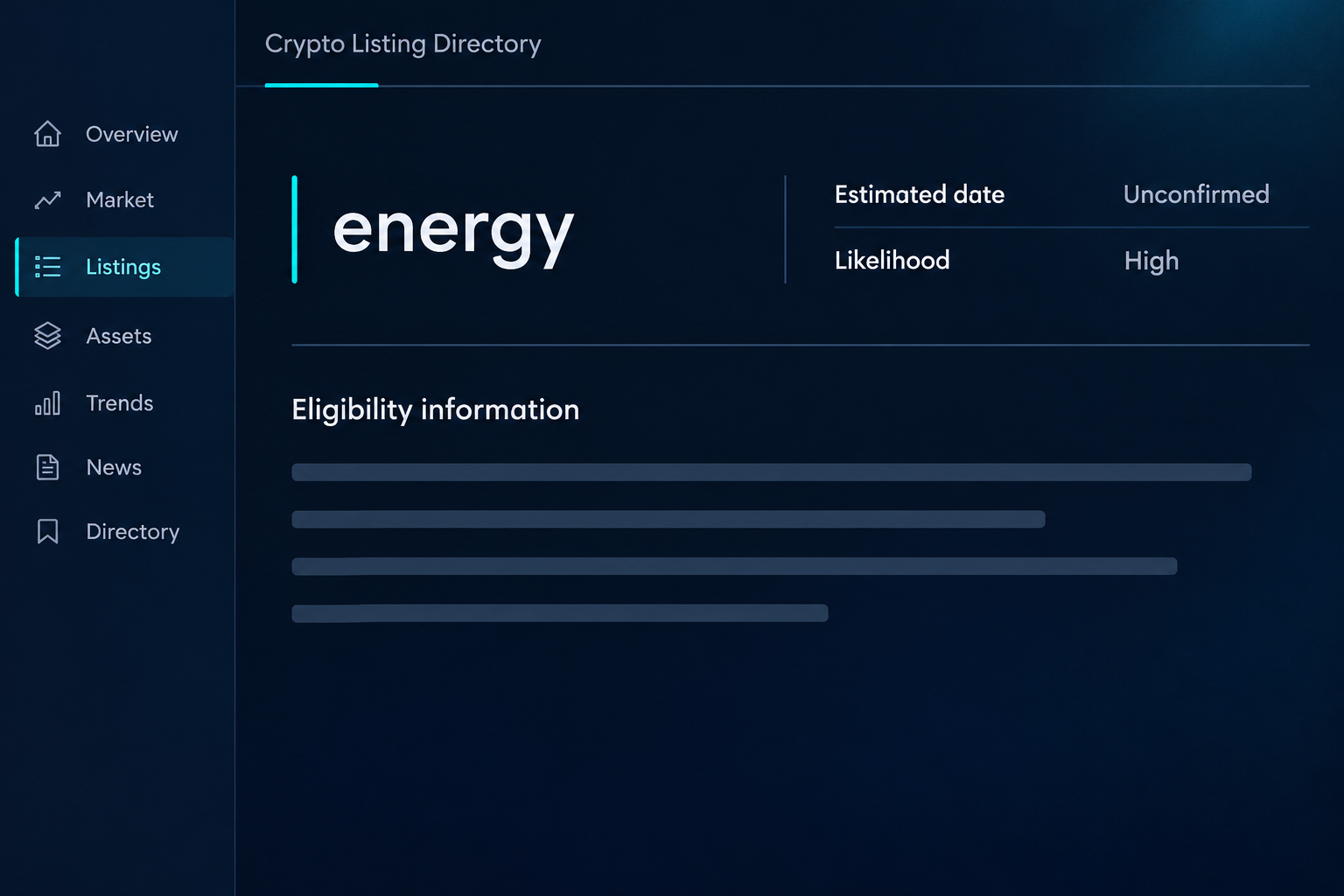
The text claimed the airdrop was live. A side panel on the same page described the estimated date as unconfirmed, set difficulty to low, and labeled likelihood high.
That combination is more revealing than a misspelling. The page wanted readers to treat an unconfirmed event as important enough to act on immediately.
The warning concerns the imitation, not the real Airdrop Alert service. The evidence also does not establish that the name “energy” identified a particular genuine project or token issuer.
The listing borrowed the language of research and scoring
The page claimed that community activity could improve the visibility of a wallet for future rewards. It offered to check an address and recommend steps to improve eligibility.
That wording creates a second reason to continue when a reward is uncertain. The reader might think the page can at least evaluate participation or say what to do next.
The captured listing also showed chain activity figures and a participant panel. Neither established that the people shown had received tokens or that anyone operated a genuine payout program.
A real number can still be irrelevant. Total activity on a network does not answer whether a particular project announced a reward, much less whether a different website administers it.
Opening a wallet chooser is not an audit result
The captured eligibility route led to a list of wallet providers. The record does not show a verified reward, a completed transfer, or a signed request.
A page promising to inspect public activity should be judged separately from the app it asks you to open. Connecting, signing, and granting a spending permission are different events.
Here are the facts to verify before treating any directory item as actionable:
- Check whether you reached the directory at its genuine address.
- Find out which project, if any, announced this specific campaign.
- Compare the campaign terms to what the listing is asking you to do.
- Keep any wallet action separate from a decision simply to read about eligibility.
The genuine Airdrop Alert clone advisory describes a separate imitation and explains how its real directory points users to projects’ official campaign pages. It does not authenticate this listing.
How the Fake $energy Airdrop Listing Works
Step 1: The directory format makes the offer feel vetted
A single advertisement for a free token can look like something to ignore. A page set inside a directory may feel like something another person has already checked for you.
The observed page reinforces that impression with sidebar categories, rankings, and other familiar navigation. The $energy listing looks like one entry in a much bigger system.
A cloned directory can borrow trust from the service it resembles. Its menu does not establish that the genuine publisher created the entry or reviewed the claim.
Look for the site you meant to visit rather than trusting the page title. The reported address was not the one used by the real advisory.
Step 2: The live claim and the estimated date disagree
The central text said the $energy offer was live. The listing’s side panel left the estimated date unconfirmed at the same time.
Those claims are not automatically reconciled just because the same site displays them. If registration were open before a distribution, there should be verifiable terms explaining the difference.
Likewise, a high likelihood score is not an official announcement. The site does not prove that an independent party measured the chance of receiving anything.
Do not let the presentation turn that ambiguity into an assignment. You do not need to connect a wallet to investigate why the page contradicts itself.
Step 3: Personalized advice provides a reason to continue
The listing suggested that regular activity might make an address more visible for future rewards. Even someone skeptical of the current offer could wonder whether there was useful advice inside.
That is what makes the supposed address audit important. It changes the user’s goal from claiming a known reward to finding out whether anything might be available.
Public transaction history may allow someone to examine a public address. It does not require handing a site your recovery phrase or granting an asset permission.
A legitimate program may define its own eligibility process. Establish what the project asks independently before treating an assessment offered by a directory as part of that process.
Step 4: The page puts a wallet decision in the path of a status check
The next visible stage was a wallet chooser. It displayed a variety of familiar brands, but their presence did not mean they approved the site or its offer.
A normal wallet connection generally begins by sharing public account information and forming a session. A separate signature or transaction may authorize something the visitor did not intend.
What matters is the request shown by the wallet. A page can call an action an audit while a different operation appears in the wallet’s confirmation.
The sample does not establish the exact request any visitor approved. Use the details of your own interaction rather than assuming all visits ended the same way.
Step 5: The uncertainty can lead to a second mistake
People who leave unclear eligibility pages sometimes look for a different link to check the same reward. A copy sent by another stranger is not an independent confirmation.
An unsolicited message promising to fix or complete the check may be unrelated. Treat it as a new request and verify who sent it before doing anything.
If you already interacted, concentrate on what the wallet recorded. You do not need to learn whether the offer was ever open in order to check whether you authorized something.
What to Do if You Have Fallen Victim to This Scam
-
Do not revisit the imitation to look up eligibility. Keep the original link in your private report if you already have it, without reposting it as a clickable invitation.
If it was shared in a community, give moderators the display name and the reported domain. Describe the mismatch between the directory and the outside site.
-
If you opened the page without connecting, stop there. The archived specimen does not establish that a visit alone exposed the contents of your wallet.
If a different copy asked for a download, treat that as something separate. Do not open a downloaded file to decide whether it belongs to a token project.
-
If you connected, check the relevant app and address. Remove the site from your wallet’s connections and review any recently approved activity for the account you used.
If you tested multiple addresses, review each one. A directory claim about one address does not tell you what happened after you switched to another.
-
If you signed or approved something, identify its effect. Check your wallet’s recent records and a known explorer for the network you were using.
If the request granted access you do not recognize, revoke it through a trusted method where supported. Never use an unsolicited service that offers to inspect or revoke it.
Wallet software varies, so ask the provider if an action is confusing or not displayed. A reason stated on the listing is not a description of the actual authorization.
-
If a recovery phrase was exposed, secure remaining assets in a fresh wallet. Use a trusted device and make new recovery information instead of importing the same phrase again.
The official MetaMask guidance on compromised wallets explains what to consider when secrets may have been disclosed. Consult your own wallet provider for product-specific help.
-
If funds moved, report using transaction evidence. Save the network, asset, amount, and transaction reference, then report through the relevant provider and local fraud channel.
Someone offering guaranteed recovery may have learned the details from public records. Do not grant that person a wallet connection, send a fee, or share secret recovery information.
How to Check an Airdrop Listing Without Authorizing Anything
Look for the decision maker, not the best-looking listing
A directory and an issuer answer different questions. One may point to a campaign, while the other is responsible for the distribution and its official rules.
Start by identifying the project with more than a ticker. Use independently established official materials and compare the name, network, dates, and program description.
If there is no issuer you can identify, the listing’s own claim is not enough. Do not infer that a similarly named token or active trading pair operates the promotion.
When the site describes a clear next step, ask who set that requirement. You should be able to find the reason in the genuine announcement, not only in the directory.
Treat panels and numbers as claims with a source
A listing may show both general network figures and campaign metrics. Check which number you are looking at before using it as evidence of anything.
A participant count does not demonstrate that anybody was paid. A chart does not prove that an opportunity is approved. A rating does not override contradictory dates.
If the actual issuer announces a date, compare it with the date on the directory. Do not rely on an unrelated page telling you the event is live.
The FTC’s cryptocurrency scam guidance has reporting information for U.S. readers. Save evidence before reaching out, but do not give an unverified contact access to collect it.
A listing can say “future rewards” without committing to anything
The page’s claim about making an address more visible leaves several questions unanswered. It does not identify which activity counts, what date it counts through, or who will evaluate it.
A later reward may depend on rules an issuer publishes. Broad claims about community engagement are not a promise that activity started today will qualify.
That distinction matters when participating would cost something. Do not spend fees or expose a wallet just to improve a score whose source you cannot establish.
If someone quotes a condition from a prior campaign, find out whether it belongs to the current one. A genuine historical rule may have no relevance to today’s offer.
A directory’s own publisher is a separate check
A real directory can write about several projects without issuing a token for any of them. A directory-shaped page that handles the purported claim itself is making a different request.
Start with the genuine publisher’s own information about promotions. Airdrop Alert’s advisory confirms its address and explains that it does not host the claims it lists.
If a copy suddenly asks to inspect a wallet before it will reveal basic campaign information, there is nothing you need to unlock. Find those details outside the copy.
Do not authenticate an unfamiliar listing by clicking links that lead back to the same domain. Look for an issuer announcement on an independently established channel.
If you can identify a genuine listing, compare what it links to with what the copy asks you to approve. Do not assume that similar text establishes the same destination.
For a community warning, include the reported domain and contradictory date language. These are more useful identifiers than a generic instruction about sites that use the word “energy.”
Frequently Asked Questions
Is Airdrop Alert itself responsible for the $energy page?
The captured page used a different domain and copied its identity. This warning addresses the imitation, not an allegation that Airdrop Alert distributed the offer.
Does a high likelihood label mean a token distribution is coming?
A label displayed by the listing is not confirmation from an issuer. Look for official eligibility terms and compare the dates instead of assuming the site’s rating is a guarantee.
What if I find a real token named energy?
A shared name does not establish that the token’s project created a particular rewards page. Verify the issuer and announcement separately before deciding the two are connected.
Why was the page asking me to check eligibility?
Its stated explanation was that activity and community participation could improve the chance of rewards. The captured action opened a wallet chooser rather than independently verifying that claim.
Does sharing a public address give someone a private key?
A public address is not the secret that controls it. Sharing the address can have privacy consequences, but it is different from authorizing a transaction or exposing recovery information.
Can I recover tokens if I sent them to a scam?
A confirmed transfer generally cannot be reversed by a wallet company. Preserve the records and ask the appropriate exchange or authorities about reporting without relying on promises of recovery.
The Bottom Line
Do not use the lookalike directory to audit your address or check the $energy offer. Verify an airdrop through its issuer before opening your wallet.
If you used the imitation, review the activity of the specific wallet account involved. An installed wallet can show what happened more reliably than a rating on the page.

Join the discussion
0 commentsShare your experience or ask a question about this article.
Community experiences
Did this happen to you?
Your experience could help someone recognize the same scam. Submit a private report for our team to review.
I experienced this tooReports are reviewed before publication. Sharing publicly is always your choice.
Discussion
Start the conversation
Have a question or something useful to share? Add the first comment.