


The pitch sounds reassuring: nobody can steal the money because a smart contract handles everything. You buy a position, join a team, and watch payments move.
Forsage used that technical language to make an old earning promise feel different. The important question is what those contracts actually made the money do.
Overview
A recruitment system presented as decentralized income
Forsage promoted cryptocurrency-based earning arrangements using smart contracts, referral teams, and paid positions commonly called slots. The contracts could automatically distribute money between participants.
That automation was central to the reassurance. Promotional explanations encouraged people to treat the absence of an ordinary administrator as protection against financial deception.
However, software can carry out an unfair payment structure perfectly. An automatic transfer tells you what happened, not whether the arrangement can support everyone’s promised earnings.
The pyramid mechanism is independently documented
An independent academic study of Forsage examined its code and historical transactions. It documented a pyramid structure in which incoming participants funded payments flowing upward.
This is more than one disappointed user’s complaint. The mechanism can be evaluated from the contracts and transactions rather than relying on promotional testimonials.
- Participants paid cryptocurrency to open earning positions within referral structures.
- Payments depended on other participants joining and purchasing positions.
- Automation did not create an independent source of business profits.
- Criminal allegations against particular founders remain separate from the documented payment mechanism.
Pending prosecutions must not be called convictions
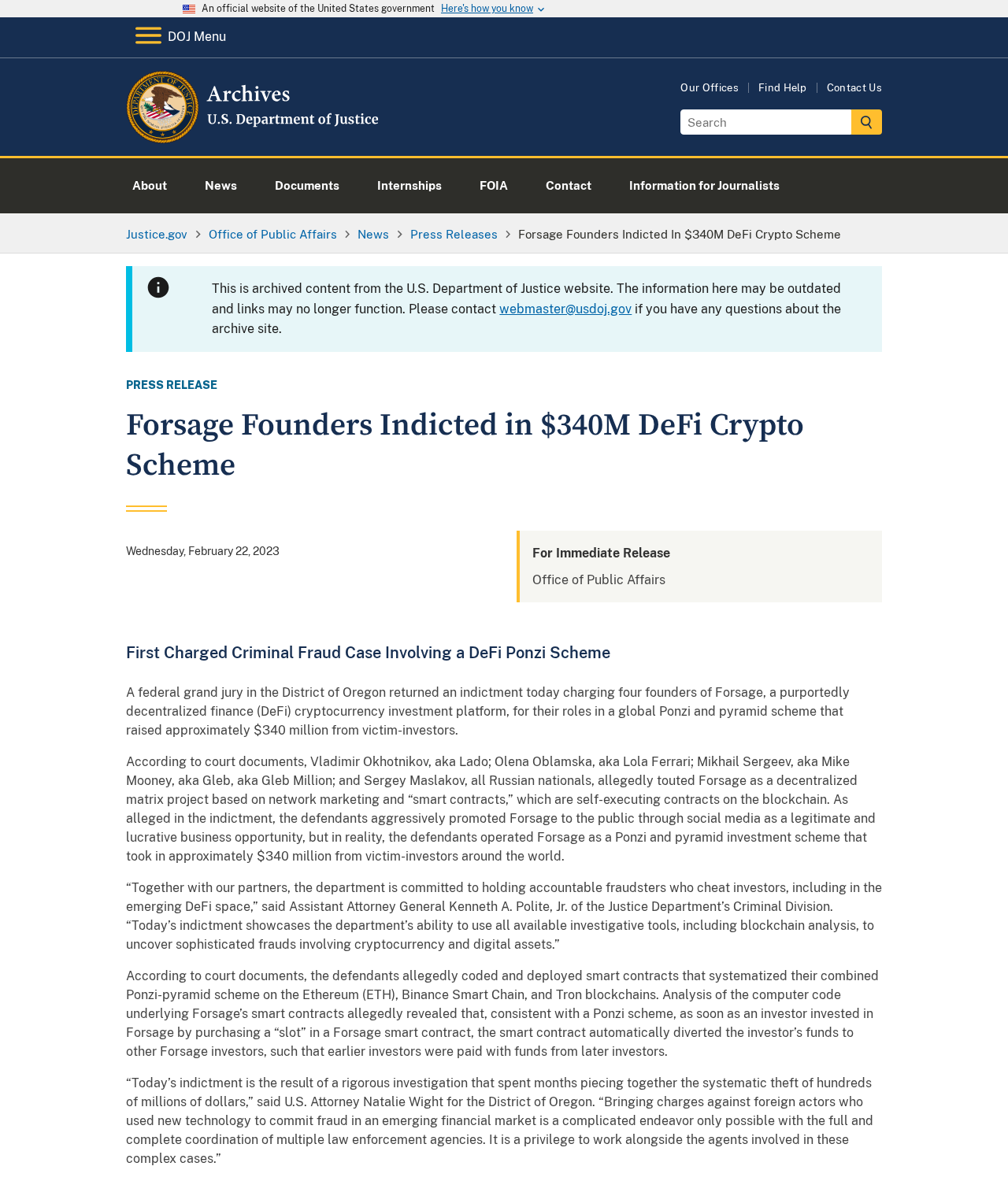
The Justice Department announced founder charges in 2023, alleging approximately $340 million in a global Ponzi and pyramid investment scheme.
An indictment is an accusation, not a guilty verdict. Reporting in 2026 about extradition and ongoing proceedings does not turn those charges into convictions.
The practical warning rests on the documented recruitment-funded structure. Do not buy a position or send another payment merely because a promoter calls the code decentralized.
Why a Smart Contract Cannot Guarantee a Fair Investment
A smart contract is software that executes rules on a blockchain. Those rules can make transfers predictable without making the underlying economic arrangement sound.
Think about an ordinary automatic payment instruction. It may transfer money exactly when specified, but that precision does not establish whether the recipient earned it.
The same distinction applies to smart contracts. A contract can reliably pass a new participant’s money to earlier participants without generating any trading profit or customer revenue.
Transparency also has limits for a reader without technical training. Public code is useful only when someone understands what it does and can explain the consequences.
A promoter saying that anyone can inspect the contract is not equivalent to independent analysis. Most prospective participants cannot reconstruct payment rules from software.
The apparent protection can therefore become part of the sales pitch. Technical detail discourages questions while the simple economic question goes unanswered: who supplies the returns?
When the answer is other people buying positions, an automatic distribution does not solve the dependency. The contract simply automates the payments between participants.
How the Forsage Scam Works
Step 1: Sell the reassurance before explaining the income source
The appeal begins with claims about decentralization and smart contracts. Those terms can make an earning opportunity sound safer than a website controlled by an unknown operator.
A prospective participant may therefore focus on whether the software can be altered. That is only one question, and it is not the most important economic one.
Even an unchangeable contract needs a sustainable source of payments. Preventing certain changes does not create customers, profitable trades, or money outside the participant network.
Before considering an offer, ask what happens if new people stop buying positions. A technical explanation should answer that question rather than distract from it.
In Forsage, the independently documented referral structure made the answer material to every participant, particularly those entering after others had already secured advantageous positions.
Step 2: Pay to enter the matrix
The historical system studied by researchers used paid levels within two arrangements called X3 and X4. Participants purchased slots connected to their position in referral teams.
Higher levels cost more cryptocurrency to open. The purchase therefore did more than create a user account; it determined participation in particular payment paths.
Those historical details should not be mistaken for instructions to join a current version. Contract names and platforms can change while the underlying recruitment dependency remains relevant.
For the buyer, an additional level can feel like unlocking greater earning potential. Financially, it is another contribution that needs a credible explanation.
Do not count an unlocked position as an asset with a guaranteed resale value or guaranteed income. Its usefulness depends on the arrangement’s actual rules and funding.
Step 3: Route money through recruitment relationships
The academic analysis documented referral links connecting users to earlier participants. Payments moved upward within those structures as additional people joined and bought positions.
That means a visible payment can be entirely real while its explanation remains misleading. The recipient received money, but another participant supplied it.
A blockchain explorer can confirm that a transfer occurred. It cannot turn participant funding into independent business revenue simply by displaying the transaction publicly.
Nor does a promoter’s payment screenshot establish what a later entrant can reasonably expect. Position, subsequent recruitment, costs, and contract rules can change the outcome.
Asking whether someone was paid is therefore incomplete. Ask whose contribution funded the payment and what must happen before the next participant can receive one.
Step 4: Make further purchases part of continued earning
The study also described rules that could block a filled lower slot until another level was purchased. These mechanics made upgrades financially important within the structure.
For a participant, buying more can then feel like protecting the original purchase. Declining an upgrade appears to risk income already imagined from the first payment.
That is a dangerous reason to commit additional money. An earlier expense does not establish that the next purchase has a sustainable return.
Compare what has actually entered your own account with what you have paid, including network fees. Keep projected earnings out of that comparison.
Different versions may have different rules, so historical slot mechanics should not be assumed universal. The central issue remains whether later participant payments fund the opportunity.
Step 5: Use automatic payouts as promotional proof
An automated transfer can look like the strongest possible evidence because the payment appears verifiable. Yet it proves execution of the rules, not financial fairness.
That distinction explains why the mechanism needs scrutiny even when someone shows a genuine transaction. A scheme does not need every receipt to be fake.
The resulting promotion can feed itself: participants receiving money have a persuasive story for people considering their own purchase of positions.
People entering later still depend on subsequent activity. Software cannot remove the finite supply of people willing and able to keep purchasing.
Do not send money to test whether a payout happens. The test would expose you to the same structure without establishing what funds the payment.
Forsage Contracts, Promoters, and Individual Court Cases
The contract and its promotion answer different questions
Code can show the payment instructions. Promotional messages show what people were told those instructions meant, including claims about safety, income, or risk.
Both matter when explaining your own experience. Keep the offer that reached you alongside transaction records rather than assuming the software alone preserves every relevant representation.
A claim that the code is public does not excuse a misleading explanation of its consequences. Access to technical information is different from informed understanding.
Independent analysis should identify the version it studied
The academic research concerns specified historical contracts and transactions. It is not a claim that every later project with similar terminology has identical code.
That limit keeps the warning accurate. It also helps readers avoid paying someone who treats an old contract analysis as proof of present recovery powers.
A new version requires its own technical and financial assessment. Renaming a matrix or moving to another chain would not independently solve recruitment dependence.
Charges describe alleged conduct by named individuals
The Justice Department identified four founders in its indictment announcement. Its allegations included misleading promotion and contract rules diverting incoming funds to other participants.
Prosecutors also alleged improper diversion involving an xGold contract. Those criminal allegations need attribution and should not be written as findings from a completed trial.
The SEC separately announced civil charges in 2022. A civil enforcement announcement and a criminal indictment are distinct procedural events.
Later arrests do not establish universal guilt or recovery
News about an arrest, extradition, or trial date can be relevant without proving every allegation. Individual outcomes must be checked separately.
They also do not establish that funds are available to claimants. A procedural development cannot authenticate a stranger offering immediate access to supposed seized cryptocurrency.
For your own report, identify the particular promoter and representations involved. Do not assume everyone in a referral team had the same knowledge or responsibility.
What a Wallet Connection Does and Does Not Mean
Using a wallet to interact with an earning offer can involve several different actions. Connecting, signing a message, authorizing a contract, and sending funds are not interchangeable.
A connection alone does not establish that every asset was transferred. Conversely, an on-chain payment you approved is not reversed merely by closing the website.
When documenting what happened, describe the actual action and retain the transaction identifier if one exists. Avoid guessing from a popup you no longer remember clearly.
If you disclosed a recovery phrase or private key, the exposure is different and potentially broader. Someone may then gain control unrelated to the original payment.
Use your wallet provider’s authenticated support route to assess that exposure. Never enter the secret into a website that promises to check whether it was compromised.
A recovery service asking for another contract payment creates a separate risk. Verify its authority and purpose rather than accepting familiar technical language as reassurance.
Seeing the original scheme does not itself establish a malware infection. The response should match what you actually installed, authorized, transferred, or disclosed.
What to Do if You Have Fallen Victim to This Scam
-
Stop buying positions or paying supposed release charges. Do not send another transfer to protect an earlier slot, unlock earnings, or satisfy an unexplained recovery requirement.
Save the exact demand before blocking further contact. Include the sender’s account, destination address, stated reason for payment, and any deadline used to pressure you.
-
Reconstruct your participation from transactions you control. Export relevant records from your established exchange or wallet, and retain transaction hashes with dates and cryptocurrency quantities.
Record contributions, payments received, and network fees separately. Keep referral identifiers and contract addresses when they appear in your own records.
A block explorer can help locate a recorded transaction, but do not connect your wallet or reveal credentials merely to read public information.
If an address’s owner is unknown, label it unknown. A transaction trail should not acquire unsupported identities from comments or promotional group messages.
-
Preserve the promises alongside the payment trail. Save chats, videos or available links, screenshots, referral invitations, and explanations about risk or automatic income.
Keep original files where possible, including dates and surrounding messages. A receipt shows money movement, while the invitation explains why you agreed to participate.
Write a short timeline in your own words before memory fades. Identify statements you personally received separately from information discovered later.
-
Review any actual account exposure through the genuine provider. If you shared a password, change it through that service and check unfamiliar sessions or recovery details.
For a disclosed wallet secret or uncertain contract authorization, start with the wallet provider’s authenticated support channel. Describe the specific action and transaction involved.
Do not let an unverified helper remotely control the wallet or request its recovery phrase. Stop if the proposed assistance requires surrendering that secret.
-
Submit a clear report through the FBI’s official intake. Open IC3.gov, choose File A Complaint, and review the conditions before selecting Accept.
Complete the contact and transaction fields, then describe the Forsage version, promoter, representations, and payments you can identify. Mark any estimates and remaining uncertainties clearly.
Check your answers, provide the digital signature, and select Submit Complaint. Save or print the confirmation page before closing the window.
If submission fails, retain your prepared information and resolve the indicated error. A completed report is not a claim approval or a promise of repayment.
-
Authenticate any later recovery contact independently. Ask which court proceeding authorizes the person, and verify that role through the institution named in the request.
Compare the message with the official case announcements before sending identity documents. No open claim window is established by the indictment announcement alone.
If you already paid the recovery contact, notify the relevant bank or exchange immediately. Provide the new transaction reference separately from the original scheme payments.
Frequently Asked Questions
Can a smart contract operate a pyramid scheme?
Yes, automatic software can distribute new participants’ money to earlier participants. Executing those rules reliably does not create an independent source of profits.
What confirms the Forsage mechanism beyond complaints?
Independent researchers examined historical contract code and transactions, documenting the referral-funded pyramid structure. That technical analysis is distinct from allegations against particular criminal defendants.
Does a real payout prove the opportunity is safe?
A real transfer proves that money moved, but not that it came from sustainable business revenue. Its origin and the obligations to later participants still matter.
Have the criminal charges already established every founder’s guilt?
An indictment does not establish guilt, and arrest or extradition is not a conviction. Individual proceedings must remain separate from the documented payment structure.
Does disconnecting my wallet reverse a payment?
No, disconnecting a website does not undo a completed transfer. Identify what you actually authorized and seek the genuine provider’s help with any continuing exposure.
Should I pay someone to recover my slot balance?
A copied indictment or promise of success cannot establish recovery powers. Confirm who authorized the person, and keep your wallet’s recovery phrase private.
The Bottom Line
Do not buy Forsage positions or treat automatic payouts as proof of a sound investment. The documented structure routes participant money through a recruitment-dependent pyramid.
If you already participated, preserve transactions and promotional promises, report the actual facts, and authenticate any recovery request before sharing documents or sending further funds.

Join the discussion
0 commentsShare your experience or ask a question about this article.
Community experiences
Did this happen to you?
Your experience could help someone recognize the same scam. Submit a private report for our team to review.
I experienced this tooReports are reviewed before publication. Sharing publicly is always your choice.
Discussion
Start the conversation
Have a question or something useful to share? Add the first comment.