


A staking page can give you five numbers to compare before you’ve even checked who runs it. The largest percentage tends to get your attention first.
One Unibase-branded page put that number beside a long lock and a promise about voting power. Those are worth looking at separately.
Overview
A Unibase lookalike advertised 34.5% for a 365-day pool
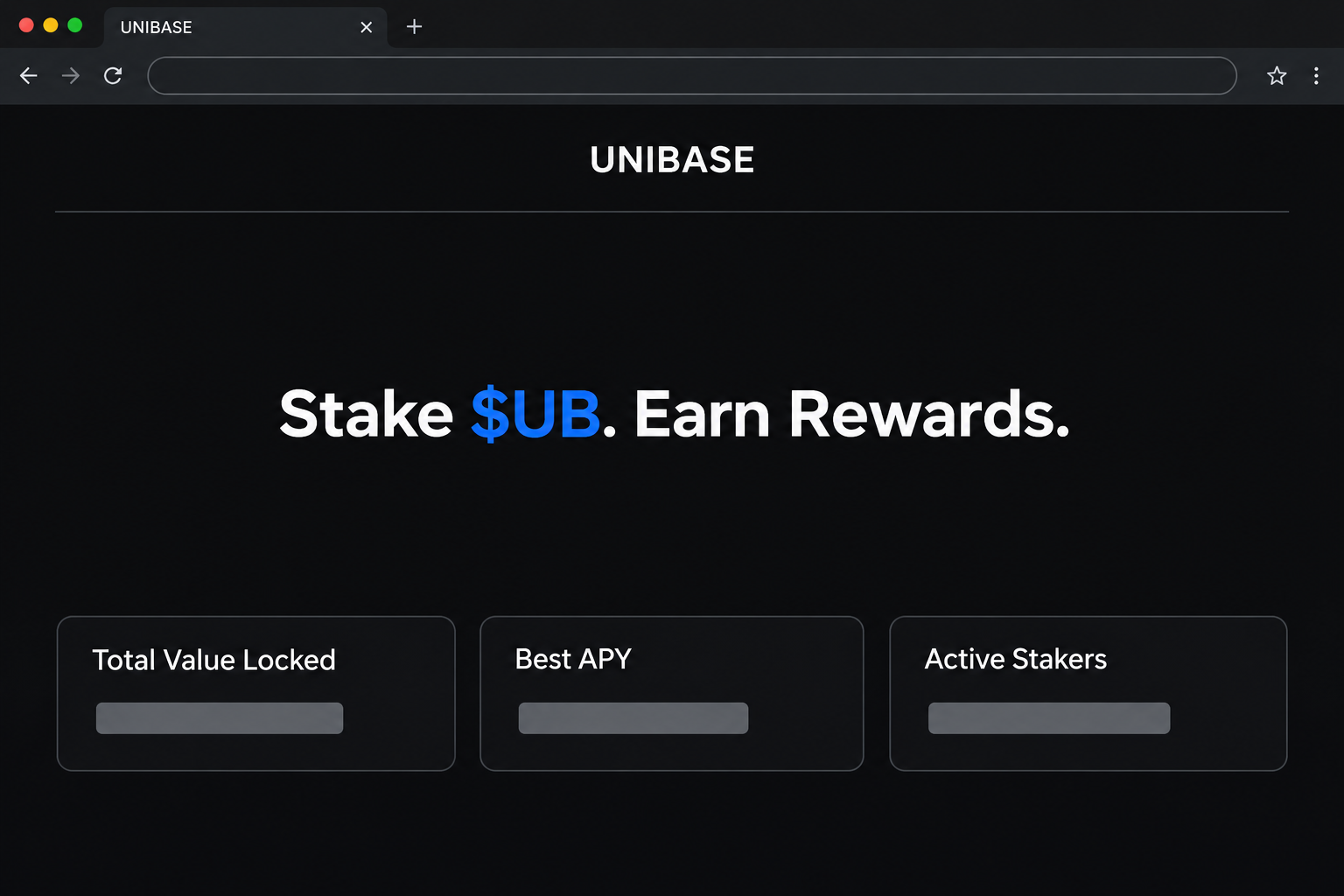
The fake Unibase staking page invited people to lock UB for rewards and greater governance weight. It displayed a “Best APY” of 34.5% for a 365-day pool.
Beside the rate were figures for total value locked, UB staked, and active stakers. They made the page look busy, but they did not verify a single deposit or reward.
The imitation used a separate .app host. A similar-looking address is not the same as a domain Unibase identifies in its documentation.
The capture shows a wallet selector over the page. It does not show an actual stake, an approved transfer, or the loss of funds from a specific wallet.
The real project distinguishes governance staking from node staking
Unibase develops infrastructure for AI agents, with tools for storing and sharing information across services. UB is a token associated with that project.
In its official staking documentation, Unibase explains that locking UB for governance creates vUB, which represents voting power and a claim on governance staking rewards.
The same documentation distinguishes that process from node staking, in which storage nodes bond UB and can face penalties. Voting weight and a node operator’s bonded stake aren’t interchangeable.
A fake page can describe a real concept while lying about where to take part.
Unibase’s documentation does not authenticate the lookalike or turn its advertised 34.5% into a verified rate.
The biggest number isn’t the most important one
The term APY describes an annualized yield figure under specified assumptions. A large number on an imitation isn’t an explanation of how that return was calculated or paid.
More important questions come first: who published the page, what is being locked, how you can verify it, and what happens when you want it back.
The word “stake” tells you what the page wants you to think you’re doing. The wallet and the record it creates tell you what actually happened.
- Confirm the exact host through Unibase’s own documentation.
- Read the actual lock terms and expected governance position separately from the quoted return.
- Don’t count a displayed staker total as evidence that other wallets are safe there.
- If you see a request from an unfamiliar site, decline it before investigating.
How the Fake Unibase Staking Scam Works
Step 1: The offer sounds like two benefits in one
The page pairs a return with the idea of supporting an AI-agent ecosystem. A person who already follows Unibase might be interested in earning rewards, voting, or both.
That helps the page feel relevant rather than random. It doesn’t need you to believe in a new project because the name and the token already exist.
Voting power and rewards are still different outcomes. A prompt asking for a transfer needs to make sense in terms of what the actual governance program records.
If you’re looking for the official product, begin with Unibase’s docs rather than the promotion. You can read the difference between staking types without attaching a wallet.
Step 2: A long lock makes an unverified rate sound concrete
The 365-day label gives the display the shape of a financial offer: leave the asset in place for a set period and earn the number shown.
That is an apparent condition, not a contract you can rely on.
The page didn’t establish how yields could change, what asset they would be paid in, or who administered the pool.
Total participation numbers add another nudge. If thousands of people seem to have joined, the next wallet connection can feel less like a decision you need to make carefully.
Those counts were on the page itself. Don’t use them to check how many people have positions or how much value the supposed contract controls.
Step 3: The landing page pushes you toward a wallet selector
The recording shows the page opening a list of wallet options. A genuine wallet logo in that list would not mean its provider had reviewed or approved the site.
The address matters as much for a staking page as it does for a bank login. A close-looking name on a different domain may belong to somebody entirely different.
Stop before choosing another wallet to see whether the terms improve. The site should be independently verifiable before it gets any information from one of your accounts.
If you arrived through a Telegram post, follow a route you find on the project’s own site instead. A copied announcement can keep its wording and change its destination.
Step 4: You may be asked to approve something unexpected
An app connection and approval are not the same event. Connecting may let the site see a public address and ask the wallet to perform an action.
A harmful follow-up could seek a spend permission or an asset transfer that doesn’t create the intended position.
This is a risk to check for, not a recovered transaction from the capture.
If you’re asked to sign, check the token, chain, and type of request. A site calling it “staking” doesn’t change what the wallet is being asked to authorize.
Don’t dismiss a warning because you expected assets to leave your spendable balance.
There is a difference between moving tokens into a documented lock and sending them somewhere you don’t recognize.
What to Do if You Have Fallen Victim to This Scam
-
Leave the pool offer and reject any open request. If you only saw the rates or opened the chooser, don’t return to look for a way to cancel a deposit.
You can check for an actual wallet event without loading the page again. Keep the time and the original source of the link if you still have them.
-
Check which wallet account received the request. Open it independently and remove the unfamiliar website from the connected-app list if it appears there.
Some wallets have several accounts or networks. Use the one connected during the visit when you look at transactions and permissions.
Phantom’s wallet incident guidance separates disconnection, token approvals, and the response to leaked recovery information.
-
Check what was approved before deciding it was a stake. Note the affected asset, amount, destination, and transaction or signature reference.
Look for an independent record of the expected position. An on-page message saying your UB is locked is not a substitute for the wallet’s record.
Follow your wallet provider’s current instructions to revoke any unfamiliar permission when applicable. Check the actual network in the wallet rather than assuming it from the promo.
-
Handle any recovery phrase or key exposure promptly. A suspicious page shouldn’t need your recovery secret to create a staking position.
If you disclosed one, move to a wallet with new recovery information on a trusted device, following your wallet provider’s guidance for remaining assets.
Mention any actual positions or delegated votes when you ask for help. A locked asset may need a separate procedure from tokens that are already available to move.
-
Keep transaction records and contact the relevant providers. If a crypto exchange was involved, reach its real support service through the account you already use.
Save the network, time, and destination for any unauthorized movement. Legitimate support should not need the private material that controls the wallet in order to review that record.
Use the FTC’s crypto scam guidance for U.S. reporting options. Do not pay an unfamiliar person claiming they can unlock the fake pool.
What to Look For in an Actual Governance Position
Voting weight isn’t the same as yield
The official Unibase documentation explains how lock duration can affect voting weight. That helps you understand why references to longer locks aren’t automatically suspicious.
But a longer commitment and a higher displayed vote value don’t tell you that the same percentage is earned by every holder. Don’t turn one label into another.
If a site uses the words voting power and APY in the same panel, find the terms for each independently. One measures influence; the other purports to describe return.
Check the lock rather than trusting a reward countdown
A genuine lock gives you something to verify about the amount, the expected position, and when or how it can be changed. Look for those terms in the actual documentation.
If a wallet shows a destination you cannot tie to the stated project, do not commit funds while you look for a better explanation.
When comparing an old screenshot with current documentation, keep the dates in mind. Old pool labels don’t define the current program, and genuine rules don’t validate an old imitation.
Use the asset path to check where the money went
Your wallet’s activity can show an incoming or outgoing transaction and identify the account involved. The lookalike’s balance can say anything without proving that record exists.
If the expected position isn’t there, don’t try to “fix” the deposit by signing more requests. Preserve the original record so you can explain it to support.
An unexplained permission can matter even if your balance appears unchanged. Review it through the wallet’s established tools rather than waiting for a second request to appear.
Read the advertised totals as claims about the page
The imitation showed 124.6 million UB staked next to an active-staker count of 4,821.
You could see both figures without establishing that the site could verify a single position.
Those numbers describe different things even on a legitimate dashboard. Tokens staked measures units of an asset; a count of stakers describes participation under whatever definition the product uses.
Total value locked is usually an estimate of the value of assets held in a program. A large amount does not tell you whether you could withdraw a particular deposit.
The figure can also move as token prices change. It does not establish that an increase came from new activity or that a new depositor earned anything.
Before you compare those numbers with another page, find out which program the other page measures and which assets it includes. A screenshot alone can’t answer either question.
On this site, no independent confirmation connects the figures to the official program. The sharp distinction is not whether the yield is high, but whether the source is authentic.
Separate a commitment from an account-security problem
If an actual staking position exists, it may have terms for maturity or exit. If the wallet instead shows an unknown transfer, you have a financial security problem to report.
Don’t let a copied lock date decide when you ask for help. Preserve the records now, even if you’re still finding out whether the promised position was ever created.
An official support conversation can begin with your public transaction reference and expected outcome. Never include the recovery information needed to control the account.
Frequently Asked Questions
Is the 34.5% Unibase staking offer legitimate?
The 34.5% figure appeared on a Unibase impersonation, paired with a 365-day pool label. It is not a verified return from the official project.
Leave that page alone, and use the official staking documentation for any real product you were looking for. Don’t connect to test the displayed rate.
What is the difference between UB and vUB?
Unibase describes UB as the token that can be locked for governance and vUB as the governance stake representation. The latter is linked to voting power and rewards.
Seeing “UB” in a dashboard doesn’t establish that a position will produce vUB. Confirm the request through the real project first.
Is the .app site an official Unibase address?
The archived .app page in this case was an imitation. Use the public documentation under unibase.com to find the actual route rather than relying on a similar spelling.
Don’t try nearby variants to see which loads. Start from a known site and compare the complete address before approving anything.
Did choosing my wallet sign the stake?
A menu alone does not establish a completed connection or approval. Check whether the wallet displayed a separate request and whether anything appears in your history.
If you did approve something, review the account, affected asset and any spending permission. You don’t need to return to the promo page to check.
Do high staker counts make the offer safer?
A site’s own activity figures don’t establish which wallets have real positions. The totals may look specific even if you cannot trace them to the official program.
Use the actual protocol documentation and your wallet’s records. No printed count proves your particular request went to the expected place.
Can I pay to unlock UB from the imitation?
Do not pay someone who claims they need a fee to unlock a position shown only on this page. Check whether the actual transfer produced a real position first.
If nothing matches, show the transaction to official support. A second payment is not a reliable way to undo the first one.
The Bottom Line
Don’t stake through the Unibase lookalike. Its 34.5% headline and long-lock label gave the appearance of a working pool without establishing a legitimate position.
Use Unibase’s own documentation to verify real staking. If you already approved something, check where the asset went and whether you granted a permission that still needs attention.

Join the discussion
0 commentsShare your experience or ask a question about this article.
Community experiences
Did this happen to you?
Your experience could help someone recognize the same scam. Submit a private report for our team to review.
I experienced this tooReports are reviewed before publication. Sharing publicly is always your choice.
Discussion
Start the conversation
Have a question or something useful to share? Add the first comment.