


The message says there’s a problem with your car’s airbag. You don’t remember hearing anything about a recall, but this doesn’t feel like something you can leave until tomorrow.
You can take the safety warning seriously without trusting the sender. Start with your car and the official record, not the message.
Overview
A real warning about fake airbag messages
On November 14, 2026, Hong Kong’s Transport Department warned about fake airbag recall messages made to look as though they came from the department.
It disowned the messages and said it would refer the matter to police.
The department did not say the vehicles named in every fraudulent message were safe. Its warning was about the source of the messages.
The department posts recall information online and doesn’t write to individual owners to recall their vehicles.
Online Threat Alerts also warned about fake vehicle recall approaches earlier in the year.
The Hong Kong statement confirms impersonation in Hong Kong. It doesn’t establish that the same senders targeted drivers elsewhere.
A safety claim and a trusted messenger are separate things
A recall is a real process for dealing with a safety defect or other qualifying problem.
The fact that recalls are real is what makes a fabricated alert unsettling. Airbags, brakes and steering don’t sound like topics you can ignore.
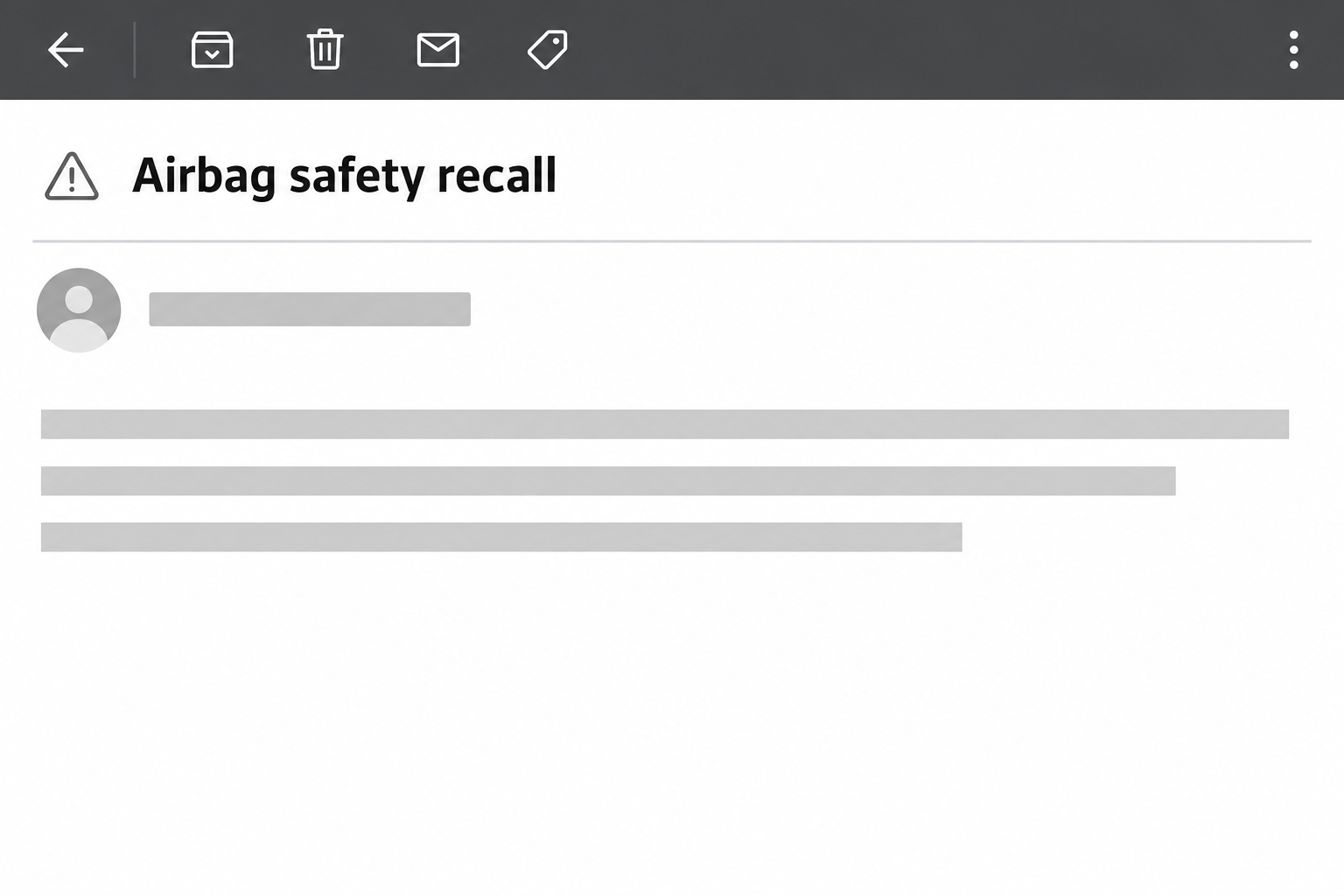
The image above is an illustration of a generic message viewer, not a copy of a notice issued by the Hong Kong authorities.
The department’s warning does not reproduce the full text or identify a particular fake website.
Do not assume the false message means a real defect is impossible. It only means the message cannot establish that there’s a defect.
Check through an official listing or an authorized dealer before deciding what to do.
What to have ready for an independent check
- Note the make, model and model year, particularly if the vehicle was imported, purchased used or registered in another country.
- Find the vehicle identification number, or VIN, on paperwork or on the vehicle itself. Use it only in a trusted lookup or with a verified dealer.
- Find your manufacturer’s official page or your local transport authority’s recall register, without following the address provided by the message.
- Ask an authorized dealer whether the recall applies to your exact vehicle, whether a repair was already done and whether there’s interim safety advice.
Make the recall check first, with the suspicious message closed.
You can come back to the message to save it as evidence after you’ve confirmed the vehicle’s status through a route the sender doesn’t control.
How the Fake Vehicle Recall Scam Works
Step 1: The notice borrows a real safety concern
An airbag alert works because it points to something most drivers cannot inspect or understand on their own.
The apparent authority is valuable to the sender. It supplies a reason for a driver to trust an unexpected message.
In the Hong Kong case, the false messages traded on the Transport Department’s name.
The agency says it has no connection to the unauthorized communications and does not send individual vehicle owners recall letters.
That distinction applies to one kind of official notice. A registration reminder, an authorized dealer appointment and a manufacturer recall notification are different communications.
Don’t use a statement about one to decide that all legitimate notices have the same sender.
Step 2: The path to checking is supplied by the sender
The notice may appear to make checking easy by giving you a link, an address or a contact to use.
That convenience removes a question you would normally ask first: is this an actual channel for my vehicle?
A bad address might be hidden behind ordinary link text. But you don’t need to inspect or decode it to make a safe decision.
Open your usual manufacturer account or find the government listing yourself.
If the message arrives as a call or an email, don’t switch to a contact the same person recommends.
Someone else answering the number they gave you is not independent confirmation.
Step 3: The verification request can become a request for data
The Hong Kong agency warned drivers not to sign in to suspicious websites or provide personal information.
It didn’t identify every item requested or report stolen vehicles. That limit matters when deciding what exposure you may actually have.
An authorized dealer may need a VIN to look up a car.
That does not mean you should provide a scan of your registration, account password or payment details to an unexpected sender. Confirm who needs each item and why.
If you land on a form and haven’t entered anything, close it.
Don’t go farther just to check whether the page will reveal the recall. You can get the answer without interacting with the sender’s form.
Step 4: A possible repair can make a follow-up seem routine
After a lead about a defective part, an unexpected call about a repair or pickup can sound like a continuation of the same process. That doesn’t make the caller independent.
Ask the dealer whether it initiated any follow-up, and don’t send additional details just because the new caller knows the make of your car.
The earlier message may have collected that information.
Hong Kong’s release does not document a pickup operation. Treat an unsolicited pickup as a separate claim to verify, not as an established outcome of the airbag messages discussed here.
What to Do if You Have Fallen Victim to This Scam
Stop communicating and save the message.
Close the page without filling out anything further. Preserve the text or email, when it arrived and what the sender asked you to do.
Save a screenshot rather than forwarding the link to a family member.
If it was an unsolicited call, write down the number displayed and the claimed organization. Don’t call back to argue or ask them to remove the information you sent them.
Check the vehicle separately before planning to drive it.
In Hong Kong, open the official Transport Department recall list. Find the relevant make and model, then confirm applicability and instructions with an authorized dealer.
In the United States, open the NHTSA recall lookup independently and use the VIN search for your vehicle.
Read the result, then call a verified dealer if the notice is recent or unclear.
If a verified notice says not to drive, follow that direction.
Ask the dealer about safe transport instead of improvising a trip or using a pickup service named in an unverified message.
Call your bank if you shared card details or paid.
Open your banking app or call the number on your card.
Tell the bank what you disclosed, whether you approved a payment and whether any charges have appeared. Ask what it can stop, replace or dispute.
Make a note of the amount, recipient and case reference.
Don’t send a second payment to anyone claiming they can reverse a charge, release a refund or stop the original transaction.
Secure any account information you entered.
If you entered a password, sign in through the genuine service and change it.
If you used the same password elsewhere, replace those copies. Start with your email and accounts tied to purchases or payments.
Check account recovery details and review active sessions where the service offers that option.
If you provided a code, tell the account provider which account and what the real code message said.
Describe exactly what personal or vehicle information was shared.
Make a list of any registration images, identity documents, address information or account details that you sent.
Give that list to the reporting service or affected account provider, without posting it publicly.
If you handed keys to an unverified person and cannot locate the vehicle, contact local police promptly.
Give police the last known location and any handover details, then contact your insurer through its usual number.
Report the impersonation through an independent channel.
Hong Kong’s Transport Department asks people who gave personal details in response to these false messages to contact police.
Preserve the message and say which department the sender claimed to represent.
For texts in the United States, the FTC’s guidance on spam texts explains how to forward a message to 7726 and where to report suspected fraud.
Keep a copy of your original evidence first.
How to Check the Real Recall Without Using the Message
Start with the right lookup for your car
Look up vehicles in the jurisdiction where they were sold or registered.
A United States lookup is not a definitive answer for a car sold in another country. The Hong Kong register explains that parallel imports may need manufacturer confirmation.
The model and year are useful for finding a notice.
The VIN is what helps a dealer or an official lookup distinguish your car from other cars with the same name and age.
When checking a used car, ask whether the repair was completed before you bought it.
Don’t assume an old recall mention means work is still due. Ask what records the authorized dealer can check for your vehicle.
Know what a blank result doesn’t prove
NHTSA says its VIN result does not show recalls that have already been repaired.
It also warns that some recently announced recalls may not yet have every affected VIN in the database.
If a lookup shows nothing, check whether the make and model match what you typed.
For a recent or international notice, call the manufacturer or authorized dealer and ask about your vehicle specifically.
If you learn there is a recall, ask what the defect is, what the dealer will do and whether there are driving restrictions before the appointment.
Write down the answer along with the person or department you spoke to.
Keep the appointment and any pickup under your control
Use the manufacturer’s directory to find an authorized dealer, then call the published number.
Ask the staff to read back the recall or campaign reference and tell you which service location will handle it.
If the vehicle is not safe to drive, ask the verified dealer or your usual roadside provider whether collection can be arranged.
Record which one you called and whom they said to expect.
If someone arrives unexpectedly, do not hand over keys because the company name sounds familiar.
Check the job with the service you contacted, using the same verified number you used before.
Ask for a work order or other record when the repair is finished.
Keep it with the vehicle’s paperwork, especially if you plan to sell the car or if a database takes time to update.
Update your contact details without answering the alert
If you have moved or bought a car secondhand, ask the manufacturer how to update the owner contact information.
In the United States, NHTSA says registered owners are notified by mail by the manufacturer.
An outdated address may mean you missed a legitimate letter. It doesn’t mean an unsolicited text with a link fills that gap.
Check the register and contact the manufacturer using independently verified information.
NHTSA offers optional alerts through its SaferCar app and general recall email signup.
That adds a second source of information you opted into, without changing how you should verify a notice naming your car.
If an authorized service desk suggests extra work, ask it to separate that work from the recall remedy.
A list of recommended services doesn’t establish that all of them are part of the safety recall.
Frequently Asked Questions
Does Hong Kong’s Transport Department notify individual owners about recalls?
The department says it does not write to individual vehicle owners about safety recalls.
Its online list is based on information from authorized agents and dealers. Verify a recall for your own vehicle with the appropriate authorized contact.
Can a fake message name a real airbag recall?
Yes, a safety issue can be real even when the person contacting you isn’t authorized.
Look up your own vehicle separately, and use the dealer or manufacturer to arrange any required inspection or repair.
Is it safe to give an authorized dealer the VIN?
A verified dealer can use the VIN to determine whether your car is affected.
Call using the manufacturer’s official dealer listing or information you already trust. Don’t read it out just because an unexpected caller asked for it.
Does a blank NHTSA result rule out a recall?
No, an empty result may not reflect a very recent recall whose affected VINs are still being identified.
It also leaves out recalls already repaired on that vehicle. Ask the manufacturer or dealer if there’s any doubt.
Do I need to replace a bank card if I only opened the message?
Receiving or reading a message does not, by itself, give someone your card details.
If you entered the card number, authorized a payment or see an unfamiliar charge, contact your bank and explain what happened.
Should I ignore the warning and keep driving as usual?
Don’t use the fake message to decide whether the car is safe. Confirm the recall with the manufacturer or dealer.
If a verified manufacturer or dealer notice gives interim precautions, including not driving the vehicle, follow those directions.
The Bottom Line
Treat the message and the possible safety defect separately. Verify the car through an official register and an authorized dealer, without opening the sender’s link.
If you already shared data or paid, contact the affected bank or account provider and save the message. Arrange any real recall repair through the dealer.

Join the discussion
0 commentsShare your experience or ask a question about this article.
Community experiences
Did this happen to you?
Your experience could help someone recognize the same scam. Submit a private report for our team to review.
I experienced this tooReports are reviewed before publication. Sharing publicly is always your choice.
Discussion
Start the conversation
Have a question or something useful to share? Add the first comment.