


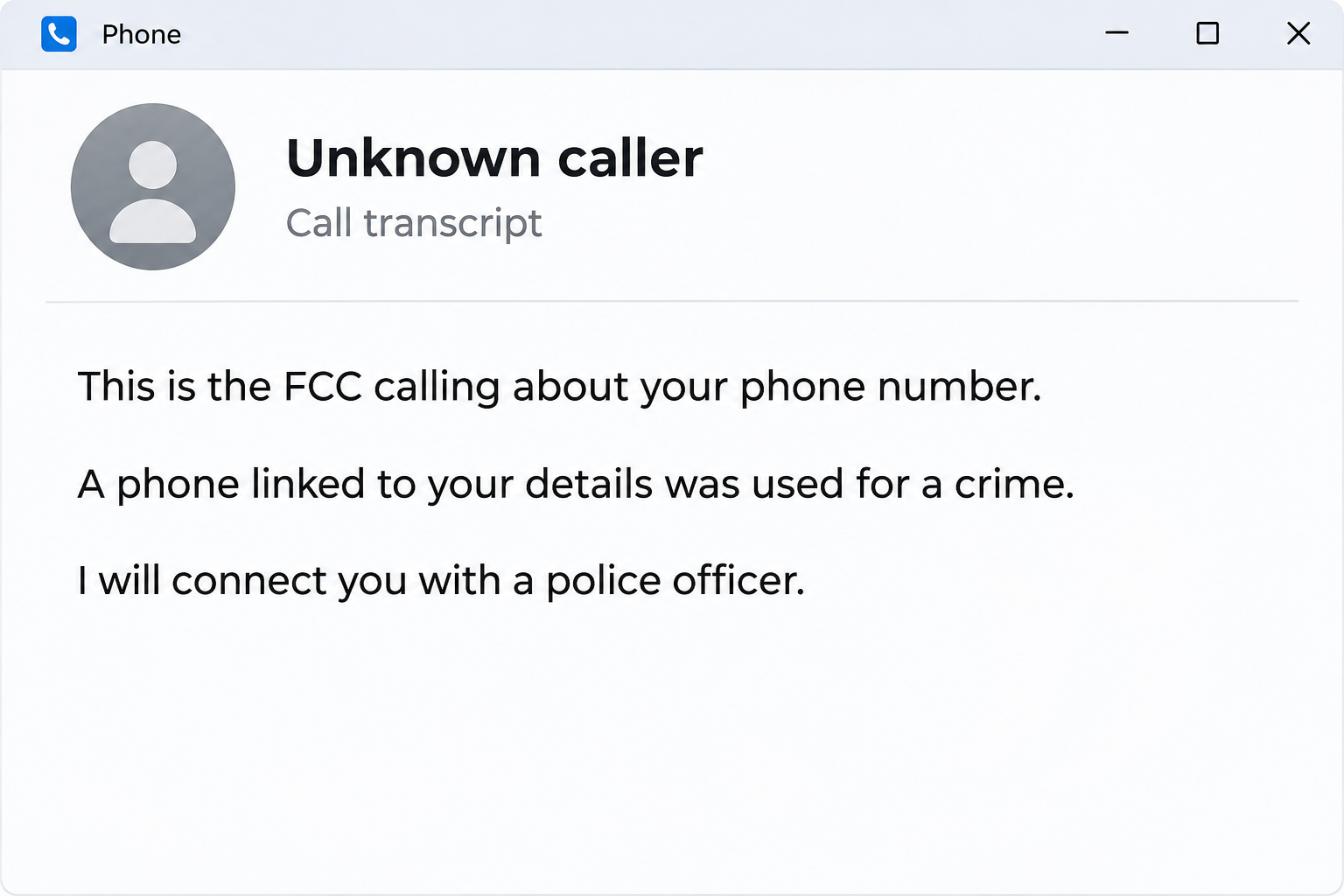
A caller says a phone connected to your details has been used in a serious crime. They introduce themselves as someone from the FCC.
You want to explain that the phone isn’t yours. Before the conversation moves to another supposed official, check what this call is asking you to believe.
Overview
The FCC has warned about this specific accusation
The FCC phone scam uses the Federal Communications Commission’s name to make a criminal allegation sound official. The caller claims your telephone number is under investigation.
The agency’s consumer alert about FCC impersonators directly rejects that story. FCC commissioners and staff do not call consumers to announce that their numbers are being investigated.
The alert also warns about a supposed law-enforcement hotline. Being transferred by the first caller doesn’t independently establish that the next person is a police officer.
A recent caller stayed on the line for about 20 minutes
In a public report, a recipient described a call about another phone allegedly connected to their details. A second person then played the role of a police officer.
The recipient became suspicious and hung up. They said no information had been requested, and some details the callers already held were outdated.
That account describes an interrupted impersonation attempt. It doesn’t document a payment, an installed application or confirmed access to the recipient’s phone.
Match your response to what actually happened
- End the unexpected call instead of accepting its transfer.
- Keep the caller’s claims separate from genuine account records.
- Contact your provider independently about an actual unfamiliar account.
- Protect any credentials or payment details you disclosed.
- Save the call details for an accurate report.
You don’t need to purchase an identity-protection subscription simply because a stranger kept you talking. Start by identifying any information, payment or account access you actually provided.
What the Real FCC Says About These Calls
The commission issued its warning because impersonators were claiming to represent its commissioners or employees. They were telling consumers that their phone numbers were connected to criminal activity.
Its instructions are specific: hang up on that approach. The agency doesn’t direct consumers to a special police hotline or demand money to resolve the alleged investigation.
The warning names payment methods including cash, payment apps, cryptocurrency and gift cards. None becomes an official FCC collection route because the caller supplies a case number.
Don’t turn this into a guessing game about which employee might be calling. The false investigation claim is the problem, even before a financial demand appears.
The fictional transcript above illustrates the claimed authority and handoff. It isn’t a recording or screenshot of the conversation described by the recipient.
For the reported call, the available account ends when the recipient hangs up. Later steps must not be treated as events that happened to that person.
How the FCC Phone Scam Works
Step 1: The caller borrows an agency’s authority
The opening places an official-sounding organization between you and a worrying accusation. Instead of considering whether to speak, you start thinking about how to clear your name.
A calm voice can make the exchange feel administrative. The caller may appear to be helping you understand a problem rather than threatening you immediately.
But an agency name is an identity claim. It doesn’t authenticate the person using it, and you shouldn’t disclose extra information to help them locate the supposed file.
Write down the claimed department if you need to remember it. You can stop the conversation without debating the caller’s knowledge of telecommunications or government procedures.
Step 2: Familiar details make the allegation feel personal
The contact may already know something about you. A name, telephone number or old address can make a broad claim appear connected to a real investigation.
Knowing one fact doesn’t establish the rest of the story. The caller still hasn’t shown that another phone exists or that you are responsible for its activity.
Don’t correct outdated information while trying to prove your innocence. Giving your current address or identification details can supply information the caller didn’t have before.
Caller ID needs the same caution. Scammers can make a familiar name or number appear on the receiving phone, as the FTC explains in its guidance.
A recognizable display therefore doesn’t solve the identity question. Use contact details you obtain independently when a genuine account issue needs checking.
Step 3: A criminal accusation keeps you explaining
The allegation is designed to be difficult to dismiss emotionally. You know you didn’t commit the offense, but you may feel obliged to keep answering until somebody accepts that.
The reported caller alleged that another phone was being used to distribute illegal sexual material. The seriousness of that accusation made the conversation especially alarming.
Your denial doesn’t require the next action the stranger proposes. You can reject the allegation without answering identity questions or following a caller-controlled investigation.
Pause before treating their description as an established event. An unverified caller telling you something happened is different from a record obtained through your actual provider.
Step 4: A supposed police officer takes over
A new voice can make the first person’s account seem independently confirmed. In reality, the second person was introduced through the same unverified conversation.
The FCC’s warning specifically rejects the idea that its employees would direct you to a special law-enforcement hotline. Don’t use that transfer as your verification method.
The handoff also changes the atmosphere. What sounded like an account problem becomes a situation where you may fear being uncooperative with police.
Professional language, an official title or a claimed case reference doesn’t remove the need for independent contact. You can end the call before checking anything further.
For the recipient who reported the recent attempt, this stage prompted suspicion. Hanging up stopped that conversation before the account describes any payment or disclosure request.
Step 5: Cooperation can become an information or money request
The FCC warns that government impersonators seek personal information or payment to resolve invented problems. Some versions tell people to move funds for supposed protection.
That is a warning about the wider scheme, not evidence that the interrupted call reached those demands. You don’t need to wait for them before leaving.
If a caller directs a transfer, read what your bank says it will do. Describing money as protected, verified or held for investigation doesn’t change its recipient.
Never share a banking code to demonstrate that you aren’t involved. A code belongs to the service that issued it, regardless of the title claimed by the person requesting it.
Does a Long Conversation Mean They Accessed Your Phone?
After hanging up, it’s easy to replay every minute and wonder what the caller accomplished. Start with the actions you remember rather than the length of the conversation.
Staying on the line for 20 minutes isn’t evidence that an account was accessed. The reported recipient didn’t identify a malicious download, shared code or remote connection.
That’s different from being guided through an installation or entering credentials on a linked page. Those actions require attention to the particular account or software involved.
If you only spoke, save the details and stop responding. You don’t need to assume a device infection or erase the phone because the accusation frightened you.
If you received a genuine security alert during the exchange, check it through the relevant provider’s app. Don’t let the caller interpret that alert or tell you to dismiss it.
Also distinguish information they knew from information you supplied. An outdated address read aloud by the stranger isn’t the same as a password you gave them.
Write down any corrections you made while talking. That record helps you explain the actual disclosure if you later contact your provider or report the approach.
Check a Genuine Phone Problem Outside the Conversation
If you recognize an unfamiliar order, bill or account alert, use your normal carrier account to examine it. Don’t reach support through a link supplied by the caller.
Ask the real provider about the specific record you found. Saying you received a threatening call is useful context, but the caller’s accusation isn’t itself an account record.
If nothing appears in your account, don’t create a new payment or identity check to satisfy the stranger. Keep the report focused on what you can actually document.
You may also need to distinguish a phone number mentioned in the story from your own active service. Write down which number the caller actually referred to.
That doesn’t require calling the alleged number or contacting whoever currently uses it. Provide it privately to genuine support or investigators if they request relevant evidence.
If your actual service suddenly stops working or you discover unauthorized changes, contact the carrier promptly. Report those findings separately from the unverified criminal allegation.
What to Do if You Have Fallen Victim to This Scam
-
End the call and decline further transfers. Don’t stay connected while looking up the agency. Use a separate, independently chosen contact route if you need assistance.
Save a voicemail or message before blocking the contact. Don’t call back to argue, test the operator or ask them to remove you from a supposed case.
-
Make a short record of the exchange. Note the time, displayed number, claimed agency, alleged problem and any second person introduced during the conversation.
Record what you actually shared or approved. If nothing was requested before you hung up, include that distinction instead of assuming an unseen payment or account action occurred.
-
Protect any account credentials you gave away. Change a disclosed password through the genuine service. Replace it on other accounts where you reused the same password.
If you shared a verification code, tell that provider which code and when. Ask about unfamiliar sign-ins or changes rather than relying on the caller’s explanation.
-
Contact your financial provider after any payment. Tell the bank or company that handled the transaction about the scam. Ask what recovery options apply to that specific payment.
Explain the deception and describe the transaction accurately. A payment you approved under pressure and a transaction you never authorized may require different reporting routes.
-
Respond specifically to sensitive identity information disclosed. Tell genuine support if you provided identification documents or other account-verification material, and ask what protection applies to that exposure.
If a Social Security number was shared, use IdentityTheft.gov to find relevant guidance. Actual misuse and an uncertain exposure call for different follow-up steps.
-
Report the impersonation through the genuine FCC route. Use the FCC’s unwanted-calls complaint guidance to find the relevant phone complaint category.
Keep your own copies of evidence after submitting a report. The commission explains that these reports inform enforcement; it doesn’t resolve each individual unwanted-call complaint.
-
Take threats of violence to local law enforcement. The FCC advises reporting threats of violence or harm immediately. Use genuine local contact information, not the alleged officer’s callback number.
Tell somebody you trust about the approach as well. They can help you review another message calmly if the impersonators contact you again.
What to Include in an FCC Impersonation Report
The FCC asks for details that identify the contact: the receiving number, displayed caller ID, time and time zone, and the employee name the caller claimed.
Include an existing recording or text screenshot if you have one. You don’t need to manufacture missing evidence or restart the conversation to obtain it.
Keep an asserted callback number separate from the number displayed on the incoming call. Label each clearly so your report doesn’t accidentally treat them as the same contact.
If the caller mentioned an old address or other personal details, describe that privately in the report. Don’t post identification records publicly to prove how convincing they sounded.
A report is a record of what happened, not a guarantee of an immediate response or refund. Continue any necessary account or payment follow-up with the actual provider.
Frequently Asked Questions
Does the FCC call to say my number is under investigation?
The agency’s consumer alert says its commissioners and staff do not make that call. Hang up rather than trying to resolve the allegation with the stranger.
What if the caller knows my name and address?
Those facts don’t authenticate the agency claim. Avoid correcting or completing the information, and independently check any genuine account problem you can identify.
Does a transfer prove I’m speaking to police?
A second voice introduced by the first caller isn’t independent verification. The FCC specifically warns about the false law-enforcement hotline used in this scheme.
Do I need paid identity protection after a long call?
The conversation’s duration doesn’t establish identity theft or device access. Review what you disclosed and address that exposure before deciding whether any paid service is useful.
Should I move money somewhere safe while this is checked?
Don’t transfer funds on the caller’s instructions. An unsolicited claim that money needs protection doesn’t establish a legitimate recipient or an official investigation.
Will reporting the call stop the next one?
The FCC doesn’t promise to resolve every individual unwanted-call report. Ask your carrier about available blocking tools, and keep refusing the impersonator’s instructions.
The Bottom Line
Hang up on an unexpected FCC call claiming your phone number is involved in a crime. The agency has explicitly warned that this investigation story is fraudulent.
If you already disclosed information or sent money, contact the relevant provider through its genuine route. Preserve the call details and report the impersonation without reconnecting to the caller.

Join the discussion
0 commentsShare your experience or ask a question about this article.
Community experiences
Did this happen to you?
Your experience could help someone recognize the same scam. Submit a private report for our team to review.
I experienced this tooReports are reviewed before publication. Sharing publicly is always your choice.
Discussion
Start the conversation
Have a question or something useful to share? Add the first comment.