

File Recovery is a malicious program that will display fake alerts, claiming that several hard drive errors and computer issues were detected on your machine.
In reality, none of the reported issues are real, and are only used to scare you into purchasing File Recovery and stealing your personal financial information.
Apart from the bogus alerts and warning,this rogue software has changed your desktop background to a solid black color,has hidden your files and folders and it’s causing browser redirects.
As part of its self-defense mechanism,File Recovery has disabled the Windows system utilities, including Task Manager and Windows Registry and is block you from running certain programs that could lead to its removal.
If your computer is infected with File Recovery virus,then you are seeing this images:
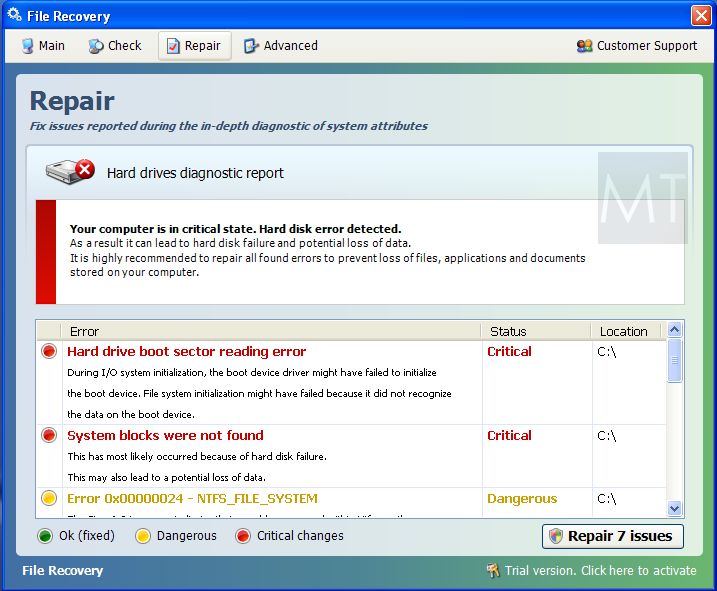
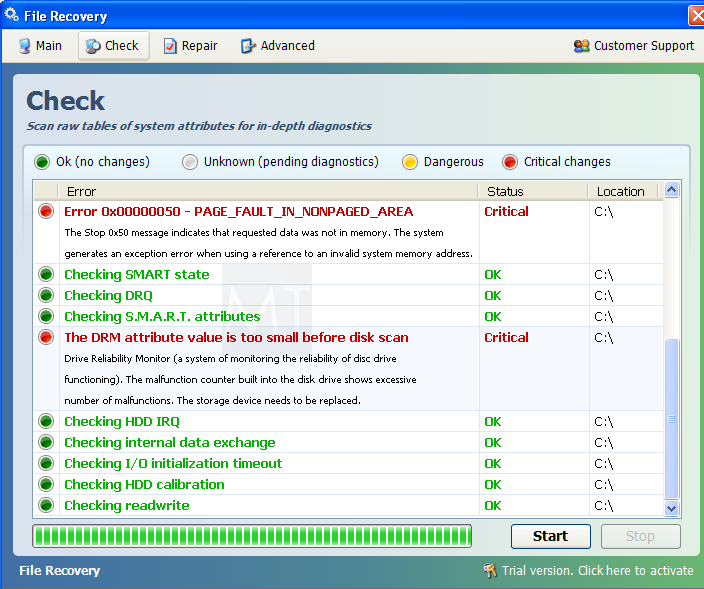
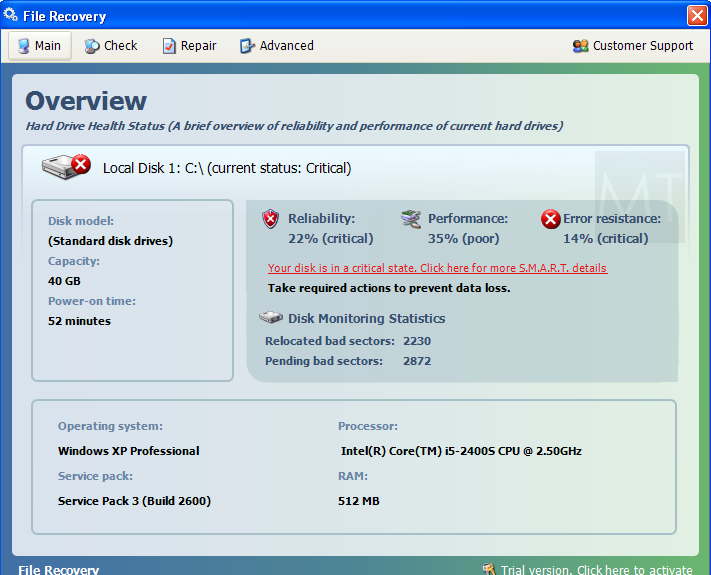
We strongly advise you to follow our File Recovery virus removal guide and ignore any alerts that this malicious software might generate.
Under no circumstance should you buy this rogue security software as this could lead to identity theft,and if you have, you should contact your credit card company and dispute the charge stating that the program is a scam and a computer virus.
Registration codes for File Recovery
As an optional step,you can use the following license key to register File Recovery virus and stop the fake alerts.
File Recovery activation code: 56723489134092874867245789235982
Please keep in mind that entering the above registration code will NOT remove File Recovery from your computer , instead it will just stop the fake alerts so that you’ll be able to complete our removal guide more easily.
File Recovery Removal Instructions
STEP 1 : Start your computer in Safe Mode with Networking
- Remove all floppy disks, CDs, and DVDs from your computer, and then restart your computer.
- Press and hold the F8 key as your computer restarts.Please keep in mind that you need to press the F8 key before the Windows start-up logo appears.
Note: With some computers, if you press and hold a key as the computer is booting you will get a stuck key message. If this occurs, instead of pressing and holding the “F8 key”, tap the “F8 key” continuously until you get the Advanced Boot Options screen. - On the Advanced Boot Options screen, use the arrow keys to highlight Safe Mode with Networking , and then press ENTER.
![[Image: Safemode.jpg]](data:image/gif;base64,R0lGODlhAQABAAAAACH5BAEKAAEALAAAAAABAAEAAAICTAEAOw== "Safe Mode with Networking screen")
![[Image: Safemode.jpg]](http://malwaretips.com/images/removalguide/safemode.jpg "Safe Mode with Networking screen")
STEP 2: Remove File Recovery malicious proxy server
File Recovery may add a proxy server which prevents the user from accessing the internet,follow the below instructions to remove the proxy.
- Start the Internet Explorer browser and if you are using Internet Explorer 9 ,click on the gear icon (Tools for Internet Explorer 8 users) ,then select Internet Options.
- Go to the tab Connections.At the bottom, click on LAN settings.
- Uncheck the option Use a proxy server for your LAN. This should remove the malicious proxy server and allow you to use the internet again.
![[Image: IE gear icon]](http://malwaretips.com/images/removalguide/icongear.jpg "Gear Icon") (Tools for Internet Explorer 8 users) ,then select Internet Options.
(Tools for Internet Explorer 8 users) ,then select Internet Options.![[Image: Internet-options-IE.png]](http://malwaretips.com/images/removalguide/ie1.png "Internet Options in IE")
![[Image: Remove-proxy-server2.png]](http://malwaretips.com/images/removalguide/ie2.png "Connections tab in Internet Explorer")
![[Image: Remove-proxy-server3.png]](http://malwaretips.com/images/removalguide/ie3.png "Uncheck the option Use a proxy server for your LAN")
If you are a Firefox users, go to Firefox(upper left corner) → Options → Advanced tab → Network → Settings → Select No Proxy
STEP 3: Run RKill to terminate known malware processes associated with File Recovery.
RKill is a program that will attempt to terminate all malicious processes associated with File Recovery virus,so that we will be able to perform the next step without being interrupted by this malicious software.
Because this utility will only stop File Recovery running process, and does not delete any files, after running it you should not reboot your computer as any malware processes that are configured to start automatically will just be started again.
- While your computer is in Safe Mode with Networking ,please download the latest official version of RKill.Please note that we will use a renamed version of RKILL so that File Recovery won’t block this utility from running.
RKILL DOWNLOAD LINK (This link will automatically download RKILL renamed as iExplore.exe) - Double-click on the iExplore.exe icon in order to automatically attempt to stop any processes associated with File Recovery.
- RKill will now start working in the background, please be patient while the program looks for various malware programs and tries to terminate them.
IF you are having problems starting or running RKill, you can download any other renamed versions of RKill from here. - When Rkill has completed its task, it will generate a log. You can then proceed with the rest of the guide.
![[Image: run-rkill-1.png]](http://malwaretips.com/images/removalguide/rkill1.png "RKILL ICON")
![[Image: run-rkill-2.png]](http://malwaretips.com/images/removalguide/rkill2.png "RKILL Command prompt")
![[Image: File Recovery virus rkill3.jpg]](http://malwaretips.com/images/removalguide/rkill3.png "RKILL LOG")
WARNING: Do not reboot your computer after running RKill as the malware process will start again , preventing you from properly performing the next step.
STEP 4: Remove File Recovery malicious files with Malwarebytes Anti-Malware FREE
- Download the latest official version of Malwarebytes Anti-Malware FREE.
MALWAREBYTES ANTI-MALWARE DOWNLOAD LINK (This link will open a download page in a new window from where you can download Malwarebytes Anti-Malware Free) - Start the Malwarebytes’ Anti-Malware installation process by double clicking on mbam-setup file.
- When the installation begins, keep following the prompts in order to continue with the setup process. Do not make any changes to default settings and when the program has finished installing, make sure you leave both the Update Malwarebytes’ Anti-Malware and Launch Malwarebytes’ Anti-Malware checked. Then click on the Finish button. If Malwarebytes’ prompts you to reboot, please do not do so.
- Malwarebytes Anti-Malware will now start and you’ll be prompted to start a trial period , please select ‘Decline‘ as we just want to use the on-demand scanner.
- On the Scanner tab,select Perform full scan and then click on the Scanbutton to start scanning your computer.
- Malwarebytes’ Anti-Malware will now start scanning your computer for File Recovery malicious files as shown below.
- When the scan is finished a message box will appear, click OK to continue.
- You will now be presented with a screen showing you the malware infections that Malwarebytes’ Anti-Malware has detected.Please note that the infections found may be different than what is shown in the image.Make sure that everything is Checked (ticked) and click on the Remove Selected button.
- Malwarebytes’ Anti-Malware will now start removing the malicious files.After completing this task it will display a message stating that it needs to reboot,please allow this request and then let your PC boot in Normal mode.
![[Image: Malwarebytes Installer]](http://malwaretips.com/images/removalguide/malwarebytes-setup.png "Malwarebytes Anti-Malware Installer")
![[Image: Finishing Malwarebytes installation]](http://malwaretips.com/images/removalguide/update-malwarebytes.png "Malwarebytes last setup screen")
![[Image: Decline Malwarebytes trial]](http://malwaretips.com/images/removalguide/malwarebytes-trial.png "Decline trial period in Malwarebytes Anti-Malware")
![[Image: Starting a full system sca]](http://malwaretips.com/images/removalguide/start-scan-malwarebytes.png "Perform a Full System Scan with Malwarebytes Anti-Malware")
![[Image: Malwarebytes scanning for malicious files]](http://malwaretips.com/images/removalguide/scan-malwarebytes.png "Malwarebytes Anti-Malware scanning for File Recovery virus")
![[Image: Malwarebytes scan results]](http://malwaretips.com/images/removalguide/results-malwarebytes.png "Malwarebytes when the system scan has finished")
![[Image: Infections found by Malwarebytes]](http://malwaretips.com/images/removalguide/detection-malwarebytes.png "Removing the infections found by Malwarebytes")
STEP 5: Double check your system for any left over infections with HitmanPro
- This step can be performed in Normal Mode ,so please download the latest official version of HitmanPro.
HITMANPRO DOWNLOAD LINK (This link will open a download page in a new window from where you can download HitmanPro) - Double click on the previously downloaded fileto start the HitmanPro installation.
IF you are experiencing problems while trying to starting HitmanPro, you can use the “Force Breach” mode.To start this program in Force Breach mode, hold down the left CTRL-key when you start HitmanPro and all non-essential processes are terminated, including the malware process. (How to start HitmanPro in Force Breach mode – Video) - Click on Next to install HitmanPro on your system.
- The setup screen is displayed, from which you can decide whether you wish to install HitmanPro on your machine or just perform a one-time scan, select a option then click on Next to start a system scan.
- HitmanPro will start scanning your system for malicious files as seen in the image below.
- Once the scan is complete,you’ll see a screen which will display all the malicious files that the program has found.Click on Next to remove this malicious files.
- Click Activate free license to start the free 30 days trial and remove the malicious files.
- HitmanPro will now start removing the infected objects.If this program will ask you to restart your computer,please allow this request.
![[Image: HitmanPro Icon]](http://malwaretips.com/images/removalguide/hpro1.png "HitmanPro Installer")
![[Image: Starting HitmanPro]](http://malwaretips.com/images/removalguide/hitmanpro36-start.png "HitmanPro installation process")
![[Image: HitmanPro installation screen]](http://malwaretips.com/images/removalguide/hitmanpro36-installation.png "HitmanPro setup options")
![[Image: HitmanPron scanning for File Recovery virus]](http://malwaretips.com/images/removalguide/hitmanpro36-scan.png "HitmanPro while scanning for File Recovery virus virus")
![[Image: HitmanPro scan results]](http://malwaretips.com/images/removalguide/hitmanpro36-results.png "HitmanPro displaying scan results")
![[Image: Activate HitmanPro license]](http://malwaretips.com/images/removalguide/hitmanpro36-activation.png "Activate the HitmanPro free 30 days trial to remove any detected infections")
STEP 6 : Restore your shortcuts and remove any left over malicious registry keys
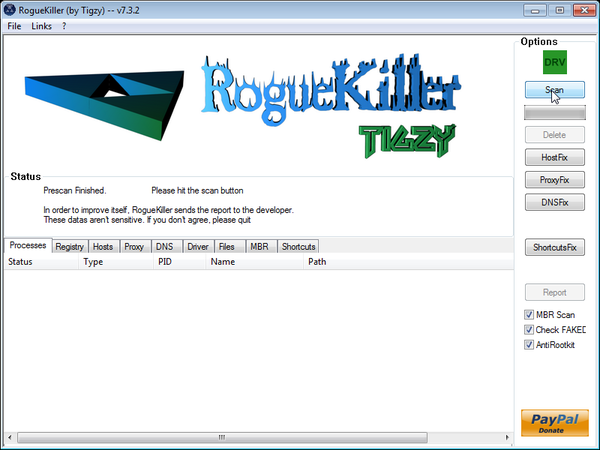
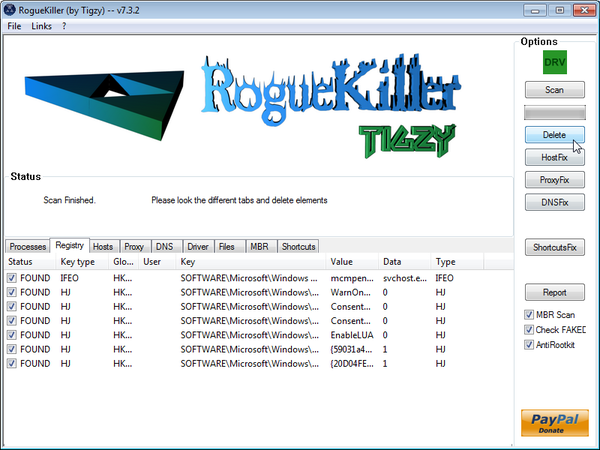
File Recovery has moved your shortcuts files in the Temporary Internet folder and added some malicious registry keys to your Windows installation , to restore your files we will need to perform a scan with RogueKiller.
- Please download the latest official version of RogueKiller.
ROGUEKILLER DOWNLOAD LINK (This link will automatically download RogueKiller on your computer) - Double click on RogueKiller.exe to start this utility and then wait for the Prescan to complete.This should take only a few seconds and then you can click the Start button to perform a system scan.
- After the scan has completed, press the Delete button to remove any malicious registry keys.
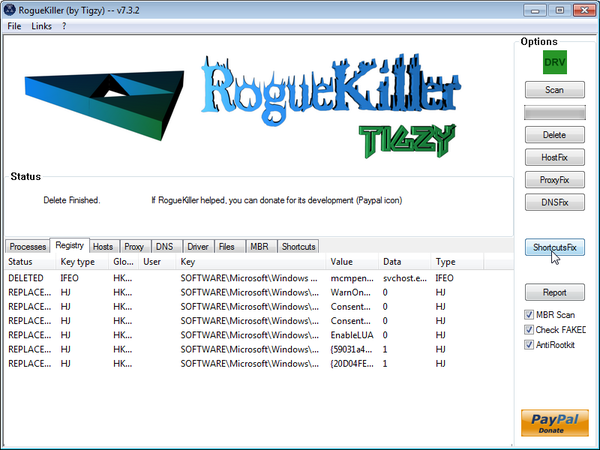
- Next we will need to restore your shortcuts, so click on the ShortcutsFix button and allow the program to run.
STEP 7: Unhide your files and folders
File Recovery modifies your file system in such a way that all files and folders become hidden, to restore the default settings , you’ll need to run the below program.
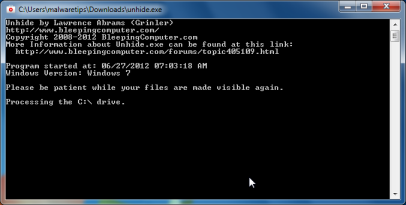
- Download the Unhide utility, to unhide your files and folders.
UNHIDE.EXE DOWNLOAD LINK (This link will automatically download the Unhide utility on your computer) - Double-click on the Unhide.exe icon on your desktop and allow the program to run.The whole process should not take more than 10 minutes to complete,and at the end this utility will generate a report.
STEP 8: Get your desktop look back!
File Recovery changes your desktop background to a solid black color,to change it back to default one follow the below instruction.
- Windows XP : Click on the Start button and then select Control Panel. When the Control Panel opens, please click on the Display icon. From this screen you can now change your Theme and desktop background.
- Windows 7 and Vista : Click on the Start button and then select Control Panel. When the Control Panel opens, please click on the Appearance and Personalization category. Then select Change the Theme or Change Desktop Background to revert back to your original Theme and colors.









hello i just want to say thank you so much I was able to fix my sisters’ computer in no time. Thank you for making my life easier .
Stelian,
You are the man! Your directions were very detailed and easy to follow. Thank you. After much angst, my computer is back in business. –Mark
Dude! You totally rock! Even a no-tech-skill flunkie like me was able to follow these instructions and kick some FRV ass! Coluldn’t have done it without you, though, so giving credit where it is due! Thank you sooooo much! Did I mention you rock? :o)
I think I’m in LOVE! Thank you … Other sites had steps 1-4 but it just wasn’t enough to do the job. I couldn’t get to any of my pictures or internet favorites until I ran this whole process. Thanks for saving me!
You rule!!! Ty so much for the info, got my life back in track :D
WOW! I had a few worries along the line, but it seems everything is back in order from the infection yesterday.
After the first MalwareBytes run when I rebooted, the screen of File Recovery reappeared and seemed active, but finally stopped.
I also got an error message the there was a problem starting cleanup.dll, the module could not be found.
I ran MalwareBytes a second time and the File Recovery screen appeared again, seemed active but finally stopped.
I continued from there with your process and in the end everything seems to have worked great.
You have truly done all of us a valuable service by providing this information.
Thanks so much,
John
I’m having same issue. When I rebooted after anti-malware (in normal mode) file recovery screen appeared again. You mentioned that it went away. I am currently running anti-malware scan a second time, will see what happens.
Hello Mike,
Can you please go ahead and perform the HitmanPro and RogueKiller scan….. And then reply back with the results.. :D
Okay, it seems that everything went back to normal (but I did notice that there is an icon on desktop called “File recovery”
Hello Mike,
That should be just an left over and harmless file from this infection.Right click on it and select delete to get rid of it.
NEXT,for your peace of mind, please perform the following scans:
STEP 1: Run a scan with Emsisoft Emergency Kit.
EMSISOFT EMERGENCY KIT DOWNLOAD LINK (This link will open a download page in a new window from where you can download Emsisoft Emergency Kit)
STEP 2: Run a scan with Eset Online Scanner.
ESET Online Scanner Download Link (This link will automatically download ESET Online Scanner on your computer.)
It worked! Thank you!!
Thank you! File recovery could not have hit at a worse time. We have generally recovered but 2 problems remain. Web browsing is now extremely slow and the Microsoft office license/key is not being recognized and I can’t find my email with the key.
Hello Rick,
Can you please run a scan with Combofix, ESET online scanner and post the logs here so that I can get an idea on what’s going on:
STEP 1 : Run a scan with Combofix
Download ComboFix from one of the following locations:
COMBOFIX DOWNLOAD LINK #1 (This link will automatically download Combofix on your computer)
COMBOFIX DOWNLOAD LINK #2 (This link will automatically download Combofix on your computer)
VERY IMPORTANT !!! Save as Combo-Fix.exe during the download.ComboFix must be renamed before you download to your Desktop
Notes:
STEP 2: Run a scan with ESET Online Scanner:
ESET Online Scanner Download Link (This link will automatically download ESET Online Scanner on your computer.)
Waiting for your reply to tell me if your machine is ok and the logs.
Thanks for the very thorough article and links. While I was familiar with Malwarebytes tools, you’ve gathered several good ones and following your instructions, and some others sites for specific registry keys/paths, I’ve been able to kill off this “secure file recovery” virus/malware. I believe the source of this instance of infection likely was “Playpickle dot com” or “flonga dot com” which my kids found somehow via their own grapevine and went to in search of free web-based games. (Telling myself to “Remember to configure a “USER” account without admin rights and USE it. Don’t just click download, okay, and Run blindly.”)
Thanks for the blog post and detailed replies.
Keep up the excellent work.
Thank you! Very well written document. I also used the system restore to an earlier day/time feature in Windows. For years I have struggled with getting the F8 to work at strat-up, but after a few attempts it does. One day I hope all these cyber criminals are found, prosecuted and spend a long-time in prison. This is a serious crime.
Thank YOU! These viruses are getting harder to kill and people like you are lifesavers.
This walk through was great. However, I’m not unable to remote desktop into the once infected computer.
Very Odd. Any suggestions?
Thank you so much. Took a while, but was worth it.
hi, there, very very very very, many thanks from here,, good detail explanation,
many thanks
Aron DK
Thanks for your detail explanation, thee problem has beam resolved……. Many thanks again
THANK YOU! From tears to gratitude, I appreciate that you have taken the time to post this for all of us to use. You saved my sanity and my GPA!
This terrible virus hit my computer the other day and I was able to find your site for help. I’m running Vista on my computer. I didn’t follow your first step and do the Registration codes for File Recovery. I went directly to the File Recorvery Removal Instructions and followed all the steps. It worked to the point that the “File Recovery” virus doesn’t show up but there still has to be something that is wrong. When I open in normal mode as soon as I try to open anything it locks up my computer and I have to stop the power to shut it down. I’m able to open and write this message through the “safe mode with networking”. At least this lets me know that everything is not lost. I tried using the Malwarebytes Chameleon as well with the same results. Is there anything else that you can suggest that may help me in my situation?
Hello Mark,
Can you please run a scan with Combofix, ESET online scanner and post the logs here so that I can get an idea on what’s going on:
STEP 1 : Run a scan with Combofix
Download ComboFix from one of the following locations:
COMBOFIX DOWNLOAD LINK #1 (This link will automatically download Combofix on your computer)
COMBOFIX DOWNLOAD LINK #2 (This link will automatically download Combofix on your computer)
VERY IMPORTANT !!! Save as Combo-Fix.exe during the download.ComboFix must be renamed before you download to your Desktop
Notes:
STEP 2: Run a scan with ESET Online Scanner:
ESET Online Scanner Download Link (This link will automatically download ESET Online Scanner on your computer.)
NEXT,please run a scan with HitmanPro and RogueKiller as seen on the guide.
Waiting for your reply to tell me if your machine is ok and the logs.
Thank you!
I at first thought this was overkill and too geekish. I was wrong, many thanks for making the process easy to follow. I managed to fix my pc 30 mins before a presentation. I do make regular Acronis backups just in case.
What virus/malware program should I use to stop this happening again? Microsoft Security Essentials did not help.
Many thanks
Hello,
I got this virus on the computer and found this website. I did all the steps and now the computer works as before, but it seems like the File Recovery still is on the computer. I dont get these fake alerts and images anymore but I can still see the program File Recovery on the start menu and the shortcuts to it. Any help would be appreciated, thanks./ Jens
Hello Jens,
That file is most likely just a left over file which you can delete.HitmanPro and Malwarebytes should have removed this rogue antivirus,however for your peace of mind I would suggest that you perform a scan with the following utilities:
1.Run a scan with Kaspersky Virus Removal Tool
Click here to download the Kaspersky Virus Removal Tool.
2.Run a scan with Eset Online Scanner.
ESET Online Scanner Download Link (This link will automatically download ESET Online Scanner on your computer.)
WOW, that is all I can say. And, of course, a BIG THANK YOU!!!
Stelian,
I discovered this virus on my wife’s laptop last week and didn’t get a chance to attempt to remove it. While I was away on business, she rebooted it and attempted to use it. Now I can’t get it to boot in safe mode. All it does is stay idle on the page loading screen. Help!! Her system is Dell Vostro w/Windows 7. Thanks in advance, Robert
Hello Robert,
Lets try to fix your computer,please run the below tools while in Normal Mode;
STEP 1: Run a scan with Malwarebytes Anti-Malware in Chameleon Mode in Norman mode:
STEP 2: Run a scan with RogueKiller
RogueKiller Download Link (This link will automatically download RogueKiller on your computer)
STEP 3 Please perform a scan with HitmanPro as seen on the guide.
If you are having problems starting this program please use the ForceBreach mode as described in the guide.
STEP 4: Run a scan with ESET Online Scanner:
ESET Online Scanner Download Link (This link will automatically download ESET Online Scanner on your computer.)
Waiting for your reply to tell me how everything is running!
Good luck…
Stelian,
Her computer won’t boot normal mode either. I just tried. It is stuck on the “Page is loading, please wait. This may take up to 30 seconds” page.
Is this what you are seeing: http://www.youtube.com/watch?v=I42YnigbWDE ?
Yes
Robert,it seems like you have a ransomware attack so this File Recovery is the least of your worries.
Try following this video and see if this will fix your problems: youtube.com/watch?v=6bVbCABjf38
Stelian,
It’s nice to know that there are still fine human beings like yourself who make positive contributions to society. Thank you many times over, Robert
Absolutely true.. well said Robert.. Stelian is a hero for me..
I got two more doubts to ask Stelian though:
1. Why some of my startup shortcuts are showing “empty” when i click on “expand “option ??
2. All the icons which earlier used to come under a single up arrow button have now come spread across my bottom right hand side corner near the date & time area ?
I ran almost all softwares as you said but I’m a little worried whether these viruses/malware/trojans etc is still there in my Dell XPS 15 laptop. May be because this is my first time but sir you see I have to do internet banking and all from now on and I’m scared to proceed beacause this happend. Kindly advice. Also FYI, I use Avast 7 latest one and before this virus inflicted, this avast only blipped about some malware site, etc.. blocked etc.. Nothing more did it do to stop this stupid thing. So I also need your advice as to setting up a good software firewall against these creepy things popping up and also killing these if any still exist in my laptop.
I’m deeply thankfull to your effort here. You sir did really help me very much.
Once again unending gratitude & thankfullness with expectations of a quick & positive reply. :)
Ganesh Krishnan, Kerala, India. :)
Hello Ganesh,
1.Can you please follow the instructions from this guide: http://malwaretips.com/Thread-Files-still-hidden-after-smart-hdd-removal-and-unhide-exe?pid=55462#pid55462
2.For your peace of mind, please perform the following scans:
STEP 1: Run a scan with Emsisoft Emergency Kit.
EMSISOFT EMERGENCY KIT DOWNLOAD LINK (This link will open a download page in a new window from where you can download Emsisoft Emergency Kit)
STEP 2: Run a scan with Eset Online Scanner.
ESET Online Scanner Download Link (This link will automatically download ESET Online Scanner on your computer.)