
FireBlaze Torch Lighter – Legit or Scam? Read This Before Buying

The FireBlaze Torch Lighter has exploded in popularity recently, promoted by flashy online ads making bold claims about its capabilities. But does this futuristic-looking lighter really live up to the hype? Or is FireBlaze just an overpriced product that preys on uninformed consumers?

This in-depth article will uncover the truth behind the viral FireBlaze Torch Lighter, analyzing the facts to determine if it’s a revolutionary new product or an elaborate sham.
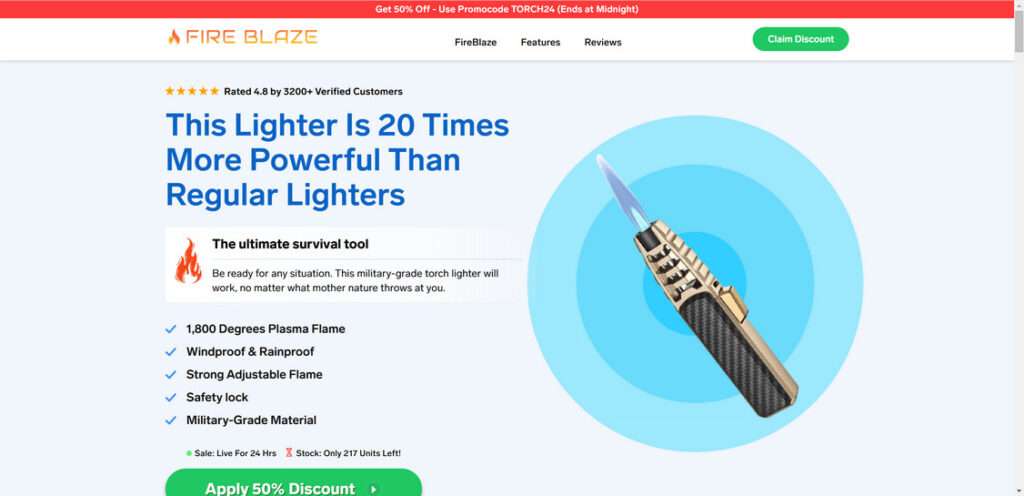
FireBlaze Torch Lighter

Outrageous Claims of Extreme Power

The main tactic used to market the FireBlaze lighter is making dramatic assertions about its supposed capabilities. The ads state it generates a massive 1,800 degree “plasma arc” flame hot enough to burn through metal.

According to the marketing, FireBlaze is a “military-grade” and “indestructible” lighter that works in any environment. These types of exaggerated claims are common in scam products seeking to impress buyers.

Just a Fancy-Looking Torch Lighter

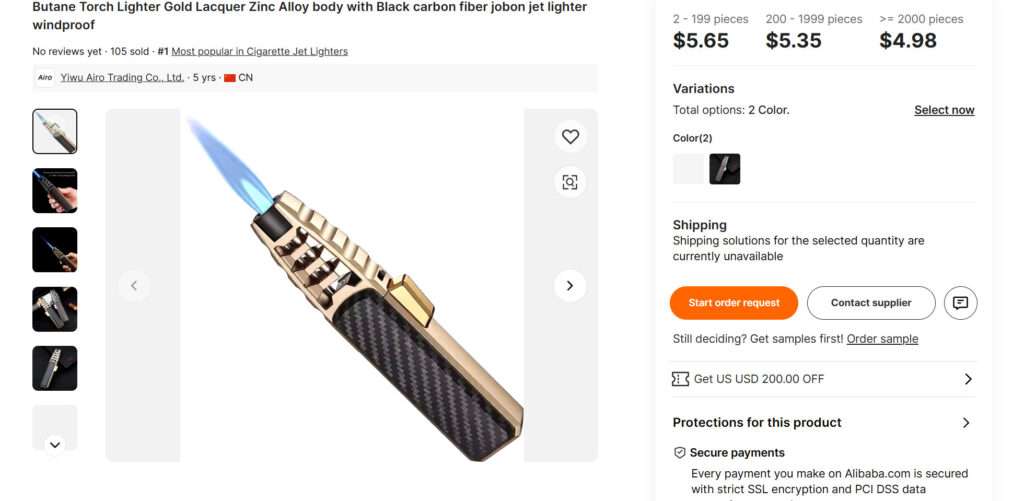
While the ads portray it as a sci-fi super lighter, the FireBlaze is actually just a standard torch lighter with some cosmetic modifications to make it look high-tech.

The “Tesla coil” and “plasma arc” claims have no basis – it uses the same basic piezo ignition system as any torch lighter you can buy for $5. And its flame is not significantly hotter or more powerful than a normal lighter either.
1 14

Verified customer reviews confirm the FireBlaze is indistinguishable from cheap torch lighters in practical use. The outlandish marketing claims are patently false.

Misleading Demonstration Videos

The promotional videos for FireBlaze show the lighter starting huge fires and burning through thick metal objects.

But these demonstrations do not represent real-world performance. They are manipulated and edited to make the FireBlaze lighter seem remarkable. No standard lighter could start fires or cut metal like shown.

The videos rely on standard scam tactics – deceptive editing and special effects to increase perceived value.

No Actual Military or Specialist Use

Despite claims that the “military-grade” FireBlaze is used by soldiers, emergency personnel and outdoorsmen, there is zero evidence to support this.

It was not designed for or adopted by any military, survival, or professional groups. Associating exaggerated survival benefits with specialty communities is a common marketing ploy.

Fake Reviews Misrepresent Satisfaction

The FireBlaze ads and website showcase numerous positive customer reviews praising its performance and quality.

But analysis shows most of these reviews are completely fabricated. They do not represent real verified purchasers. And those who do buy FireBlaze report it does not live up to the marketed capabilities.

Inventing fake reviews is an illegal tactic meant to boost perceived value and trust. Real customers clearly disagree with the marketed claims.

Part of a Network of Viral Lighter Scams

Research into the FireBlaze reveals it is one of many rebranded versions of the same cheap torch lighter. Brands like FireJet, Inferno Lighter, and BlazerTorch use similar names, logos, and advertising while selling an essentially identical mass-produced product.

These viral lighter scams get cycled through temporary websites and domains, vanishing once enough complaints come in. It’s a well-oiled scam machine preying on uninformed consumers.

Aggressive Sales Tactics Manufacture Urgency

The FireBlaze marketing utilizes several high-pressure sales tactics meant to create a false sense of value, including:

  • Countdown timers
  • Claims of limited supply
  • “Flash” discounts
  • “Last chance” warnings

In reality, these techniques are purely manipulative methods to manufacture urgency and demand. Ethical businesses never need to pressure and mislead consumers like this.

Final Verdict: This is a dropshipping operation

When all the facts are objectively analyzed, the FireBlaze Torch Lighter exhibits multiple clear hallmarks of an elaborate dropshipping operation:

  • Outlandish unsubstantiated claims of performance
  • Misleading demonstrations exaggerating capabilities
  • No evidence of real military/specialist usage
  • Completely fabricated positive reviews
  • Reliance on manipulative sales tactics
  • No quality assurance or accountability

The hyped “revolutionary” and “indestructible” features of the FireBlaze do not stand up to any scrutiny. Customers are better off avoiding this obvious sham and purchasing quality lighters from reputable transparent brands. Don’t get burned seeking unrealistic lighter claims.


10 Rules to Avoid Online Scams

Here are 10 practical safety rules to help you avoid malware, online shopping scams, crypto scams, and other online fraud. Each tip includes a quick “if you already got hit” action.

  1. Stop and verify before you click, log in, download, or pay.

    warning sign

    Most scams win by creating urgency. Verify using a trusted method: type the website address yourself, use the official app, or call a known number (not the one in the message).

    If you already clicked: close the page, do not enter passwords, and run a malware scan.

  2. Keep your operating system, browser, and apps updated.

    updates guide

    Updates patch security holes used by malware and malicious ads. Turn on automatic updates where possible.

    If you saw a scary “update now” pop-up: close it and update only through your device settings or the official app store.

  3. Use layered protection: antivirus plus an ad blocker.

    shield guide

    Antivirus helps block malware. An ad blocker reduces scam redirects, phishing pages, and malvertising.

    If your browser is acting weird: remove unknown extensions, reset the browser, then run a full scan.

  4. Install apps, software, and extensions only from official sources.

    install guide

    Avoid cracked software, “keygens,” and random downloads. During installs, choose Custom/Advanced and decline bundled offers you do not recognize.

    If you already installed something suspicious: uninstall it, restart, and scan again.

  5. Treat links and attachments as untrusted by default.

    cursor sign

    Phishing often impersonates delivery services, banks, and popular brands. If it is unexpected, do not open attachments or log in through the message.

    If you entered credentials: change the password immediately and enable 2FA.

  6. Shop safely: research the store, then pay with protection.

    trojan horse

    Be cautious with brand-new stores, “closing sale” stories, and prices that make no sense. Prefer credit cards or PayPal for dispute options. Avoid wire transfers, gift cards, and crypto payments.

    If you already paid: contact your card issuer or PayPal quickly to dispute the transaction.

  7. Crypto rule: never pay a “fee” to withdraw or recover money.

    lock sign

    Common patterns include fake profits, then “tax,” “gas,” or “verification” fees. Another is a “recovery agent” who demands upfront crypto.

    If you already sent crypto: stop paying, save evidence (wallet addresses, TXIDs, chats), and report the scam to the platform used.

  8. Secure your accounts with unique passwords and 2FA (start with email).

    lock sign

    Use a password manager and unique passwords for every account. Enable 2FA using an authenticator app when possible.

    If you suspect an account takeover: change passwords, sign out of all devices, and review recent logins and recovery settings.

  9. Back up important files and keep one backup offline.

    backup sign

    Backups protect you from ransomware and device failure. Keep at least one backup on an external drive that is not always connected.

    If you suspect infection: do not connect backup drives until the system is clean.

  10. If you think you are a victim: stop losses, document evidence, and escalate fast.

    warning sign

    Move quickly. Speed matters for disputes, account recovery, and limiting damage.

    • Stop payments and contact: do not send more money or respond to the scammer.
    • Call your bank or card issuer: block transactions, replace the card if needed, and start a dispute or chargeback.
    • Secure your email first: change the email password, enable 2FA, and remove unfamiliar recovery options.
    • Secure other accounts: change passwords, enable 2FA, and log out of all sessions.
    • Scan your device: remove suspicious apps or extensions, then run a full malware scan.
    • Save evidence: screenshots, emails, order pages, tracking pages, wallet addresses, TXIDs, and chat logs.
    • Report it: to the payment provider, marketplace, social platform, exchange, or wallet service involved.

These rules are intentionally simple. Most online losses happen when decisions are rushed. Slow down, verify independently, and use payment methods and account controls that give you recourse.

Previous

Don’t Buy the VitalTac Military Tactical Flashlight Before Reading This

Next

Stealth Bird 4K Drone – Scam Or Legit? Read This Before Buying





