

The Stealth Bird 4K drone has been heavily marketed in scammy ads claiming that “the U.S. government doesn’t want you to have this drone.” These misleading ads push the idea that the Stealth Bird 4K is a powerful, military-grade drone associated with the U.S. Army, Special Forces, Marines or other military branch. However, none of these claims are true.
In reality, the Stealth Bird 4K drone is just a cheap knockoff drone that you can find for a fraction of the price under a different name. If you’re researching “Stealth Bird 4K drone reviews” to see if this drone is worth buying, here is what you need to know about this misleading product.
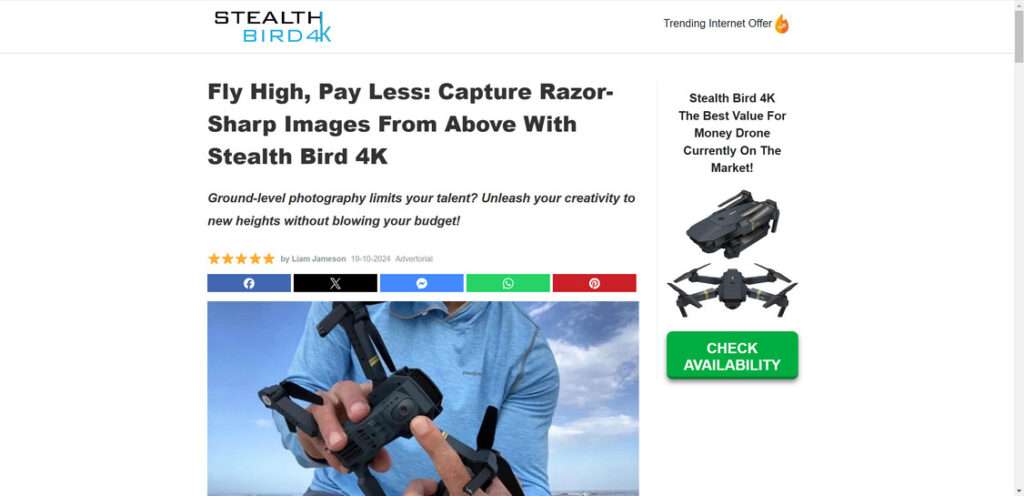
Overview of the Stealth Bird 4K Drone
The Stealth Bird 4K drone is marketed as if it is a unique, military-spec drone that the government wants to keep secret. However, there is no real connection between this drone and any military organization.
Here are some of the misleading claims made in the marketing of the Stealth Bird 4K drone:
- It is marketed as a powerful, military-grade drone the government doesn’t want the public to have
- The ads imply it has advanced capabilities and is somehow disrupting the drone industry
- The creators are listed as former engineers of a major drone brand, giving it the appearance of credibility
- Fake “Stealth Bird 4K drone reviews” and doctored photos are used to make it seem more impressive
In reality, none of these marketing claims hold up to scrutiny. The Stealth Bird 4K drone is simply a cheap knockoff being misleadingly marketed to take advantage of uninformed buyers.
The Stealth Bird 4K Drone is Just a Rebrand of a Cheap Drone
Despite the claims that this is a unique military-grade drone, the Stealth Bird 4K is actually just a rebranded version of a cheap consumer drone.
Specifically, the Stealth Bird 4K appears to be a rebrand of the drone, which can be purchased for around $7 from Alibaba, Temu or Aliexpress.
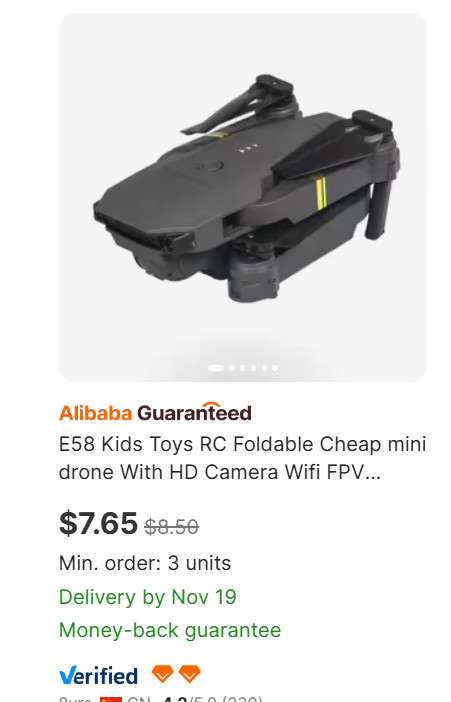
The is a low-cost beginner drone made in China. It has basic features like altitude hold and headless mode, but lacks any of the advanced capabilities that are claimed in the Stealth Bird 4K marketing.
Some telltale signs that the Stealth Bird 4K is a rebrand drone:
- Same overall design, size, shape, and folding mechanism
- Eachine logo crudely photoshopped out in marketing images
- Specs like camera resolution, battery life, and range match the Eachine E58
So despite the supposed “military-grade” claims, the Stealth Bird 4K drone is clearly just an off-the-shelf beginner drone that has been rebranded and marked up in price significantly.
Fake Creators and Engineers
The marketing for the Stealth Bird 4K drone claims it was designed by two former engineers of a major drone brand, Robert Spencer and Mark.
However, these names appear to be completely made up. There are no records of any prominent drone engineers with those names.
The photos used in the ads featuring Robert Spencer and Mark are also fake. Reverse image searches show these are stock photos that have been doctored to look like they are standing with the drone.
This is a tactic commonly used in dropshipping operations like this – inventing expert creators to make the product seem high-quality and credible. But in reality, there are no legitimate engineers behind the Stealth Bird 4K drone. It is simply a cheap off-the-shelf drone like any other.
Fake Reviews and Testimonials
One of the ways the marketing tries to legitimize the Stealth Bird 4K drone is by promoting fake reviews and testimonials.
For example, the official website claims the drone has a near perfect rating of 4.8/5 stars from over 3,200 verified buyers. However, none of these supposed reviews actually exist – the rating appears to be completely fabricated.
There are also fake positive reviews published on affiliate marketing sites that profit from steering people to purchase the drone. Comments like “This is the most impressive drone I’ve ever flown” are completely invented to boost perceptions of the product.
Genuine reviews from real drone experts and buyers are nowhere to be found. The only positive ratings for this drone come from the company’s own marketing materials and affiliates. This is a clear sign that the reviews are fake and not trustworthy.
Is the Stealth Bird 4K Worth Buying?
Given its origins as a cheap mass-produced drone and the plethora of fake marketing surrounding it, the Stealth Bird 4K is certainly not worth its advertised $99 price tag.
You can buy the same drone it is based on for around $10 if you find it on Temu. Even then, you are getting an unreliable toy drone that will underperform and lack any serious capabilities.
For just a little more money spent smartly, you could buy an entry-level hobbyist drone from a trusted brand that will outperform the Stealth Bird 4K in every regard. Models like the Hubsan Zino Mini Pro, DJI Mini SE, or Potensic D88 provide far better value and capability for novice and intermediate pilots.
Simply put, the marketing tactics used for the Stealth Bird 4K prey on uninformed buyers overpaying for an exaggerated hyped-up drone. It takes advantage of the interest in drones and exploits it to make sales. But informed buyers can easily see through the deception and find much better options.
The Stealth Bird 4K drone has been also investigated by Jordan Liles on his YouTube channel, where he offers a detailed video on the subject. We recommend watching his content for a comprehensive understanding of how this dropshipping operation works.
Alternatives to the Stealth Bird 4K Drone
Instead of wasting money on the overpriced Stealth Bird 4K drone, here are some of the best alternatives to consider in various budget ranges:
Under $100
- Hubsan Zino Mini – Retailing around $80, the Zino Mini from respected brand Hubsan offers good specs like 4K video, auto-return home, and GPS for the price. A great budget starter drone.
- Snaptain SP500 – For under $100, Snaptain’s foldable drone can shoot 1080p video and has decent flight time. Reliable and easy to fly for beginners.
Under $200
- DJI Mini SE – A lighter version of DJI’s popular Mavic Mini drone, retailing for $169. Has most of the same great stability and camera capabilities as the Mini.
- Potensic D88 – With two batteries you get over 30 minutes flight time. Also has built-in 1080p camera and dual GPS modules for improved hovering. Costs around $180.
Under $500
- DJI Mavic Mini – The awesome portable 4K camera drone from DJI comes in at $399. 24-30 minutes flight time and 3-axis gimbal for great footage.
- Hubsan Zino 2 Plus – For under $500 you get 4K video, obstacle avoidance tech, and easy portability from this advanced Hubsan model.
Higher Budget Options
- DJI Air 2S – Steps up to a 1″ CMOS sensor for noticeable bumps in image quality and low light performance. Costs around $999.
- Autel EVO 2 – Their 8K camera drone model has incredible photo and video quality. Priced at $1499.
For any budget, there are better performing and more reliable drones than the over-hyped Stealth Bird 4K model. Stick to reputable drone companies like DJI, Hubsan, Autel and others to get a good value drone that matches your needs.
Conclusion
Despite being marketed as an exclusive military-grade drone, the Stealth Bird 4K is clearly just an overpriced toy-grade quadcopter. It lacks any of the advertised unique capabilities and elite performance.
With its origins as a cheap mass-produced drone, fake reviews, and completely misleading marketing tactics, the Stealth Bird 4K simply cannot be recommended as a worthwhile purchase.
You will be far better served spending your money on reputable beginner and intermediate drones from trusted companies. They will offer you far more reliability, capability, and overall value without scam-like deception.
So don’t waste your money or expect much from this hyped up drone. Look to quality models that are actually worth their price tag. And be sure to carefully research drones based on real performance data and user reviews rather than fake marketing hype.








