

Fuel Sync is advertised as a tiny plug-in device that can reduce fuel use without changing how you drive. The pitch arrives at exactly the right emotional moment: fuel is expensive, the device looks simple, and the promised savings appear large enough to pay for the purchase almost immediately.
The offer is not a credible shortcut to better mileage. MalwareTips found unsupported performance claims, interchangeable sales websites, and a separate recurring membership that can turn a small gadget purchase into a $49.99 charge every 30 days.
Overview
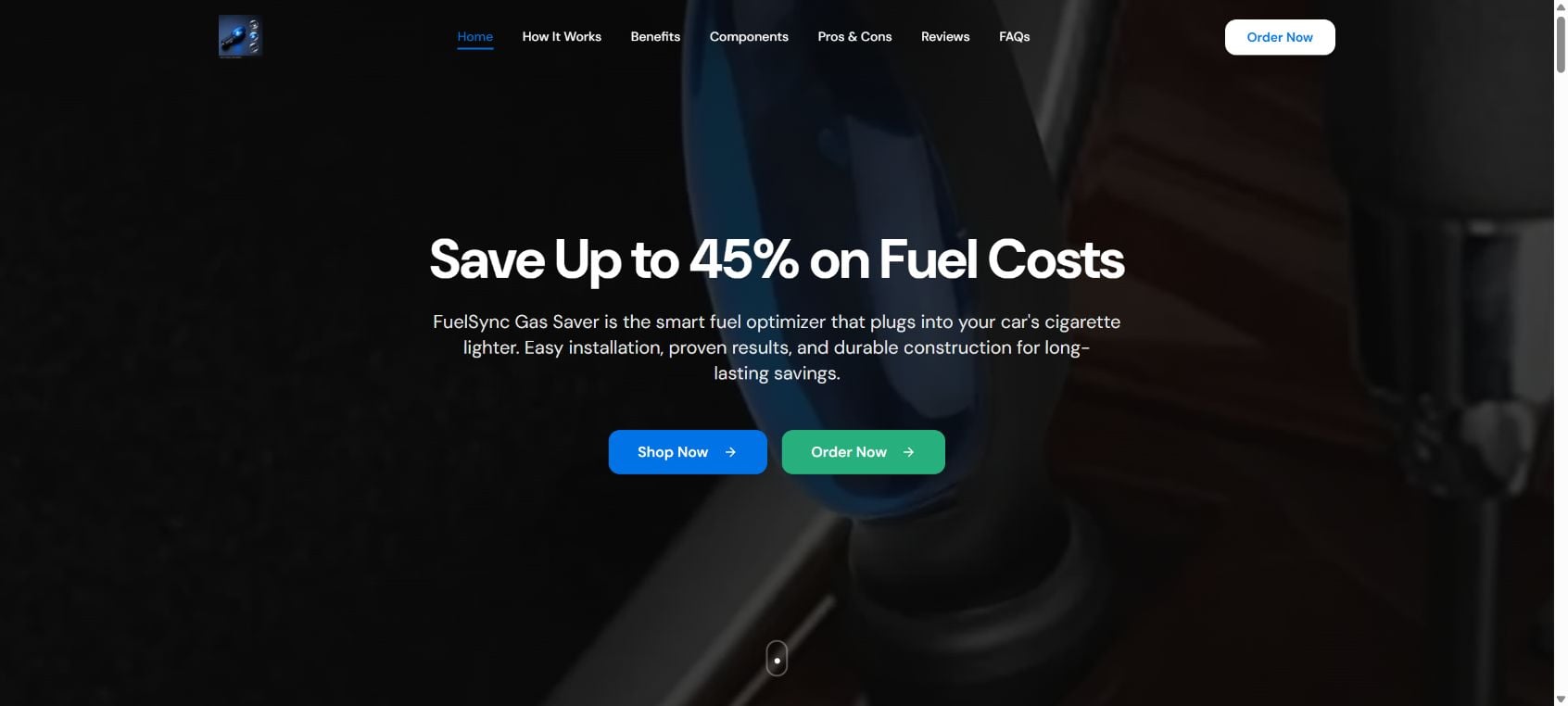
Fuel Sync is the name used for several inexpensive automotive gadgets promoted through TikTok, Facebook, Instagram, and display advertisements. Depending on the advertisement, the device may plug into a cigarette-lighter socket or an OBD2 diagnostic port.
The details change from one website to another, but the central promise stays the same. Buyers are told that the device uses electromagnetic signals, artificial intelligence, ECU optimization, or an advanced chip to improve combustion and reduce fuel consumption.
One live Fuel Sync page reviewed by MalwareTips on August 10, 2026, claimed savings of up to 45%. Other versions of the pitch have promised smoother acceleration, lower emissions, immediate activation, or fuel savings after a short calibration period.
These claims are presented without a vehicle-specific installation, a connection to the engine computer, a controlled test report for the retail product, or credible evidence that the device changes any parameter involved in fuel delivery.
A cigarette-lighter socket supplies electrical power. A generic accessory plugged into that socket does not automatically gain access to the engine control unit, fuel injectors, ignition timing, transmission programming, or oxygen sensors.
An OBD2 connector can provide access to diagnostic data, but a plastic device merely fitting into that port does not prove that it safely rewrites engine software. Real calibration work requires compatible hardware, verified software, knowledge of the vehicle, and testing. It is not achieved by an anonymous universal chip making the same promise for every car.
The Environmental Protection Agency maintains public test reports for aftermarket retrofit devices. The agency also explains that products in this category have repeatedly failed to produce statistically significant fuel-economy or emissions benefits.
The Federal Trade Commission has warned marketers about implausible gas-saving claims. In one review of this market, the FTC noted that the EPA had evaluated or tested more than 100 purported fuel-saving devices and additives without finding one that significantly improved gas mileage.
Fuel Sync sellers do not provide an EPA evaluation showing that the exact retail device in the advertisement produces the advertised 35% or 45% improvement. A five-star graphic, a mechanic-style actor, or an animated engine diagram is not a substitute for that evidence.
The same name appears across different storefronts
There is no single, stable Fuel Sync storefront that consumers can treat as an established manufacturer. The name has appeared on multiple domains with different page designs, prices, explanations, and contact details.
That matters because a seller can close one landing page after complaints appear, move the same product images to another domain, and continue buying social media ads. Search results then fill with new pages calling themselves the official store.
Some pages describe a cigarette-lighter device. Others say the product connects to OBD2. Some claim instant results, while others say the gadget needs several weeks or 150 miles to calibrate. These are not minor wording differences. They are conflicting descriptions of how the product supposedly works.
A trustworthy automotive manufacturer should identify the model number, electrical specifications, compatible vehicles, test method, warranty provider, responsible company, and technical mechanism. Fuel Sync pages generally rely on benefit language instead.
The product is only one part of the financial risk
The most serious warning is not limited to whether the gadget works. The Fuel Sync sales funnel documented in the source material connected buyers with Aviroo Home and an automatically renewing membership.
Aviroo Home’s terms state that the payment method on file may be charged $49.99 every 30 days. The first charge occurs 12 days after purchase, followed by another charge every 30 days until cancellation.
A full year of $49.99 monthly charges totals $599.88 before taxes. That is far more than the price shoppers expect when an advertisement presents a small gas-saving gadget as a one-time purchase.
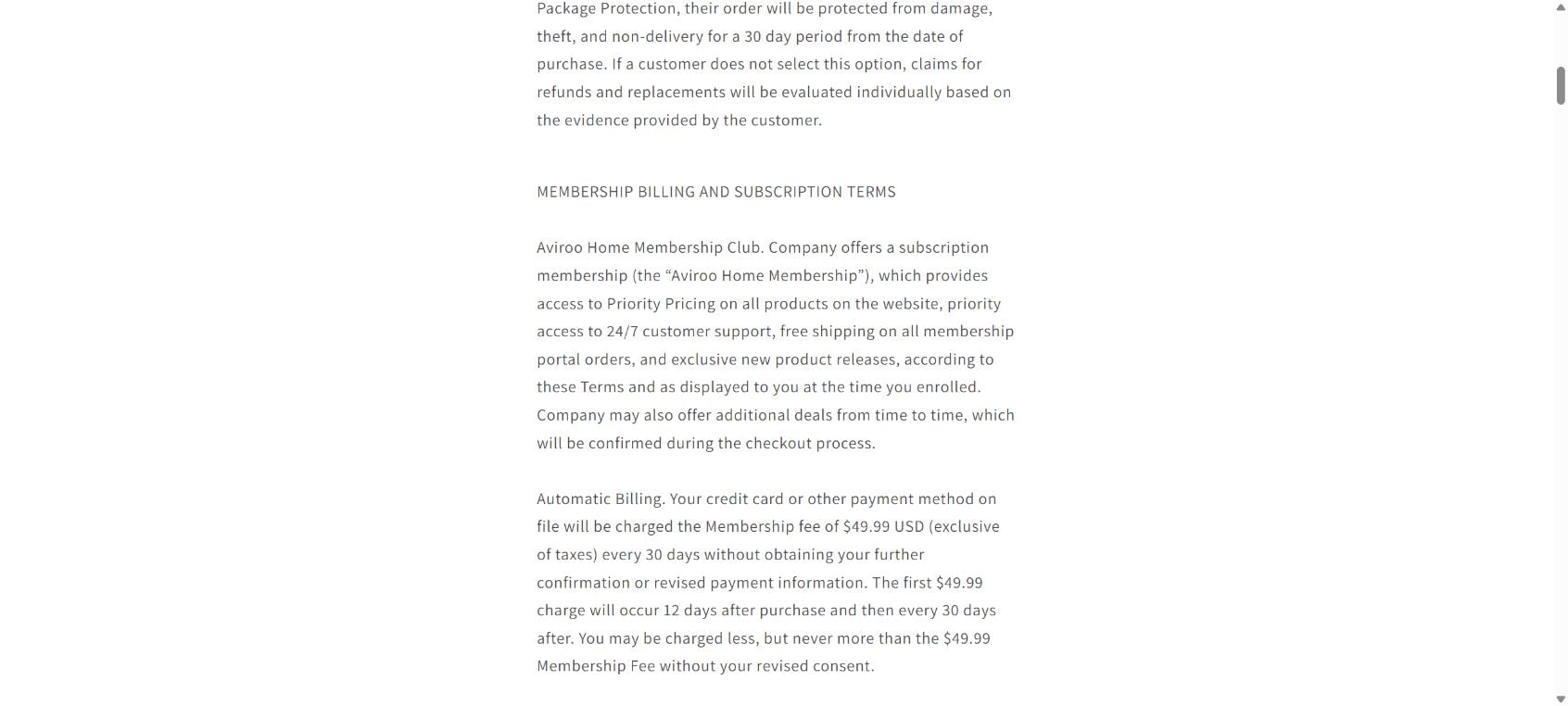
The terms also say cancellation must be requested at least three days before the next billing period. A buyer who notices the charge late may therefore face another payment while trying to stop the membership.
The seller describes membership benefits such as priority pricing, support, shipping, and product access. The practical problem is how the enrollment is presented during a purchase focused on Fuel Sync. If a control looks like a discount, shipping choice, or ordinary checkout element, a shopper may not understand that it authorizes recurring billing.
Fuel Sync warning signs at a glance
- The gadget is promoted with savings claims as high as 35% or 45%.
- No independent test report for the exact retail device is provided.
- Different websites describe different ports and mechanisms.
- The product is described as universal despite major differences between vehicles.
- Ads use mechanics, testimonials, technical graphics, or AI-style videos as proof.
- Review counts appear on seller-controlled pages without an independent review record.
- Large discounts and limited-stock messages pressure visitors to order quickly.
- The same product name appears across short-lived, unrelated-looking domains.
- One associated checkout funnel includes a $49.99 membership every 30 days.
- The first membership charge can occur only 12 days after the product purchase.
How The Operation Works
The Fuel Sync operation is designed to make a low-cost electronic accessory feel like a breakthrough. The presentation does most of the work. Each stage answers an emotional concern while moving the shopper closer to the payment form.
1. An ad begins with the pain of rising fuel prices
The campaign usually starts with a familiar frustration: a high total at the gas pump. Short videos show drivers, commuters, retirees, delivery workers, or families who supposedly cut their monthly costs after discovering a small device.
The advertisement may mention oil companies, mechanics, or a technology the automotive industry supposedly does not want consumers to know about. This creates a simple story in which an ordinary buyer can beat an expensive system.
2. Technical-sounding words replace a real explanation
Visitors are told that Fuel Sync optimizes electromagnetic waves, recalibrates an ECU, improves combustion, analyzes driving behavior, or corrects hidden inefficiency. These phrases sound plausible because they borrow language from real automotive engineering.
The page does not show what data the device reads, what commands it sends, how it authenticates with different vehicles, or which control maps it changes. The alleged mechanism remains broad enough to fit any car and any advertisement.
3. A dramatic percentage creates an easy mental calculation
A claim such as 45% invites the visitor to calculate immediate savings. If a driver spends $250 a month on fuel, the advertisement suggests a benefit of $112.50 every month.
That imagined return makes a $25 or $30 device feel almost risk-free. The shopper is encouraged to compare the purchase price with the promised savings instead of asking whether the device has ever produced those savings under controlled testing.
4. Fake authority and social proof lower resistance
The landing page may feature a mechanic, media logos, thousands of reviews, laboratory imagery, or a statement that German or American engineers developed the technology. Some ads use AI-generated people or voices to produce many testimonials cheaply.
None of those elements verifies performance. A real test would identify the vehicle, route, weather, fuel, driver, baseline, measurement method, sample size, and statistical result. The Fuel Sync pages provide a sales narrative instead.
5. Urgency moves the buyer into checkout
Countdown timers, low-stock counters, flash-sale labels, and claims that many people are viewing the product encourage immediate action. These elements are often generated by the webpage and may reset when the visitor returns.
The goal is to prevent comparison shopping. Time spent searching the gadget’s images, reading independent tests, or checking the seller’s terms increases the chance that the visitor will leave.
6. Extra options increase the value of the order
Once the customer reaches checkout, the funnel can introduce warranties, package protection, expedited shipping, multiple-device bundles, or a priority-price membership. Each option is framed as a small improvement to the original purchase.
The recurring membership deserves special attention because it changes the transaction from a product order into an ongoing financial commitment. A discount is not a bargain if it also enrolls the card in a $49.99 payment every 30 days.
7. The first charge may arrive after the buyer stops watching
A membership charge that begins 12 days after the sale can be separated from the original order in the buyer’s memory. The product may still be in transit, or the buyer may be waiting to test it.
By the time the charge appears, the advertisement may be gone and the storefront may have changed. The customer then has to identify the billing descriptor, locate the cancellation process, and preserve evidence before another billing date.
8. New domains keep the campaign moving
When one domain develops a poor reputation, marketers can launch another page using the same device photographs and claims. The product name may stay the same because people have already seen it in ads, or it may change while the gadget remains identical.
This is why a positive-looking page calling itself the official Fuel Sync store should not restore confidence. A professional template can be deployed in hours. Evidence about the device and transparency about the operator matter far more than the page design.
If You Have Bought This
If you ordered Fuel Sync, stay calm. A quick review of the confirmation, card statement, and checkout terms can stop a recurring charge and preserve your options for a refund or dispute.
- Save every record. Keep the advertisement, product page, checkout screen, order confirmation, receipt, tracking details, emails, and photographs of anything delivered. Take screenshots before a short-lived site disappears.
- Check the exact amount charged. Compare the product total with the amount on your bank or credit-card statement. Look for separate charges for shipping, warranty coverage, package protection, or membership.
- Search for recurring enrollment language. Review the receipt and emails for Aviroo Home Membership, member pricing, priority pricing, club access, trial, automatic billing, or renewal. Do not assume a lower product price was simply a discount.
- Cancel the membership in writing. Use the seller’s cancellation form and email address. Include your name, order email, and order number, but do not email a full card number. State clearly that you revoke authorization for all future recurring charges.
- Keep proof of cancellation. Save the submitted form, sent email, automated reply, ticket number, and any confirmation. A screenshot with the date can help if another charge appears.
- Ask the seller for a refund. Explain which claim, charge, or enrollment was not clear. Keep the request factual and written. If returning the device, obtain the approved address and tracking before sending it.
- Contact your card issuer promptly. If the charge was unauthorized, recurring after cancellation, higher than agreed, or tied to misleading terms, ask the issuer about blocking future payments and disputing the transaction.
- Consider replacing the card. If the seller continues charging or the issuer cannot reliably block the merchant, ask whether a new card number is appropriate. Confirm that automatic account-updater services will not pass the new number to the merchant.
- Do not install unknown software. A basic plug-in gadget should not require remote computer access, an unofficial mobile app, or software sent through a messaging service. Refuse any request to install remote-control tools.
- Do not rely on the device for vehicle safety. Remove it if it becomes hot, smells unusual, interferes with electronics, triggers warning lights, or affects drivability. Ask a qualified mechanic to inspect any persistent problem.
- Report the experience. U.S. consumers can report deceptive advertising or billing to ReportFraud.ftc.gov. Include the domain, billing descriptor, amount, dates, and screenshots.
The FTC’s online shopping guidance recommends keeping purchase records and using a credit card when possible because credit cards provide stronger dispute rights when an item is not delivered or a billing problem occurs.
Do not wait through weeks of vague support replies if a dispute deadline is approaching. You can continue communicating with the seller while also asking your payment provider what deadline and documentation apply.
The Bottom Line
Fuel Sync combines an implausible gas-saving promise with a low-cost gadget and, in one documented sales funnel, a $49.99 recurring membership. There is no credible evidence that a universal plug-in device can cut fuel costs by 35% or 45% simply by lighting an LED in a cigarette-lighter or diagnostic port.
Do not order Fuel Sync. If you already did, inspect the transaction for membership enrollment, cancel in writing, monitor the payment method, and act quickly if any charge differs from what you knowingly authorized.








