

A box of full-size snacks arriving without a shopping bill is an easy offer to like. GetFreeSnacks presents it with bright packaging and very little apparent effort.
If you are wondering what you would actually receive, look beyond the pictures. The difference between the homepage promise and the service description is important.
Overview
The homepage makes regular snack deliveries feel close
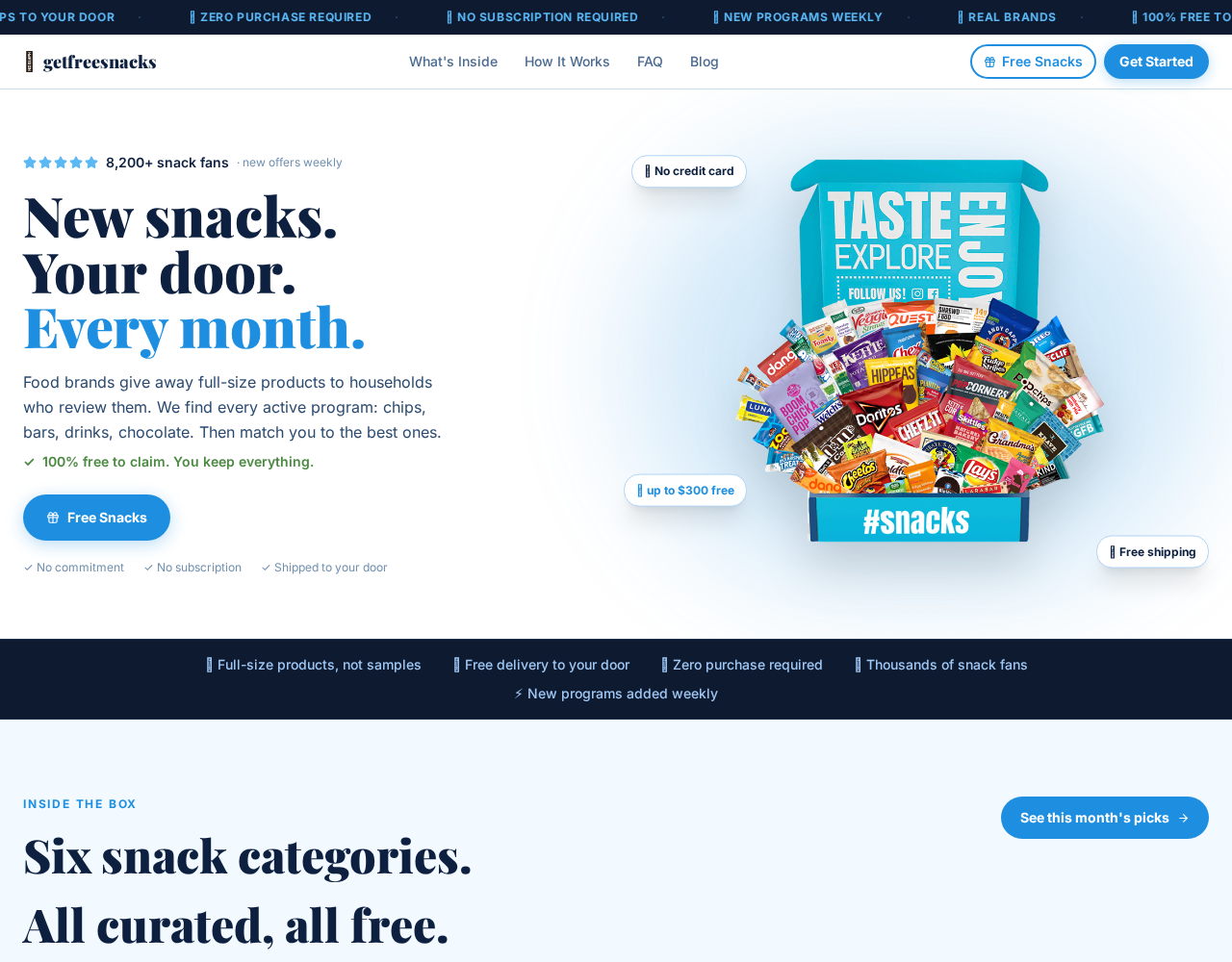
GetFreeSnacks.com promotes full-size food products from familiar brands, delivered to your door. It repeatedly emphasizes no purchase, no credit card, and no required subscription.
The page suggests monthly opportunities and displays a possible value of up to $300. That is promotional wording, not a credit or parcel reserved for each visitor.
Its illustrated box includes recognizable food packaging. A collection of brand images does not establish that those manufacturers sponsor this particular website or guarantee its visitors food.
The homepage describes answering questions, applying to sampling programs, and receiving products for feedback. The application stage is the part shoppers should not overlook.
The terms describe a newsletter and information service
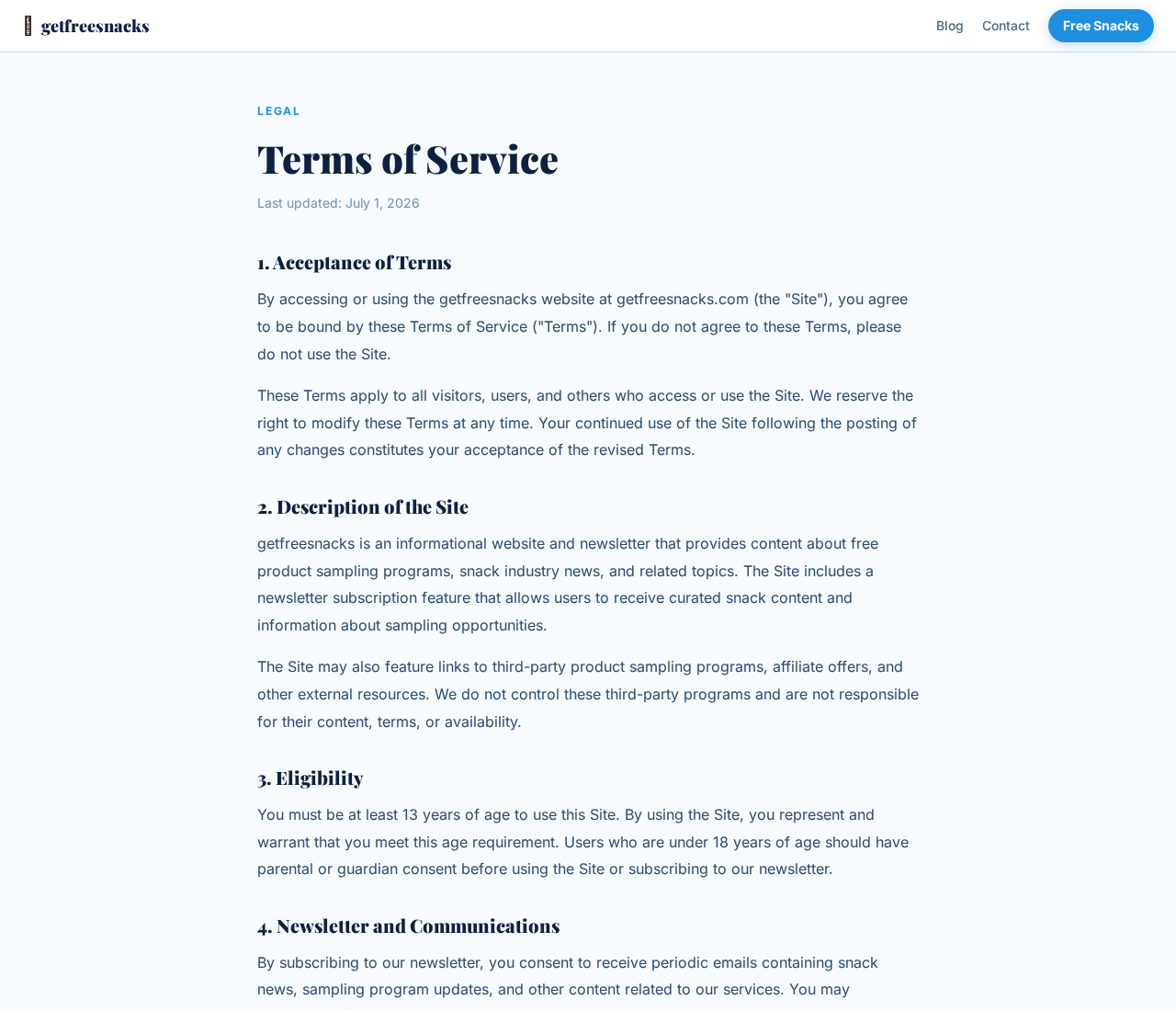
The service terms call GetFreeSnacks an informational website and newsletter covering sampling opportunities and snack-related content.
They say outside companies operate the sampling programs and determine their eligibility and availability. They expressly avoid guaranteeing that a reader will qualify.
That is substantially narrower than the impression of a regular free snack box. Joining an information service is not the same as placing a successful product order.
- A newsletter signup does not reserve a monthly shipment.
- Individual sampling programs can reject applicants or run out of stock.
- Affiliate links may compensate the publisher for certain actions.
- Each outside program has separate terms and privacy practices.
- The site’s own privacy policy says it does not sell, trade, or rent personal information.
The warning concerns expectations and outside offers
The signup is presented as free, and the terms describe email content. There is no published paid GetFreeSnacks membership in the pages inspected for this article.
The real concern is being drawn by a delivery-style promise into a newsletter and third-party opportunity search that guarantees neither eligibility nor a parcel.
If you only want a guaranteed box of free food, skip this signup. It does not provide the certainty the homepage can lead a hurried reader to expect.
A Sampling Application Is Not a Snack Order
A genuine product-sampling program may ask questions to select households suited to a campaign. It can have limited quantities, demographic requirements, or a particular delivery region.
Being shown an opportunity does not mean you have been selected. Neither does completing a questionnaire necessarily produce a shipping confirmation.
GetFreeSnacks’ terms place those decisions with the outside program. The publisher does not promise that every visitor, or even every subscriber, will qualify.
That distinction should be clear before you provide details. A person searching for grocery relief may not want another list of offers to investigate.
The homepage’s monthly language can also suggest a standing arrangement. But the terms describe changing opportunities, not an ongoing obligation to send a box.
Look for a named campaign, its operator, application period, quantity limits, and actual acceptance message. Without those, there is no specific delivery to rely on.
If a later page asks for payment, stop and read it as a new offer. Do not assume the original no-purchase promise covers that different company’s transaction.
How the GetFreeSnacks Signup Journey Works
Step 1: A generous-looking box supplies the hook
The homepage combines colorful food packaging with statements about full-size products and free delivery. It makes the potential benefit easy to imagine.
The brand imagery does not identify the contents of your future parcel. There is no individual packing list or shipment created simply by viewing the page.
Read the possible value as an advertising ceiling, not a balance you can withdraw or a commitment to send that amount of merchandise.
Step 2: Questions promise a personalized match
The site’s stated first step asks about the visitor so it can match available programs. Its privacy policy describes collecting details through forms and newsletter subscriptions.
Listed information can include a name, email, age range, country, and gender. Those details can be useful for targeting opportunities and communicating with readers.
They are still personal information. Provide only what you are comfortable sharing for an information service, rather than assuming each answer confirms a free order.
Step 3: Individual programs make their own decisions
The homepage tells visitors to apply to the available programs they want. Its terms clarify that independent third parties set the rules.
Before leaving the publisher’s page, identify the organization receiving your information next. A recognizable snack name in an image is not that identification.
Read the next program’s eligibility requirements and check whether your country qualifies. Repeatedly completing ineligible applications will not turn them into guaranteed shipments.
Step 4: Affiliate offers can sit beside sampling information
The terms disclose that some outgoing links may earn a commission when visitors click or take particular actions. The site also discusses advertising networks.
Affiliate income is a common publishing model. It means the incentive to send a visitor onward is separate from whether that visitor receives a snack.
Assess the destination on its own terms. An offer involving a trial, paid purchase, or recurring plan is a different decision from reading a free newsletter.
Step 5: The inbox can be the immediate result
The terms say newsletter subscribers consent to periodic content and sampling updates. They do not promise a parcel every time an email is sent.
If you join, expect information unless a specific program separately confirms your selection. Do not confuse an opportunity email with a dispatch notification.
Keeping that distinction clear prevents the frustrating cycle of completing more forms because you believe an already-promised box is waiting to be released.
What Happens to the Information You Share
The publisher describes both forms and automatic tracking
The privacy policy distinguishes details you provide from information collected during a visit. Automatic information can include an IP address, browser, referring page, and visit times.
This is not the same as taking payment-card details. It does mean a no-purchase offer can still involve a data exchange.
If you do not want to join another marketing audience, an attractive box is not a good reason to ignore the form’s consent wording.
Beehiiv is named as the newsletter provider
The policy says email addresses are shared with Beehiiv to deliver the newsletter. That is a stated service-provider relationship, not proof of an unauthorized sale.
It also says the publisher does not sell, trade, or rent personal information. Its separate disclosures describe service providers handling email delivery, analytics, and advertising.
Outside sampling sites have their own policies. Leaving GetFreeSnacks can therefore involve a separate data decision even when the first signup was straightforward.
Unsubscribing and deleting records are not identical
The policy describes removing an unsubscribed address from the active mailing list, while acknowledging that archived records may remain.
If you want more than fewer messages, ask the publisher specifically about retained information and available deletion options. Keep the answer for your records.
You may also need to contact any other program you joined. One newsletter’s unsubscribe link cannot automatically manage accounts at unrelated companies.
The Missing Details Behind a Monthly-Box Impression
A clear food offer should identify the program actually supplying the products. It should explain selection, location, delivery expectations, and any feedback obligation.
The general homepage promise does not replace those details. Nor does a displayed community count establish that thousands of people received a particular parcel.
GetFreeSnacks displays testimonials about discovering snacks and trying products. Treat them as statements presented by the publisher, not independently authenticated delivery records.
The same applies to the pictured products. They show the kind of reward being suggested, not proof of a current partnership with every manufacturer shown.
A useful opportunity has a start and finish you can identify: an application, selection confirmation, shipping notice, and genuine delivery or feedback instructions.
If you cannot identify which organization is responsible for those stages, do not provide more information merely to keep the process moving.
When a Free Offer Changes Into Something Else
A request for a card, shipping fee, identity document, or paid trial deserves a fresh decision. It should never be waved through because the first page said free.
The FTC’s trial-offer guidance explains renewal charges and exaggerated affiliate advertisements. Use it to assess an outside offer, not as proof against every sampler.
Read the actual destination’s amount, billing frequency, and cancellation terms. If those are unclear, leave without trying to unlock the reward.
A legitimate paid snack service is also different from a free sampling application. You should know which one you are joining before authorizing anything.
Do not supply a bank login or verification code to prove eligibility. A food sample does not justify giving someone control of a financial account.
Likewise, there is no reason to install remote-access software so a supposed agent can arrange your snack delivery. That would be a separate warning sign.
Household Questions Still Deserve Boundaries
The terms permit users aged 13 and over, while advising parental or guardian consent for those under 18. That is a website rule, not universal sampling eligibility.
A separate food campaign may have a different age limit. Check its requirements before a teenager provides household information through a parent’s email address.
Questions about preferred flavors are different from requests for children’s full names, precise birth dates, or identity documents. Do not supply extra details without a clear reason.
If a program needs a delivery address after accepting an applicant, identify the organization collecting it and read how that address will be used.
There is no need to provide an address to every linked opportunity merely to see whether it exists. Start by checking the program’s public details.
Families looking to reduce grocery costs should also keep reliable food assistance separate from promotional sampling. An application that might be rejected cannot cover a planned meal.
That makes the distinction between information and delivery more than fine print. It helps prevent a hopeful signup from becoming something your household budgets around.
What to Do If You Signed Up for GetFreeSnacks
-
Check what you actually joined. Distinguish the GetFreeSnacks newsletter from each sampling program, trial, or advertiser account opened afterward.
Make a short list from confirmation emails instead of relying on the page you first remember seeing.
-
If you do not want the newsletter, use its unsubscribe option. For questions about the publisher’s records, contact hello@getfreesnacks.com.
Its contact page also lists brands@getfreesnacks.com for brand partnerships, which is a different purpose from handling a reader’s subscription.
-
For an expected parcel, find the specific program’s acceptance or shipping message. Ask that program for an update rather than assuming the newsletter ships everything.
If you only received a general opportunity email, do not treat it as a confirmed food order.
-
Review any outside service for a trial deadline or renewal. Cancel unwanted paid commitments with the company responsible for billing them.
Save the cancellation confirmation. Unsubscribing from snack emails does not cancel a separate advertiser’s subscription.
-
If an unfamiliar charge appears, identify the merchant from receipts and your statement. Contact it about the payment and ask your provider about unresolved disputes.
If you supplied only an email and see no charge, focus on managing messages and data. An unwanted email is not a payment dispute.
-
Handle follow-up messages carefully. Be suspicious of demands for another fee, passwords, or verification codes to release a previously advertised free box.
Keep useful evidence, but do not publish your address, application details, or payment information in a public complaint.
-
If the original presentation misled you, save the homepage and relevant terms. Report the specific mismatch to the advertising platform or appropriate consumer agency.
Explain whether the issue was an undelivered promise, unwanted marketing, or billing. Those problems require different evidence and remedies.
Frequently Asked Questions
Does GetFreeSnacks guarantee a free box every month?
Its terms describe a newsletter and information service, with independent programs deciding eligibility. They do not guarantee that a subscriber qualifies for products.
Is GetFreeSnacks a paid snack subscription?
The inspected pages advertise no purchase or paid subscription requirement. A paid GetFreeSnacks membership was not established, so it should not be described as one.
Does the pictured food prove the brands sponsor the site?
No. Product imagery does not establish an authorized partnership or guarantee that those items are available through a current program.
Does the website say it sells my email address?
No. Its policy says it does not sell, trade, or rent personal information. It names Beehiiv and other service-provider uses separately.
Why might I receive emails but no snacks?
Newsletter enrollment supplies information about opportunities. Receiving products depends on a separate program accepting your application and arranging delivery.
Should I pay a later fee to unlock the offer?
Do not pay merely to pursue the original free-box impression. Treat any payment request as a separate transaction with its own identifiable seller and terms.
The Bottom Line
Do not join GetFreeSnacks expecting a guaranteed monthly snack delivery. Its terms describe information and applications, not a confirmed order for every subscriber.
If you already joined, manage the newsletter and outside signups separately. Only rely on a parcel when the actual sampling program confirms your acceptance and shipment.

Join the discussion
0 commentsShare your experience or ask a question about this article.
Discussion
Start the conversation
Have a question or something useful to share? Add the first comment.