

A Coach discount code in two minutes is an appealing promise when the bag you want costs more than you planned. The page looks reassuringly polished.
If you reached YourBagCode expecting a quick saving, pause before following the claim button. The steps behind that promise deserve a closer look.
Overview
YourBagCode currently presents a Coach-code offer
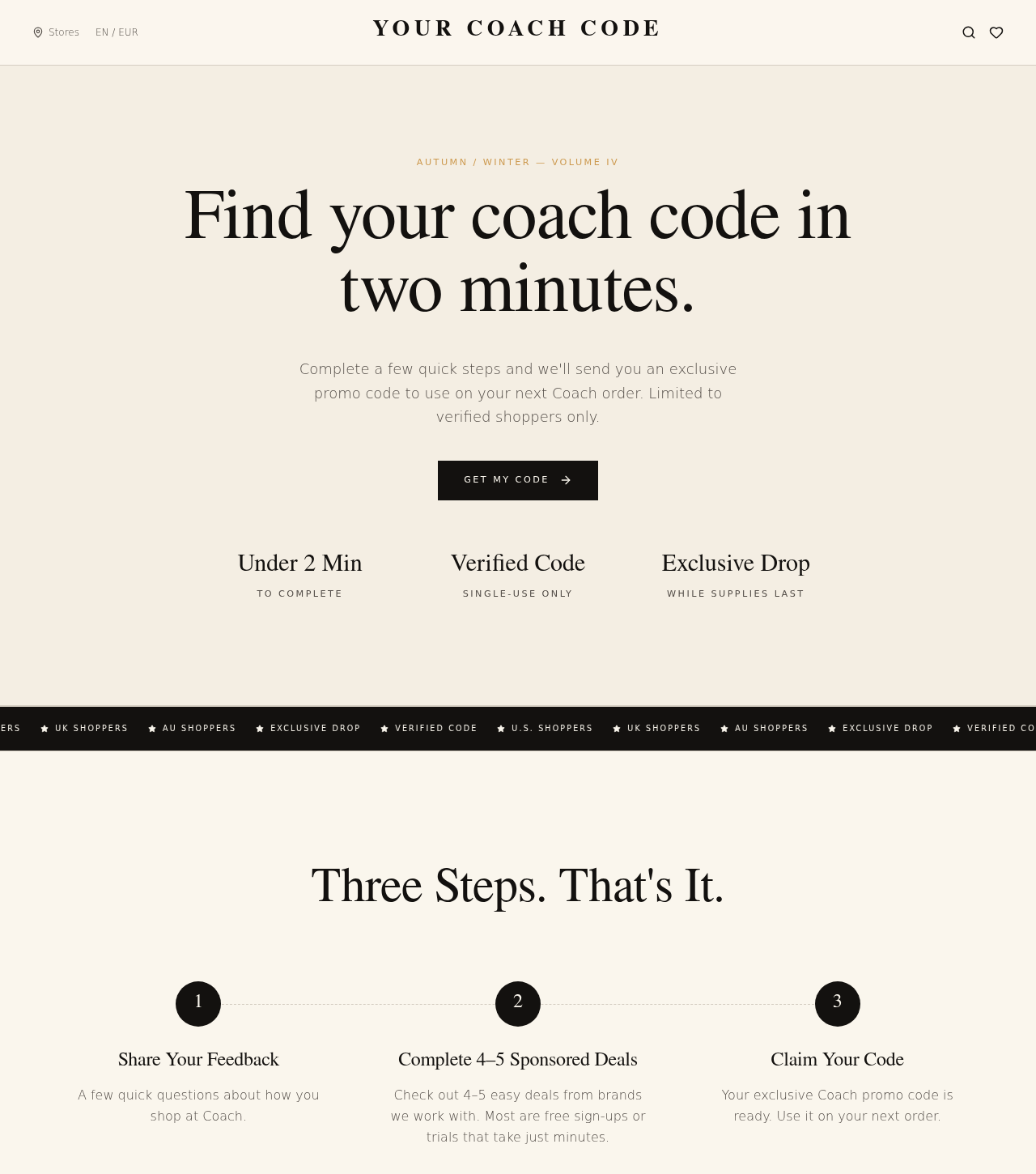
YourBagCode.com displays a page branded Your Coach Code. It promises an exclusive promotional code for a future Coach order after completing a few steps.
The layout borrows the visual language of a fashion store: restrained colors, editorial typography, seasonal collection wording, and references to a modern wardrobe.
But the main action is not buying a bag. The page asks visitors to pursue a code through an offer route outside Coach’s website.
That difference matters more than the attractive design. A fashion-themed landing page is not the same thing as an authorized promotion from the retailer it names.
The page introduces four or five sponsored deals
The advertised process begins with shopping feedback, moves to four or five sponsored deals, and ends with the claimed code.
It describes most of those deals as free registrations or trials. The main buttons link to trksy.org through a route containing offer and affiliate identifiers.
That establishes an affiliate-style handoff. It does not establish the conditions of every downstream advertiser, a guaranteed code, or a particular recurring charge.
- The code’s value is not clearly specified on the visible landing page.
- The page promotes a two-minute completion time while requiring multiple sponsored actions.
- Its claim buttons do not take shoppers directly to Coach checkout.
- Trials can involve separate payment and cancellation terms.
- Coach’s own promotions should be checked through Coach, not assumed from another site’s branding.
The sensible verdict is to avoid chasing the unverified reward
No usable code was obtained, and the linked offer did not successfully load during the check. Final advertiser conditions therefore remain unconfirmed.
The visible page is enough to reject the idea of an uncomplicated retailer coupon. It is a sponsored-offer journey with important missing reward details.
Do not complete unrelated deals simply to find out whether this promised saving exists. Look for a confirmed Coach promotion before making any additional commitment.
Why the Page Can Feel Like a Retailer Offer
A shopper arrives thinking about a handbag, not affiliate marketing. Your Coach Code keeps that expectation alive with fashion language and a clean storefront-style presentation.
The header includes a store reference and currency-style labeling. Further down, the page talks about European craft, small ateliers, and shipping from Milan.
Those details do not explain who issues the code, which Coach products qualify, or what happens if the sponsored actions never produce a reward.
They are especially odd beside a survey-and-deal process. A description of objects crafted in Europe is not a set of coupon redemption terms.
The word verified also appears repeatedly. What has been verified, by whom, and against which conditions is not explained in the visible offer.
A single-use code could be perfectly legitimate. The missing element is a concrete, checkable promise connecting the required actions to an actual retailer benefit.
Without that connection, the design does much of the reassuring work that clear terms should be doing.
How the YourBagCode Offer Funnel Works
Step 1: A quick-code promise lowers resistance
The headline tells visitors they can find a Coach code in two minutes. That frames the task as a small interruption before shopping.
People are more likely to begin when the reward seems close and the time commitment seems trivial. The page reinforces that impression with short steps.
Before starting, ask whether two minutes refers only to the questions or to completing every requirement. The page’s broader presentation does not make that distinction reassuringly clear.
Step 2: Shopping feedback makes the request feel relevant
The first stated task is answering questions about shopping at Coach. That makes the activity resemble customer research related to the desired discount.
A survey can collect useful marketing information without reserving a coupon. Answering questions is not evidence that a retailer has approved or funded a reward.
Do not provide a Coach password, payment-card number, or other sensitive account information to prove you are a shopper. None is needed to read a promotion.
Step 3: The reward becomes conditional on other offers
The next stage asks for four or five sponsored deals. That is a meaningful additional condition, not merely a box to tick after a short questionnaire.
A free registration, an account requiring payment details, and a paid trial are different commitments. Describing most deals as free leaves that distinction unresolved.
Each advertiser can have its own eligibility rules, geographic limits, billing date, and cancellation route. The landing page’s promise cannot cancel those separate contracts for you.
If completing the reward requires a purchase you otherwise would not make, count the entire cost against the hoped-for discount.
Step 4: The button hands the visit to an affiliate route
The main claim links use trksy.org, with parameters identifying an offer and affiliate. They are not Coach cart or customer-service addresses.
Affiliate tracking is common and not inherently malicious. Here, its significance is that the page sends the visitor into another party’s offer process.
A missing or failed destination is a reason to stop, not to keep trying different registrations. It also prevents a confident claim about what every visitor sees next.
Step 5: The code still needs a real redemption rule
The landing page promises a single-use code and a delivery window, but does not clearly state a fixed discount, minimum spend, exclusions, or expiration.
Those details determine whether the reward would be useful even if delivered. A code with restrictions can be worth far less than the shopper expects.
Do not make a Coach purchase assuming the code will arrive later. A saving that has not been issued and accepted is not money already available.
The Official Coach Checkout Is a Different Process
Coach’s customer-care guidance describes entering promotion codes at checkout. It also says eligible sitewide promotions may apply automatically to qualifying cart items.
That is a direct retailer process. It is different from completing outside sponsored deals before learning the value and conditions of a code.
Check current offers through the retailer’s genuine website or customer service. Coach can confirm its own promotion rules; a third-party landing page cannot speak for it.
The presence of a retailer name, familiar product category, or attractive fashion photography does not establish an authorized relationship.
Coach’s general coupon instructions do not authenticate YourBagCode. Ask the retailer about the specific promotion if you want to establish whether it will honor an offered code.
For the shopper, the decision is straightforward: do not accept unrelated trial obligations while the code’s value and conditions are still missing.
What Could Cost You Money or Time
Trial terms belong to the advertiser taking your details
The page says there is no subscription, while also describing sponsored trials. Those statements should not be read as a guarantee that every outside offer is non-recurring.
A trial provider may require payment details and renew according to its own terms. That is a possible exposure, not a confirmed YourBagCode charge.
Read the actual advertiser’s billing disclosure before entering a card. If the rate or cancellation date is missing, leave that offer.
Tracking can create an argument about completion
In a multi-party offer journey, a visitor may complete an action without knowing whether the reward system counted it. The visible page does not resolve that risk.
Do not respond to a missing confirmation by purchasing the same offer twice. First identify which company is responsible for recording the action.
Keep the original conditions and confirmation emails. A screenshot of a progress display is useful, but does not prove a retailer owes the promised coupon.
The supposed saving has no clear value yet
Without a stated discount or minimum purchase, you cannot sensibly compare the reward with the effort, data, or money required to obtain it.
A $10 trial would not be a bargain merely because a future code might save something. The offer needs to disclose the benefit before asking for that calculation.
Even entirely free registrations take time and can produce marketing email. Give that time a value instead of treating every completed task as progress you must protect.
A Simple Check Before Following Any Coupon Offer
Start with the destination, not the promise. Read the actual domain in the address bar and identify whether you are still on the retailer’s website.
Next, find the promotion’s issuer and redemption conditions. A legitimate benefit should have an identifiable operator, eligibility rules, and a way to resolve missing rewards.
Then inspect what is required before delivery. A survey followed by four registrations is a different offer from receiving a code by email.
Finally, consider whether you would want each sponsored product without the reward. If the answer is no, the promotion is steering you into unwanted commitments.
Do not confuse abandoning the funnel with losing money you already own. An unissued coupon is a promise, not a balance waiting to be withdrawn.
That distinction is useful when the next page says one more action will unlock everything. Earlier effort does not make a new obligation worthwhile.
What a Useful Code Confirmation Would Need to Tell You
A code email should identify the actual benefit, where it can be redeemed, and when it expires. A congratulatory message without those details settles very little.
Check whether the offer excludes sale items, requires a minimum basket, or works only in a particular country. Those restrictions can change its practical value.
Never forward a private account login or card verification code as evidence that you deserve the discount. Retailer redemption and account authentication are different processes.
If someone says the code needs a separate activation payment, stop. That is a new financial request, not proof that completing the earlier deals succeeded.
You can ask Coach about a promotion without paying an intermediary. Use contact information from Coach’s own site, not a support number supplied by a reward message.
What to Do If You Responded to YourBagCode
-
Stop completing new deals while you reconstruct what you actually accepted. List each outside advertiser, signup email, and confirmation you received.
Do not pay another fee simply because a page says the code is almost ready.
-
Check each trial or subscription independently. Record its price, conversion date, account access, and cancellation method from the advertiser’s own confirmation.
If you do not want the service, cancel through that provider and save the completed cancellation notice.
-
Keep screenshots of the original code promise and any stated requirements. Preserve receipts for paid actions without publishing your personal or payment details.
Those records help distinguish an undelivered reward from an actual unauthorized charge or a trial you agreed to purchase.
-
If you supplied only an email address, review incoming marketing cautiously. Unsubscribe from unwanted legitimate mail and block suspicious messages without following their payment links.
An email signup alone does not mean your device is infected or that every password needs replacing.
-
If you entered credentials on an unfamiliar page, change the affected account password through its genuine website. Review sessions and enable available multifactor protection.
Change other accounts only where the compromised password was reused. Do not send verification codes to someone claiming to release your coupon.
-
For an unexplained card charge, contact the advertiser identified on the receipt and your payment provider if needed. Ask about stopping further recurring payments.
Use the correct dispute reason and provide cancellation evidence. Refund eligibility and deadlines depend on the transaction and provider.
-
If a code arrives, verify its conditions through Coach before planning a purchase. Do not pay a separate activation or validation charge to use it.
Report misleading promotions through the platform where you encountered them and the appropriate consumer-protection channel.
Frequently Asked Questions
What is YourBagCode showing now?
The address currently displays Your Coach Code, a page promising a promotional code after feedback and sponsored deals. It is not a direct Coach product checkout.
Is the Your Coach Code offer confirmed as an official Coach promotion?
No authorization was established. Check the promotion with Coach directly rather than treating the retailer’s name and the page’s styling as proof.
Why does it ask for four or five sponsored deals?
Those actions are part of the page’s stated reward conditions. The buttons lead through an affiliate-style tracking route, not directly to a Coach coupon.
Does the page prove I will be subscribed to something?
No specific subscription charge was observed. However, any outside trial may carry its own renewal terms, which must be checked with that advertiser.
Can I count on receiving the code in two minutes?
No completed reward was verified. The page’s short time claim should not be treated as a guarantee that all sponsored requirements and code delivery finish that quickly.
What is the safest way to find a genuine Coach discount?
Use Coach’s own offers and customer-care information. Confirm the code’s value, exclusions, and validity before making a purchase or joining unrelated services.
The Bottom Line
Do not chase the YourBagCode offer by completing unrelated sponsored deals. The code’s value and authorization are unclear, while the additional commitments can be real.
If you already started, review and cancel unwanted advertiser plans separately. For the handbag purchase itself, use a promotion that Coach can actually confirm.

Join the discussion
0 commentsShare your experience or ask a question about this article.
Discussion
Start the conversation
Have a question or something useful to share? Add the first comment.