

Buying gold can feel reassuring. You can hold it, count it, and put it somewhere safe. But what happens when someone else chooses that place?
A strange investment pitch has reached bank customers in Norway. The promise sounds familiar, but the instructions that follow deserve a much closer look.
Overview
An investment that ends with an outdoor drop
The gold in the forest scam persuades people to buy precious metal, then surrender it under a promise of storage while its value rises.
Instead of taking their investment to an independently verified custodian, customers receive instructions to leave it somewhere for another person to collect.
The setting makes this story unusual. The underlying problem is simpler: someone who gained your trust is taking control of an asset you bought.
What Norwegian banks have actually reported
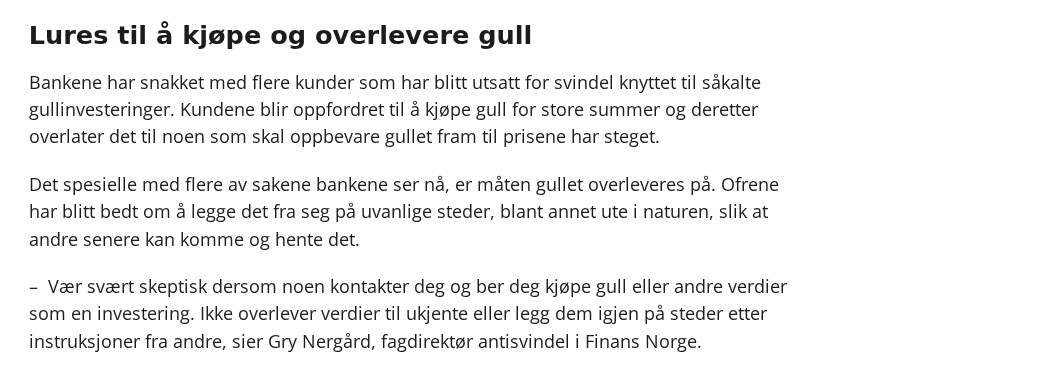
Finans Norge’s banking-industry warning, published October 22, 2026, describes customers buying substantial amounts of gold and leaving it in unusual places, including outdoors.
The stated arrangement was that someone would keep the metal until prices increased. The warning identifies these encounters as investment fraud, not an unconventional storage service.
No particular dealer or total loss figure is named. If you’ve received similar instructions, don’t wait for your contact’s name to appear in a warning.
The warning sign is the handover, not the metal
A real purchase can sit inside a fraudulent arrangement. Even genuine gold and a valid shop receipt cannot authenticate the person asking to collect it.
- The investment starts with someone else’s unsolicited proposal.
- You pay for an asset that another person wants to control.
- The proposed storage cannot be checked independently before collection.
- An outdoor location replaces a documented, accountable handover.
- The promised benefit depends on trusting the same person arranging the drop.
Don’t leave gold, cash, or other valuables at a stranger’s chosen location. If a collection is already planned, contact police rather than organizing your own confrontation.
Why a Real Gold Purchase Can Still Lead to Theft
Imagine reaching the point where you’ve already paid a dealer. You have a receipt, perhaps sealed packaging, and something valuable in your possession.
That experience can make the wider arrangement feel established. You’ve completed a genuine transaction, so the next instruction may seem like routine administration.
But two separate decisions are involved. Buying metal is one transaction. Giving another party custody is another, with its own risks and verification requirements.
A receipt answers what you purchased and whom you paid. It doesn’t answer who will receive it next, where it will go, or who can retrieve it.
This distinction matters when discussing responsibility, too. A dealer who sold real gold isn’t automatically involved in a stranger’s later collection instructions.
Tell the dealer what happened, but don’t assume every business mentioned in the conversation belongs to the same operation. Preserve names and documents for investigators.
How the Gold in the Forest Scam Works
Step 1: A purchase is presented as an investment opportunity
The reported Norwegian scheme begins with encouragement to purchase gold as an investment. The attraction is something tangible that might become more valuable.
The banking alert doesn’t establish whether every customer first heard the pitch by phone, message, or another channel. The delivery method isn’t the decisive test.
Ask instead who proposed the transaction and why that person needs to direct your next move. An investment recommendation shouldn’t erase your ability to verify it.
If you’re interrupted by repeated calls while considering a purchase, end the conversation. Review the proposal away from the person trying to secure your agreement.
Step 2: The buyer spends money on physical gold
At this stage, funds become a portable asset. The customer may still physically control it, making this an important opportunity to stop further loss.
Someone who already bought gold hasn’t necessarily completed the fraudulent handover. They can refuse collection instructions and seek independent help while retaining possession.
Keep the purchase invoice, payment confirmation, product description, and any available serial numbers. These records describe the asset more reliably than a later recollection.
Don’t send photographs of documents or valuables to the person directing the scheme. Share relevant records privately with your bank, dealer, or police.
Step 3: Someone offers to keep the investment safe
The custody promise connects the purchase to the theft. Someone else will supposedly hold the gold until its price has risen.
That changes the question from whether gold is valuable to whether this particular person has any legitimate right to take it.
A claim about future prices cannot answer a question about present custody. Neither can a friendly manner, investment vocabulary, or repeated reassurance.
Before relinquishing property, you need an independently identifiable recipient and an arrangement you understand. A caller’s explanation isn’t a substitute for those checks.
Step 4: Collection moves to an unusual location
Customers are instructed to leave their gold somewhere another person can retrieve it. In the cases described by Finans Norge, locations included natural outdoor areas.
The official warning says to leave the valuables, not that every customer buried them. Don’t let a dramatic headline distract from the actual instruction.
Whether the location is wooded or built up, leaving property unattended removes a basic safeguard: knowing who received it and documenting that transfer.
You don’t need to visit the location to test the story. Refuse the drop and tell police if you have already received collection instructions.
Step 5: The buyer loses control of the asset
Once someone collects the gold, the buyer can’t simply cancel the handover through a banking app. The earlier payment and later physical transfer are different events.
That doesn’t make reporting pointless. Collection times, messages, purchase records, and location details may still help investigators understand what happened.
What it does mean is that another promise from the same contact isn’t a recovery plan. Don’t pay additional money to make the arrangement work.
If the person says the gold is safe, don’t arrange another meeting to check. Keep the message and pass the information to law enforcement.
How This Differs From the Gold Bar Protection Scam
There is a related scheme in which impostors claim that savings are threatened and must be converted into gold for protection.
MalwareTips already covers the gold bar protection scam involving fake officials and couriers. Its starting point is an invented security crisis.
The Norwegian warning concerns an investment and storage promise. These stories overlap at the physical handover, but their opening pitches aren’t interchangeable.
The Social Security Administration’s inspector general also warns against giving assets to supposed officials for safekeeping. That is separate official guidance, not evidence of the Norwegian callers’ identities.
If your caller claims to be police, bank staff, or a government agent, verify that claim through a contact route you obtain independently.
Don’t assume a badge photograph or case number settles the matter. The crucial check happens outside the conversation controlled by the person seeking your valuables.
Before Anyone Else Takes Custody of Your Gold
Separate the seller from the proposed storage provider
Write down which organization sells the metal and which organization would hold it. If the answers differ, verify both rather than treating them as one business.
A familiar dealer’s name can create confidence in an unrelated contact. Ask the dealer through its established contact details whether it recognizes the proposed arrangement.
Ask who can release the asset back to you
Ownership and access aren’t the same thing. Someone may say the gold remains yours while giving you no independently verifiable way to reclaim it.
Read any custody agreement before delivery. Look for the named recipient, storage location, access procedure, charges, and explanation of what happens if the business closes.
Don’t confuse paperwork with independent confirmation
A document supplied by the promoter may describe a vault, insurer, or custodian. Contact those organizations separately using details you locate yourself.
If you cannot verify the arrangement, don’t surrender the asset. You don’t owe an unknown caller a trial handover to demonstrate good faith.
Keep investment performance separate from custody
Even a genuine increase in the market price would not fix missing gold. A price chart says nothing about whether your property remains available.
Likewise, a falling price isn’t permission for someone to demand another payment before revealing where your metal is. Resolve custody questions before any transfer.
What to Do if You Have Fallen Victim to This Scam
-
Stop the collection before doing anything else. If you still hold the gold, don’t hand it over or take it to the proposed location.
You can stop even after agreeing verbally. Tell a trusted person what’s happening so you aren’t managing the next decision alone.
-
Contact police about an imminent or completed drop. Explain that valuables are involved and whether someone is expected to collect them.
Give the time, exact location, contact details, and instructions privately. Use your local emergency service if there is immediate danger.
Don’t confront a collector, follow a vehicle, or announce an attempt to catch them. Let police decide how to handle the physical risk.
-
Call your bank through its genuine contact route. Explain both the purchase and the proposed handover, including any transfers that haven’t completed.
Ask whether pending payments can be stopped and what account protections are appropriate. Describe accurately what you authorized and what deception led to it.
-
Tell the gold dealer promptly. If an order hasn’t shipped or been collected, ask what can still be paused under the purchase terms.
If delivery already occurred, request copies of invoices and product identifiers. Don’t assume a legitimate dealer must refund metal that someone else later took.
-
Build one clear evidence folder. Save messages, contact names, telephone numbers, account details, invoices, and photographs you already have.
Add a chronological note while events are fresh. Record where the instructions changed and whether another person was introduced as the collector or storage provider.
-
Protect accounts if you disclosed access information. Tell the bank about any shared password, approval code, identity document, or unexpected authentication request.
Use a trusted device and the bank’s own guidance for recovery. A physical gold scam doesn’t automatically mean every device or account is compromised.
-
Report through the appropriate fraud channel. In Norway, follow police and bank instructions. In the United States, relevant internet-enabled fraud can be reported at IC3.gov.
Use genuine official websites, not reporting links sent by the original contact. Keep the reference number with your evidence so subsequent updates stay connected.
-
Reject paid recovery promises. Someone who contacts you afterward may claim to know where the gold is or how to retrieve it.
Don’t fund an advance payment, release charge, or supposed investigation fee. Give new contact attempts to the investigators already handling your report.
Helping a Relative Without Driving Them Back to the Caller
Start with the next practical decision, not an argument about whether they should have known better. Ask whether anything is due to be collected today.
If a handover is imminent, focus on pausing it and involving police. A debate about investment returns can wait until the valuables are secure.
Offer to sit beside them while they call their real bank. Let them explain the situation, and help organize documents rather than taking over every conversation.
Someone who already paid may keep listening because stopping feels like admitting a loss. Explain that protecting what remains is a useful action, not a failure.
Avoid posting their story publicly with identifying details. The location, purchase amount, telephone number, and collector description belong in a private report.
Check in after the first calls are finished. New promises can arrive when the person is tired or embarrassed, making continued support especially valuable.
Frequently Asked Questions
Is the gold in the forest scam a real warning?
Yes. Finans Norge describes customers buying gold and leaving it outdoors for collection under an investment-storage promise. It advises against handing valuables to strangers.
Were victims told to bury the gold?
The official warning describes leaving gold in unusual places, including nature. It doesn’t establish that burial was required in every case.
Does genuine gold mean the investment is legitimate?
No. The metal and purchase can be real while the storage promise is fraudulent. Check the proposed recipient separately from the business that sold it.
Should I collect the gold myself if I already left it?
Contact police with the location and timing first. Another person may be expected there. Don’t arrange a confrontation or attempt to follow a collector.
Can the bank reverse the loss after collection?
There is no guaranteed reversal of a physical handover. Contact the bank immediately about pending payments and tell police what was taken.
Will security software get stolen gold back?
No. Scanning a device cannot reverse a transfer of valuables. Account or device protection may be needed only if the encounter also exposed access information.
The Bottom Line
Don’t buy gold on an unsolicited stranger’s instructions and leave it for collection. A promised investment return cannot make an unverified custody arrangement safe.
If you’ve already bought the metal, keep control of it. If a handover is planned or completed, contact police and your bank promptly.
The decision isn’t whether gold is a good investment. It’s whether to surrender your property to someone whose authority you cannot independently establish. Don’t do it.

Join the discussion
0 commentsShare your experience or ask a question about this article.
Discussion
Start the conversation
Have a question or something useful to share? Add the first comment.