

Imagine this: you’re going about your day when suddenly your phone buzzes with a new text message. It’s from the Washington GoodToGo Tolls Services, claiming you have an unpaid toll and demanding immediate payment. Your heart races as you read the threat of additional charges if you don’t settle the balance promptly. But wait – is this really a legitimate message from GoodToGo, or could it be a cleverly disguised scam?
In today’s digital age, scammers are becoming increasingly sophisticated in their attempts to trick unsuspecting victims. The Washington GoodToGo Tolls Services scam is a prime example of how fraudsters prey on people’s fears and uncertainties to steal personal and financial information. By masquerading as a trusted entity and creating a false sense of urgency, these scammers manipulate individuals into revealing sensitive data that can be used for nefarious purposes.
In this comprehensive article, we’ll dive deep into the inner workings of the Washington GoodToGo Tolls Services scam. We’ll explore how to identify the fraudulent messages, what steps the scammers take to deceive their victims, and most importantly, what you can do to protect yourself if you’ve fallen victim to this scheme.
Scam Overview
The Washington GoodToGo Tolls Services scam is a sophisticated phishing scheme that preys on unsuspecting individuals by sending deceptive text messages. These messages, carefully crafted by scammers masquerading as representatives of the legitimate GoodToGo tolling system, falsely assert that the recipient has an outstanding toll invoice. The scammers employ high-pressure tactics, threatening the victim with substantial additional charges if the alleged balance is not paid immediately.
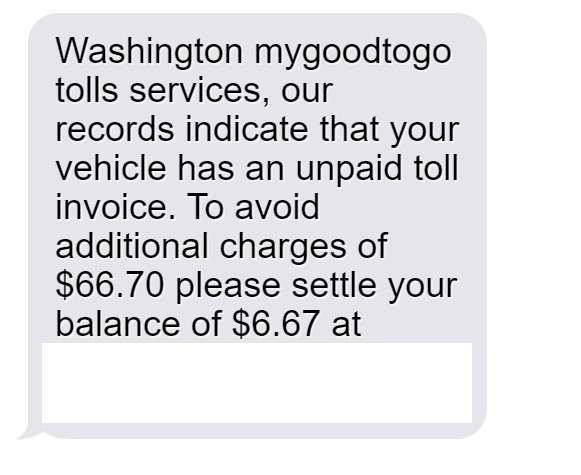
A typical scam message reads: “Washington mygoodtogo tolls services, our records indicate that your vehicle has an unpaid toll invoice. To avoid additional charges of $66.70 please settle your balance of $6.67 at https://mygoodtogotoll.com“.
At first glance, the message may appear genuine, as it includes specific details such as the purported unpaid amount and a link to a website that seems to belong to the GoodToGo tolling system. However, upon closer inspection, there are often subtle clues that the message is fraudulent, such as misspellings (e.g., “mygoodtogo” instead of “GoodToGo”), or suspicious URLs that don’t match the official GoodToGo website.
When a victim clicks on the link provided in the scam text message, they are redirected to a fraudulent website that has been meticulously designed to mimic the look and feel of the legitimate GoodToGo site. This fake website often features convincing branding elements, such as logos and color schemes, to further deceive the victim into believing they are interacting with the real tolling authority.
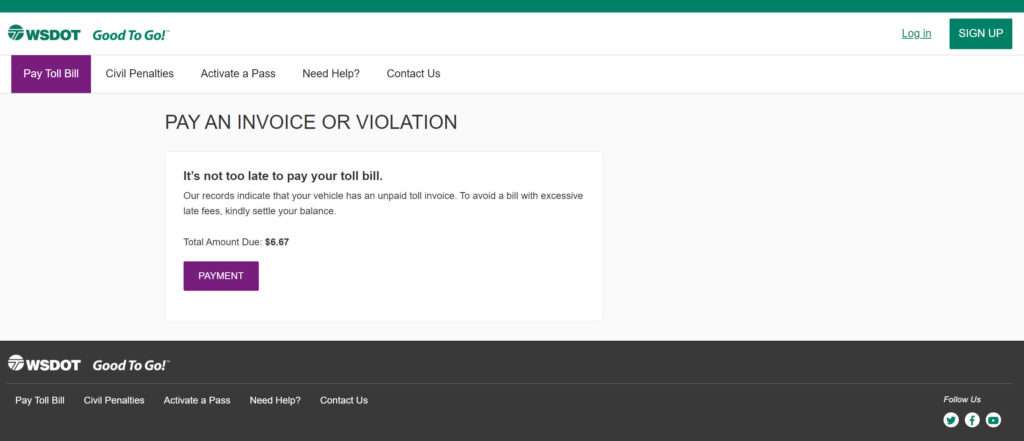
The scam website typically includes a payment portal where the victim is instructed to enter their personal details and credit card information to settle the alleged unpaid toll. The scammers request a wide range of sensitive data, including the victim’s full name, date of birth, driver’s license number, mobile phone number, email address, and physical address. By gathering this information, the scammers can engage in various forms of identity theft and financial fraud, such as opening new accounts in the victim’s name or making unauthorized purchases with their credit card details.
Scammers often register domain names that are very similar to those of legitimate organizations (like “mygoodtogotoll.com” instead of “mygoodtogo.com”). This tactic, known as typosquatting, exploits common typing errors or misspellings to trick victims into visiting fraudulent websites. In the case of the Washington GoodToGo Tolls Services scam, the fake URL is designed to closely resemble the real GoodToGo website, making it difficult for victims to spot the deception.
The success of this scam relies heavily on creating a false sense of urgency and fear in the victim. By threatening significant late fees and additional charges, the scammers pressure the victim into acting quickly without taking the time to verify the legitimacy of the message or website. Additionally, the scammers often set the fake unpaid toll amount at a relatively low value, such as $6.67, to make the payment seem more plausible and less suspicious.
Victims of the Washington GoodToGo Tolls Services scam often only realize they have been deceived when they notice unauthorized charges on their credit card statements or when they contact the actual GoodToGo customer service and discover that no unpaid tolls are associated with their account. By this point, the scammers may have already used the stolen information for various fraudulent activities, leaving the victim to deal with the consequences of identity theft and financial fraud.
To protect yourself from falling victim to this scam, it is crucial to be vigilant when receiving unsolicited text messages claiming you owe money. Always verify any alleged unpaid tolls directly with the official GoodToGo website (www.mygoodtogo.com) or by contacting their customer service. Never click on links or provide personal information in response to suspicious messages, and be cautious of any website that asks for sensitive data, especially if you accessed it through an unexpected text message.
How The Scam Works
The Washington GoodToGo Tolls Services scam operates through a series of deceptive steps designed to lure victims into revealing their personal and financial information. Here’s a detailed breakdown of how the scam unfolds:
Step 1: Receiving the Fraudulent Text Message
The scam begins when an individual receives a text message purportedly from the Washington GoodToGo Tolls Services. The message claims that the recipient has an unpaid toll invoice and must settle the balance to avoid additional charges. The scammers create a false sense of urgency by threatening hefty late fees if the payment is not made promptly.
Step 2: Clicking on the Fraudulent Website Link
The text message includes a link to a fraudulent website that closely mimics the official GoodToGo website. When the victim clicks on the link, they are directed to a page that appears legitimate, complete with GoodToGo branding and a professional-looking payment portal.
Step 3: Entering Personal Details
The scam website prompts the victim to enter their personal details, including their full name, date of birth, mobile number, email address, and physical address. This information is then harvested by the scammers for future fraudulent activities.
Step 4: Providing Credit Card Information
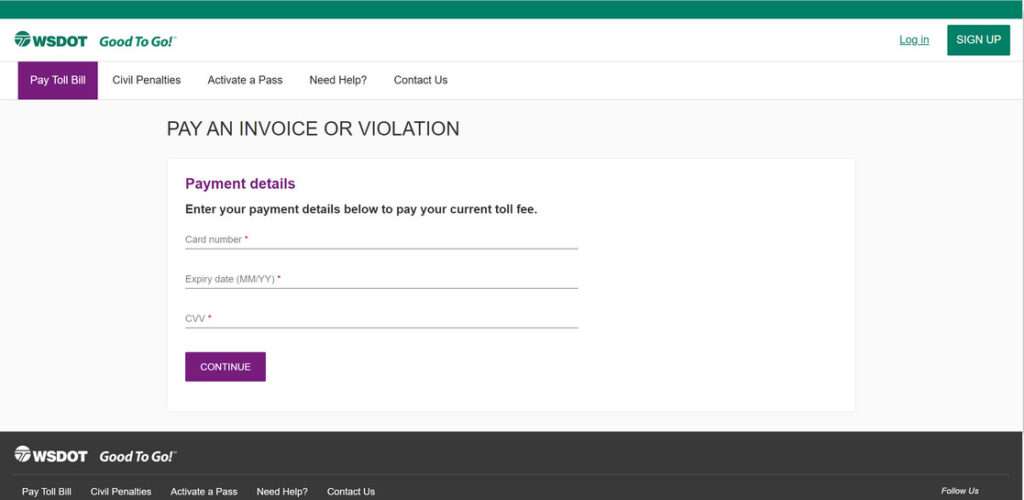
After entering their personal details, the victim is asked to provide their credit card information to settle the alleged unpaid toll. The scammers typically request the card number, expiration date, and CVV code. Once the victim submits this information, the scammers have everything they need to make unauthorized purchases or sell the data on the dark web.
Step 5: Realizing the Scam
In most cases, victims only realize they’ve been scammed when they notice unauthorized charges on their credit card statements or when they contact the real GoodToGo customer service and learn that no unpaid tolls are associated with their account.
What to Do if You Have Fallen Victim to This Scam
If you believe you have fallen victim to the Washington GoodToGo Tolls Services scam, it is essential to act quickly and take the necessary steps to minimize the potential damage to your finances and identity. The following detailed guide will help you navigate the process of reporting the scam and protecting yourself from further harm.
Step 1: Contact Your Credit Card Issuer
Your first priority should be to contact your credit card issuer immediately and report the fraudulent charges. Explain to the representative that you have been a victim of a scam and that the charges on your statement are unauthorized. Request that your credit card be canceled and a new one issued to prevent any further unauthorized transactions. Ask the issuer to reverse any fraudulent charges that have already been made.
When speaking with your credit card issuer, be sure to take note of the date, time, and the name of the representative you spoke with. This information may be helpful if you need to follow up on your case or provide evidence of your report to other agencies.
Step 2: Notify the Credit Bureaus
The next step is to inform the three major credit bureaus (Equifax, Experian, and TransUnion) about the potential identity theft. Request that a fraud alert be placed on your credit report, which will notify you of any new accounts opened in your name or changes made to your existing accounts. This alert will also require businesses to verify your identity before granting credit in your name, making it more difficult for scammers to use your stolen information.
You can contact the credit bureaus using the following information:
- Equifax: 1-800-525-6285 or equifax.com
- Experian: 1-888-397-3742 or experian.com
- TransUnion: 1-800-680-7289 or transunion.com
In addition to placing a fraud alert, you may also consider freezing your credit. A credit freeze prevents anyone from opening new accounts in your name, providing an extra layer of protection against identity theft. Keep in mind that you will need to temporarily lift the freeze if you plan to apply for credit in the future.
Step 3: File a Report with the Federal Trade Commission (FTC)
The Federal Trade Commission (FTC) is the primary government agency responsible for investigating and prosecuting scams and identity theft. By filing a report with the FTC, you contribute to their efforts to track down and stop scammers.
To file a report, visit ftc.gov/complaint and provide as much information as possible about the scam, including the date and time you received the fraudulent text message, the phone number it came from, and any other relevant details. The FTC will use this information to build cases against scammers and provide support to victims.
Step 4: Notify the Washington State Attorney General’s Office
In addition to filing a report with the FTC, it is also important to notify the Washington State Attorney General’s office about the scam. The Attorney General’s office works to protect consumers from fraudulent and deceptive practices, and your report will help them investigate and potentially prosecute the scammers behind the Washington GoodToGo Tolls Services scam.
To file a complaint with the Washington State Attorney General’s office, visit atg.wa.gov/file-complaint and provide detailed information about your experience with the scam.
Step 5: Change Your Passwords
If you have used the same password for the fraudulent website as you do for other online accounts, it is crucial to change those passwords immediately. Scammers may attempt to use your stolen login credentials to gain access to your email, social media, or other sensitive accounts.
When creating new passwords, be sure to use a combination of uppercase and lowercase letters, numbers, and special characters. Avoid using easily guessable information, such as your birthdate or pet’s name. Consider using a password manager to generate and store strong, unique passwords for each of your accounts.
Step 6: Monitor Your Accounts
In the months following the scam, it is essential to closely monitor your credit reports and financial statements for any suspicious activity. Look for unauthorized charges, new accounts opened in your name, or any other signs of identity theft.
You are entitled to one free credit report from each of the three major credit bureaus every year. Visit annualcreditreport.com to request your free reports and review them carefully for any discrepancies or unfamiliar accounts.
Seeking Additional Support
Falling victim to a scam can be a stressful and emotionally taxing experience. If you find yourself struggling to cope with the aftermath of the Washington GoodToGo Tolls Services scam, don’t hesitate to seek additional support.
Consider contacting the Identity Theft Resource Center (ITRC) at idtheftcenter.org or 1-888-400-5530. The ITRC provides free, confidential assistance to victims of identity theft, including personalized recovery plans and emotional support.
Remember, taking prompt action and reporting the scam to the appropriate authorities is the best way to protect yourself and others from the consequences of identity theft and financial fraud. By staying vigilant and following the steps outlined above, you can minimize the impact of the Washington GoodToGo Tolls Services scam and regain control of your personal and financial information.
Frequently Asked Questions About the Washington GoodToGo Tolls Services Scam
Q1: What is the Washington GoodToGo Tolls Services scam?
A: The Washington GoodToGo Tolls Services scam is a phishing scheme in which scammers send fraudulent text messages claiming that the recipient has an unpaid toll invoice. The messages threaten additional charges if the alleged balance is not paid immediately and include a link to a fake website designed to steal personal and financial information.
Q2: How can I identify a scam text message from the Washington GoodToGo Tolls Services?
A: Scam messages often contain telltale signs, such as misspellings (e.g., “mygoodtogo” instead of “GoodToGo”), suspicious URLs that don’t match the official GoodToGo website, and a false sense of urgency. If you receive an unsolicited text message claiming you owe money, always verify the information directly with the official GoodToGo website or customer service.
Q3: What should I do if I clicked on the link in the scam text message?
A: If you clicked on the link in the scam message but did not provide any personal or financial information, close the website immediately. Run a virus scan on your device to ensure no malware was installed. If you entered sensitive information, follow the steps outlined in the “What to Do if You Have Fallen Victim to This Scam” section of this article.
Q4: How can I protect myself from falling victim to the Washington GoodToGo Tolls Services scam?
A: To protect yourself from this scam, be cautious of unsolicited text messages claiming you owe money. Always verify alleged unpaid tolls directly with the official GoodToGo website (www.mygoodtogo.com) or by contacting their customer service. Never click on links or provide personal information in response to suspicious messages.
Q5: What should I do if I provided my credit card information to the scammers?
A: If you provided your credit card information to the scammers, contact your credit card issuer immediately and report the fraudulent charges. Request that your card be canceled and a new one issued. Ask the issuer to reverse any unauthorized transactions that have already been made.
Q6: Should I report the Washington GoodToGo Tolls Services scam to the authorities?
A: Yes, it is essential to report the scam to the Federal Trade Commission (FTC) at ftc.gov/complaint and the Washington State Attorney General’s office at atg.wa.gov/file-complaint. Your report will help these agencies investigate and potentially prosecute the scammers behind the scheme.
Q7: How can I tell if a website is legitimate or a scam?
A: Legitimate websites use secure, encrypted connections (HTTPS) and display a padlock icon in the browser’s address bar. Be cautious of websites with misspellings, grammatical errors, or low-quality images. If a website asks for sensitive information, especially when accessed through an unexpected text message, it is likely a scam.
Q8: What should I do if I notice unauthorized charges on my credit card statement after falling victim to the scam?
A: If you notice unauthorized charges on your credit card statement, contact your credit card issuer immediately and report the fraudulent transactions. Request that the charges be reversed and ask for a new card to be issued to prevent further unauthorized activity.
Q9: How long should I monitor my credit reports and financial statements after falling victim to the scam?
A: It is recommended to monitor your credit reports and financial statements closely for at least 12 months after falling victim to the Washington GoodToGo Tolls Services scam. This will help you identify any suspicious activity or signs of ongoing identity theft.
Q10: What additional resources are available to help me cope with the aftermath of the scam?
A: The Identity Theft Resource Center (ITRC) provides free, confidential assistance to victims of identity theft, including personalized recovery plans and emotional support. You can contact the ITRC at idtheftcenter.org or 1-888-400-5530 for help navigating the aftermath of the Washington GoodToGo Tolls Services scam.
The Bottom Line
The Washington GoodToGo Tolls Services scam is a devious attempt to exploit unsuspecting individuals by posing as a legitimate tolling authority. By sending fraudulent text messages and directing victims to a convincing scam website, the perpetrators aim to steal personal and financial information for their own gain.
To protect yourself from falling victim to this scam, always be cautious of unsolicited text messages claiming you owe money. Verify any alleged unpaid tolls directly with the official GoodToGo website or customer service. Never click on links or provide personal information in response to suspicious messages.
If you have been targeted by this scam, act swiftly to minimize the damage by contacting your credit card issuer, reporting the incident to the appropriate authorities, and closely monitoring your financial accounts. By staying informed and vigilant, you can help protect yourself and others from the Washington GoodToGo Tolls Services scam and similar fraudulent schemes.

Join the discussion
0 commentsShare your experience or ask a question about this article.
Discussion
Start the conversation
Have a question or something useful to share? Add the first comment.