

It starts the same way for almost everyone.
You are scrolling Facebook or Instagram, half-paying attention, when a video stops you cold. A confident narrator promises a “Greek Calculator” method that can beat Powerball, Mega Millions, or your local lottery using nothing but a simple calculator and a hidden mathematical loophole.
The pitch feels oddly specific, which makes it feel believable. A named “creator,” usually “Dr. Arthur Wright,” gives the whole thing an air of authority. And the price seems low enough to risk it, often around $47.
If you have been seeing these ads everywhere, or you already paid for access, this guide is for you. We are going to break down what the Greek Calculator lottery trick scam claims, what is actually happening behind the scenes, and what to do next if you got pulled in.
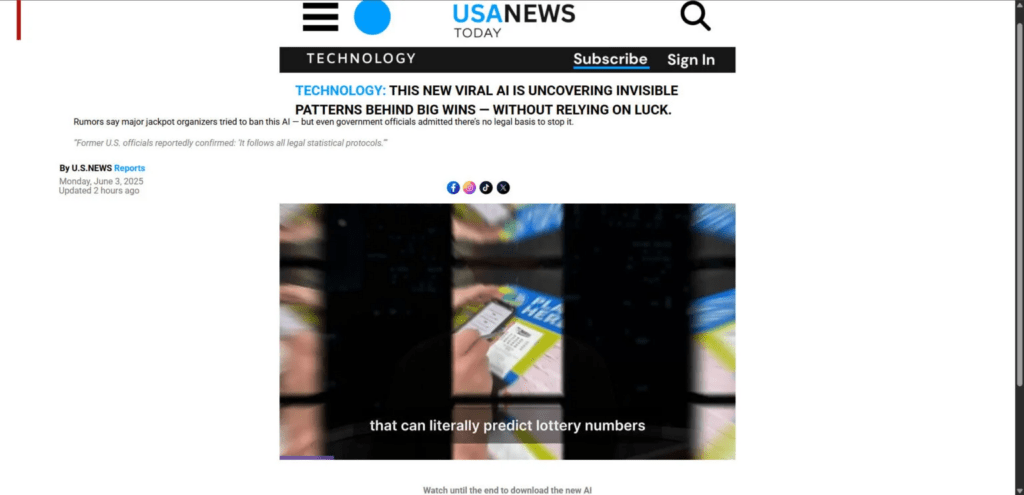
Scam Overview
The Greek Calculator lottery trick scam is a classic “lottery hacking” con dressed up in modern packaging.
The core promise is simple: there is a hidden mathematical weakness in major lotteries, and the Greek Calculator method can exploit it. You are told the lottery is not truly random, that it follows patterns, and that a special formula can reveal the next winning numbers.
That is the fantasy being sold.
The reality is that lottery draws are designed specifically to prevent predictability. Each draw is independent. The balls are mixed. The outcomes are random by design. The “system” you are being sold is not a proven loophole. It is a marketing funnel.
What makes this scam so effective is how it blends old-school manipulation with newer tools like AI-generated video, voice cloning, and fake “news style” clips.
Here are the most common elements you will see in Greek Calculator scam promotions, and why each one matters.
1) The “mysterious method” story is engineered to feel real
Scams like this rarely say “buy my random number generator.”
Instead, they tell a story.
You will hear claims like:
- The method is based on “ancient Greek formulas”
- A mathematician discovered a hidden loophole
- A simple calculator can reveal the right numbers
- This works across Powerball, Mega Millions, and other lotteries
- The system is legal because it is “just math”
That story is designed to bypass skepticism.
People know they cannot guess lottery numbers. But “math loophole” sounds different. It sounds like something you could have missed. It sounds like you are getting inside information.
And when you are tired, stressed, or hoping for a financial break, that story can hit hard.
2) “Dr. Arthur Wright” is presented as authority, but the credibility is hollow
One of the loudest red flags in Greek Calculator promotions is the named “inventor.”
The ads often frame Dr. Arthur Wright as:
- A brilliant mathematician
- A lottery strategist
- A researcher with a breakthrough method
- A public figure who is being “silenced”
But when you look for verifiable details, you often hit a wall.
Scam campaigns routinely invent experts because authority sells. It is a psychological shortcut. If a “doctor” says it works, people relax.
That is the point.
Whether the name is Dr. Arthur Wright or another polished-sounding persona, the tactic is consistent: create a figure who appears credible, then use that credibility to push an unbelievable claim.
3) The ads use fake credibility signals to lower your defenses
A big part of the scam is the way it borrows trust.
The marketing often includes:
- Fake TV segments that resemble talk shows or news clips
- Edited interviews with “winners”
- Celebrity references used as implied endorsements
- AI-generated voices that sound like recognizable public figures
- Logos and visual styles that mimic legitimate media
You mentioned deepfakes and manipulated audio tied to celebrities and public figures, plus a fake Ellen-style segment referencing a real Powerball winner. That fits a broader pattern: scammers know that familiar faces shortcut doubt.
If the video looks like a broadcast, people assume it was vetted.
If a celebrity appears to say it works, people assume it was verified.
But these clips are designed to be persuasive, not truthful.
4) The price point is chosen to feel “low risk,” not low harm
The typical cost, often around $47, is not random.
It sits in a sweet spot:
- Low enough that many people will not research deeply
- High enough to generate serious volume profit at scale
- Small enough that some victims will feel embarrassed to report it
- Easy to justify as “worth a try”
That last one is the hook. You are not buying software, you are buying a chance to believe.
And once you pay, you are pulled into the next layer.
5) The real product is usually generic, recycled, or meaningless
When people finally get access, the experience tends to fall into familiar buckets:
- A PDF “method” that reads like vague motivational advice
- A basic members area with generic lottery tips
- A “calculator” that produces random number sets
- A set of instructions that can never be proven wrong, because they are not specific
- Upsells for “premium” versions, coaching, or additional “secret” modules
This is important: scams like this do not need the method to work.
They only need it to feel plausible for long enough that you do not immediately dispute the charge.
6) The scam is built to rebrand quickly and outrun complaints
You already noticed something crucial: these campaigns rarely stick to one name.
Today it is the Greek Calculator.
Tomorrow it becomes “Lotto Rush.”
Next month it might be another brand with the same structure, same sales script, and a new face on the landing page.
Rebranding works because it:
- Breaks the connection to negative reviews
- Makes it harder for victims to find each other
- Lets scammers keep running ads after a domain gets flagged
- Resets public awareness every time the name changes
This is why you might see multiple domains selling the same “method,” including sites like painelnumerico.online and similar throwaway addresses.
7) The “money-back guarantee” is often marketing decoration
Refund promises are common in scams like this because they reduce hesitation.
The guarantee language usually sounds strong:
- “60-day money-back guarantee”
- “No questions asked”
- “100% satisfaction”
But in practice, it may fail because:
- The support email goes unanswered
- The contact page leads nowhere
- The seller name on your statement does not match the product
- The website disappears or rebrands before you can follow up
- The refund process is intentionally confusing
A guarantee only matters when a legitimate business stands behind it.
An anonymous operation can promise anything.
8) The claims collapse under basic logic
There is a simple thought experiment that cuts through the noise.
If a calculator-based method could reliably predict lottery numbers:
- It would be demonstrated publicly and repeatedly
- Lottery commissions would investigate immediately
- The method would become widely known and lose any “edge”
- The people who discovered it would not need to sell it for $47 through social ads
Scams like this rely on a gap between how people feel and how lotteries actually work.
They sell certainty in a place where certainty does not exist.
And they do it with storytelling, urgency, and borrowed credibility.
How The Scam Works
To protect yourself and others, it helps to see the Greek Calculator lottery trick scam as a process. The scam is not just the “calculator.” It is the entire funnel, from the ad to the charge on your card.
Below is a step-by-step breakdown of how it typically works, with clear subheadings so you can recognize each stage when you see it again.
Step 1: The bait appears where you least expect it
Most victims do not search for this scam directly.
They encounter it through:
- Facebook feed ads
- Instagram reels and stories
- TikTok-style videos reposted across platforms
- Sponsored posts that look like regular content
The ad is engineered to stop your scroll.
It uses one or more of these hooks:
“Lottery loophole exposed”
- “Powerball cracked”
- “Ancient Greek formula”
- “One simple trick”
- “Calculator method”
- “They do not want you to know this”
The language is designed to create a feeling of discovery, like you found something hidden.
Step 2: The ad builds trust fast using authority and familiarity
Once you stop, the video moves quickly.
It often includes:
- A named expert, usually “Dr. Arthur Wright”
- A confident explanation of “math” without actual math
- Claims that the method is legal and overlooked
- References to “winners” who used the system
- Familiar faces or celebrity-style clips, sometimes manipulated
- A tone that feels like news, documentary, or talk show content
This stage is about emotional momentum.
If you believe the first 15 seconds, you are more likely to accept the rest.
Step 3: You are sent to a long-form sales page built to wear you down
Clicking the ad usually leads to a landing page, often with a long video and a lot of text.
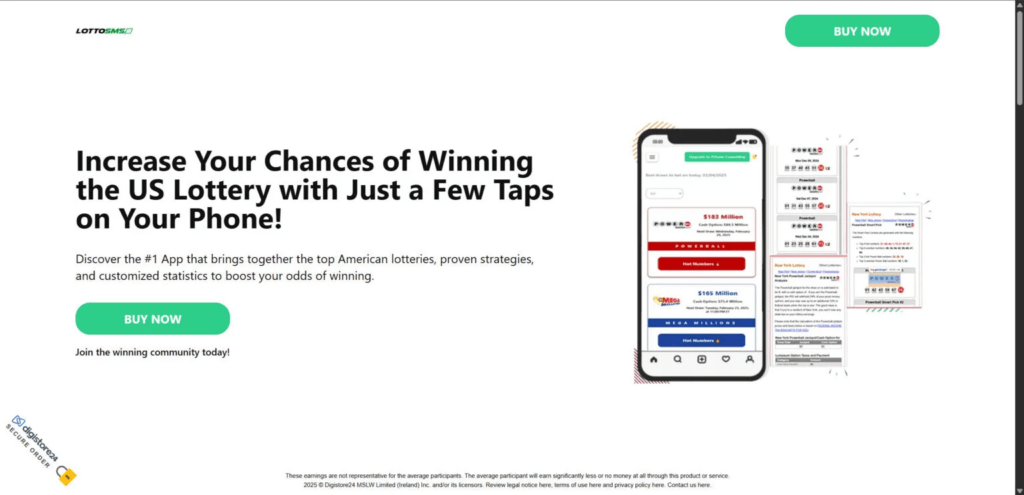
These pages commonly include:
- A big headline about “cracking the lottery”
- A dramatic origin story about discovering a loophole
- A “warning” that the method could be taken down
- Testimonials with stock photos or staged videos
- Fake comment sections that look like social proof
- A countdown timer or limited availability message
The goal is not to educate you.
The goal is to keep you on the page long enough that doubt gets replaced by curiosity and hope.
Step 4: The page introduces a small payment that feels like a shortcut
Eventually you reach the offer.
It is usually framed as:
- A small fee for “access”
- A discount that expires soon
- A one-time purchase with no monthly fees
- A low-risk decision because of a refund guarantee
Common price points include around $47, sometimes more, sometimes with upsells.
At this stage, many people think:
“It is only $47. If there is even a small chance, it is worth it.”
That thought is exactly what the funnel is built to produce.
Step 5: The checkout process feels normal, which is part of the trap
Many scam funnels use legitimate-looking payment pages.
You might see:
- Familiar card icons
- Security badges
- “Encrypted checkout” language
- A clean, modern design
This can be misleading.
A polished checkout page does not mean the product is legitimate. It only means the marketer knows how to build a conversion-friendly site.
In some cases, the charge descriptor on your card statement may not match the product name. That is not always proof of fraud on its own, but in scam funnels it often adds confusion and delays disputes.
Step 6: After payment, you receive something that cannot deliver what was promised
This is where the scam becomes obvious.
Victims often receive:
- A login to a basic portal
- A downloadable PDF with vague steps
- A “calculator” that outputs number sets with no explanation
- “Strategies” that sound like superstition dressed as math
- Advice that boils down to “keep trying”
Even when the content looks technical, it usually avoids specifics.
You might see:
- Unverifiable claims about “hot numbers”
- Instructions to pick numbers based on dates or patterns
- Suggestions to play more tickets or join pools
- Statements that protect the scammer, like “results may vary”
The product is designed to be unprovable.
If you lose, they blame your timing, your consistency, your mindset, or the idea that you did not follow the steps perfectly.
Step 7: The upsell wave hits, because the first payment is just the entry point
Many victims are offered additional purchases right after checkout.
These upsells can include:
- “Premium Greek Calculator” upgrade
- VIP number sets
- Weekly prediction packs
- “Private coaching”
- Additional “hidden formulas”
- Access to a “members group”
This is where the real profit often lives.
The scam counts on a percentage of buyers feeling committed. Once you have paid once, it is easier to pay again if you believe the next upgrade will finally make it work.
Step 8: The guarantee becomes difficult to use, or impossible
When buyers ask for refunds, common patterns include:
- No reply from support
- Automated responses with no follow-up
- Requests for extra steps that delay action
- A demand for “proof” you tried the method
- A different company name handling billing
- The website going offline or changing domains
The longer this drags out, the less likely a buyer is to pursue it.
This is not accidental.
It is part of the design.
Step 9: The rebrand begins, and the cycle repeats with a new name
Once enough complaints accumulate, the brand name gets swapped.
This is why the same funnel may show up as:
- Greek Calculator
- Lotto Rush
- Other “lottery trick” names that rotate regularly
The script stays the same.
The fake expert may stay the same, or get replaced.
The domain changes.
The ads come back.
To the next person, it looks new.
Why this scam spreads so well
It is worth saying plainly: this scam thrives because it targets something deeply human.
A lottery ticket is not just a ticket. For many people it is a story about relief.
- Relief from debt.
- Relief from stress.
- Relief from feeling stuck.
The Greek Calculator scam turns that feeling into a product, then sells it at scale through social media ads.
What To Do If You Have Fallen Victim to This Scam
If you paid for the Greek Calculator method, Lotto Rush, or any similar lottery trick system, take a breath.
You are not alone, and you are not foolish. These funnels are built by people who test what works, refine it, and push it to huge audiences.
What matters now is what you do next.
Here is a calm, practical checklist to follow.
1. Gather your proof while everything is still fresh
Take 10 minutes to collect what you might need for disputes and reports:
- Screenshot the receipt page, if you still have access
- Save the confirmation email
- Screenshot the website and the offer details
- Write down the URL you purchased from
- Note the date, time, and amount charged, such as $47
- Check the billing descriptor on your card statement and record it
This helps you move faster in the next steps.
2. Contact your bank or card issuer and request a dispute
If you paid by credit or debit card, call the number on the back of your card.
Explain clearly:
* You believe you purchased a deceptive product
* The marketing made claims that were not delivered
* You want to dispute the charge
Ask about:
* Chargeback eligibility
* Time limits for filing
* Whether you should block future charges from the merchant
If you act quickly, your odds improve.
3. If you used PayPal or another payment platform, open a case immediately
Log in and file a dispute through the resolution center.
Be specific:
* The product was misrepresented
* The claims were deceptive
* The refund process is not functioning, if that is true in your case
Upload screenshots and emails.
4. Check for additional charges and consider a card replacement if needed
Some victims worry about recurring charges. Even if the sales page says “one-time purchase,” it is smart to monitor closely.
Do this:
* Review your statement for any additional pending charges
* Set transaction alerts on your bank app
* If you see suspicious activity, ask your bank about freezing or replacing the card
5. Change passwords if you created an account
If you set up a login on the site, change that password anywhere else you might have reused it.
Use a new, unique password.
If possible, enable 2FA on your email account, since email access can be used to reset other passwords.
6. Report the scam so it becomes easier to stop
Reporting helps platforms and agencies connect the dots across domains and brand names.
You can report to:
* Your social platform, such as Facebook or Instagram, by reporting the ad
* The FTC at reportfraud.ftc.gov
* IC3 at ic3.gov if you are in the United States
If you are outside the United States, report to your local consumer protection agency as well.
7. Do not pay anyone who claims they can recover your money for a fee
After scams like this, many people get targeted by “recovery scammers.”
They may claim:
* They can get your money back
* They can “trace the payment”
* They are affiliated with law enforcement or a platform
* You just need to pay a small processing fee
That is usually another scam.
Real dispute and recovery channels do not require you to pay a stranger to get started.
8. Warn others in a simple, non-embarrassing way
You do not need to post a dramatic story.
A short warning can save someone else:
- “I saw ads for the Greek Calculator lottery trick. It looks like a scam funnel. Do your research before paying.”
- “If you see Lotto Rush or Greek Calculator claiming lottery prediction, be careful. The claims do not hold up.”
Scammers rely on silence and shame.
You do not owe them either.
The Bottom Line
The Greek Calculator lottery trick scam is not a breakthrough, and it is not a hidden loophole. It is a familiar marketing con that uses a polished story, a fake authority figure like “Dr. Arthur Wright,” and social-media-friendly videos to sell hope as if it were math.
If you already paid, focus on action, not self-blame. Gather your receipts, dispute the charge, monitor your accounts, and report the ads so fewer people get pulled in.
And if you are still tempted by the idea of a secret system, hold onto this one grounding thought.
Any method that could reliably beat Powerball would not be sold for $47 through a social media ad and a disposable website. It would change the entire lottery industry overnight.
When something promises certainty in a game built on randomness, the safest assumption is also the simplest one: the product is not the shortcut. You are.
Greek Calculator Lottery Trick Scam FAQ
What is the Greek Calculator lottery trick?
The “Greek Calculator” is marketed as a secret calculator-based method that supposedly exploits a hidden mathematical loophole to predict lottery numbers for games like Powerball and Mega Millions. In reality, it is a misleading sales pitch used to sell access to a “system” that has no proven ability to predict random lottery draws.
Is the Greek Calculator a real app or tool?
What people receive after paying is often a basic members area, a PDF guide, or a simple number generator that produces combinations without any verifiable advantage. The “AI” or “ancient Greek formula” angle is primarily marketing language, not demonstrated technology.
Can any calculator or formula actually predict lottery numbers?
No. Legitimate lotteries are designed to be random. Each draw is independent, and past results do not create reliable patterns you can use to forecast future numbers. Any product claiming consistent prediction is selling an illusion, not math.
Who is Dr. Arthur Wright?
Promotions often claim the method was created by “Dr. Arthur Wright,” presented as a mathematician or expert. A major red flag is the lack of verifiable credentials or a legitimate professional footprint. In scam funnels, invented experts are commonly used to create trust quickly.
Why do the ads look like real TV segments or celebrity endorsements?
These campaigns frequently use edited clips, AI-generated voices, staged “news-style” videos, and misleading references to celebrities or public figures to borrow credibility. The goal is to make the product feel verified and widely trusted when it is not.
How much does the Greek Calculator scam usually cost?
Many versions push a low entry price, often around $47, because it feels like a “small risk.” Some buyers are then hit with upsells for “premium” tools, VIP access, coaching, or additional “modules.”
Why do they claim there’s a money-back guarantee?
Guarantees reduce hesitation and increase conversions. But in many scam operations, refunds are difficult to obtain because support is unresponsive, the website disappears, the brand rebrands, or the billing name is confusing.
What are the biggest red flags that it’s a scam?
Common red flags include:
- Claims of guaranteed or consistent lottery wins
- “Secret loophole” language with no proof
- Fake expert backstory with no credentials
- Celebrity or TV show style promotions that can’t be verified
- Pressure tactics like countdown timers or “limited spots”
- No transparent company details, address, or real support team
I paid for it. What should I do now?
Start by collecting receipts and screenshots, then contact your bank or payment provider to dispute the charge. Monitor your statements for additional charges and report the ad on the platform where you found it. If you created an account, change any reused passwords.
Are Lotto Rush and similar names connected to the same scam?
Yes, many lottery prediction scams rotate brand names and domains frequently. The structure, sales script, and tactics often remain the same even when the name changes, which helps scammers outrun complaints and negative reviews.

Join the discussion
0 commentsShare your experience or ask a question about this article.
Discussion
Start the conversation
Have a question or something useful to share? Add the first comment.