


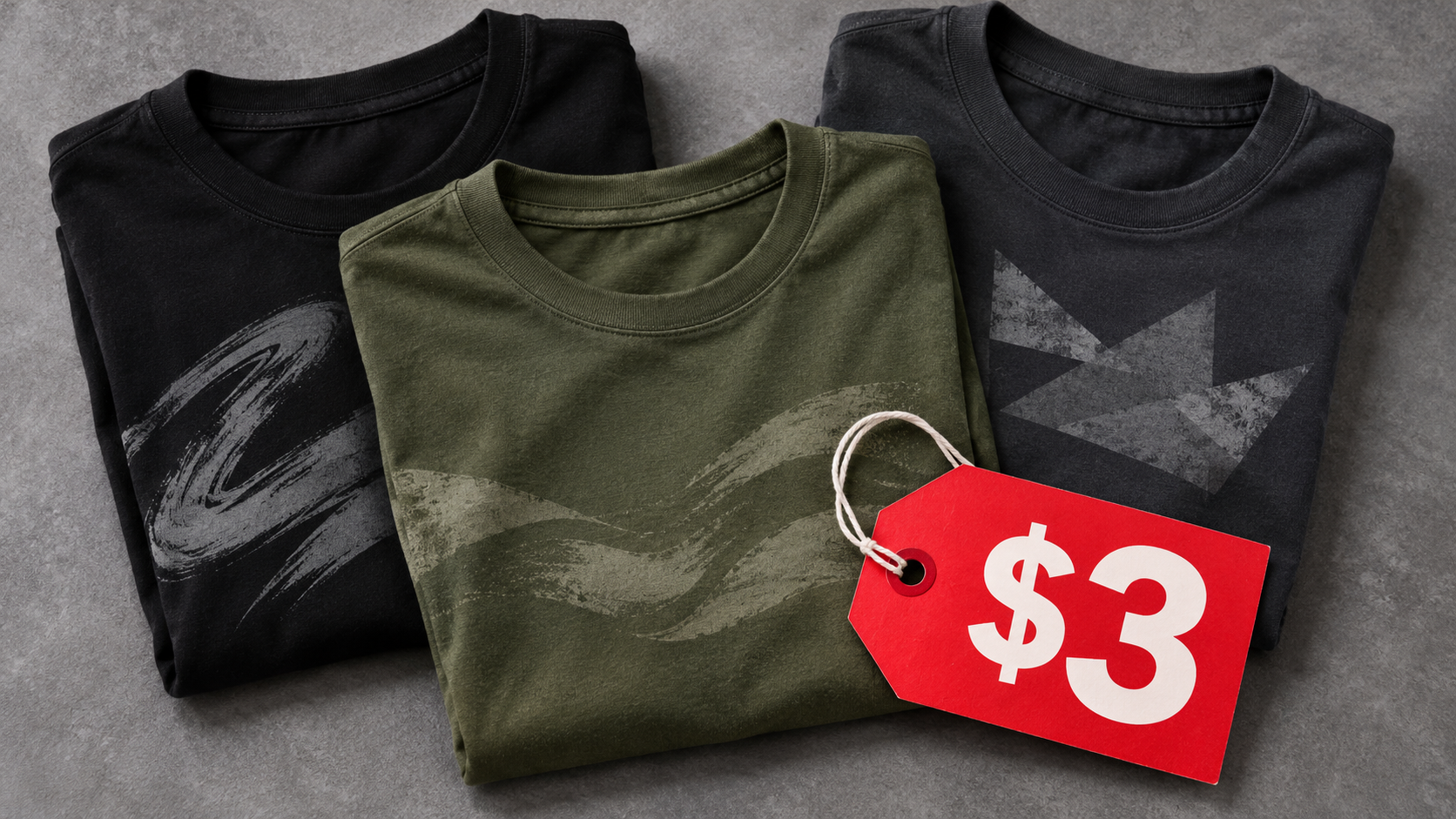
Maybe you recognize the shirt in the ad. You’ve seen the design before, but you’ve never seen it priced at $3.
Then you notice the ad isn’t talking about one shirt. It’s making the same promise across the store, just as shoppers are looking for early Black Friday deals.
Overview
One price for the whole store
The Grunt Style ad in question advertised every item for $3 in an early Black Friday sale. It used the apparel brand’s name, but it wasn’t a Grunt Style sale.
Bitdefender Labs reported the U.S. ad and identified the shop behind it as fake. The genuine brand had no connection to either one.
There isn’t a reliable reason to enter your card for this offer. That remains true even if the page shows a shirt you already know the real company makes.
The ad borrows more than the name
The ad leaned on the brand’s veteran-founded identity. If that connection is one of the reasons you like the clothes, it’s easy to feel the ad speaks directly to you.
Nothing about recognizing the message tells you whether the merchant has permission to use it. A product photograph, familiar wording and brand logo can all be copied.
Grunt Style really does advertise military and first responder discounts through its own site. That doesn’t make any unrelated ad mentioning those groups an authorized promotion.
What this warning covers
- A social media ad used the Grunt Style name to promote a storewide $3 sale.
- The researchers identified its destination as a fake store, not the genuine retailer.
- The report doesn’t establish a specific charge or package outcome for every shopper.
- You can still shop real deals through Grunt Style or a retailer you can verify.
That last distinction matters if you already placed an order. Your first job is to establish who took the payment, not to demand that Grunt Style refund another seller’s transaction.
How the Fake Grunt Style Black Friday Sale Works
Step 1: A familiar shirt stops the scroll
You’re looking at a shirt you want, so you may barely notice the small account name next to the ad. The image has already done most of the work.
The holiday timing makes the price easier to believe. Shoppers expect surprise deals, so even a storewide markdown can sound plausible when someone calls it early access.
Find out who paid for the ad. Adding “outlet,” “official” or “clearance” to a name can make the advertiser sound like a division of the brand.
Step 2: The same low price makes the cart grow
One shirt at $3 could be a clearance item. Every item at $3 invites a different thought: buy for yourself, buy a few gifts and sort out the details later.
The price can make you spend less time checking the merchant than usual. It can also tempt you into adding things you hadn’t planned to buy.
Check the business before doing either. Even a small charge involves handing over information, and the price of the first shirt tells you nothing about who handles the payment.
Step 3: The ad takes you to a storefront
A storefront can look more credible than a payment form. Familiar product types and ordinary shopping controls make it feel like any other place you’ve ordered clothes.
But you can be on a different page from the one you imagined when you saw the ad. Look at who runs the site and who would take the order.
Bitdefender’s report identifies the fake shop without documenting a completed purchase. Don’t take screenshots of products, stock counters or a checkout button as evidence of real inventory.
Step 4: A small order still needs real information
A shopper expecting a delivery will usually give a name, shipping address and contact details. Paying can add card or billing information, depending on how the checkout is set up.
You might also be invited to create an account. If you reuse an existing password, the risk can grow beyond the amount you meant to spend on clothes.
Those are risks to consider, not a claim every person supplied all those details. If you already went through checkout, write down what you actually entered and how you paid.
Step 5: The receipt is a starting point, not a guarantee
A confirmation email can arrive even if the seller never ships as promised. A tracking number can also leave questions about the address, package or shipment it belongs to.
Other outcomes are possible with copycat stores, including a charge you didn’t expect or something different from the item ordered. The published ad sample doesn’t prove a particular outcome occurred.
What matters after payment is the record you have. Save the ad, seller identity, order, expected arrival and actual transaction rather than relying on the confirmation’s subject line.
How to Check Whether a Grunt Style Deal Is Real
Try finding the deal without the ad
Go directly to the Grunt Style website and look for the promotion on its own terms. Make the check in a fresh tab, not from the seller’s suggested link.
Compare the particular thing you saw. A real coupon for selected items doesn’t validate a claim that every product is $3, even if both promotions mention Black Friday.
If the deal is supposedly available through a retailer, identify that retailer first. A real reseller should tell you who ships the order and handles returns under its own name.
Look at how the address ends
On a phone, tap the browser’s address field to see the entire host. The first familiar words that fit on the screen might be just part of a longer name.
Read the seller information as well. The name on the receipt, contact page and sale terms should make sense together, although a different legitimate fulfillment partner is possible.
A padlock won’t settle who runs the store. Encryption addresses how data gets to the site. It doesn’t determine whether you want that particular site to receive your data.
Check the total and the terms for what you chose
Real sales can have final-sale exclusions, shipping costs and limits on sizes or colors. Before any purchase, find the total and read what happens if the item doesn’t arrive.
Ask who handles order problems and find its written process. A contact address doesn’t tell you much if the page won’t say who runs the shop.
If verifying the deal means sending a test payment, don’t do it. A declined charge can still leave you wondering who received the details you typed in.
What to Do If You Ordered From the $3 Sale
-
Check payment activity first: Open your card issuer’s app or statement. Note the amount, date, merchant name and whether the transaction is pending or posted.
Don’t call a number shown on the ad to ask what the charge is. Use the phone number on your card or the bank’s own support options.
-
Save the exact order: Keep the receipt, promised products, amount and estimated arrival. Save any replies the seller already sent, rather than starting over from memory.
Get the merchant descriptor from your bank record. You may need to explain why the website title, order confirmation and name on the payment don’t match.
-
Tell the issuer what happened: A card charge you never authorized differs from an order you placed and didn’t receive. Explain which happened and ask what options apply.
For U.S. shoppers, the FTC’s online shopping guidance explains payment protections and disputes. Ask your issuer which deadlines and documents apply to your situation.
-
Don’t pay for a refund: If somebody asks for a new card payment, gift card or bank code to send your money back, stop dealing with them.
Keep any correspondence about a refund in case the issuer asks for it. A promise made over chat isn’t the same as a refund posted to your account.
-
Document a wrong package: If you received a different item, save the packaging and take pictures of the item and label. Compare the item’s details with the order receipt.
Ask your payment provider what evidence it needs before paying to send anything back. Don’t follow an expensive return instruction simply because it arrived in a message.
-
Secure a reused password: Change it anywhere it opens an account you still use, especially email and shopping services with stored cards or other payment details.
Don’t sign back into the suspect shop to remove the password. The immediate priority is keeping whoever received it out of your genuine accounts.
-
Report the copycat ad: Use the social platform’s reporting controls. Tell the genuine brand about the impersonation through its own site if you have identifying evidence.
If you report a loss in the United States, use ReportFraud.ftc.gov. Avoid reposting the live ad link, full payment record or home address on social media.
If the Seller Claims You Have to Wait
A delivery delay can happen during a genuine holiday sale. The question is whether the company handling the order can give you a specific update for the item you bought.
Check the promised delivery window and keep any new dates the seller offers. There’s a difference between a traceable delayed shipment and a message that simply tells you to wait.
If the only update is a tracking number, check it through the carrier. Ask what the carrier can confirm without opening another link from the seller.
A status of “delivered” doesn’t answer whose order the tracking number describes. Write down anything the carrier can confirm and pass that along to your payment provider if needed.
A long delivery window shouldn’t stop you from asking the payment provider about dispute deadlines. You can ask before deciding whether you need to file a claim.
If you see a charge you didn’t authorize, don’t wait for the delivery window at all. Report the charge to your issuer as soon as you find it.
How to Warn Someone Who Wants the Deal
Tell them that the documented ad isn’t from the company printed on the shirt. That’s more useful than arguing about whether any brand would ever sell a shirt for $3.
Open the real store together and look for the specific sale. If they want to shop for someone else, a genuine clearance page can still serve that purpose.
If a friend recommended the deal, ask whether they placed an order themselves. Passing around an ad is different from buying something through the genuine retailer.
For someone who already ordered, the aim isn’t to win that argument. It’s to figure out where the money went and preserve records while they’re still easy to find.
Check Who Has Your Card Even If an Order Never Confirmed
A checkout can fail after you enter payment details. A missing receipt doesn’t tell you whether the form transmitted those details or whether the card issuer declined a payment.
Don’t try a second card to see whether it works. Check for an authorization from the first attempt and ask the first issuer what it recommends securing.
When you call, explain whether you typed the number into the store or paid through a separate provider. That difference helps the issuer decide what records to check.
Look at any notification through the bank’s app rather than tapping a text that arrives after the attempt. The failed checkout doesn’t make a new request for verification trustworthy.
Watch for additional charges even if the first one was small. The bank doesn’t need to know who ran the ad to help protect a possibly exposed card.
Frequently Asked Questions
Is the Grunt Style everything-for-$3 ad real?
The early Black Friday ad Bitdefender documented was an impersonation that led to a fake store. Don’t enter payment details for that advertised sale.
Does this mean Grunt Style is a scam?
The warning concerns a copycat ad and shop. It does not accuse the genuine apparel company, which Bitdefender says wasn’t associated with the campaign.
What if the shirt design matches the official store?
A matching design doesn’t establish who takes the order. Compare the actual seller and specific deal, not just the image on the product page.
Can I dispute an order that never arrived?
Ask your payment provider about a non-delivery dispute. Keep the receipt, seller communication and promised arrival information. The provider can tell you which evidence and deadlines apply.
Is a low price proof of a fake retailer?
A low price by itself proves very little. In this case, the concern is the independently documented impersonation and fake store, not just a number in an ad.
Do I need to call my bank if I never entered anything?
Seeing the ad or browsing the store doesn’t show that you shared a card. Call promptly if you entered payment details or notice activity you didn’t authorize.
The Bottom Line
Don’t buy from the fake Grunt Style $3 Black Friday sale. If you want the clothes, find the real store or a verified retailer and check the actual price there.
If you already paid, save the order and check your statement now. Deal with your payment provider, not a seller that wants new information or more money to refund you.

Join the discussion
0 commentsShare your experience or ask a question about this article.
Community experiences
Did this happen to you?
Your experience could help someone recognize the same scam. Submit a private report for our team to review.
I experienced this tooReports are reviewed before publication. Sharing publicly is always your choice.
Discussion
Start the conversation
Have a question or something useful to share? Add the first comment.