


If you filed a GSPartners claim, you probably remember how much work it took to find the old transfers. Then came the wait for someone to review them.
A message bearing the settlement name can feel like progress at last. Before doing what it asks, find out whether it belongs to your claim.
Overview
The Gold Standard Bank settlement is real
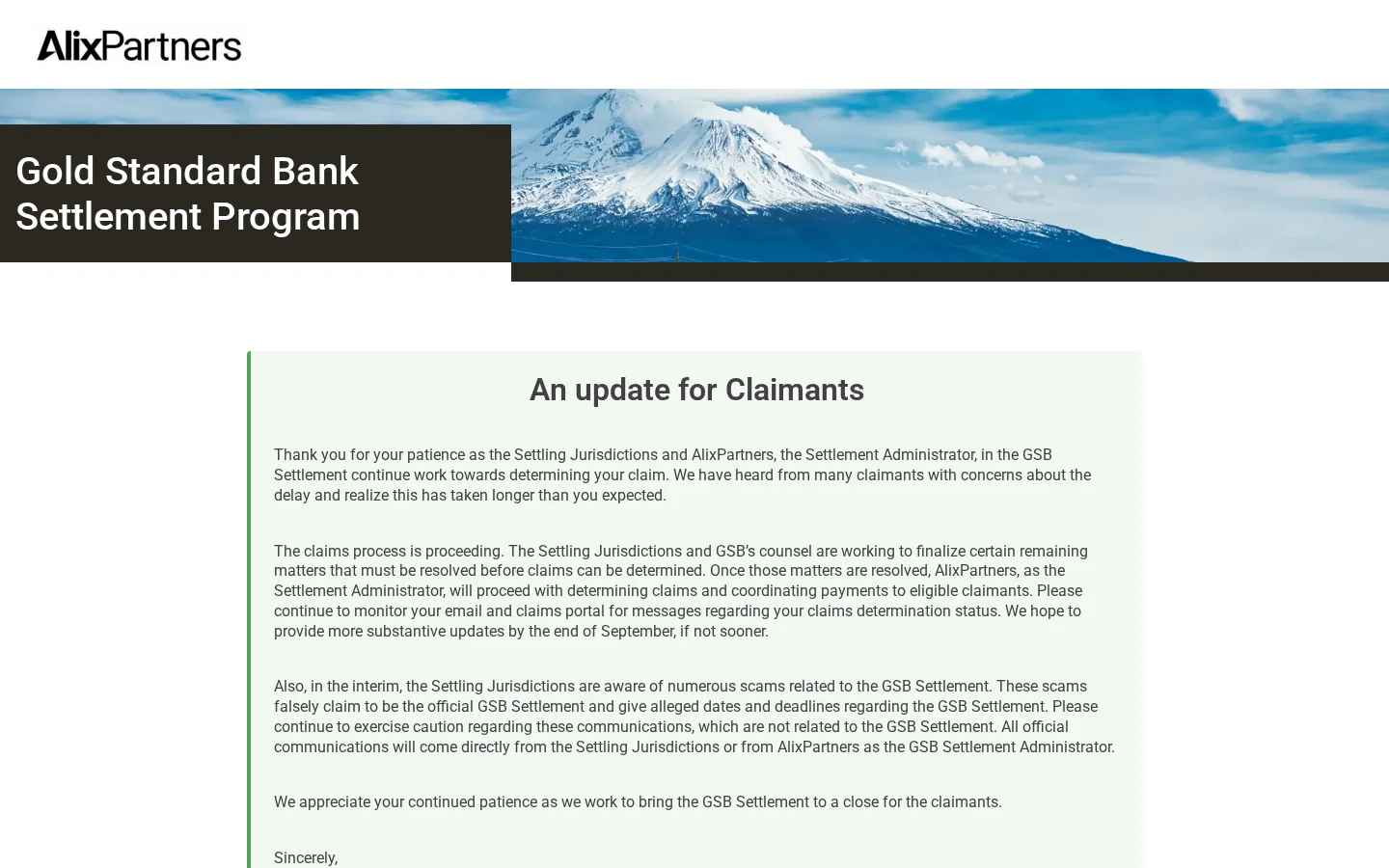
The Gold Standard Bank Settlement Program grew out of a coordinated effort by certain American and Canadian securities regulators. AlixPartners administers claims on behalf of the program.
That makes an important distinction easy to miss. An authentic claims process exists, and the people running it have warned that strangers are impersonating it.
The settlement’s public update, dated September 1, 2026, says certain matters had to be resolved before claims could be determined. It does not approve any particular claim.
The same notice says the parties hoped to provide a later update. A date when they hoped to share news is not a distribution date or a new submission deadline.
The notice warns about dates an impostor invents
The official update describes scams claiming to be the settlement and giving false dates or deadlines. That warning matters even if the message never asks for a card number.
A fabricated cutoff can get someone to share a file or make a payment before they check the account they created for the actual claim.
The public settlement site also warns about counterfeit sites asking for funds and information. It expressly says participants are not required to deposit money as part of administration.
Separate these three things when a message arrives:
- The administrator can review an existing claim and tell you what it still needs.
- An unofficial deadline cannot change what the administrator has said about your claim.
- Someone asking you to send value first is not following the published settlement procedure.
A fake request may look familiar because it mentions an investment name you recognize. An old product name is not a password only the administrator knows.
What the original GSPartners names have to do with this
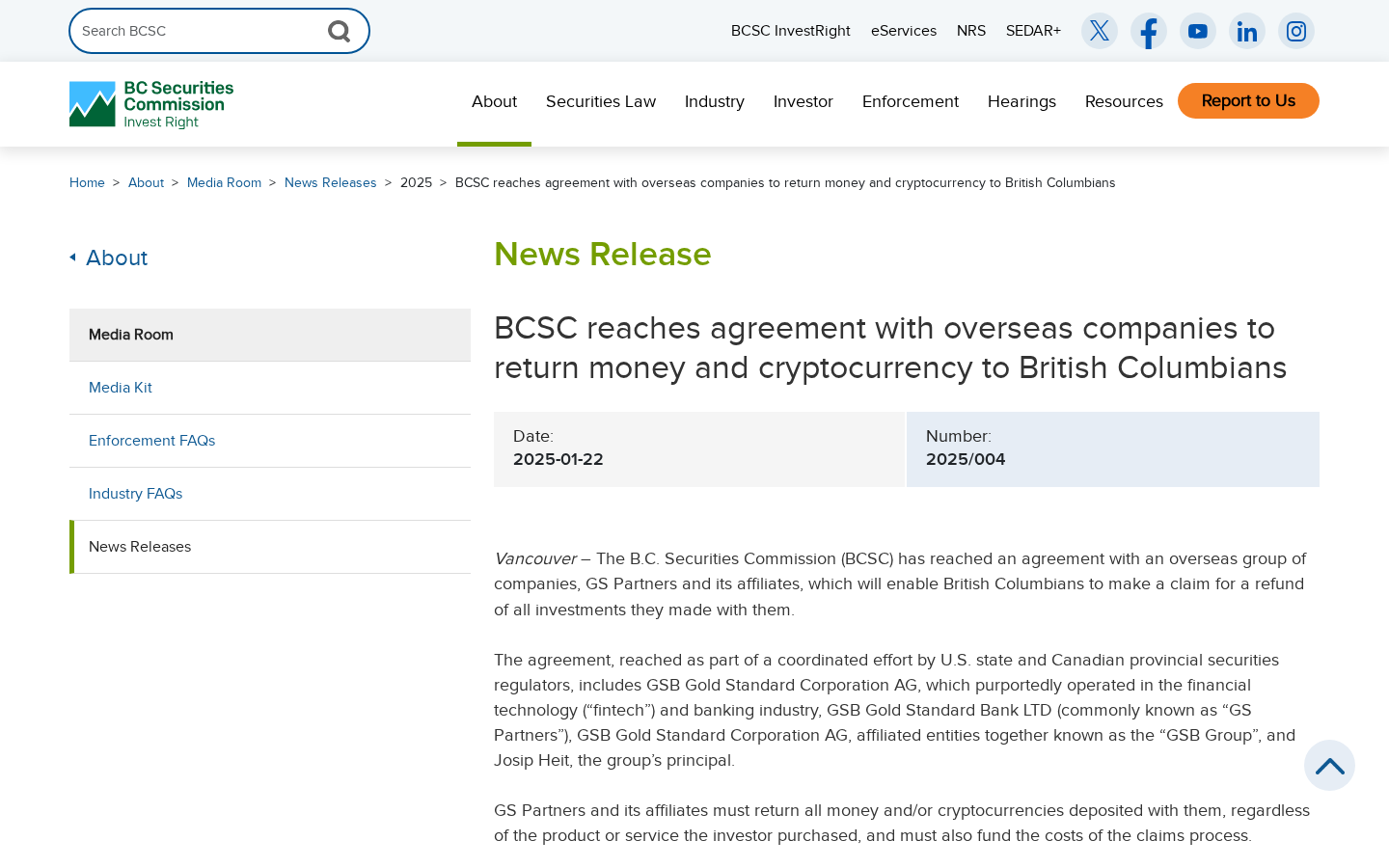
The British Columbia Securities Commission identifies products including MetaCertificates, the G999 token, XLT Vouchers and a staking pool in Lydian World.
You might have dealt with one of those names without calling it GSPartners. The settlement site lists its covered entities and brands separately from the administrator.
The British Columbia notice describes refunds for eligible investors based on deposits minus withdrawals. It does not say a portal’s displayed earnings are automatically repayable.
Coverage depends on the participating jurisdiction and the individual claim. The B.C. notice’s May 22, 2025 filing deadline was for that jurisdiction’s process, not a new cutoff.
How the GSPartners Settlement Impersonation Scam Works
Step 1: A message borrows the name of a process you already know
The notification doesn’t have to introduce an unfamiliar investment. It can present itself as the next step in the claim you filed months earlier.
There is an actual portal and an actual administrator. Those facts give the impostor a believable story without proving that the sender has access to anything.
An online group discussing the case may also circulate unofficial screenshots or notices. Someone sharing an incorrect date need not be the person who started the scam.
For your purposes, the screen that matters is the account you reach independently. You can verify an official request without arguing about who posted the message.
Step 2: A supposed cutoff cuts short the verification
The official warning calls out made-up deadlines. The threat might sound plausible after a long period with little news, especially if it suggests that missing one step costs you everything.
Think about the order in which information arrives. A deadline that exists only in a forwarded message is something to verify before you do any work for its sender.
The message might point back to an actual settlement announcement. An authentic sentence or a correct agency name embedded in the message does not authenticate the new instructions.
Read the full instructions inside your account if a notice appears there. A genuine request and a fraudulent copy can arrive around the same time.
Step 3: The handoff asks you to act outside the real channel
The settlement site warns of counterfeit pages seeking money or information. Stop if the route asks you to send a deposit or to submit documents to an unfamiliar service.
The most important distinction is between a public wallet address and the words or keys that control it. The administrator may need a transaction record, not control of your funds.
A promise to pay in digital currency is not a reason for you to send digital currency first. Keep the direction of the proposed transfer straight.
A previous loss makes a small new fee seem minor by comparison. It is still a separate payment, and it does nothing to advance a real claim.
Step 4: A claimed confirmation substitutes for an actual result
Someone can tell you that a payout is approved without a payment arriving. Only the official determination and the records in the receiving account can answer those questions.
If the sender asks you to pay again or provide a different wallet after the first attempt, treat that as a separate request, not evidence a payment is pending.
Even a message with a familiar reference number should lead back to your independently opened account. Compare the requested action, not just the name or amount.
There is no advantage in asking an unverified sender to prove their identity by sending more images. You need a check through an organization you can reach without them.
What to Do If You Received a GSPartners Refund Notice
- Leave the message open only long enough to preserve it without following its links. Save the sender, date and what it asked you to do.
- Open the official settlement homepage in a new tab and select Claims Portal there. Use the account you already created for the legitimate claim.
- Compare any status or request you find inside the portal with your saved submission confirmation. Do not infer approval from the fact that you can sign in.
- If nothing matches, contact AlixPartners at the address printed on the official site and ask about your existing claim using a fresh message.
- If you entered a password or sent documents elsewhere, write down what was exposed and secure the account or identity records that were actually affected.
- If you sent money, contact the bank or exchange you used with the transaction details. Report the impersonation separately from the original investment loss.
How to check an existing claim without using the email link
Start from the Gold Standard Bank Settlement Program. Find the link labeled Claims Portal near the public update and open it from there.
The link opens the separate portal at claims.gsbsettlement.com. Check the address before signing in and use your existing account rather than making another one to satisfy a message.
If you cannot get in, follow the account recovery option on the genuine portal if available. Otherwise use the administrator’s published contact, gsbsettlement@alixpartners.com.
Give the reference if you have it and describe the discrepancy. For example, explain that you received a purported deadline that is not visible in your account.
Use the exact email address you used to file when giving the administrator context. A different inbox might not contain the notice you are looking for.
Check your archived messages and spam folder for the original submission confirmation. Keep it as a record, without following links in a newly received message.
Ask which authenticated route to use if the administrator needs documents. The first email does not need an attachment containing your full identity file or account credentials.
The public site still contains general instructions written for the original filing process. An old description of a 90-day window is not evidence the window has reopened.
If you never filed or cannot find a submitted claim, ask which rules apply to your jurisdiction. Do not assume that a portal login is an extension.
Keep those old records organized by account
The administrator says it evaluates information by user account. If you had more than one account, save each confirmation and note which transaction belongs to it.
For transfers, keep the dates, amounts, assets, addresses and transaction references where you have them. Keep withdrawals in their own column instead of reporting only the money you sent.
You do not need to invent an amount for a transfer you cannot trace. Explain the missing record when asked and keep any bank or exchange response.
Only transfer evidence and documentation belong in a verified claims process. Private keys, recovery words and codes from your phone do not belong in a claim file.
Preserve a copy of an uploaded document and any confirmation you received. That makes it easier to explain what happened if the administrator asks for another version.
If an old exchange account has closed, ask the exchange itself whether it can provide a statement. A private recovery service is not needed to request that record.
If a family member used your device to submit a separate claim, do not assume it shared your account. Find each actual confirmation and keep the records apart.
When the message has already cost you something
For a recent payment, go to your bank or exchange through its known app, site or number. Explain that you paid someone impersonating the GSB settlement.
Ask whether the transaction can still be stopped, recalled or identified for investigation. A transfer may be irreversible, and a stranger claiming otherwise is not entitled to another payment.
If you entered a reused password, replace it at the real services where it was used. Begin with the email account that receives your login and claim notices.
If you shared a recovery phrase, do not rely on a password change to secure that wallet. Seek current instructions from the known wallet provider through its official channel.
If you uploaded identification, keep a list of what the impostor received. In the United States, IdentityTheft.gov can help you plan steps for the exposed information.
For a fresh online payment fraud, report the message and transfer through the FBI’s Internet Crime Complaint Center in the United States. Elsewhere use your local reporting authority.
The fastest payment offer is not the most useful offer
Someone saying they can speed this up might have found your name in a public group. That does not give them a role in deciding a claim.
Do not move the conversation to a private chat just so a stranger can see your original application. An application can contain enough information to make a later impersonation convincing.
If a message claims to replace or supersede AlixPartners, check with your regulator before acting. Get the authority’s contact independently, not from the person proposing the change.
Frequently Asked Questions
Is the GSPartners settlement itself a scam?
The settlement announced by participating regulators is real. The scam discussed here is an attempt to pass a counterfeit message or site off as that genuine process.
Confirm the administrator and portal through a participating regulator or the public settlement homepage. A logo or recognizable product name does not make the message official.
Is there a deposit required to receive payment?
The settlement site says you do not have to deposit money as part of its administration. A private transfer request conflicts with the procedure it describes.
Do not pay out of fear that your file will be closed. Ask the actual administrator to verify any claimed deadline or requirement.
Does a sign-in mean AlixPartners accepted my claim?
No, a working login means you can access the portal. A claim decision is a separate result you must check inside your account or with the administrator.
Keep your submission confirmation, and do not use an unsolicited approval message as the only record that you were found eligible.
Is the latest public update a promise of payment on a certain day?
The September notice explains that work remained before claims could be determined. It gives no personal decision or date when a particular claimant will be paid.
If a newer communication names a date, verify it in the real portal or with the administrator. Do not accept a countdown from a third party.
Why might legitimate claims ask about wallet addresses?
The administrator can need to match a claimant’s deposits or withdrawals to verifiable transactions. An address and a transaction reference are different from a secret that controls the wallet.
Use only the confirmed submission route for the records it actually requests. No party needs your recovery words to see a past public transfer.
Where do I go if I cannot find my original confirmation?
Try the existing portal account and search the email address you used when you filed. If that fails, ask the administrator how to locate your file.
Say whether you submitted a claim or only began preparing one. Those are different circumstances, and a third party cannot make either one qualify.
The Bottom Line
Do not pay or upload documents in response to a GSPartners refund message. Check your existing claim through the official settlement homepage and contact AlixPartners independently if anything differs.
If you already paid an impersonator, report that new transfer to your bank or exchange. Keep the real claim in its own records so you can continue checking it safely.

Join the discussion
0 commentsShare your experience or ask a question about this article.
Community experiences
Did this happen to you?
Your experience could help someone recognize the same scam. Submit a private report for our team to review.
I experienced this tooReports are reviewed before publication. Sharing publicly is always your choice.
Discussion
Start the conversation
Have a question or something useful to share? Add the first comment.