


Waking up sore can make a bedding advertisement unusually persuasive. A photograph of a soft, cool-looking bed starts to look like an answer, not another shopping decision.
Hanare’s mattress topper speaks directly to that feeling. Before replacing your current setup, look closely at the promises attached to this extra layer.
Overview
A real bedding product with a much bigger health story
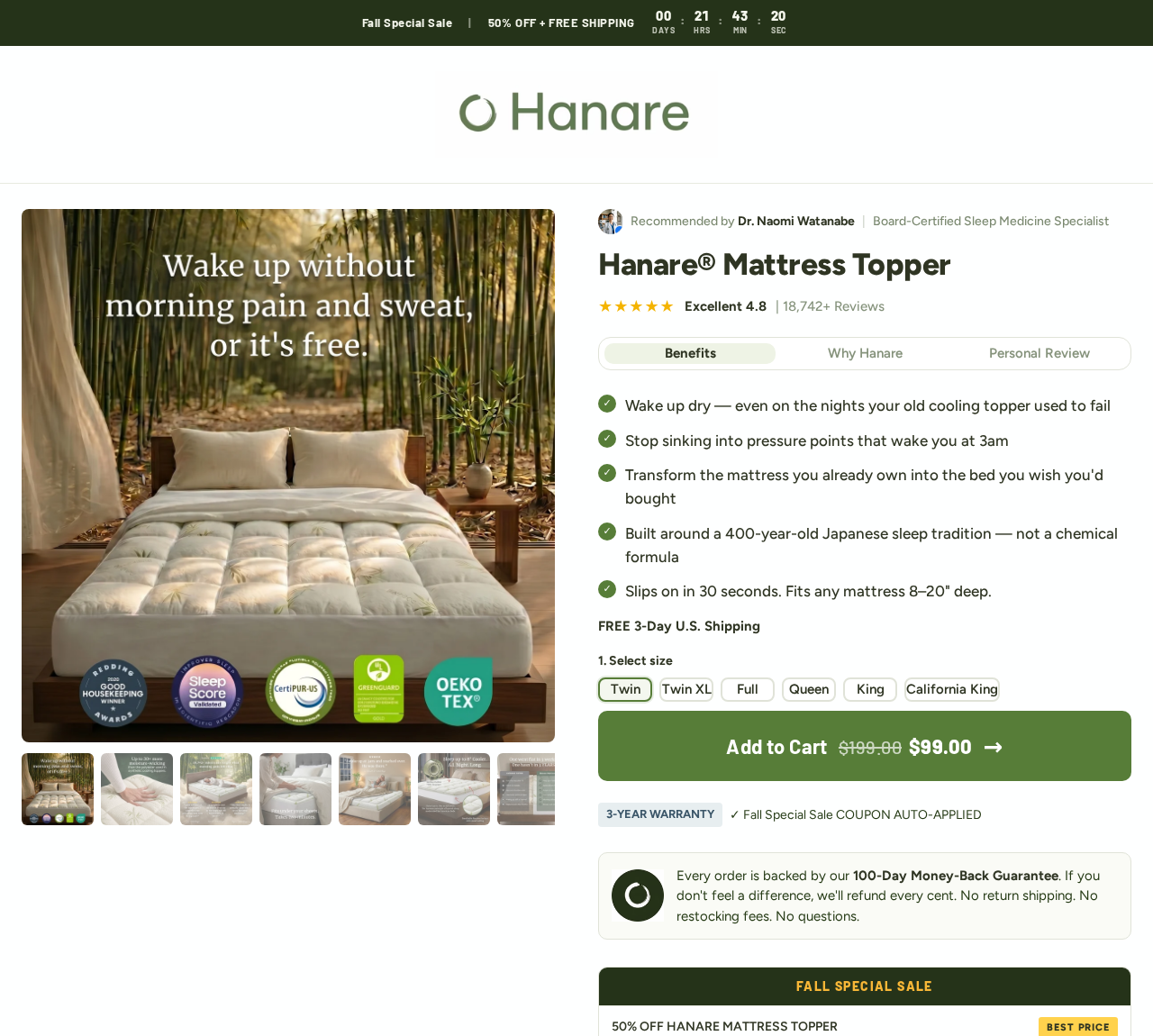
Hanare sells a mattress topper through tryhanare.com. The inspected product page displayed a $99 price, a $199 comparison price, and a 100-day money-back promise.
The presentation combines cooling, cushioning, and Japanese sleep traditions with claims about waking without pain or sweat. Those are different levels of promise.
A topper can change how a bed feels. Establishing that it treats chronic pain or menopause-related symptoms requires evidence beyond an appealing bedroom photograph.
The cited mattress study does not test this topper
The sales story invokes a 2003 Lancet study about medium-firm mattresses. That study involved adults with chronic low-back pain, not a clinical trial of Hanare.
The distinction matters because the offer also discusses hip discomfort, hot flashes, and population-level differences between Japan and other countries.
- A study of complete mattresses cannot automatically validate an added comfort layer.
- National health statistics cannot establish what this product will do for one buyer.
- Customer stories do not establish that prescribed treatment can safely be stopped.
- The current written return policy does offer meaningful protection for eligible one-time physical purchases.
The buying conclusion depends on the reason for buying
Do not buy Hanare as a proven treatment for persistent pain, menopause symptoms, or other medical problems. The sales narrative extends beyond product-specific clinical evidence.
If you want ordinary bedding comfort, evaluate it as bedding. Compare construction, measurements, total price, and the actual return process with other toppers.
The return promise is not the red flag here. The weak point is using tradition and general research to make much bigger health claims.
What the Lancet Study Actually Tested
The original 2003 mattress trial enrolled 313 adults with chronic, nonspecific low-back pain and compared firm with medium-firm mattresses over 90 days.
Results favored medium-firm mattresses for some pain and disability outcomes. That finding concerns the mattresses and participants in that trial.
It does not establish that Hanare’s topper reproduces the tested construction or produces the same results when placed over different existing mattresses.
It also does not test menopause treatment, longer life, or prevention of hip arthritis. Those outcomes cannot be added to the study by marketing association.
For a shopper, the important question is not whether a real paper exists. It is whether the paper answers the claim attached to the product.
A study can be genuine while its use in a sales pitch is too broad. That is why the product name and actual intervention matter.
A worn, sagging mattress may also behave differently from a sound one. Adding padding does not necessarily correct the support underneath it.
Someone trying to solve persistent pain needs an assessment of the problem, not an assumption that a topper is the missing treatment.
How the Hanare Sales Story Works
Step 1: A familiar morning problem gets your attention
The product gallery promises waking without morning pain and sweat, with the alternative framed as getting your money back. That makes the experiment sound easy.
For someone already buying pillows, changing sleeping positions, or waking repeatedly, the promise connects with a real frustration.
But morning discomfort and night sweats do not all have the same cause. A sales page cannot determine yours from a description of common symptoms.
Think about the specific change you want: a cooler surface, less pressure at one contact point, or medical relief. Do not merge those goals.
Step 2: Japanese tradition supplies a bigger explanation
The page links the topper to a centuries-old Japanese sleep tradition. It then draws attention to national differences in longevity and certain health complaints.
The implication is that a different way of sleeping helps explain those differences, and that buying this layer lets you access the same advantage.
National comparisons cannot isolate bedding from healthcare, diet, activity, reporting differences, and other influences. They do not establish a treatment effect for this product.
A tradition may provide design inspiration. It is not a substitute for testing the finished item against the specific health benefits used to sell it.
Step 3: Medical language makes comfort sound clinically established
The sales material connects its support explanation with the Lancet mattress study and uses claims about chronic back and hip pain.
That gives an ordinary bedding decision the appearance of a researched health intervention. The gap is the missing product-specific connection.
A topper is only one part of the sleeping surface. Its effect depends on the mattress beneath it, the sleeper, and the construction of both layers.
Ask for the finished-product study, including participants, comparison, and measured outcomes. A general discussion of medium firmness does not answer that request.
Step 4: Testimonials turn possibilities into personal expectations
The page includes stories about disappearing hip discomfort, reduced use of pain medication, and improvements associated with menopause-related sleeping problems.
Those are powerful stories for someone experiencing the same difficulties. They remain individual accounts rather than controlled evidence of what the topper caused.
Do not stop medication or abandon a clinician’s plan because a customer story describes doing so. The testimonial does not assess your condition.
If bedding improves your comfort, that can still be useful. It does not require adopting the sales page’s broader explanation of your health.
Step 5: A trial and extra warranty reduce hesitation
The inspected listing advertised a 100-day guarantee and a three-year warranty. It also offered an optional extended lifetime warranty at $29.90.
A satisfaction return and a product warranty are different protections. One concerns trying the purchase, while the other depends on covered defects and conditions.
Check the final basket for size, quantity, and any optional protection. Do not assume an extra warranty is required to use the advertised standard guarantee.
The discount is also a comparison with the seller’s reference price, not an independent assessment of market value. Compare similar construction at the actual total.
Step 6: The return process determines the practical downside
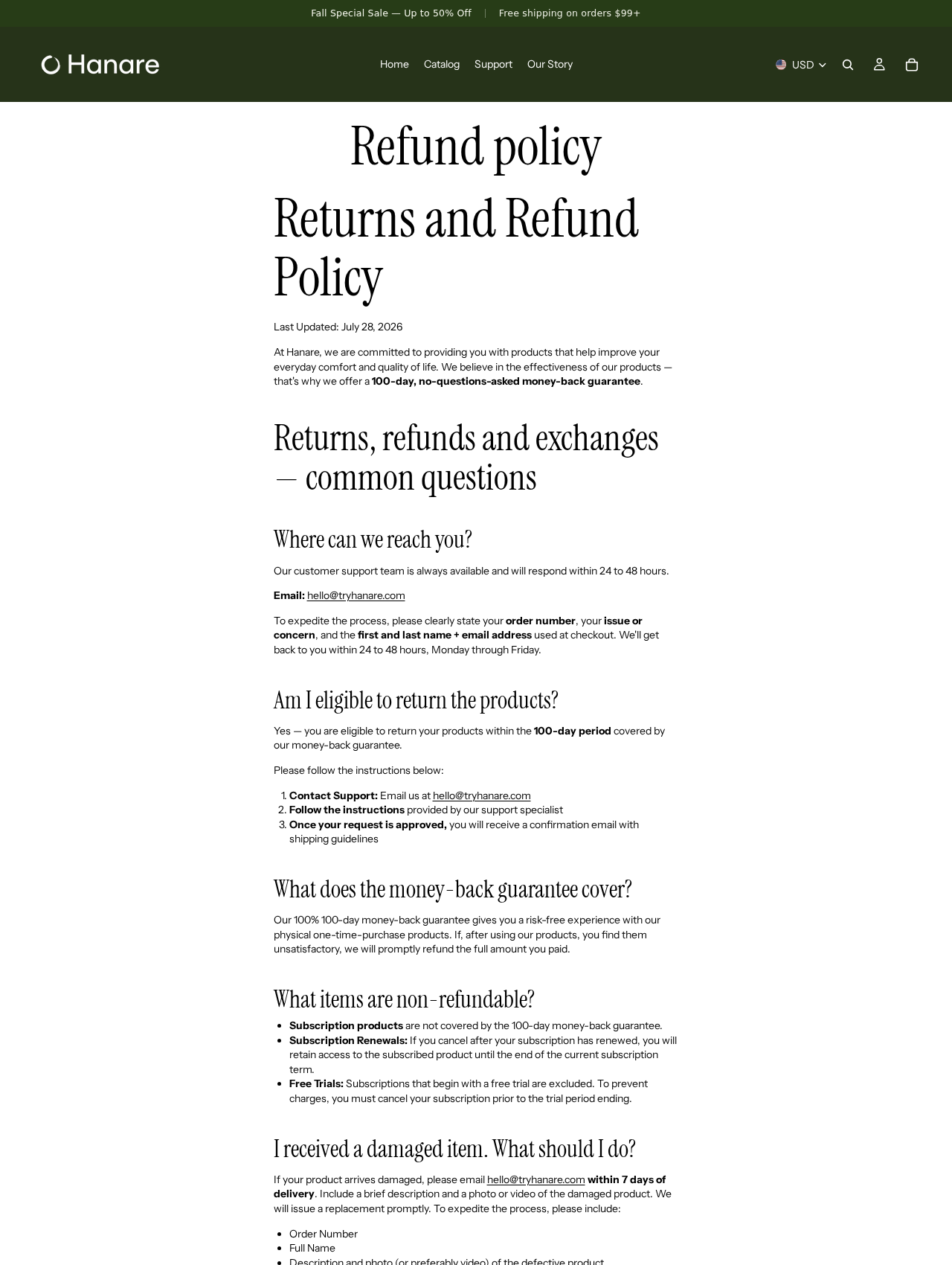
The current refund page gives eligible physical one-time purchases a 100-day satisfaction period after use. It promises seller-paid return shipping, full refunds, and no restocking fee.
You are not being told to keep bedding sealed or fund an overseas return. Keep those favorable terms with your order in case you need them.
Contact support first and follow the approved instructions. Keep the purchase documents and the version of the guarantee supplied with your order.
A workable return promise can reduce financial risk. It cannot turn unsupported medical advertising into evidence that the product treats a condition.
Company, Support, and Return Checks
Keep the transaction identity with the bedding order
The storefront uses the Hanare brand. Preserve the legal or billing name on your receipt rather than assuming the display name identifies every party handling payment.
If you need a bank dispute, the amount, transaction date, and descriptor help identify the payment. A screenshot of the logo alone is less useful.
Keep the sewn-in labels and product information. If the construction differs from the description, those details help identify exactly what was delivered.
The Wyoming address is not a returns instruction
The footer lists 30 N Gould St #60016, Sheridan, Wyoming 82801. It explicitly says that location is not the return address.
Do not send a bulky topper there without authorization. Request the seller-funded return described in the policy and confirm which items must be included.
An address can serve business correspondence without being a showroom, factory, or return warehouse. Those functions should not be treated as interchangeable.
Use the published support mailbox and retain the reply
The contact route is hello@tryhanare.com. The policy asks for an order number, explanation, and the name and email used at checkout.
It describes a response within 24 to 48 hours on weekdays. Other parts of the site advertise broader support hours.
No support test was conducted. If an answer is delayed, follow up in the same thread and keep evidence that your request arrived within the return period.
A bulky return needs a practical route
The policy says the seller pays return shipping. Ask whether that means a label, arranged collection, or reimbursement, and which carrier accepts an expanded topper.
Check packaging requirements if you cannot recreate the original vacuum wrapping. A prepaid carrier label does not necessarily supply a box large enough for the return.
Ask which labels and accessories should accompany it. Written instructions let you use the promised trial without guessing or paying unnecessary postage.
Comfort Claims Versus Medical Claims
A softer or cooler-feeling surface is a reasonable product characteristic to investigate. A promise to fix the underlying cause of a health problem is different.
For cooling, ask about the cover fabric, filling, washability, and what any test actually measured. A cool-looking photograph does not measure overnight temperature.
For support, consider your current mattress and whether its shape or firmness is the real problem. Extra cushioning is not always extra structural support.
For persistent night sweats, new symptoms, or ongoing pain, speak to a qualified clinician. Do not let a product trial postpone appropriate care.
Menopause can affect sleep, but a bedding purchase does not assess or treat every reason for disrupted sleep. Keep symptom management separate from shopping.
Similarly, a reviewer reporting less discomfort cannot establish prevention of arthritis or a change in life expectancy. Those are much broader outcomes.
The product gallery displays multiple certification-style logos. Their appearance is not treated here as independent verification that each applies to this finished topper.
If a certification matters to your decision, request a matching model-specific certificate and check it with the issuer. Do not rely on the graphic alone.
What to Do If You Ordered a Hanare Topper
- Save the order and the promises you relied on.
Keep the receipt, selected bed size, amount, optional warranty choice, and the advertised trial. Save relevant product claims before the page changes.
Write down whether your expectation was ordinary comfort or a particular health benefit. That helps explain any later dissatisfaction accurately.
- Check the delivered item promptly.
Compare its dimensions, labels, contents, and condition with the listing. Photograph damage before using or washing the topper.
The policy asks customers to report damaged arrivals within seven days. Notify support promptly rather than waiting until the satisfaction period is nearly over.
- Do not change medical treatment to test a testimonial.
Continue the care plan agreed with your clinician. If symptoms persist or worsen, seek appropriate advice rather than treating the topper as a diagnosis.
You do not need to tolerate worsening discomfort just because the page invites a lengthy trial. Stop using an unsuitable sleeping setup.
- Request the published satisfaction remedy if needed.
Email hello@tryhanare.com with the order number and reason. Refer to the 100-day protection for eligible physical one-time purchases.
Ask for confirmation of the deadline, refund amount, and how the seller will pay return shipping. Keep the answer rather than relying on a general chat assurance.
- Return only through the approved route.
Do not mail the topper to the Wyoming correspondence address. Follow the approved return instructions and retain tracking and the carrier acceptance receipt.
Ask about packaging if the expanded item no longer fits its original box. Resolve those logistics before paying for postage yourself.
- Escalate a genuine unresolved purchase dispute.
If the merchant refuses the applicable guarantee, give your payment provider the purchase terms, correspondence, and return evidence. Ask about its deadline and required documents.
A dispute is not guaranteed to succeed. Describe what happened precisely, including any remedy already offered, rather than making claims you cannot support.
Frequently Asked Questions
Is the Hanare mattress topper a confirmed scam?
The evidence concerns an operating bedding offer with overextended health marketing. It does not establish that every order is fraudulent or that no product is delivered.
The firm warning is against purchasing it as a clinically proven medical solution.
Does the Lancet study prove Hanare works?
No. The cited study compared complete firm and medium-firm mattresses in people with chronic low-back pain. It did not test this topper.
It cannot validate all the separate pain, sweating, or longevity implications in the sales story.
Can it help menopause-related night sweats?
A bedding surface may affect comfort, but the inspected evidence does not establish Hanare as a menopause treatment. Persistent symptoms deserve appropriate clinical advice.
Judge a cooling claim by relevant finished-product testing, not national comparisons or a testimonial about stopping treatment.
Can I return a used topper?
The current policy describes a 100-day satisfaction guarantee after use for eligible one-time physical purchases, with seller-paid return shipping and no restocking fee.
Contact support for approval and keep the terms attached to your own order.
Can the topper fix a sagging mattress?
The seller says its layer works over old or uneven mattresses. That does not establish that added cushioning repairs damaged support underneath.
Inspect the mattress itself before paying for another layer. Comfort at the surface and structural support are different problems.
Should I buy an extra warranty to use the trial?
The product advertises its 100-day guarantee separately from the optional extended warranty. Do not assume the additional payment is required for the standard satisfaction process.
Ask what each protection covers before accepting the add-on.
The Bottom Line
Do not buy Hanare as a proven answer to chronic pain or menopause symptoms. A real mattress study and an attractive sleep story do not validate this topper.
If you already bought it and are unhappy, use the advertised 100-day return process. Keep any health concerns with your clinician, not inside a bedding sales funnel.

Join the discussion
0 commentsShare your experience or ask a question about this article.
Discussion
Start the conversation
Have a question or something useful to share? Add the first comment.