

If you’ve been scrolling through social media or wellness blogs lately, you might have seen glowing ads for the HiZoo Neck & Shoulder Massager. With sleek product photography and bold promises like “lymphatic drainage,” “youthful appearance,” and “professional-grade massage experience,” it’s easy to get swept up in the hype.
But is it all just clever marketing? Or is this massager truly worth its steep $149 price tag? In this comprehensive, in-depth review, we peel back the layers to determine if the HiZoo Massager is legit or if it’s another overpriced, overhyped gadget built on marketing fluff.
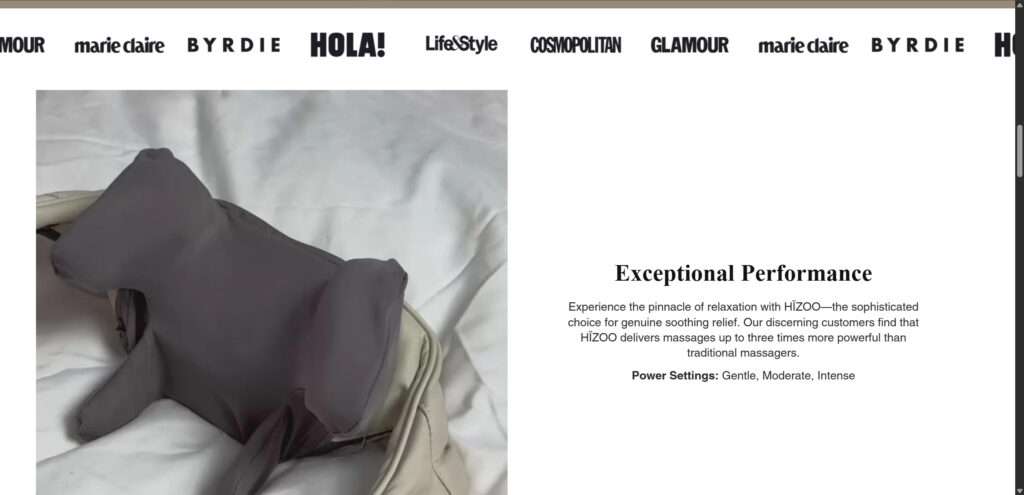
What the HiZoo Massager Claims to Offer
The product page is filled with compelling language. HiZoo promises:
- Rhythmic rollers that mimic a real hand massage
- Muscle tension relief
- Improved blood circulation
- Lymphatic drainage
- A more defined, youthful appearance
- Better sleep
- Multiple heat and intensity levels
- USB-C recharging and cordless operation
Sounds like the ultimate relaxation tool, right? Let’s examine the truth behind these claims.
HiZoo Massager Red Flags
Red Flag #1: Medical Claims Without Medical Backing
HiZoo’s claim that using the massager for just 10 minutes a day can promote lymphatic drainage and reduce puffiness should raise immediate skepticism. Lymphatic drainage is a legitimate medical procedure often performed by licensed professionals using specialized techniques. The notion that a low-powered, wearable device can deliver the same results lacks any substantial clinical backing.
Fact check:
- No peer-reviewed studies support that casual home-use devices like this significantly affect lymphatic flow.
- Claims of improved facial structure, reduced puffiness, or a “youthful appearance” through such massagers are anecdotal at best.
If you’re hoping for transformative beauty results, you may be disappointed.
Red Flag #2: Materials & Tech Exaggerations
HiZoo claims that its massager is built with premium components like “titanium plating” and “stainless steel gears.” But a close look at teardown reviews and comparisons shows the internals are mostly standard molded plastic.
These types of materials are used in bulk-manufactured, low-cost massage devices for practical reasons: they keep the weight and production cost down. The use of “titanium” is likely exaggerated for marketing purposes—there is no real evidence of such material being used.
Red Flag #3: Identical Product Sells for $10 on Alibaba
Here’s where things get even more revealing. The exact same design—identical buttons, shape, padding, and color scheme—can be found on wholesale platforms like Alibaba or AliExpress for as low as $6.40 to $14.50.
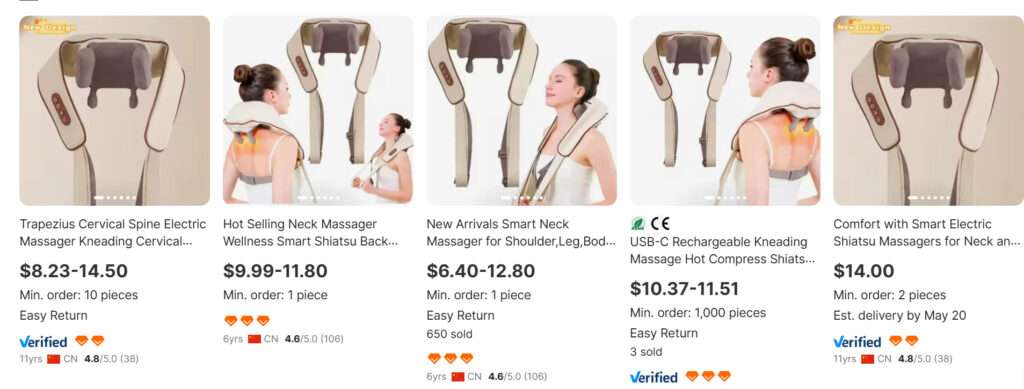
This raises a huge red flag. Why is HiZoo charging $149 for a product that costs less than $15 to manufacture and ship wholesale?
The likely answer: drop shipping.
Drop shipping is a business model where sellers list and market a product without keeping it in stock. When a customer places an order, it is fulfilled directly by a third-party manufacturer, often overseas. In this case, HiZoo appears to be drop shipping massagers from a Chinese supplier, branding them under a “luxury wellness” label, and marking up the price nearly 1000%.
Red Flag #4: Suspiciously Glowing Reviews
HiZoo’s website and Trustpilot page are filled with 5-star reviews. But a closer look at the reviews raises several suspicions:
- Most reviewers have only one review ever posted.
- There’s very little detail in the reviews; generic phrases like “works great!” or “love it!” dominate.
- None of the reviews discuss shipping delays, packaging quality, or customer support experiences.
These are all hallmarks of fabricated or incentivized reviews. Genuine reviewers typically share detailed feedback, mention pros and cons, and sometimes post follow-up comments. The lack of these details casts doubt on the legitimacy of HiZoo’s social proof.
Real User Experiences
Unlike curated testimonials on HiZoo’s website, here’s what actual users are saying:
- “I paid $149 and received a massager with no branding and no user manual.”
- “It stopped working after a week, and I couldn’t get a refund.”
- “Found the exact same model on AliExpress for $12, feeling duped.”
- “Customer service ignored my refund requests.”
Clearly, the real-life experience doesn’t always match the polished marketing on HiZoo’s homepage.
Lack of Refunds and Poor Customer Service
Several users have reported that once they receive the product, getting a refund or replacement is nearly impossible. HiZoo does not offer a satisfaction guarantee or a transparent return policy.
Worse, some buyers claim their emails were ignored or auto-replied without follow-up.
Without a responsive customer service team or a verified returns policy, the risk of losing your money becomes very real.
The Psychology Behind the Scam
This isn’t a new trick. Many e-commerce websites prey on the psychology of perceived luxury and wellness. Here’s how:
- High prices = higher perceived quality
- Scarcity marketing (“Only 9 left!”)
- Pseudoscientific buzzwords (“lymphatic drainage,” “detox,” “facial sculpting”)
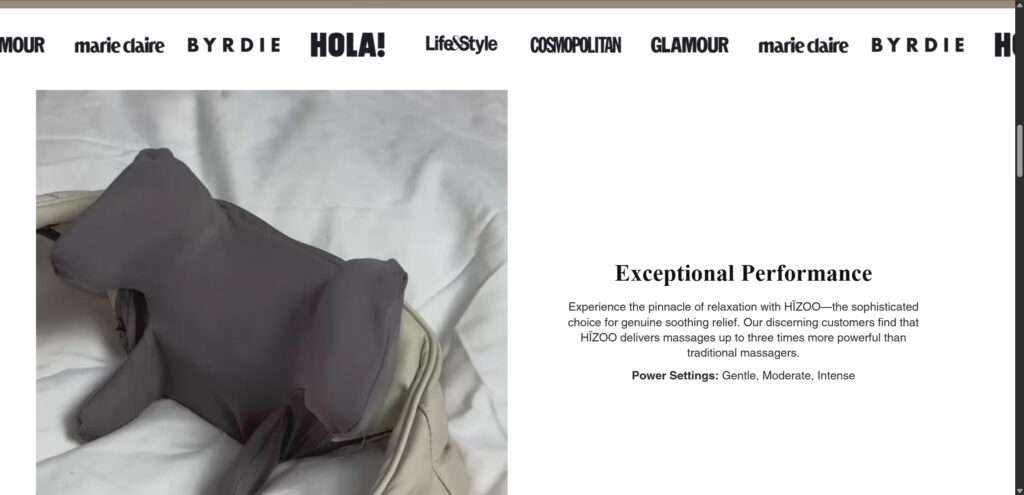
- Influencer validation (unverified “as seen in” logos)
These tactics create a sense of urgency and trust that isn’t necessarily earned.
Is It Ever Worth Buying?
In a word? Maybe. If you:
- Understand you’re buying a rebranded $10 device
- Don’t mind the huge markup
- Are okay with limited or no support
- Want a basic massage experience (not medical-grade)
…then sure, you could find some value. But you can get the same unit for 90% less on a trusted B2B platform.
How to Protect Yourself from Dropshipping Scams
If this HiZoo review has made you cautious (and it should), here are some tips:
- Reverse image search product photos to spot duplicates.
- Search the product name on Alibaba or AliExpress to check the original cost.
- Check refund policies and shipping locations. If it ships from China with no US-based office or warehouse, proceed with caution.
- Read off-platform reviews, especially on Reddit and other forums.
- Trust your instincts. If something feels fishy, it probably is.
Final Verdict: Is the HiZoo Massager a Scam?
Let’s be clear: the HiZoo Neck & Shoulder Massager is a real product, not a complete scam. It does exist, and some people do receive it and find it usable.
But is it worth $149?
Absolutely not.
With:
- Dubious health claims
- Suspect materials
- Nearly identical $10 clones online
- Poor refund and support policies
- Likely drop shipping tactics
…it’s safe to say HiZoo is not offering what it claims. It’s not illegal, but it’s certainly ethically questionable and massively overpriced.
What Should You Do Instead?
If you’re genuinely interested in neck and shoulder relief, here are better options:
- Buy direct from Alibaba or AliExpress if you’re comfortable with that route.
- Choose Amazon massagers with thousands of verified reviews and a clear return policy.
- Consult a physical therapist for tools that actually help your unique needs.
Final Thoughts: Do Your Homework Before You Click “Buy”
In a world flooded with beautifully branded but poorly supported gadgets, it’s essential to pause and investigate before making impulse purchases. The HiZoo Neck & Shoulder Massager is a cautionary tale of modern wellness marketing: slick branding over substance, high price over high performance.
Before spending $149 on promises, remember that a product’s true value comes from performance, support, and honesty. And in HiZoo’s case, all three are sorely lacking.
Stay skeptical. Stay informed.
Your wallet will thank you.

Join the discussion
0 commentsShare your experience or ask a question about this article.
Discussion
Start the conversation
Have a question or something useful to share? Add the first comment.