

If you’ve come across the Minceetbien Silicone Reline Denture Set online, you’ve probably been tempted by the flashy deals, glowing testimonials, and the promise of a perfect smile without a trip to the dentist. But as more and more customer reviews surface, a very different picture is emerging — one that suggests the product may be part of a widespread online scam. In this article, we take a deep dive into the Minceetbien Denture Set, examining what it claims to offer, how the scam works, and what you can do if you’ve already been affected. Keep reading — you won’t want to miss this.
Scam Overview
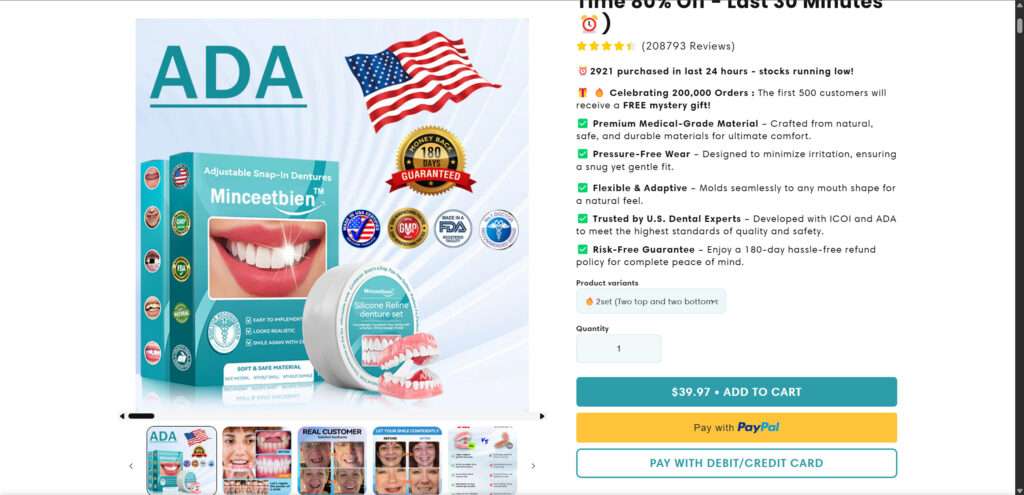
The Minceetbien Silicone Reline Denture Set claims to be a high-quality, cost-effective solution for people in need of dentures. With promises of “premium medical-grade materials,” “instant perfect smile,” and endorsements by U.S. dental experts, the product is marketed as a revolutionary dental breakthrough. The promotional content is professionally designed, featuring glowing reviews and dramatic before-and-after images.
But beyond the surface, things don’t add up. Here’s a detailed breakdown of the discrepancies and red flags:
False Medical Claims
The website proudly states that the product is developed with ADA (American Dental Association) and ICOI (International Congress of Oral Implantologists) standards. However, neither organization officially endorses or recognizes Minceetbien. There’s no verifiable certification number or documentation to support these claims.
Misleading Product Quality
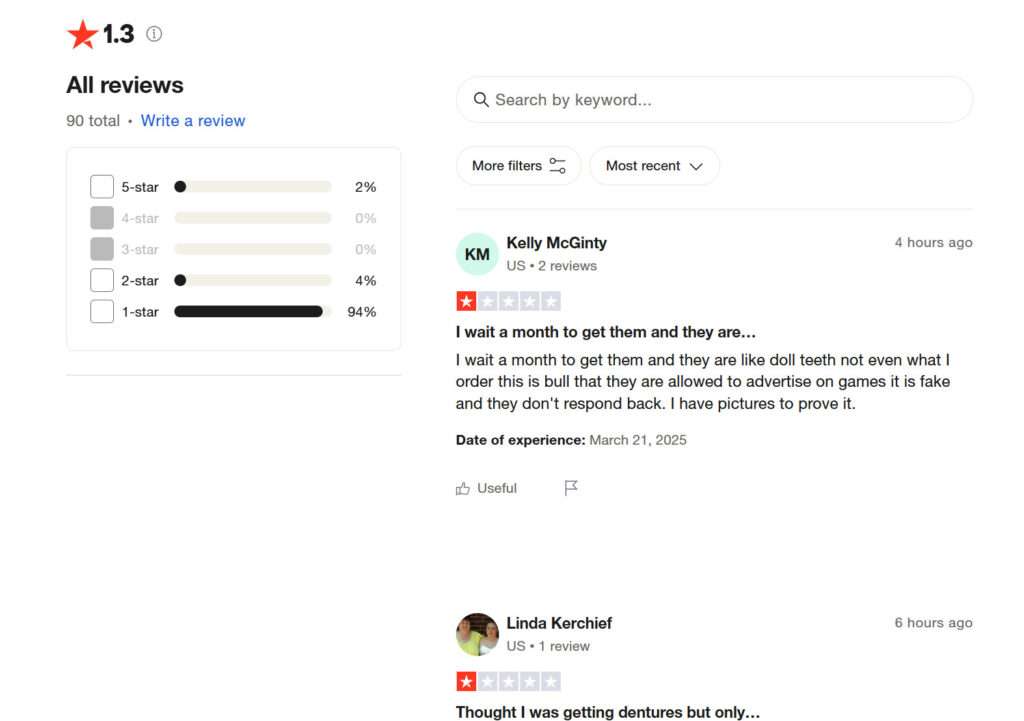
Buyers expect a durable, custom-fit silicone denture product. What they receive instead is often described as flimsy, plastic-like material that looks nothing like the product photos. Multiple customers compare the product to Halloween costume teeth — cheap, fake, and unwearable.
Duplicate Listings Across Brands
The exact same product, images, and descriptions have been spotted under different brand names such as Bikenda, Parowu, and AEXZR on other websites like Amazon and eBay. This duplication suggests a mass-produced item repackaged under different names to avoid accountability.
Dubious Pricing Tactics
The site advertises the denture set at a steep discount — 80% off the “original” price of $199, selling for just $39.97. However, customers report being charged as much as $59 or seeing additional unauthorized charges on their credit cards. The payment process lacks transparency, with some transactions processed by third-party overseas vendors.
Fake Scarcity & Urgency
Marketing tactics include countdown timers, phrases like “Only 30 minutes left!” and “Over 200,000 orders!” These psychological tricks create a false sense of urgency that pressures consumers into impulsive purchases without researching the product.
Fabricated Reviews
The testimonials on the product page appear polished and idealized. Some are suspected to be AI-generated or copied from unrelated products. Meanwhile, independent review platforms like Trustpilot tell a much darker story, filled with negative experiences and allegations of scam behavior.
No Real Contact Info or Support
Attempts to reach Minceetbien’s customer support often go unanswered. The website usually lacks a physical address, legitimate customer service number, or any credible contact details. Even the “money-back guarantee” is virtually unenforceable.
Trustpilot and Other Review Platforms
As of this writing, the product has 90 reviews on Trustpilot — and most of them are negative. Users report:
- Receiving completely different products from what was advertised
- Poor fit and extremely low quality
- Inability to reach customer service
- Denied or ignored refund requests
- Feeling misled and calling it outright fraud
How the Scam Works
Here’s a step-by-step breakdown of how the Minceetbien scam operates:
Step 1: Catchy Ads and Emotional Appeal
The process begins with well-crafted ads that tug on emotions — showcasing elderly individuals regaining confidence or people overcoming dental struggles. These ads run on Facebook, Instagram, TikTok, and sometimes even YouTube. The copy is persuasive, with phrases like “regain your smile,” “feel confident again,” and “risk-free purchase.”
Step 2: Manipulative Website Design
When you click the ad, you’re taken to a visually appealing website filled with trust symbols (like ADA, FDA, and “Doctor Recommended” badges), countdown timers, and stock photos of smiling people. It’s designed to look legitimate and medical-grade. There’s even mention of U.S. patents and guarantees of authenticity.
Step 3: The Bait and Switch
You place an order thinking you’re getting a professional-grade product for under $40. Instead, you receive something that resembles dollar-store plastic. Many buyers claim the item is unusable — it either doesn’t fit or falls apart within hours. Some even say they didn’t receive anything at all.
Step 4: Mysterious Billing Practices
Even though you expect to be charged $39.97, your bank statement might show a different amount, often slightly higher. Some victims report multiple charges or hidden shipping and handling fees. The company may use ambiguous names on billing to prevent chargebacks or disputes.
Step 5: Ghosted by Customer Service
After realizing the product is a scam, customers attempt to contact the company using the details provided. Emails go unanswered. The “support chat” never replies. Phone numbers, if listed, are either disconnected or looped to voicemail. There’s no clear return address or process to initiate refunds.
Step 6: The Refund Runaround
Even those who manage to reach a representative are often given the runaround. The company might ask for photos, delay responses, or offer partial refunds only if the product is returned (often at your own cost to a vague address in China). Despite a so-called “180-day money-back guarantee,” very few have seen their money returned.
Step 7: Duplicate Brand Resurgence
Once the scam gains negative publicity under one name (e.g., Minceetbien), the same exact product is rebranded and relaunched under a new name, complete with fresh testimonials and new ads. The cycle continues, trapping new victims.
What to Do If You’ve Fallen Victim to the Minceetbien Scam
If you suspect you’ve been scammed by Minceetbien or a similar product, follow these steps immediately:
1. Dispute the Charge with Your Bank or Card Provider
Most credit cards and banks offer fraud protection. File a dispute and provide screenshots of the website, your receipt, and photos of what you received (or didn’t receive). The sooner you act, the better your chances of recovering your money.
2. Report the Scam to Authorities
Submit a report to consumer protection agencies like:
These organizations track scams and may take action if enough complaints are filed.
3. Leave Public Reviews
Help others avoid the same trap by posting your experience on Trustpilot, SiteJabber, Reddit, or Facebook groups. Use relevant keywords like “Minceetbien Denture Scam” to help the content rank in search engines.
4. Monitor Your Bank Account for Fraud
Keep an eye on your account for unusual charges. If you used the same card on other sites, consider requesting a replacement card and updating your information securely.
5. Warn Your Network
Share your story with friends, family, and on social media. Awareness is key — someone you know may be considering the same product.
6. Use Scam Reporting Tools
Online platforms like ScamAdviser and Scamwatch allow you to report suspicious websites. This helps flag and potentially shut down fraudulent sellers.
FAQ: Minceetbien Denture Set Scam
What is the Minceetbien Silicone Reline Denture Set?
The Minceetbien Silicone Reline Denture Set is marketed as an affordable, high-quality dental solution for people who wear dentures. It claims to offer a flexible, medical-grade silicone fit that mimics professional dental work, all without needing a dentist visit.
Is the Minceetbien Denture Set a scam?
Based on customer reports and investigations, yes. Many buyers have received products that do not match the description or images, experienced unauthorized charges, and struggled to get refunds or support. The product is widely considered a scam.
What makes this a scam and not just a bad product?
This goes beyond customer dissatisfaction. The scam involves misleading marketing, fake endorsements, deceptive pricing, reused product images from other brands, and systematically denying refunds. These are hallmarks of a fraudulent scheme, not just poor product quality.
Who is behind the Minceetbien product?
The actual company behind Minceetbien remains unclear, with no verified business address, contact number, or legitimate ownership details publicly available. The brand often disappears or rebrands once too many complaints arise.
How do people fall for the scam?
Buyers are drawn in by emotional marketing, limited-time offers, steep discounts, and fake reviews. The product page is designed to look professional and trustworthy, often including fake medical seals and certifications to create a false sense of legitimacy.
What should I do if I already purchased this product?
If you’ve bought the product and feel you were scammed, you should immediately contact your bank or credit card company to dispute the charge. You should also report the incident to the FTC, BBB, and other scam-tracking platforms.
Can I get a refund from Minceetbien?
Despite advertising a 180-day refund policy, most customers report never receiving a refund. The company often ignores emails, provides no return instructions, or demands that products be returned to unverifiable addresses at the buyer’s expense.
Are there any legitimate denture reline kits online?
Yes, but it’s critical to do proper research. Look for products with verified reviews, sold by reputable companies, ideally through trusted platforms like major pharmacies or dental suppliers. Consult your dentist before purchasing any denture-related product online.
Is the product dangerous to use?
Some customers have expressed concerns about the material being poorly made or potentially unsafe. While there are no confirmed reports of serious harm, the inconsistent quality and lack of regulatory oversight make it risky to use in your mouth.
How can I protect myself from similar scams in the future?
Always verify the seller’s credibility, check for independent reviews, avoid sites with overly aggressive sales tactics, and never trust medical claims that aren’t backed by verifiable third-party certifications. Use a credit card when purchasing online for better fraud protection.
The Bottom Line
The Minceetbien Silicone Reline Denture Set may look like a miracle dental solution, but a closer look reveals a textbook example of a deceptive online scam. From fake endorsements to poor product quality and shady billing practices, the entire operation is riddled with red flags. If you’ve already fallen victim, act quickly to protect your finances and report the scam. And if you’re still considering a purchase, our advice is simple: stay far away.
Online dental products can offer convenience, but only when purchased from reputable sources. Always do your research, verify claims, and trust your instincts. If something looks too good to be true — especially at a massive discount — it probably is.

Join the discussion
0 commentsShare your experience or ask a question about this article.
Discussion
Start the conversation
Have a question or something useful to share? Add the first comment.