

If Safari is slow, keeps redirecting you to unwanted pages, or behaves unpredictably, resetting it to the default settings can often fix the issue. Resetting Safari lets you remove unwanted extensions and clear cookies and cached data that could be causing problems. These are separate actions, not a single factory-reset switch. It can also help eliminate adware or malicious scripts that may have altered your browser settings.
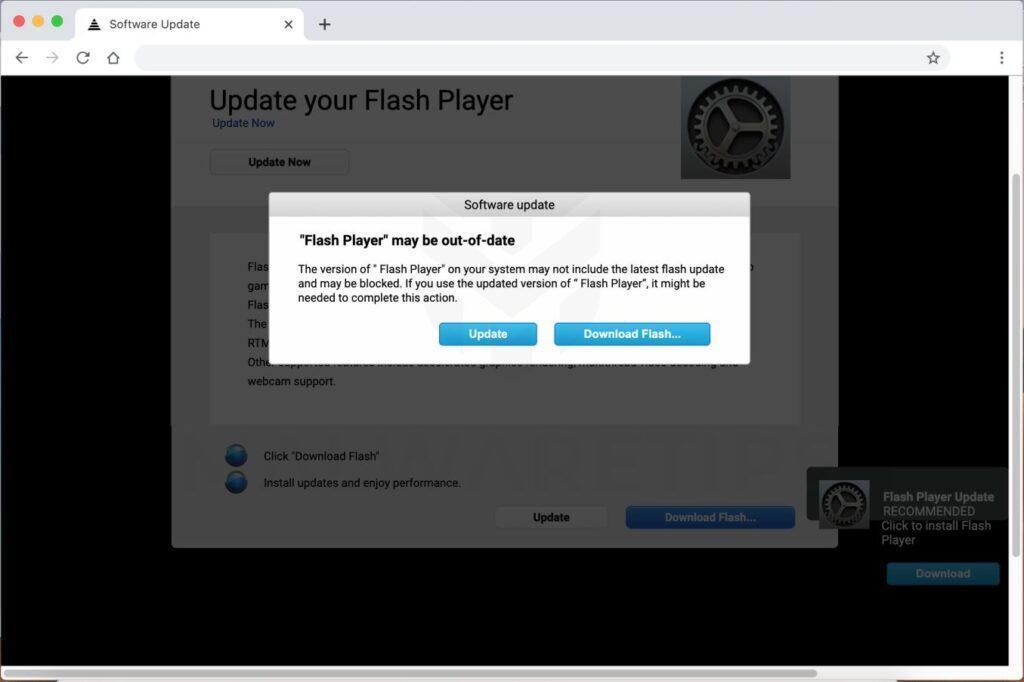
Unlike Chrome or Firefox, Safari doesn’t include a built-in “Reset” option. However, you can troubleshoot it by clearing the relevant browsing data, reviewing extensions, and checking settings. Clearing website data does not automatically uninstall extensions or reset every preference. Below, you’ll learn how to reset Safari safely on both Mac and iOS devices.
How to Reset Safari to Default Settings (Mac Guide)
Before resetting Safari, make sure to back up any important bookmarks. To do this, open Safari, click the File tab in the top menu bar, select Export Bookmarks, and save the file to your desktop or preferred location. This ensures you won’t lose your saved sites during the reset.
To troubleshoot Safari on a Mac, start with its settings. If that does not solve the problem, use the additional checks in the second tab. If you’re using Safari on an iPhone or iPad, tap the iOS tab for step-by-step instructions.
Reset Safari for Mac via Settings
-
Go to Safari’s “Settings”.
On the menu bar, click the “Safari” menu and select “Settings”.
Choose Safari → Settings from the menu bar.
-
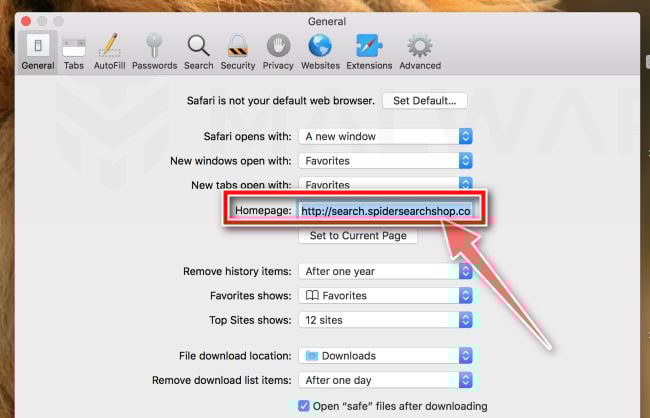
Check Homepage.
This will open a new window with your Safari preferences, opened to the “General” tab. Some browser hijackers may change your default homepage, so in the Homepage field make sure it’s a web page you want to use as your start-up page.
-
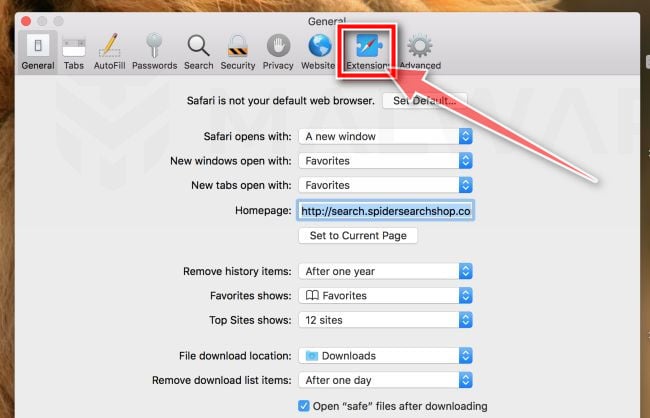
Click “Extensions”
Next, click on the “Extensions” tab.
-
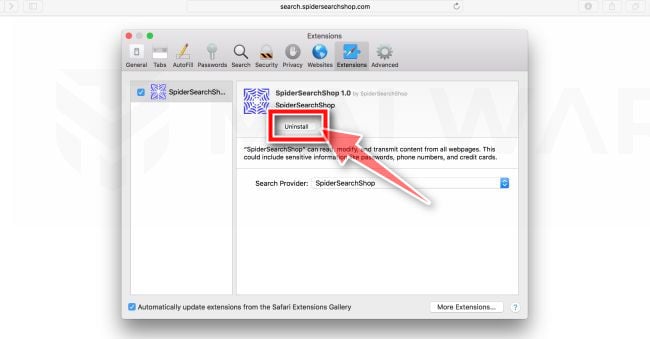
Find and uninstall malicious extensions.
The Extensions screen lists installed extensions. Select the unwanted extension and click Uninstall. Keep extensions you deliberately installed and trust. An unfamiliar name alone is not proof that an extension is malicious.
-
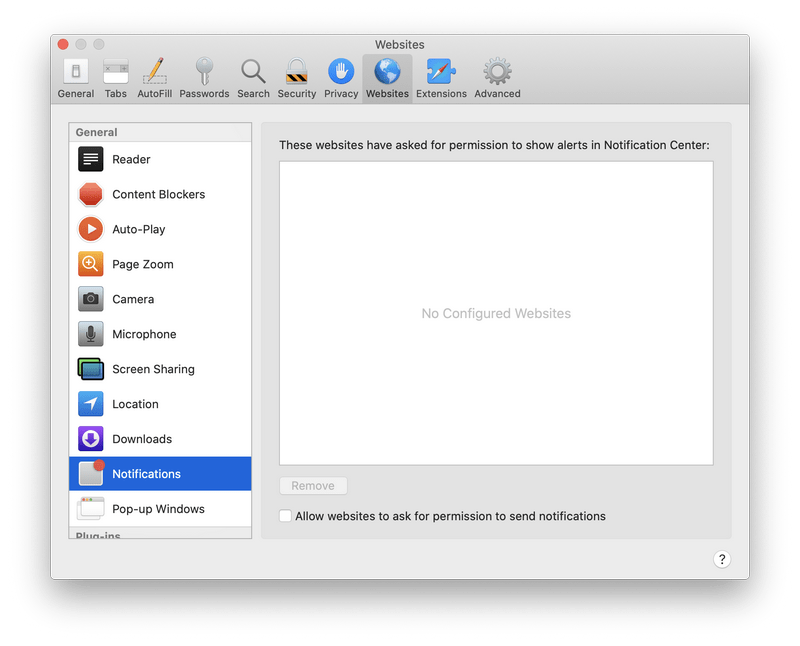
Remove spam notifications ads
Open Settings → Websites → Notifications. Set the unwanted website to Deny or remove its permission. Turning off Allow websites to ask for permission to send notifications prevents new requests; it does not revoke every existing permission.
-
Remove all data stored by websites on your computer.
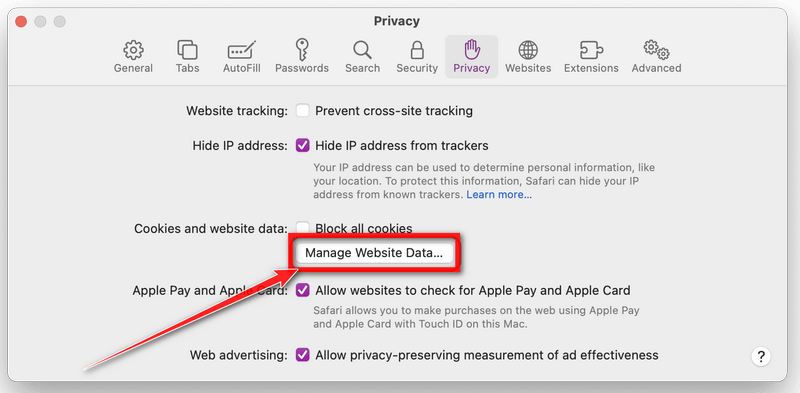
In the Safari menu, choose “Settings…”, select “Privacy” at the top of the new window that appears, and then click the “Manage Website Data” button.
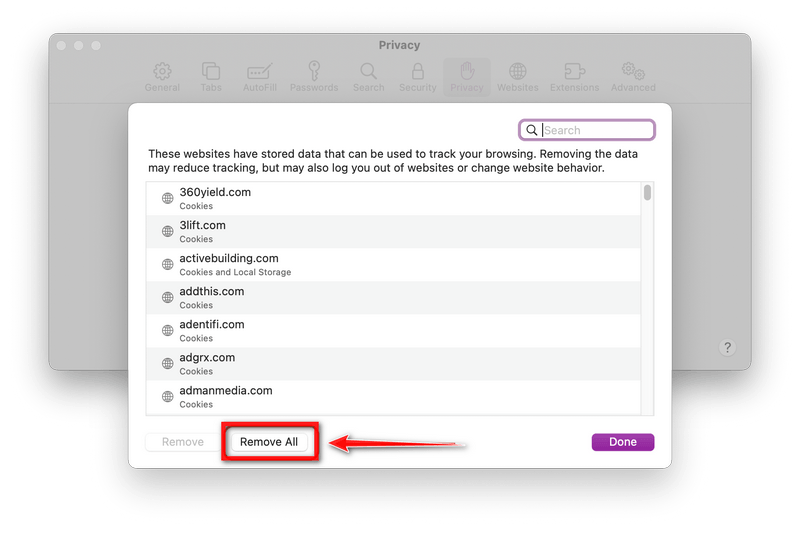
In the next dialog box, click “Remove All“. It will ask you if you are sure you want to remove all data stored by websites on your computer. Select “Remove Now” to clear data that could be used to track your browsing.
This signs you out of websites and removes local website data. If only one site is causing trouble, select that site and click Remove instead. Your saved passwords and bookmarks are separate.
-
Empty Safari Caches.
From your Safari menu bar, click Safari and select Settings, then select the Advanced tab. Enable the checkbox to “Show features for web developers (called Show Develop menu in menu bar in older versions)“.
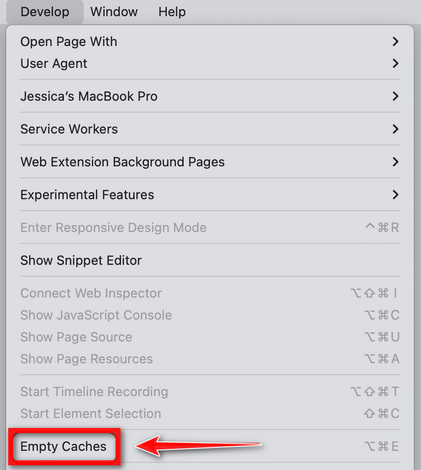
From the menu bar select Develop, then click on Empty Caches as seen in the image below.
Further Safari Troubleshooting
Quit and reopen Safari without restoring the problem tab.
Choose Safari → Quit Safari. If it will not respond, use Apple menu → Force Quit → Safari → Force Quit. Hold Shift while opening Safari again so it does not restore the previous windows.
Test extensions one at a time.
Open Safari → Settings → Extensions and turn off the listed extensions. Reopen the page. If the problem stops, enable trusted extensions one at a time to find the cause. Uninstall the unwanted one using its Uninstall button.
Remove the affected site’s data.
Open Safari → Settings → Privacy → Manage Website Data, search for the site, select it, and click Remove → Done. This signs you out of that site. Do not paste commands that delete all of your Library, Cookies, or Safari folders; they can remove personal data beyond the problem you are fixing.
Reset Safari for iOS (iPhone or iPad)
If you’re using Safari on iPhone or iPad, you can reset it using the built-in Clear History and Website Data option. This removes browsing history, cookies, and cached files, restoring Safari’s performance and privacy.
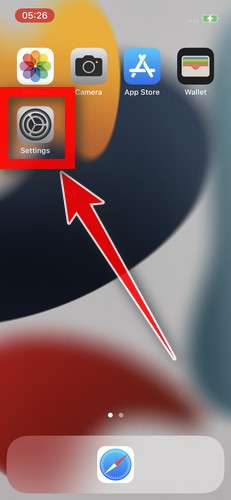
- Open the Settings app.
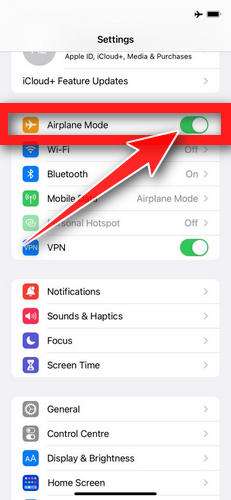
- Turn on Airplane Mode while resetting. If Wi-Fi stays connected, turn it off too. After clearing the unwanted page, turn Airplane Mode off and reconnect.
- Open Apps, then tap Safari.
- Tap Clear History and Website Data.
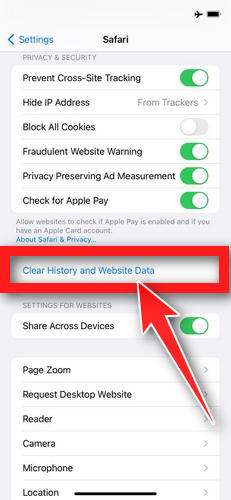
- Confirm by tapping Clear History when prompted.
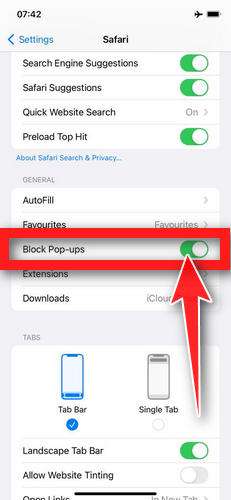
- While in Safari settings, make sure Block Pop-ups and Fraudulent Website Warning are enabled.
That’s it! Safari has now been reset to its default settings. To protect your privacy and prevent intrusive ads, consider installing an ad blocker such as AdGuard [recommended].
If Safari continues to behave abnormally after resetting, the issue may be caused by adware or unwanted software on your device. Try the following next steps:
- Run a full system scan with Malwarebytes Free.
- Ask for expert assistance in our Malware Removal Help forum.
