


Hush Bark SmartBark Collar promises a quieter home when barking has become exhausting. The sales page makes relief look like a quick equipment purchase.
Before putting an automatic device around your dog’s neck, look past that promise. What it actually delivers, and what happens if you return it, matter considerably.
Overview
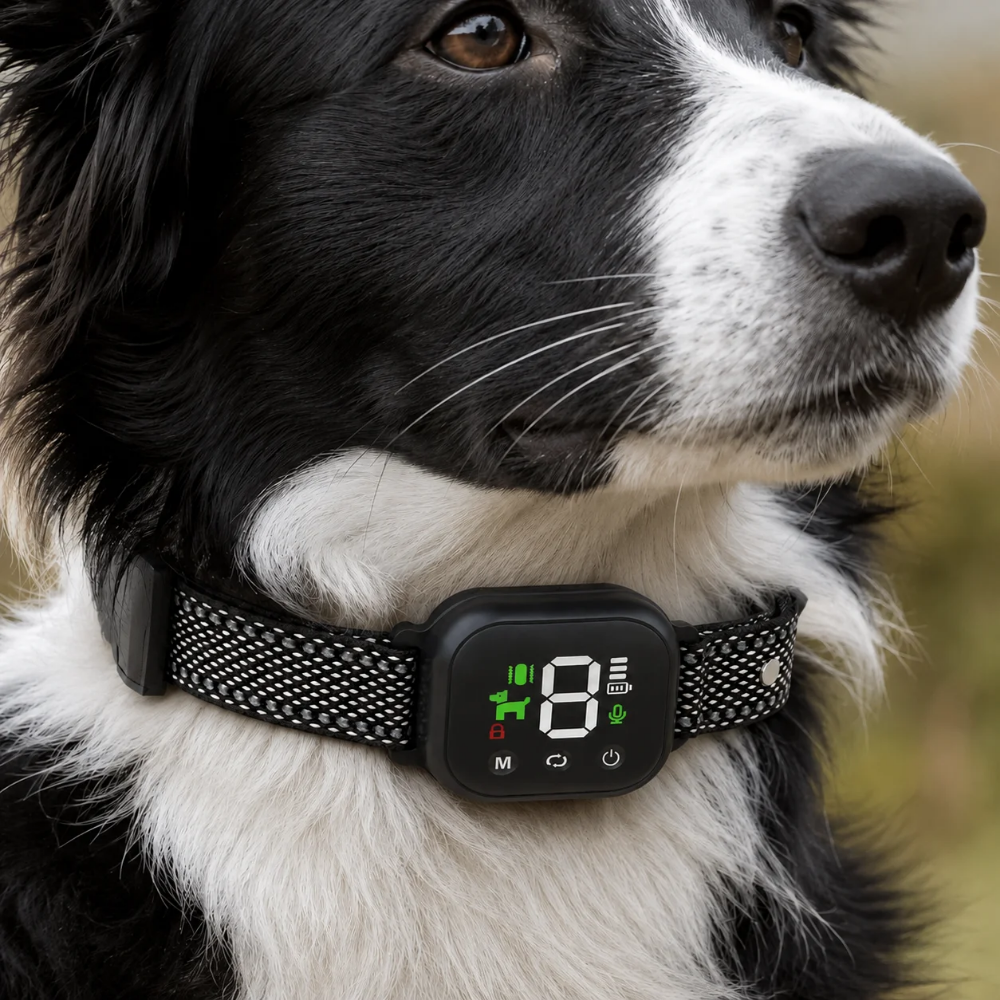
This is a wearable correction collar
The product sold through gethushbarksmartbarkcollar.com is a rechargeable collar with a digital display. Its own FAQ describes automatic vibration and shock correction.
That identifies the device more clearly than the word smart. It responds to barking with an unpleasant or interrupting consequence selected through its settings.
It is not the handheld ultrasonic product sold under a similar HushBark name, nor a phone application. Reviews of those products do not validate this collar.
The purchase page steers toward several collars
The captured checkout highlights a three-collar Recommended Deal. A single-collar option appears separately, alongside lower unit prices for larger quantities.
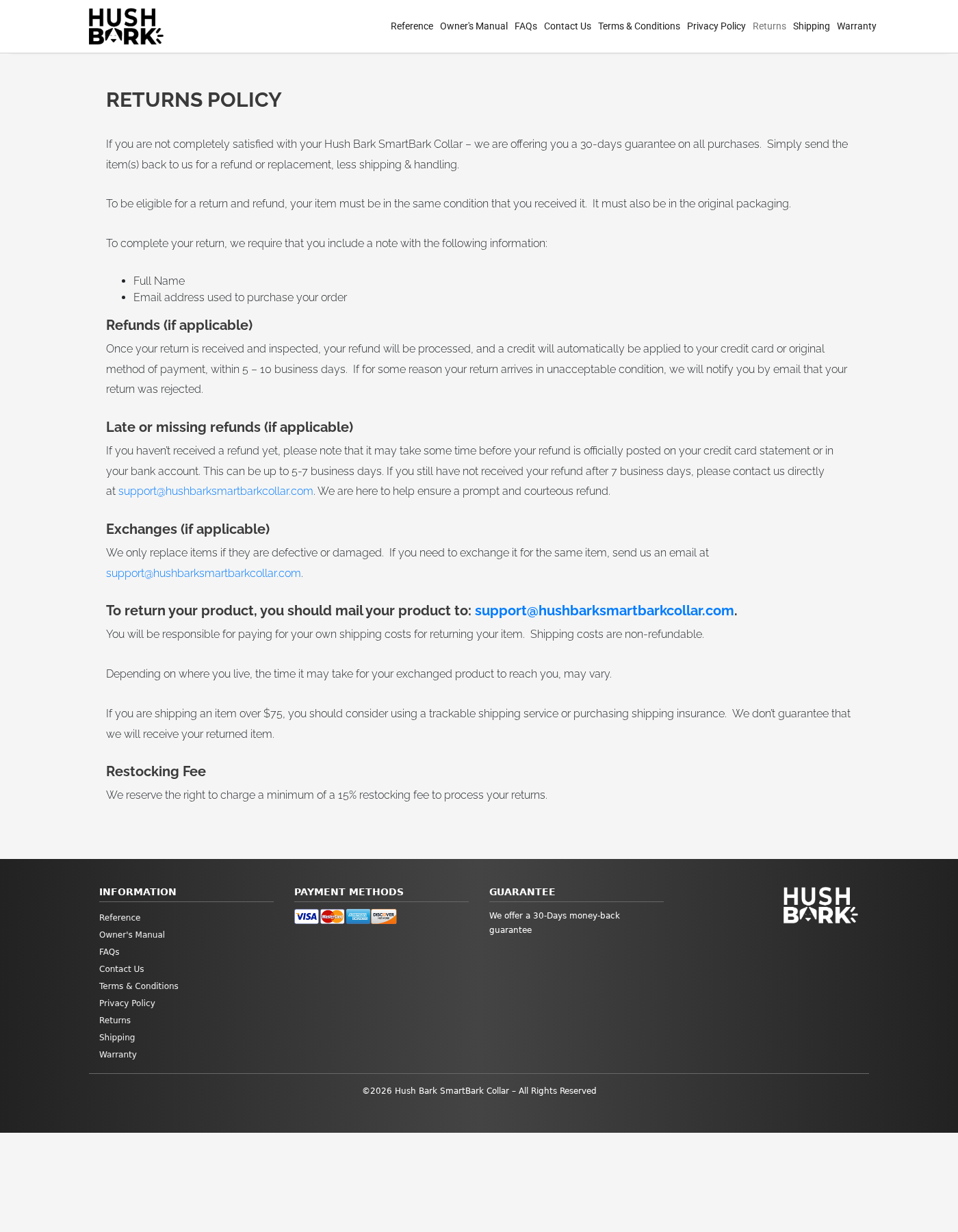
The guarantee is also less generous than a simple money-back headline suggests. Return postage is the buyer’s responsibility, and a restocking charge may apply.
- Shock is a documented function, not merely an assumption about the contact points.
- The seller’s technology names do not agree within its FAQ.
- The return policy reserves a minimum 15% restocking fee.
- The published return-address line supplies an email address instead of a postal destination.
Do not buy this as a harmless shortcut
A correction collar can deliver a stimulus without resolving why a dog is barking. An automatic response is not the same as an appropriate training plan.
This offer does not justify a purchase recommendation. Its welfare reassurance, incomplete seller accountability, and return deductions deserve attention before any discount.
What Hush Bark’s Own FAQ Reveals
The question about AcoustiNode technology receives an answer naming DecibelCore instead. That inconsistency matters because the named system is supposed to explain reliable bark detection.
The answer describes sound detection followed by automatic vibration and shock. It does not supply independent testing showing how often a correction is triggered incorrectly.
Claims about sensitivity controls are not a substitute for those results. A setting changes operation; it does not demonstrate that the device interprets a dog’s situation correctly.
The FAQ also says sound, vibration, and shock levels can be adjusted independently. Buyers should not confuse the availability of adjustments with proof of harmlessness.
Static correction is an electrical stimulus, not a special category of gentle sound. The site’s safety wording should not obscure that distinction.
The seller excludes elderly, pregnant, aggressive, easily frightened, and unhealthy dogs. It also gives age and weight thresholds, including a minimum of eight pounds.
Those exclusions contradict the impression that a universal smart device can simply solve a household barking problem. The dog’s health and reason for barking remain central.
The page suggests limiting wear to six to twelve hours with breaks and skin checks. That is the seller’s instruction, not an independent welfare endorsement.
A displayed battery indicator or a reassuring photograph cannot answer whether a particular dog should experience automatic corrections when left alone.
What Veterinary Behavior Guidance Says
The American Veterinary Society of Animal Behavior’s current position recommends reward-based training and rejects aversive methods, including electronic collars.
Its guidance is relevant because this collar expressly includes shock. The seller’s broad safety reassurance should not be mistaken for a veterinary consensus.
Barking can accompany fear, frustration, environmental triggers, separation-related distress, or a medical problem. Quieting the sound alone does not identify which issue needs attention.
For example, a dog distressed by being alone may need a carefully planned behavior program. Punishing the noise is not equivalent to making that dog comfortable.
Sudden changes in behavior deserve veterinary attention, particularly when pain or illness could be involved. A collar should not delay that assessment.
Practical first steps can include blocking a triggering view, changing the delivery routine, providing suitable enrichment, and rewarding an alternative behavior.
The appropriate combination depends on the dog and situation. A qualified reward-based professional can help identify the trigger and build a plan around it.
This is not a claim that the Hush Bark unit has been clinically tested here or caused a documented injury. It is a reason to reject unsupported harmlessness.
How the Hush Bark Checkout Draws You In
Step 1: A household problem becomes a limited sale
The page promises peace while surrounding the product with seasonal-sale graphics, an expiring discount, and a money-back badge.
A further coupon popup says only five lucky visitors receive the promotion each week. That statement is part of the seller’s sales presentation, not independent scarcity evidence.
Feeling desperate for a quieter evening can make those prompts unusually effective. Pause the purchase decision before they replace questions about welfare and suitability.
Step 2: The recommended package contains three collars
The initial cards display three collars at $53.32 each, compared with $66.66 for one. Larger packages reduce the displayed per-collar price further.
Three collars are not a single $53.32 purchase. Promotions and additional coupons can change the figures, so check the quantity and settled order total together.
Buying extras for friends or multiple dogs does not reduce the need to assess each animal. A bulk discount cannot establish whether correction is appropriate.
Step 3: Extras sit within the payment flow
The order form includes a $9.95 three-year warranty offer and $3.50 package protection. Review their selection and coverage rather than assuming they are necessary.
Optional protection does not prove a manufacturer warranty exists without it. Ask what rights and remedies the basic purchase includes before paying for additional cover.
The payment button is not a way to request more information. Do not enter card details merely to discover the final conditions.
Step 4: A disappointed buyer meets the deductions
The returns page excludes shipping and handling, makes the customer pay return postage, and reserves a restocking fee of at least 15%.
The item must retain its original packaging and meet the stated condition requirements. A trial that involves fitting and using the collar needs explicit clarification.
Keep the original guarantee and the narrower conditions together. They explain why a reassuring badge is not enough to evaluate the likely refund.
Collar and checkout warning
This collar’s FAQ explicitly includes shock. Do not mistake smart detection or adjustable settings for proof that automatic correction is harmless.
The highlighted package contains three collars. Returns can cost postage, shipping deductions, and a minimum 15% restocking fee.
Seller Identity, Delivery, and Return Accountability
The product name is not a clearly identified legal operator
The terms describe the website as operated by Hush Bark SmartBark Collar. That repeats the product’s trading name rather than clearly naming an incorporated seller.
A consumer needs to know who takes payment and owes the refund. Record the legal merchant and transaction descriptor from your own confirmation.
A company found through a similar name is not automatically responsible. Match the order’s domain, contact information, and payment details before making that connection.
A warehouse claim does not locate the manufacturer
The shipping page says orders leave a New Jersey warehouse. Its processing and delivery claims describe distribution, not where the collar or battery was manufactured.
It gives a five-to-seven-day delivery estimate, while the FAQ gives five to ten business days. Ask which schedule applies to your destination and order.
Neither estimate turns the warehouse into an authorized return depot. The returns page’s address line actually contains the support email, leaving a physical destination unspecified.
Support details are published, but results require evidence
The contact page lists support@hushbarksmartbarkcollar.com and +1 866 489 6347. It promises an email response within 24 hours.
That is a seller promise, not a successfully completed support test. No call, message, order, or return was initiated for this investigation.
When contacting the merchant, ask for a case number and written answer. A general reassurance does not resolve a missing return address or disputed deduction.
The pictured collar needs a traceable model
The square display and automatic correction features belong to a widely sold product category. Similar appearance does not establish a particular supplier or identical internal components.
Ask for the actual manufacturer, model number, and matching instructions. Rebranding ordinary hardware does not create proprietary behavior expertise.
Photograph the model label and supplied documentation if a collar arrives. Those details are stronger identification evidence than a polished image of a dog wearing it.
What the Return Deductions Could Mean
A 15% restocking charge on a $66.66 collar would be about $10, before any excluded delivery charge or postage paid to send it back.
That is an illustration using the displayed single-unit price, not a quotation of a completed refund. The policy reserves a minimum, so request the actual calculation.
A multi-unit order exposes more money to that condition. Returning one unwanted collar from a bundle may also require clarification about the remaining package price.
Ask whether every returned unit, accessory, and warranty charge receives credit. Do not accept a headline refund amount without knowing which parts of the transaction it covers.
Cancellation before dispatch is a separate question from returning delivered goods. If you notice the wrong quantity immediately, request correction immediately and preserve the time sent.
An offered partial refund can be considered without accepting the seller’s explanation as correct. Compare its amount with the full remedy you requested and available dispute options.
Be wary of paying another unexplained fee just to release a refund. Verify any payment request through the merchant and payment provider using your existing transaction records.
Keep a simple timeline of the order, delivery, first complaint, promised resolution, and follow-up. It gives a reviewer clear facts instead of scattered screenshots.
Reviews, Reused Names, and the Wrong Product Problem
The checkout claims 3,758 verified customer reviews and a 4.8 rating. It does not provide a clear independent review destination behind that claim.
A seller can select which testimonials appear on its own page. Read detailed product-specific accounts rather than treating the displayed number as independent certification.
Check especially whether a reviewer discusses a wearable collar, contact points, correction modes, and fitting. A review about pointing a handheld ultrasonic device covers something else.
The distinction is not pedantic. Different hardware creates different welfare questions, operating instructions, and purchase terms even when the advertising names sound alike.
MalwareTips’ WoofAway investigation covers another bark-control offer with a multi-unit checkout. It is useful comparison, not proof of shared ownership.
Do not transfer a favorable review, refund experience, or safety assurance from that product to Hush Bark. Match the actual device and seller first.
Watch for review pages that sound like owner tests but only recite features. A meaningful test should explain the animal, setting, duration, and observed limitations.
Here, the strongest purchase warning comes from the collar’s own disclosed function and policy. You do not need an invented customer horror story to recognize those concerns.
What to Do If You Bought the Collar
-
Put your dog’s welfare first. Remove the collar if it causes distress, irritation, or concerning behavior. Seek veterinary advice about injury, pain, or a sudden barking change.
-
Audit the receipt. Check the number of collars, discount, warranty, package protection, delivery charges, and paid total. Preserve the original checkout confirmation.
-
Request a complete return quote. Ask the merchant for a postal address, authorization requirements, and every proposed deduction, including the restocking charge.
-
Keep the package and evidence. Photograph the delivered collar, model label, accessories, and condition. Keep correspondence about suitability or any mismatch with the advertising.
-
Dispute accurately if necessary. Explain an unauthorized quantity, missing delivery, defect, or misleading description to the payment provider. Supply the relevant records rather than a generic accusation.
-
Replace the shortcut with a plan. Identify when barking happens and what precedes it. Take those observations to a veterinarian or qualified reward-based behavior professional.
Frequently Asked Questions
Is the Hush Bark SmartBark Collar ultrasonic only?
No. The seller’s FAQ specifically describes vibration and shock correction. Do not confuse it with a separate handheld HushBark product promoted through another site.
Does adjustable sensitivity prove the collar is safe?
No. Adjustable controls describe operation. They do not replace independent welfare evidence or an assessment of why your dog is barking.
What does the veterinary behavior association recommend?
AVSAB recommends reward-based training and rejects aversive methods, including electronic collars. Its guidance does not endorse this product or its automatic corrections.
Why might I be ordering three collars?
The captured checkout highlights a three-unit package as its recommended deal. Verify the selected quantity rather than assuming the prominent figure buys one collar.
Will a return recover everything I paid?
Not under the published policy alone. It excludes shipping and handling, assigns return postage to the customer, and reserves at least a 15% restocking fee.
Where do I send a Hush Bark return?
Obtain a physical destination from the merchant in writing. The captured return-address line gives an email address, which cannot serve as a postal destination.
The Bottom Line
Do not buy Hush Bark as a harmless automatic fix. Its shock function, unsupported reassurance, and costly return conditions are substantial reasons to choose another approach.
If already purchased, review the quantity and extras, request complete return instructions, and protect the payment-dispute deadline. Address the barking through appropriate veterinary and reward-based guidance.

Join the discussion
0 commentsShare your experience or ask a question about this article.
Discussion
Start the conversation
Have a question or something useful to share? Add the first comment.