

Online shoppers continue to encounter websites that look professional, reassuring, and trustworthy, only to discover later that the entire shopping experience was manufactured to deceive them. The Ivy & Cole Charleston Sale Scam has become one of the latest examples. What appears to be a stylish boutique with refined clothing for men and women is actually a cleverly constructed trap designed to collect payments without delivering products. Many consumers who believed they were participating in a legitimate moving sale or seasonal clearance have instead found themselves with empty wallets and no support from the store.
This article provides a detailed, research based, and easy to follow guide that explains how the Ivy & Cole Charleston scam operates, how victims are misled, and what steps affected shoppers can take to protect themselves.
Scam Overview
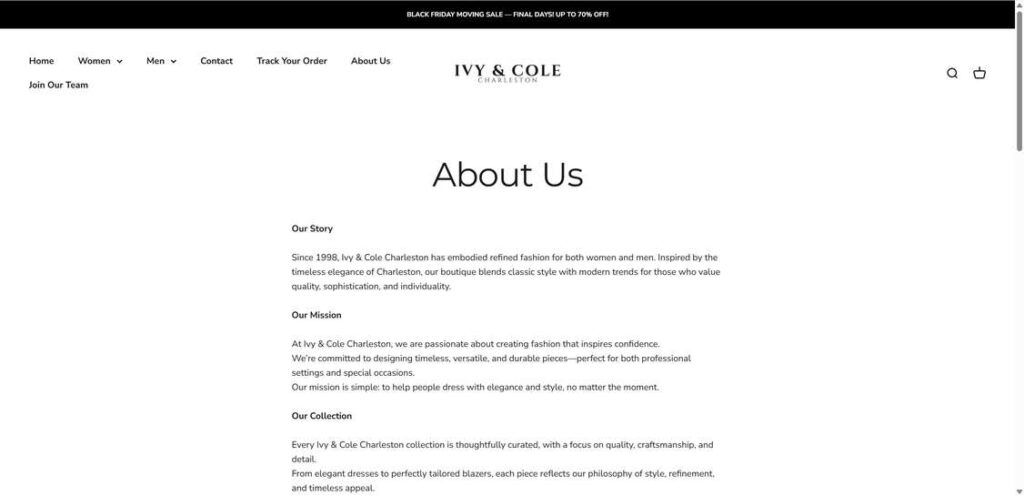
The Ivy & Cole Charleston website is presented as an upscale fashion boutique offering apparel for both men and women. At first glance, the design appears polished. It features high quality images, a professional layout, and a theme styled to mimic long established boutiques with rich histories and loyal customers. The site includes sections such as About Us, Track Your Order, Contact, Join Our Team, and themed sales pages that appear legitimate. However, when examined closely, many elements reveal inconsistencies that strongly indicate a fraudulent operation.
One of the most significant red flags is the domain age. The website claims the boutique has existed since 1998 and has a long tradition of offering refined fashion to shoppers who appreciate elegance and classic style. In reality, the domain ivycolecharleston.com was only registered recently, with public WHOIS records showing a registration date in October 2025. This immediate contradiction is one of the most common signs of a fake boutique. Scammers create brand new domains and fabricate entire business histories to gain trust quickly.
Another concerning detail is the use of extremely large discounts across the entire store. Many items show reductions of 60%, 70%, or even more. While clearance sales exist in the retail world, legitimate stores rarely discount every product in every category at the same time. This universal discount strategy is typical of fraudulent stores that try to pressure shoppers into impulse buying. The website emphasizes urgency through phrases like moving sale final day and last chance to save, which are used repeatedly to create emotional pressure rather than genuine value.
The product selection itself raises additional concerns. Numerous clothing items appear to be generic images scraped from online marketplaces. Many of them match pictures found on fast fashion platforms and supplier catalogues. This indicates that the store does not have original products, nor does it possess manufacturing or inventory. Instead, the images are repurposed to populate the storefront quickly and cheaply.
Fake reviews also contribute to the illusion of legitimacy. Star ratings such as 4.7 out of 5 based on more than 1200 reviews appear on product pages. However, there is no system for customers to leave a real review. The review counts remain static and do not change over time, which suggests they are fabricated. Real boutiques display dynamic reviews and verified purchase labels. Here, the social proof is entirely manufactured.
Shipping and return promises appear generous but lack substance. The site advertises free delivery, a 30 day money back guarantee, and secure checkout. Yet the policies provided in the footer are vague or missing entirely. There is no verifiable return address, no mention of a physical store location, and no details about warehouse operations. Shoppers who attempt to contact support frequently report receiving no response or only generic automated emails.
Another concerning sign is the presence of a Track Your Order page that does not provide real tracking. Fake tracking portals often generate placeholders or default statuses that never update. They exist mainly to stall victims long enough for scammers to withdraw funds or shut down the site entirely. This pattern aligns closely with how similar scam boutiques have operated in the past.
Overall, the Ivy & Cole Charleston Sale Scam relies on a combination of polished design, emotional pressure, fabricated history, and misleading product listings to attract customers.
How The Scam Works
Understanding how the scam functions step by step helps reveal the tactics used to deceive consumers. The following breakdown explains the process from the initial advertising phase all the way through post purchase frustration.
Step 1: Targeted Advertising
The scam begins with paid ads placed on social media platforms such as Facebook, Instagram, and TikTok. These ads often promote a moving sale, a one day clearance, or a limited availability event. The ads are visually appealing and feature attractive photographs to create trust at first glance. Most victims report seeing ads targeting people who enjoy shopping for clothing or lifestyle products.
The ads usually promise very high discounts such as up to 70% off or final day to save. These unrealistic offers push users to click quickly rather than researching the store. The scammers rely on the emotional appeal of getting a bargain before it disappears.
Step 2: Landing On A Professional Looking Store
After clicking the ad, shoppers are taken to the Ivy & Cole Charleston website. The homepage features high resolution images, clean layouts, and categories arranged professionally. At this stage, many shoppers feel reassured. The site mirrors the style of legitimate fashion boutiques that operate online.
The About Us page adds emotional storytelling about the brand being founded decades ago in Charleston. It claims a long tradition of refined craftsmanship and family values. This narrative is designed to reinforce authenticity even though the domain was registered only weeks earlier.
Step 3: The Illusion Of Scarcity
The product pages are filled with countdown timers, stock warnings such as only a few left, and banners promoting last day offers. These psychological triggers are intentionally designed to shorten decision making time. Customers feel pressured to make purchases immediately because they fear missing out on a rare opportunity.
Scammers use scarcity tactics extensively because they reduce the likelihood that a shopper will notice inconsistencies within the website.
Step 4: Fabricated Reviews And Social Proof
Each product includes a high star rating along with fake review counts. Many pages claim over 1200 reviews despite the domain being brand new. However, there is no review submission system for real customers.
This social proof is entirely fabricated. It exists solely to make hesitant shoppers feel comfortable enough to click Add to Cart.
Step 5: Checkout Process And Payment Collection
Once items are added to the cart, shoppers proceed to checkout. Here, the site collects personal information including name, address, phone number, and email. The payment process often accepts credit cards, PayPal clones, or unsupported digital wallets.
Some victims have reported being redirected to suspicious payment processors. Others noted that the bank statements show unfamiliar merchant names. These discrepancies often appear when scammers use foreign payment systems to hide their identity.
After payment is completed, the shopper receives a confirmation email that appears professional but provides no meaningful details.
Step 6: Fake Tracking And Delayed Communication
Within a few days, victims receive a tracking number or an update claiming that the order has shipped. However, the tracking page either never updates or displays generic messages such as package on the way without any movement.
This stage is designed to delay chargebacks and refunds. Scammers know that credit card disputes may be harder to win once some time has passed.
When victims try to contact support, they often receive no response or automated replies that do not address their concerns.
Step 7: Final Outcome For Victims
Eventually, the product never arrives. In some rare cases, victims receive a very cheap fake item or an unrelated product worth only a few dollars. This tactic is used to make disputes more difficult because the scammer can claim that the order was technically fulfilled.
Over time, the website may disappear entirely and resurface under a new name. The scammers then repeat the same cycle with a different domain and a new brand identity.
What To Do If You Have Fallen Victim To This Scam
If you placed an order with Ivy & Cole Charleston and have not received your items, follow these steps immediately. Acting quickly increases your chances of recovering funds and protecting your information.
1. Contact Your Bank Or Credit Card Provider
Explain that you made a purchase from an online store that appears to be fraudulent. Request a chargeback. Provide evidence such as order confirmations, screenshots of the website, and proof that the product was never delivered.
2. Report The Transaction To PayPal Or The Payment Processor
If you used PayPal or a similar service, open a dispute as soon as possible. Include details about the misleading practices and the lack of product delivery.
3. Monitor Your Bank Account
Scammers sometimes attempt additional unauthorized charges. Watch your statements closely for any suspicious activity.
4. Change Your Passwords
If you used the same password on multiple websites, change them immediately. Some scam websites attempt to collect login credentials.
5. Report The Website To Relevant Authorities
Submit a complaint to:
• Your country’s consumer protection agency
• The Federal Trade Commission (if you are in the United States)
• Your payment provider’s fraud department
6. Warn Others
Share your experience online to help others avoid the scam. Many victims discover the truth only after searching for reviews.
7. Install Protective Tools
Use trusted security tools that block scam websites and malicious ads. Recommended options include:
• Malwarebytes with ScamGuard protection enabled
• AdGuard to filter out fraudulent advertisements and suspicious domains
These tools can reduce the risk of encountering similar scam boutiques in the future.
The Bottom Line
The Ivy & Cole Charleston Sale Scam is a highly polished but completely fraudulent online boutique designed to trick shoppers into paying for products that do not exist. The site presents itself as a long standing fashion brand with elegant designs and generous sales, but every layer of its presentation is deceptive. From the fabricated business history to the new domain registration, from the impossible discounts to the fake reviews, the entire operation is structured to mislead consumers.
Shoppers should avoid placing any orders on this website and take action quickly if they have already been affected. By following the recovery steps listed above and installing protective tools, consumers can reduce the chances of falling for similar scams in the future.








