

The Nancy & Rose Anniversary Sale has been spreading fast across social media, offering eye catching deals on sweaters, jackets, and handmade boutique fashion. The website looks polished, the photos feel warm and inviting, and the story of two sisters building a small brand seems believable. But behind the charming presentation is a growing pattern of missing orders, fake discounts, and frustrated customers who never receive what they paid for.
This investigation exposes how the scam works, why it looks so convincing, and what you should do if you already placed an order. Before you shop, read this.

Scam Overview
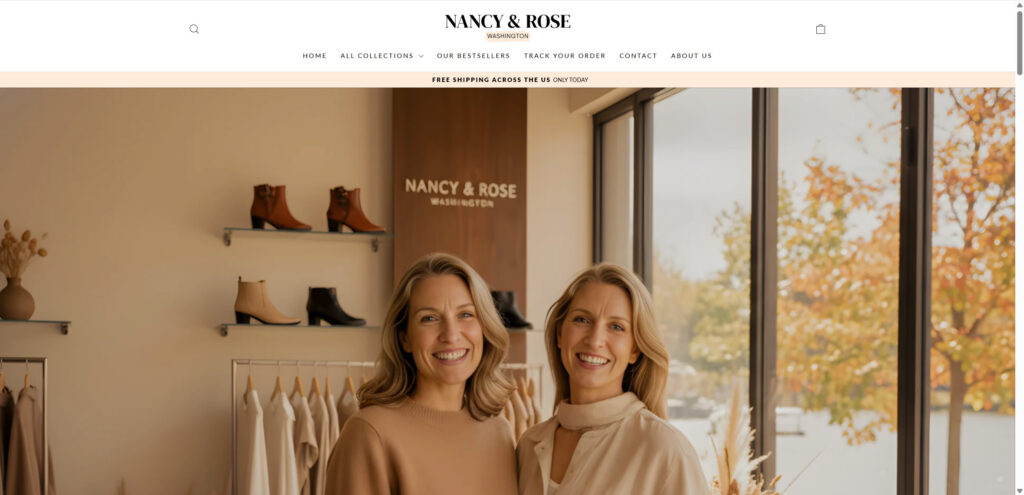
Nancy & Rose markets itself as a boutique fashion brand based in Washington. The store layout features lifestyle photography, soft color palettes, and a clean design that resembles legitimate clothing retailers. The site claims to offer handcrafted apparel designed by two sisters named Nancy and Rose, supposedly based on their long standing passion for fashion.
The scam becomes more obvious when you inspect the details. The About Us page tells a predictable and overly sentimental story that has appeared on dozens of other fraudulent clothing sites. The same text, with only minor changes, has been reused across countless fake boutiques. The entire narrative about sisters, sewing machines, and slow growing dreams is a prewritten template designed to build trust.
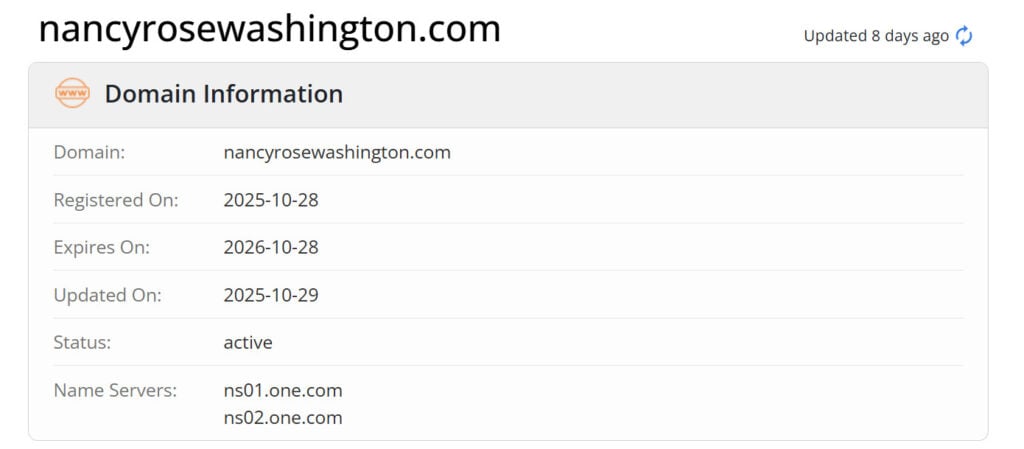
The domain registration data confirms the real story. The website was created recently, often within days or weeks of the first ad campaign. In this case, nancyrosewashington.com was registered in late 2025. No legitimate fashion brand that allegedly has fifteen years of history would have a domain created only weeks earlier. Scammers use quick domain registrations because they know the website will not last long. Once customers start complaining, they abandon the domain and launch a new one under a different name.
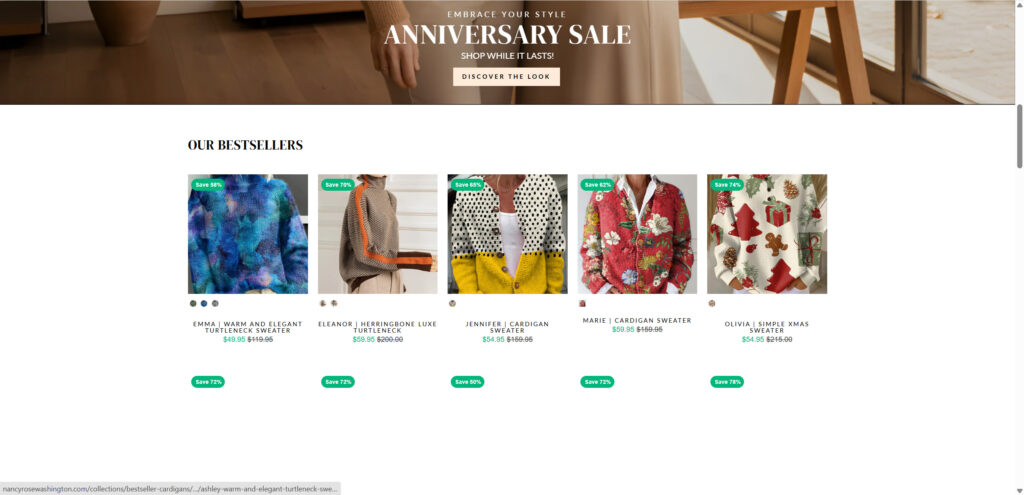
Red flags appear throughout the product listings. Every item is marked down with massive discounts, often 60% to 80% off. Savings like these are not sustainable for real retailers, especially on new collections and items supposedly made with premium materials. Genuine fashion brands rarely offer 70% to 80% discounts across the entire store, and certainly not during a single sale event.
The next red flag is the lack of original product photography. All images used by Nancy & Rose are stolen from other websites. Many images come from Chinese wholesale platforms where clothing is sold in bulk at extremely low prices. Scammers copy these photos and mark the retail price as $180, $250, or $300, then place a fake promotional price of $54.95 or $64.95. The dramatic markdown encourages shoppers to buy quickly without researching. In reality, the products cost only a few dollars to manufacture.
The website also includes fake trust badges that appear at the bottom of the page. The icons say Free Shipping Across the USA, Secure Payment, and 30 Day Return Policy. These badges are meaningless. Scam sites use them to create false confidence, but the policies are never honored. If you try to return a defective item, scammers either ignore you or demand that you ship the item back to China at your own cost, which usually exceeds the cost of the item. In many cases, they do not reply at all.
Another major concern is the complete lack of real contact information. Although the website displays an email address such as support@nancyrosewashington.com, this inbox is often unmonitored or handled by automated responses. There is no physical address, no phone number, and no real employees. The business does not exist offline. Legitimate companies provide customer service teams that respond promptly and maintain transparent communication channels.
The scam targets consumers who enjoy online shopping, especially older shoppers who are attracted to modest fashion and seasonal sweaters. These shoppers often value sentimental branding, handmade descriptions, and limited time discounts. Because the photos appear charming and relatable, the scam successfully manipulates emotions.
Another reason the scam works is the promotional strategy. Nancy & Rose invests heavily in paid advertising on Facebook, Instagram, TikTok, Google, and pop up ad networks. Scammers know how to run ads that look trustworthy. They use cozy photography, attractive models, and sentimental text about sisterhood and craftsmanship. Many shoppers assume that a company advertising through major platforms must be legitimate. Unfortunately, scam advertisers can pay for ads the same way real businesses can. Ad networks do not guarantee authenticity.
The site also includes a misleading footer stating that the company has 15 years of customer service experience, over 19 years in the fashion industry, and an establishment date of 2006. None of this is true. Scammers include these statements to create false authority. However, these claims contradict the domain registration date, which shows the website appearing only weeks earlier.
Another key sign of deception is the uniform pricing structure. Many products are priced at $59.95, $54.95, or $64.95 regardless of category. Jackets, boots, sweaters, and blazers all share similar pricing. Real brands assign varied prices based on materials, manufacturing, and design complexity. When a site sells every item for around $50 to $60 with inflated original prices, it is a common indicator of dropshipping scams.
Fake reviews are another element of the scam. Many sites include prebuilt customer reviews filled with generic praise. Nancy & Rose uses reviews that look handwritten or personalized, but they are identical across multiple scam boutiques operating under different names. Some reviews include AI generated profile photos. Others list vague statements such as Perfect fit or Beautiful quality. None of the reviews reference specific details.
Another problem is that customers who did successfully receive items reported severe quality issues. Sweaters arrive completely different from the product photos. Instead of thick, knitted fabric, customers receive thin, synthetic materials with poor stitching. Coats arrive in colors that do not match the photos. Boot soles separate after a few days. Many customers receive nothing at all.
Shipping times also reveal fraudulent behavior. Although the website advertises quick shipping across the USA, packages actually originate from China. Tracking numbers often do not work for weeks. Some tracking numbers are recycled or fake. If a package does arrive, it often takes more than a month.
The overall structure of the operation is clear. Nancy & Rose is not a small boutique run by sisters. It is a fast moving scam built to profit from fake discounts, stolen photos, and deceptive marketing. Once complaints accumulate, the scammers shut down the website and launch a new one under a different brand name with the same template, same products, and same story.
How The Scam Works
The Nancy & Rose Anniversary Sale Scam follows a predictable and highly effective structure. Scammers use psychologically persuasive methods to create excitement, urgency, and emotional trust. The scam can be broken down into a clear sequence of steps.
Step 1: Build a polished and believable website
Scammers begin by building a clean, modern online storefront using ecommerce platforms like Shopify. These platforms allow fraudsters to set up professional looking shops in less than 24 hours. They choose a minimalist theme, add elegant photography, and write sentimental text that appeals to shoppers who value style and emotional connection.
The Nancy & Rose website includes multiple pages: Home, All Collections, Bestsellers, Track Your Order, Contact, and About Us. The structure looks identical to legitimate fashion boutiques. Scammers know that familiarity increases trust. By replicating the layout of real ecommerce stores, they reduce suspicion.
Step 2: Create a fake brand identity
The next step is crafting a story that feels personal. Nancy & Rose claims to be founded by two sisters who built the brand from scratch using a sewing machine in their apartment. This kind of narrative is memorable, warm, and relatable. Scammers know that customers are more likely to buy from businesses that appear family owned.
The story mentions long nights, slow progress, and emotional customer messages that kept the sisters motivated. These details are designed to make the brand feel authentic. However, the same text appears across many scam stores with different names. It is a prewritten template, not a true story.
Step 3: Populate the store with stolen product photos
Once the identity is established, scammers fill the store with images taken from real fashion designers and Chinese wholesale platforms such as Alibaba, DHgate, or Taobao. These images show attractive clothing items that appear handmade or premium.
The products include:
• Cardigans
• Sweaters
• Elegant jackets
• Patterned blazers
• Winter coats
• Western boots
Scammers upload these images and mark the original prices at $150 to $300. Then they apply heavy discounts of 60% to 78% to create urgency. These deep discounts are unrealistic for genuine boutiques but highly effective for emotional impulse buyers.
Step 4: Launch aggressive advertising campaigns
Once the store is populated, scammers begin buying traffic. They run ads through:
• Facebook
• Instagram
• TikTok
• Google Shopping
• Native ad networks
• Sponsored posts on content farms
The images used in ads show cozy sweaters, autumn scenery, smiling models, and heartwarming quotes. The ads lead with statements like Save 74%, Anniversary Sale, and Shop While It Lasts.
Scammers know that visually appealing images convert well, especially when combined with limited time promotions. Many victims report clicking on ads during their morning coffee or while scrolling at night, which is when impulse purchases are most common.
Step 5: Encourage fast checkout and discourage research
The website is designed to minimize hesitation. The pricing appears generous, the product variety is wide, and every item shows a dramatic discount. The store includes banners saying Free Shipping Across The US and Secure Payment, which reduce perceived risk.
Scammers avoid showing customer photos, size charts, or detailed reviews. Instead, the focus is on quick purchasing. The goal is to push shoppers to place an order within minutes. Many victims do not take time to check the domain age, business legitimacy, or online complaints. Scammers rely on this behavior.
Step 6: Collect payment information immediately
Nancy & Rose accepts payments through credit cards, PayPal proxies, and Apple Pay shortcuts. Scammers need fast access to funds, so they do not offer cash on delivery or any payment method that delays processing.
Once the victim submits payment, their card is charged instantly. In some cases, multiple unauthorized charges occur. Scammers operate several payment processors, so transactions may appear under different names. Many victims report charges that do not match the store name.
Step 7: Send fake or misleading order confirmations
Immediately after checkout, customers receive an email with an order confirmation. The message appears professional, containing an order number and an estimate for shipping times. This step is crucial because it delays suspicion.
The confirmation email often states that items will ship soon. Some customers receive fake tracking numbers that never update. Others receive tracking numbers linked to unrelated shipments. The goal is to delay complaints long enough for the scammers to collect as much money as possible.
Step 8: Stall or ignore customer service requests
If customers email support, they sometimes receive robotic replies asking for patience due to high order volume. The messages are generic and identical across scam stores. As time passes, the inbox becomes unresponsive.
Scammers avoid refunds. They delay responses until customers give up or until the chargeback period expires. If the victim insists, scammers may request that the item be shipped back to China at the customer’s expense. This tactic makes returns financially impossible.
Step 9: Deliver cheap knockoffs or nothing at all
Some customers eventually receive a package, but the contents are unrecognizable. Sweaters are made of thin plastic like fabric, poorly stitched, and completely different from the photos. Jackets arrive without proper lining. Boots fall apart immediately.
Often, customers receive nothing. The tracking status remains stuck at Shipping Label Created or In Transit indefinitely. In many cases, scammers mark packages as delivered even when customers never received them.
Step 10: Shut down and relaunch under a new name
When complaints increase or payment processors start blocking transactions, scammers shut down the website. They abandon the domain and create a new one with a different boutique name such as:
• Ivy & Cole
• Rose & Clara
• Millie & Grace
• Ella & Harper
• Madison & Ivy
The cycle repeats indefinitely. Scammers rely on speed. They create multiple stores at once and run identical operations under different names. This makes it almost impossible for victims to track them down or hold them accountable.
What To Do If You Have Fallen Victim To This Scam
If you placed an order on Nancy & Rose Washington and have not received your product or received a cheap knockoff, you still have options. Follow these steps as quickly as possible.
1. Contact your bank or credit card issuer for a chargeback
Explain that you purchased from a fraudulent website. Provide screenshots of:
• The fake website
• Your order confirmation
• Tracking information
• Any conversations you had with customer support
Banks can reverse unauthorized or deceptive charges. The sooner you act, the better your chance of success.
2. Report the transaction as fraud through your bank’s online portal
Many banks allow online dispute submissions. Select categories such as:
• Item not received
• Merchandise not as described
• Fraudulent seller
This documentation helps build a strong case.
3. Save all evidence
Create a folder with:
• Screenshots of the website
• Product photos
• Ad screenshots
• Emails
• Tracking pages
• Domain lookup details
This evidence assists your bank and helps you file official complaints.
4. Do not ship anything back to China
Scammers often demand returns to a foreign address. This is a tactic to discourage refunds. Packages to China can cost more than the value of the item. Do not agree to this.
5. File a dispute with PayPal if you paid through PayPal
PayPal tends to protect buyers. Choose the category Item not as described or Item not received. Provide detailed evidence.
6. Freeze your card if there were additional unauthorized charges
Scammers sometimes reuse card information. Freezing or replacing your card prevents future fraudulent transactions.
7. Report the website to your country’s cybercrime center
Examples include:
• FTC in the United States
• Action Fraud in the UK
• Canadian Anti Fraud Centre
• Europol Internet Crime Reporting
Reports help authorities track scam networks.
8. Warn others online
Leave reviews on:
• Trustpilot
• Reddit forums
• Scam reporting websites
• Facebook groups
Your warning may prevent more victims from losing money.
9. Block future ads from the same seller pattern
If you saw the ad on Facebook or Instagram, click the three dots near the ad and choose Hide Ad or Report Ad. This reduces your chances of seeing future scams from similar networks.
10. Learn how to spot scam boutiques in the future
Scam boutiques share common traits:
• Recently registered domain
• Fake About Us story
• Massive storewide discounts
• Identical pricing
• Stolen product images
• No real contact information
• No company registration
• No verifiable reviews
Being aware of these signs helps protect you from future fraud.
The Bottom Line
The Nancy & Rose Anniversary Sale Scam is part of a large network of fraudulent fashion boutiques created to deceive shoppers with fake discounts, emotional storytelling, and stolen product images. The operation uses polished web design and persuasive advertising to appear legitimate. Many victims discover too late that the brand is not real, the products are cheap knockoffs, and refunds are nearly impossible.
The best protection is awareness. Always check domain registration dates, look for inconsistencies in the About Us story, verify company information, and search for reviews before ordering from unfamiliar stores. If something feels too good to be true, it usually is.
If you already placed an order, act quickly by contacting your bank, filing chargebacks, gathering evidence, and reporting the scam. Many victims successfully recover their money when they respond promptly.








