

Have you seen social media posts or web ads touting an incredible TenPoint crossbow giveaway endorsed by comedian Jeff Foxworthy? As tempting as scoring a free crossbow from your favorite funnyman sounds, caution is advised. This widespread scam uses Jeff Foxworthy’s fame to dupe trusting supporters into hidden subscription fees.
This article will uncover the manipulative tricks used by scammers to exploit Jeff Foxworthy fans, and arm you with knowledge to recognize and avoid this celebrity-fronted ruse. Keep reading to ensure you don’t get hooked by fake crossbow giveaways perpetrating fraud through your trusted funnyman.
TenPoint Nitro 505 Crossbow Scam Overview
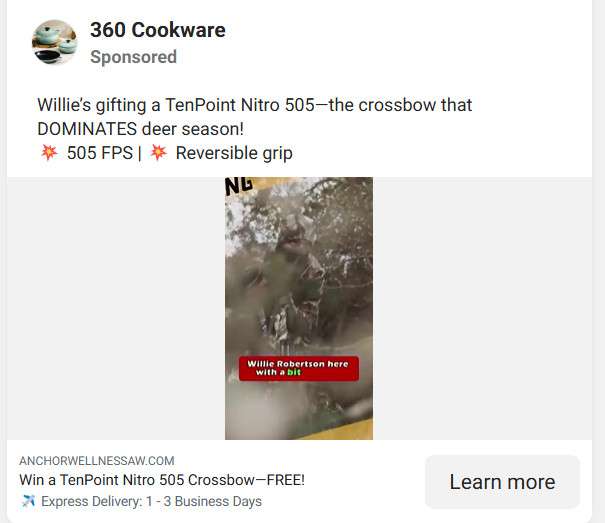
This fraudulent giveaway promotion is built around a completely fabricated partnership between Jeff Foxworthy and TenPoint Crossbow Technologies. Scammers are running online ads utilizing Jeff’s celebrity status to target fans and outdoor enthusiasts.
The ads claim Jeff has teamed up with TenPoint to give away high-end Nitro 505 crossbow packages for free. Some even tout discounts up to 100% off the crossbow’s $3,000+ retail value.
Posts typically showcase Jeff holding a TenPoint crossbow and urge viewers to click through quickly before the fictional promotion expires. They leverage Jeff’s mass appeal and perceived trustworthiness among supporters.
In reality, no such endorsement deal exists between Jeff and TenPoint. Allgiveaway claims are false – simply bait to lure victims into an elaborate sequence of deception.
Clicking on these fake ads leads users through a pipeline of sophisticated fraud under the guise of securing their free crossbow prize. This ends with stealing sensitive personal and financial data through concealed monthly subscription fees exceeding $100.
Ultimately it’s a malicious bait and switch. No free crossbows are awarded, just recurring credit card charges engineered to bleed victims dry through intentional trickery.
This scam has been also investigated by Jordan Liles on his YouTube channel, where he offers a detailed video on the subject. We recommend watching his content for a comprehensive understanding of the scam.
Next, let’s break down exactly how scammers carry out this scam from start to finish.
How The TenPoint Crossbow Scam Works
Here is an in-depth look at how scammers carry out this fraudulent celebrity crossbow giveaway from start to finish:
Stage 1: Phony Social Media Promotions
The scam starts with sponsored ads and posts on Facebook, Instagram, YouTube and other platforms. These feature Jeff Foxworthy photos with captions announcing an exclusive TenPoint crossbow giveaway for fans.
Urgency and limited supply tactics encourage swift action before the made-up promotion expires. Manipulative phrases like “Hurry, almost gone!” create false FOMO despite the giveaway being entirely fabricated.
Stage 2: Fake News Articles Add False Credibility
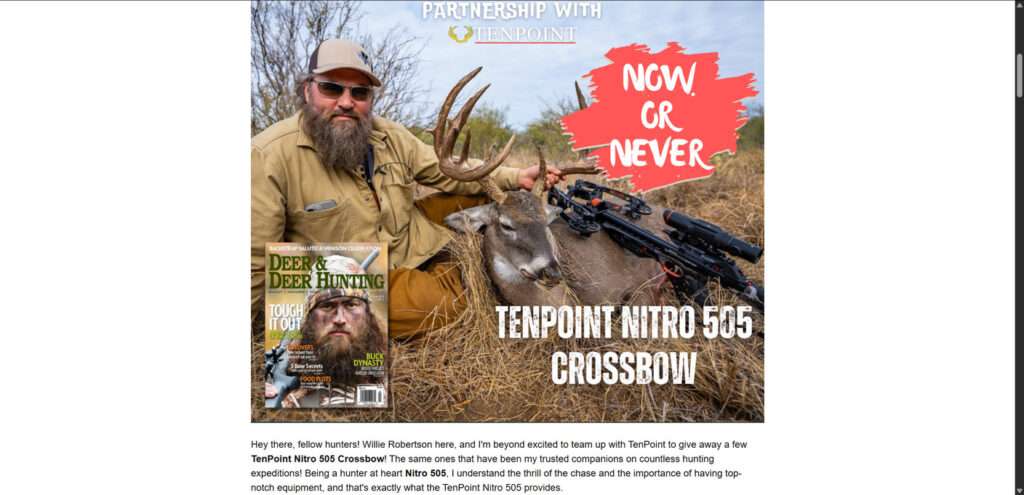
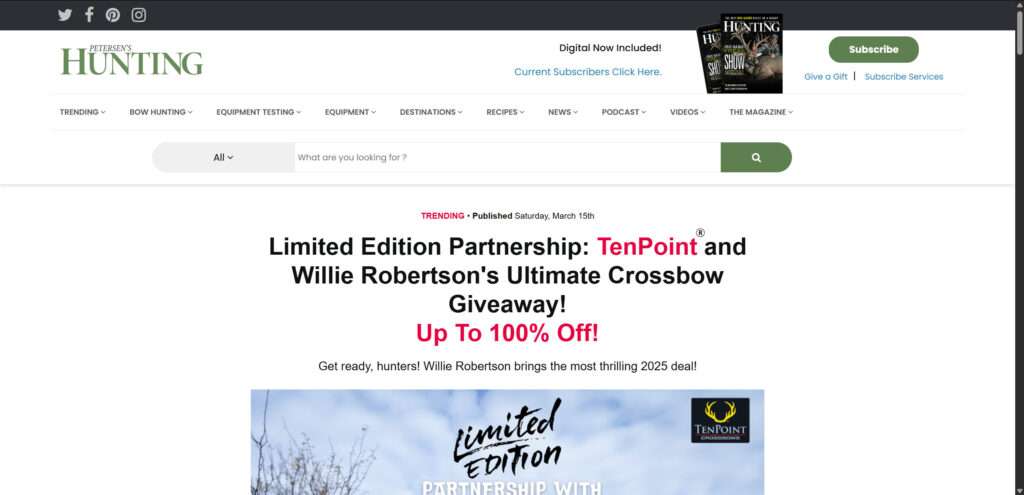
Clicking these deceptive social ads redirects users to mock “news” articles on imposter domains impersonating ESPN, Outdoor Life, Petersen’s Hunting and other reputable sources.
These false articles echo the phony giveaway narrative, citing bogus quotes from Jeff excitedly gifting free Nitro crossbows to supporters as part of a major TenPoint promotion. High resolution imagery furthers the facade.
Stage 3: Phishing Order Forms Dupe Users
After consuming the fake news reports, users reach mocked up TenPoint order pages made to harvest personal and payment data under false pretenses.
These showcase the Nitro 505 and urge visitors to “claim” their free crossbow, valued over 3,000,byprovidingtheirinfoandcreditcardnumbertocoverareasonable3,000, by providing their info and credit card number to cover a reasonable 3,000,byprovidingtheirinfoandcreditcardnumbertocoverareasonable4.95 – $9.99 shipping and handling fee.
In reality, submitting payment data surrenders users to exorbitant hidden monthly subscription fees exceeding $100 per month.
Stage 4: Auto-Enrollment in Recurring Billing Scam
Although users expected only minor shipping charges, the credit card information they provided actually activates expensive recurring subscription plans without consent.
These unnecessary “services” range from 79.99to79.99 to 79.99to299.99 per month for vague, unrelated perks. They intentionally conceal the true costs and are extremely difficult to cancel.
So victims keep getting billed ridiculously high recurring fees for services they never wanted while scammers profit endlessly off their stolen financial data.
Stage 5: No Free Crossbows Arrive
Despite moving through the scam’s pipeline expecting a free Jeff Foxworthy-gifted TenPoint Nitro crossbow, victims ultimately receive nothing besides exorbitant credit card charges.
The fictional gift was simply bait to dupe targets into surrendering their personal and payment information through an elaborate sequence of false promises and deception.
Warning Signs Of The Fraudulent TenPoint Crossbow Giveaway
While this celebrity-centered crossbow giveaway scam can seem convincing, several red flags can expose their deceitful tactics:
- Phony Urgency / Limited Supply Tactics – Any promotion urging immediate action due to extremely limited supply or expiring deadlines is highly suspicious. These are common high-pressure scam tactics.
- Overly Remarkable Claims – Outlandish free gift offers of expensive products from a celebrity likely indicate a scam. Verify remarkable claims through official brand channels before engagement.
- Fake News Reports – Scammers regularly orchestrate completely fabricated “news” articles on sketchy domains to reinforce false narratives. Verify authors and publications.
- Misspelled or Suspicious URLs – Check domains closely for subtle misspellings or other signs of impersonation. Avoid entering sensitive data on questionable sites.
- Unexpected Fees – Don’t pay unanticipated shipping/handling costs upfront. These often conceal auto-enrollment in recurring monthly subscription scams.
- Difficulty Canceling Services – Services that prove impossible to cancel are a huge red flag. Legitimate offers allow easy subscription management.
Stay vigilant for these warning signs. If an offer raises multiple concerns, avoid engagement altogether. You can’t lose what you didn’t provide scammers in the first place.
What To Do If You Are A Victim
If you unfortunately fell prey to the fake Jeff Foxworthy crossbow giveaway scam, here are some urgent steps to take in response:
- Notify Your Credit Card Company – Immediately alert your credit card provider of any fraudulent charges so they can be stopped and refunded. Cancel any associated subscriptions still linked to your account.
- Monitor Statements Closely – Carefully review statements every month for additional questionable charges from unfamiliar companies. Dispute unrecognized or suspicious fees ASAP.
- Change Passwords – Log into accounts created through the scam flow and change your passwords immediately. Make them long, complex and unique across different sites. Enable two-factor authentication where possible.
- Place Fraud Alerts – Contact Equifax, Experian and TransUnion to place fraud alerts on your credit reports. Renew these alerts every 90 days while monitoring your credit closely.
- Report The Scam – File a complaint with the FTC’s scam reporting agency and your state attorney general’s office. Also notify the social networks used to promote the false giveaway.
- Seek Legal Action – Consulting an attorney to pursue fraud charges against the scammers may be warranted depending on your financial losses. Class action lawsuits are also an option.
- Spread Awareness – Share your experience online and on Jeff Foxworthy’s social channels to prevent others from falling victim too. Shedding light on such tactics is key.
Stay persistent unwinding the scam’s damage through fast action and education. And help stop these celebrity-exploiting scammers from claiming more victims.
The Bottom Line
This elaborate Jeff Foxworthy crossbow giveaway scam provides a stark lesson in skepticism. Scammers will illegally hijack celebrities’ identities to create completely fictional product endorsements masking sinister intent.
When promotions leverage public figures touting outlandish free gifts or deep discounts, exercise extreme caution. Avoid entering personal data on questionable sites without verifying remarkable claims firsthand with official brand representatives.
We hope this inside look at their manipulative playbook exploiting Jeff Foxworthy’s fame helps protect more consumers from such unscrupulous fraud. Don’t let scammers hook you using a trusted funnyman as their fraudulent frontman.
Frequently Asked Questions
Q: How does the Jeff Foxworthy crossbow giveaway scam work?
A: The scam starts by running online ads featuring Jeff Foxworthy announcing a fake partnership with TenPoint Crossbows gifting out free Nitro 505 crossbows. Targets who click through are fed fake news reports, phishing order forms, and ultimately credit card data is stolen through concealed monthly subscription fees exceeding $100.
Q: What platforms does this scam advertise on?
A: The fraudulent Jeff Foxworthy crossbow giveaway promotions typically appear on Facebook, Instagram, YouTube, TikTok and other major social media sites which offer wide reach to target many victims.
Q: Are the ads’ images of Jeff Foxworthy real?
A: The scam ads do feature Jeff Foxworthy’s actual likeness. However, these images are used completely without his consent or knowledge. Jeff has no affiliation with this fictional crossbow giveaway.
Q: Is Jeff Foxworthy actually affiliated with TenPoint Crossbows?
A: No. Jeff Foxworthy has no legitimate partnership with TenPoint Crossbow Technologies. The fake crossbow giveaway promotions are totally fabricated without the involvement of Jeff or TenPoint.
Q: How can I recognize these scam ads are fraudulent?
A: Warning signs include absurdly discounted or free high-end gifts, urgent calls to act now before fake deadlines, and questionable links redirecting away from the official TenPoint website. Verify remarkable claims through official channels only.
Q: What should I do if I was scammed with the fake crossbow giveaway?
A: Immediately contact your credit card company to dispute any fraudulent charges, then monitor closely for additional deceitful fees. Change compromised passwords, enable two-factor authentication, and place fraud alerts on your credit reports.
Q: How can I help stop this Jeff Foxworthy crossbow scam?
A: You can report fake ads to social networks and leave comments warning others of the scam on Jeff Foxworthy’s official pages. Share your experience widely to prevent more from being duped by celebrity-tied phony giveaways.
Q: How can I stay safe from similar celebrity endorsement scams?
A: Apply healthy skepticism to remarkable claims and huge free gifts or discounts tied to a celebrity endorsement. Verify directly with official brand sites and avoid providing personal data through questionable third-party domains.
In Closing
We hope this comprehensive exposé can help protect trusting Jeff Foxworthy fans from predatory scammers shamelessly exploiting his fame and reputation. When an unbelievable offer seems too good to be true, it almost always is. Verify remarkable claims and scrutinize domains closely before providing sensitive information or payment data. Avoid becoming another victim to celebrity-fronted fake giveaways by staying vigilant against their manipulative tactics.








