

A shocking story has swept across TikTok, Facebook, and YouTube. It claims that 23-year-old marine trainer Jessica Radcliffe was fatally attacked by an orca during a live performance at “Pacific Blue Marine Park.” The dramatic viral clips are stirring emotion—but what is the truth? In this article, we uncover the full story behind the so-called Jessica Radcliffe orca attack. We break down the claims, analyze the evidence, and expose the clear signs that it is a carefully crafted hoax.
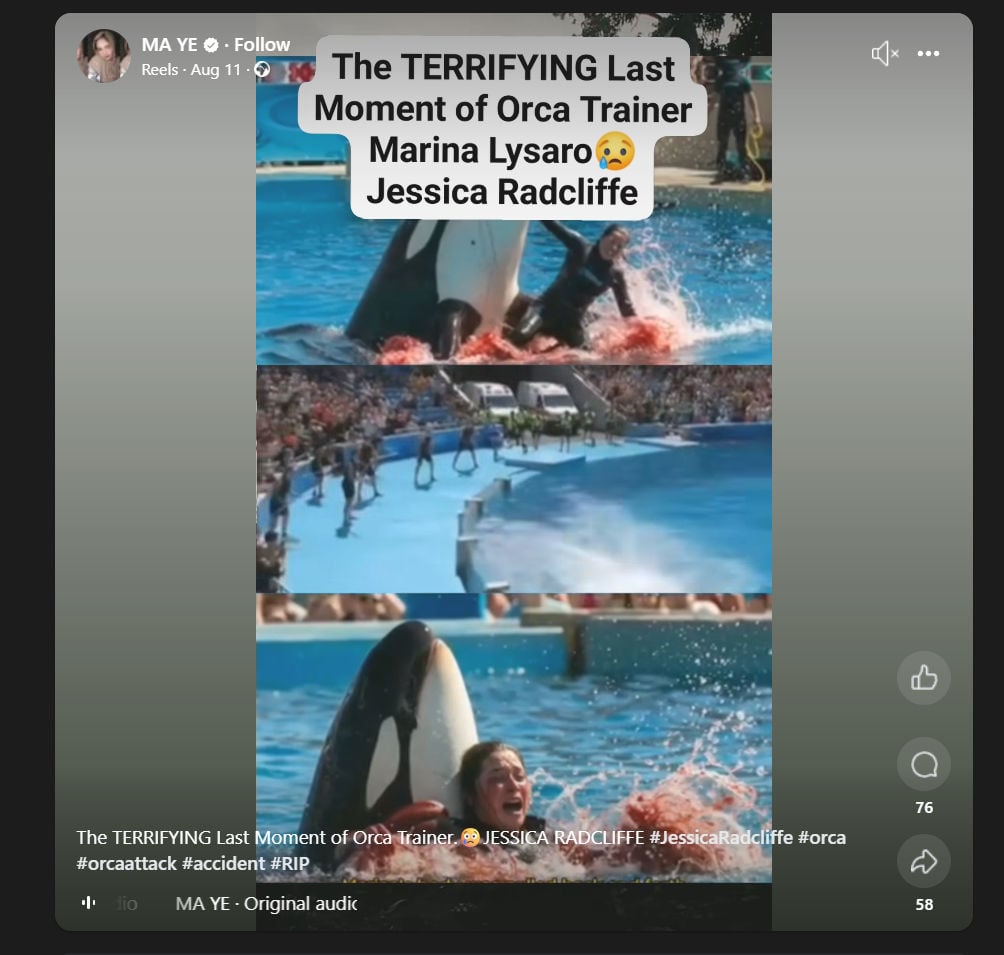
The Viral Narrative: What’s Being Claimed
Across TikTok, Facebook, X (formerly Twitter), and YouTube, a gripping video clip recounts how an orca supposedly attacked and killed a young marine trainer named Jessica Radcliffe during a live show. The narrative adds lurid details—claims that the orca was provoked by the scent of menstrual blood in the water. It alleges the trainer died within minutes and that the show took place at a park called Pacific Blue Marine Park. The scenes are gruesome, designed to shock and provoke strong emotional reactions.
Fact-Check: No Evidence, No Existence
1. No Trace of the Person or Park
- Multiple fact-checks confirm that Jessica Radcliffe does not exist, and Pacific Blue Marine Park is fictitious. There are no credible records, news reports, social media profiles, or professional listings for either the trainer or the location.
- Fact checking outlets including The Economic Times, NDTV, New York Post, Times of India, and more have all concluded the event is entirely fabricated.
2. AI-Generated and Manipulated Content
- Experts and investigators determined that the video is AI-generated and cobbled together from edited archival footage. It uses manipulated audio and visuals to mimic a live orca show gone wrong.
- Forensic analysis exposed audio that was artificially generated, along with visual glitches and implausible scenes.
3. Drawing on Real Events to Feel Real
- Though the Jessica Radcliffe story is fake, it taps into memory of real vicious incidents involving trainers:
- Dawn Brancheau, killed in 2010 by orca Tilikum at SeaWorld.
- Alexis Martínez, killed in 2009 at Loro Parque.
- Keltie Byrne, killed in 1991 at Sealand of the Pacific.
- The artificial narrative is designed to echo these tragedies, making the video feel eerily familiar.
Why These Hoaxes Hit So Hard
1. Emotional and Visual Impact
People are naturally drawn to dramatic, graphic stories—especially ones that tap into fear and shock. Such content spreads fast because it triggers a strong emotional response.
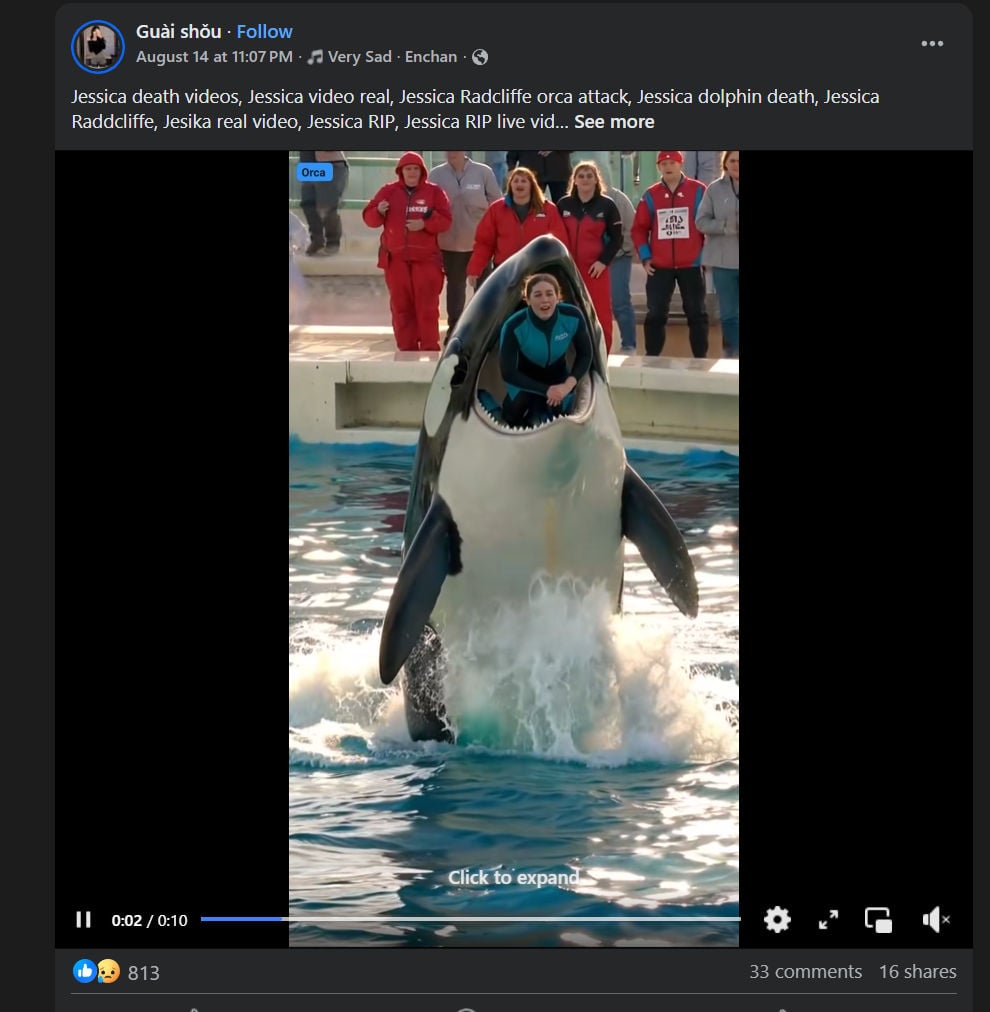
2. Social Media Algorithms Amplify Sensation
Platforms like TikTok and Facebook reward engaging content—particularly video—which keeps viewers watching. This boosts reach, even if the content is misleading.
3. Hoaxes Meet Reality Halfway
By referencing real accidents and well-known marine park controversies, the hoax feels plausible. That lends it a veneer of credibility—even though it is entirely fictional.
4. Lack of Immediate Fact-Checking
By the time fact-checks are published, the video may already have gone viral. The delay allows misconceptions to embed before reality catches up.
Real Orca-Trainer Incidents (and the Truth Behind Them)
| Year | Trainer | Orca | Venue | Notes |
|---|---|---|---|---|
| 1991 | Keltie Byrne | Tilikum | Sealand of the Pacific (Canada) | Pulled underwater, drowned |
| 2009 | Alexis Martínez | Keto | Loro Parque (Spain) | Internal injuries led to death |
| 2010 | Dawn Brancheau | Tilikum | SeaWorld Orlando (USA) | Dragged underwater and killed |
These events are tragic but well-documented. They spurred debates on orca welfare, trainer safety, and ethics of marine captivity. Unlike the Radcliffe hoax, each involved real people, parks, authorities, and exhaustive investigations.
How to Spot a Viral Hoax Like This
- Check Reliable News Sources
Search for the story on trusted outlets. If no mainstream outlet reports it, that’s a red flag. - Verify the Person or Location
Look for existence of the individual or venue—professional profile, news, obituaries. If none exist, be skeptical. - Assess the Video Quality and Sound
Look for unnatural lighting, victim names, distorted audio, or glitchy visuals. AI-generated content often leaves telltale signs. - Look for Fact Checks
Outlets like Economic Times, NDTV, Times of India, EOnline, Vocal Media have already investigated this. - Consider Context and Plausibility
Ask: Has the story been confirmed by authorities, emergency services, witnesses? If not, it’s likely fabricated.
Broader Impact: Why It Matters
These hoaxes do more than shock—they distort public understanding of marine life and reinforce negative stereotypes. As Reddit users pointed out:
“These videos are not only extremely harmful to the overall image of orcas, spreading absurd claims like ‘the orca smelled her menstruation blood’ … and portraying them as vicious creatures.”
They also disrespect real trainers who died in genuine accidents by appropriating and sensationalizing death for clicks.
Frequently Asked Questions About the Jessica Radcliffe Orca Attack Hoax
Is the Jessica Radcliffe orca attack video real?
No, the Jessica Radcliffe orca attack video is not real. Investigations confirm that the video circulating on TikTok, Facebook, and YouTube is digitally manipulated using AI-generated elements and stock footage. There is no record of a trainer named Jessica Radcliffe, nor did the incident take place.
Who is Jessica Radcliffe?
Jessica Radcliffe is not a real person. There is no verified social media presence, employment history, obituary, or official news coverage linking that name to any marine park or orca-related incident. The name appears to be entirely fictional, invented for the purpose of the viral video hoax.
Did the attack happen at Pacific Blue Marine Park?
No. Pacific Blue Marine Park does not exist. It is not listed among any recognized marine life facilities worldwide. There are no business registrations, websites, or official references to a park by that name. It is a fabricated location, used to make the video appear more realistic.
How was the Jessica Radcliffe video made?
The video is a combination of manipulated stock footage, AI-generated voices, and edited clips from unrelated marine shows. Visual inconsistencies, such as disappearing crowd members and unrealistic lighting, suggest the content was artificially stitched together to create a dramatic false narrative.
Why do people believe the Jessica Radcliffe story?
Many people believed the story because it mimics real-life tragedies involving orca attacks on trainers, such as the deaths of Dawn Brancheau, Alexis Martínez, and Keltie Byrne. These historical events lend credibility to the hoax. Additionally, emotional storytelling and visual drama help the video spread quickly before facts are verified.
Has any credible news outlet confirmed the attack?
No legitimate news outlet has reported the Jessica Radcliffe orca attack as a real event. In fact, prominent publications such as NDTV, Economic Times, Times of India, and the New York Post have confirmed it is a hoax. The absence of any official confirmation is a strong indicator that the story is fabricated.
Why was this fake orca attack video created?
The fake orca attack video appears to have been created to generate viral attention, increase social media engagement, and potentially direct viewers to ad-filled or scam websites. Shock content like this often spreads rapidly, especially when it involves death, danger, or emotional distress.
Are orca attacks on trainers common?
No, fatal orca attacks on trainers are extremely rare. There have been a few high-profile cases, such as the death of Dawn Brancheau in 2010. However, most orcas in captivity do not exhibit aggressive behavior toward humans. Still, concerns about keeping orcas in captivity have sparked ongoing ethical debates.
How can I tell if a viral video is fake?
To identify fake viral videos like this one, look for the following red flags:
- No coverage by credible news organizations
- Lack of verifiable names, locations, or dates
- Inconsistencies in audio or visuals
- Overuse of dramatic language and captions
- Missing sources or references
Always search for supporting information from trusted outlets before sharing shocking content.
What should I do if I see someone sharing the Jessica Radcliffe hoax?
If you see someone sharing the fake Jessica Radcliffe orca attack video, you can politely inform them that the video is a confirmed hoax. Share a link to a reputable fact-checking article or news report. Avoid engaging in arguments, but help others stay informed and avoid spreading misinformation.
Final Thoughts: Know Before You Share
The Jessica Radcliffe orca attack story is fully fabricated. There is no such person, no such park, and no such incident. The video is AI-generated, blending fake voices and altered footage for shock value.
But it matters that we talk about how these hoaxes spread—and how to stop them. In an age of fast-scrolling and algorithmic newsfeeds, our best defense is thoughtful skepticism. A moment’s pause and a few quick checks can protect us from being misled.
So the next time a sensational story fills your feed—stop, verify, then decide if it’s worthy of a share. It’s a small step, but an important one in slowing the spread of misinformation.

Join the discussion
0 commentsShare your experience or ask a question about this article.
Discussion
Start the conversation
Have a question or something useful to share? Add the first comment.