

The JetHose Pressure Washer is marketed as a revolutionary cleaning tool that promises professional-level results using nothing more than your standard garden hose. Ads claim it can blast away dirt, moss, algae, and stubborn stains instantly thanks to its so-called “Hydro-Power Technology.”
But does JetHose actually live up to these bold promises, or is it just another dropshipping gimmick with exaggerated claims?
In this article, we’ll break down everything you need to know about JetHose: what it claims, how it really works, red flags that suggest it’s part of a dropshipping scheme, and what to do if you’ve already bought one.
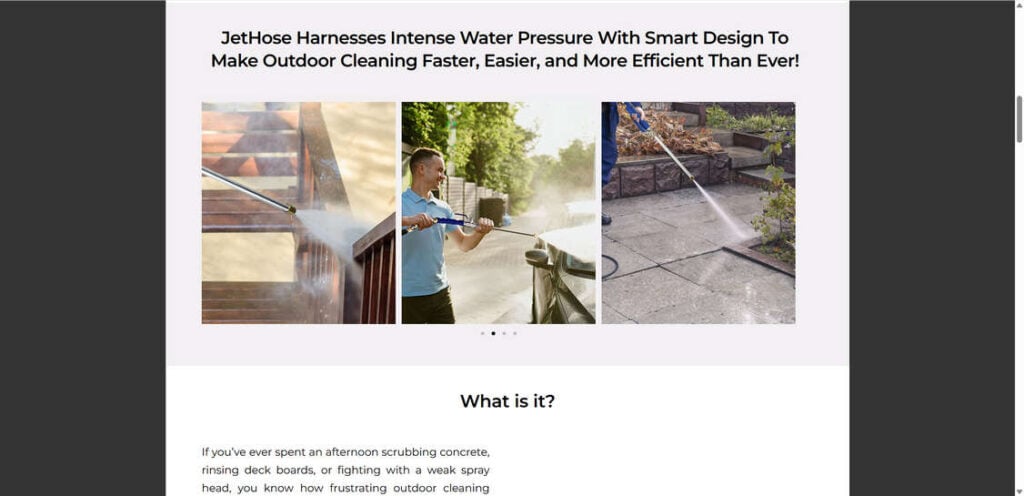
Overview of JetHose Pressure Washer
The official JetHose website is filled with bold claims and flashy marketing. According to their sales pitch, JetHose is the “#1 pressure device for instant and powerful cleaning.” Let’s look at what they promise compared to what real users experience.
Claimed Features
JetHose markets itself as having these standout features:
- Extreme Water Pressure – Promoted as being able to instantly eliminate grime and stains.
- Hydro-Power Technology – Suggested as a revolutionary system that transforms your garden hose into a professional washer.
- Two Spray Modes – Advertised as perfect for everything from patios and driveways to cars and fences.
- Universal Compatibility – Claims to easily connect to any standard hose without extra parts.
- Durability – Supposedly made from “professional-grade” materials designed for long-term use.
- Money-Saving Solution – Pitched as an affordable alternative to expensive cleaning services and industrial pressure washers.
Marketing Promises
The website goes further by making JetHose sound like a miracle solution. They highlight:
- “Clean exterior surfaces 10x faster.”
- “No costly professional services needed.”
- “Removes even stubborn stains instantly.”
- “As seen in Forbes, Yahoo, MotorTrend, and Business Insider.”
These endorsements are misleading since there’s no evidence of official coverage in these outlets. The logos are simply placed to boost trust.
Red Flags in the Overview
- Exaggerated Cleaning Power
Real pressure washers rely on electric or gas-powered pumps that generate 1,500–3,000 PSI of pressure. A garden hose, by comparison, typically delivers 40–60 PSI. No attachment can magically increase this. JetHose can narrow water flow, but it cannot create professional-grade pressure. - Misleading Before-and-After Photos
A reverse image search shows many of JetHose’s before-and-after photos are taken from unrelated cleaning websites, not actual customer results. - Dropshipping Pricing
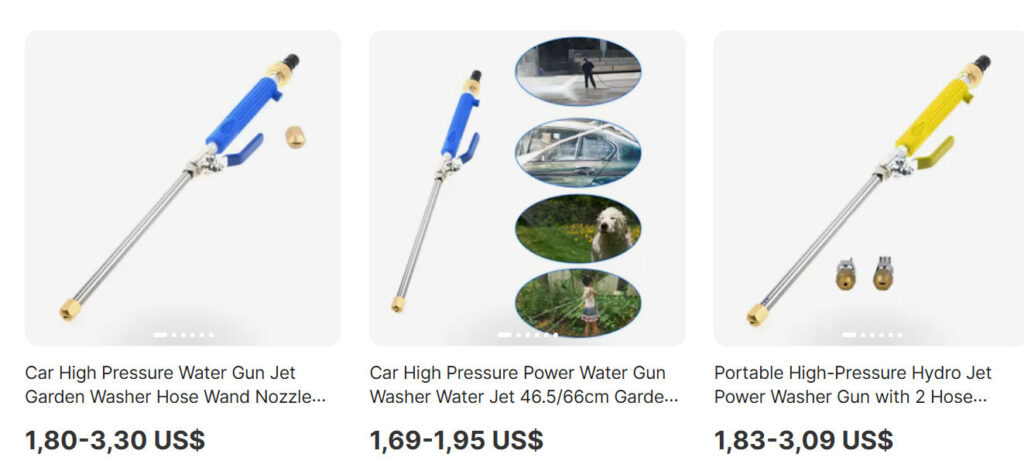
Identical nozzles are available on AliExpress and Alibaba for $5–$15, while JetHose sells them for $60–$125, often claiming a fake “60% discount.” - Customer Complaints
Verified reviews on Trustpilot and Amazon highlight several issues:- Products arriving broken or missing pieces.
- Weak cleaning performance compared to expectations.
- Cheap plastic parts that wear out quickly.
- Confusing billing and hidden charges during checkout.
Reality vs Marketing
At best, JetHose works like any basic garden hose nozzle. It may be fine for rinsing dust, watering plants, or light cleaning, but it will not remove embedded stains, oil, or mold like a professional pressure washer.
In short, the marketing creates unrealistic expectations that the product cannot meet.
How The Operation Works
To really understand JetHose, we need to look at how these types of dropshipping operations function.
Step 1: Generic Product Sourcing
JetHose is not an innovative new device. It is a generic garden hose nozzle widely sold on Alibaba, AliExpress, and similar wholesale platforms. Suppliers manufacture these nozzles for a few dollars each.
Step 2: Rebranding
The sellers behind JetHose rebrand the generic nozzle with a catchy name, sleek website, and exaggerated marketing language. They rename it “Hydro-Power Technology” to make it sound proprietary, even though it’s just a brass or aluminum nozzle.
Step 3: Inflated Pricing
Wholesale price: $5–$15
JetHose website price: $60–$125
The “discounts” (50–60% off) are permanent fixtures, designed to pressure customers into thinking they’re getting a limited-time deal.
Step 4: Aggressive Marketing
JetHose runs ads across Facebook, Instagram, TikTok, and YouTube. These ads typically:
- Show unrealistic before-and-after cleaning photos.
- Use dramatic taglines like “Turn your garden hose into a power washer!”
- Feature urgency tactics such as countdown timers, “only 46 left in stock,” and flashing banners about discounts.
Step 5: Customer Acquisition
The ads target homeowners looking for affordable cleaning solutions. Many fall for the promise of professional-grade cleaning at a fraction of the price.
Step 6: Fulfillment
When customers place an order, JetHose doesn’t ship directly from its own warehouse. Instead, it uses a dropshipping supplier (usually in China) to fulfill the order. This leads to:
- Long shipping times (2–6 weeks).
- Low-quality packaging.
- Occasional missing or damaged items.
Step 7: Fake Social Proof
To build trust, JetHose displays:
- Fake Reviews: The “8K+ happy customers” shown on the site are generic and unverifiable.
- Media Logos: No real press coverage exists.
- High Star Ratings: Often fabricated, since independent reviews tell a very different story.
Step 8: Limited Support and Returns
Customers who are unhappy face problems like:
- No clear contact information.
- Unresponsive customer service.
- Difficult refund process requiring expensive international return shipping.
Step 9: Repeat and Rebrand
Once negative reviews pile up, sellers often shut down the JetHose brand and re-launch under a new name, repeating the cycle.
This is the hallmark of a classic dropshipping scam operation.
What To Do If You’ve Fallen Victim
If you already bought JetHose and feel scammed, here are the steps you can take:
- Contact JetHose Support
- Request a refund immediately.
- Keep records of all emails and order confirmations.
- Dispute the Charge with Your Bank or PayPal
- File a chargeback if JetHose refuses to refund you.
- Provide screenshots of misleading claims, fake endorsements, or comparison listings from AliExpress.
- Report the Website
- File a complaint with the Federal Trade Commission (FTC) in the U.S.
- In the UK, report to Action Fraud.
- EU buyers can report to their national consumer protection body.
- Leave Honest Reviews
- Share your experience on Trustpilot, Reddit, and SiteJabber.
- Warn others so fewer people fall for the same scheme.
- Avoid Similar Scams
- Be wary of sites with:
- Constant fake discounts.
- Countdown timers and urgency tactics.
- Media logos without real coverage.
- No transparent contact details or company registration.
- Be wary of sites with:
- Look for Real Alternatives
- If you need true cleaning power, invest in a real pressure washer from reputable brands like Sun Joe, Greenworks, or Karcher.
- Even entry-level models (1,500–2,000 PSI) outperform JetHose by a wide margin.
Frequently Asked Questions About JetHose Pressure Washer
1. Is JetHose Pressure Washer legit or a scam?
The JetHose Pressure Washer is closer to a scam than a legitimate cleaning tool. While it is marketed as a revolutionary “hydro-power” device that can deliver extreme pressure, in reality, it is nothing more than a basic garden hose nozzle rebranded and sold at inflated prices. Identical products can be found on AliExpress or Alibaba for $5–$15, while JetHose sells them for $60–$125. Combined with fake reviews, misleading before-and-after photos, and exaggerated claims, it fits the profile of a dropshipping scam operation.
2. Does JetHose Pressure Washer really increase water pressure?
No. A standard garden hose provides water pressure of around 40–60 PSI. Professional pressure washers use electric or gas-powered pumps that deliver 1,500–3,000 PSI. JetHose cannot generate this kind of pressure. At best, it narrows the flow of water through a nozzle, which may feel slightly stronger but is nowhere near professional cleaning strength. This means JetHose can rinse away light dirt but will not remove deep stains, moss, algae, or oil as advertised.
3. Why are there so many positive reviews on the JetHose website?
The glowing reviews on the JetHose website are likely fake or manipulated. Many of them use generic language, stock photos, or AI-generated images instead of authentic customer submissions. On independent review sites like Trustpilot and Reddit, actual buyers complain of poor performance, cheap materials, long shipping times, and difficulty getting refunds. The large gap between onsite testimonials and external reviews is a major red flag.
4. Is JetHose Pressure Washer safe to use on all surfaces?
The website claims JetHose is safe for surfaces such as wood, siding, cars, and concrete. However, since it doesn’t actually create high pressure, it cannot effectively clean tough stains or mold from those surfaces. Instead, customers often find it ineffective for heavy-duty cleaning while being no more useful than a standard hose attachment. If safety is your concern, JetHose won’t damage most surfaces—but it also won’t clean them as promised.
5. Where does JetHose ship from?
Despite marketing itself as an American brand, JetHose orders are usually fulfilled through Chinese dropshipping suppliers. This is why customers frequently report shipping times of 2–6 weeks, poor packaging, and occasional missing or broken items. Because JetHose doesn’t hold inventory in the U.S. or Europe, quality control is inconsistent, and customer service is unreliable.
6. Can I get a refund if I’m not satisfied with JetHose?
In theory, JetHose advertises a 30-day money-back guarantee. In reality, customers report that refunds are difficult to obtain. Many are told to return items to international addresses at their own expense, making it more costly than the product itself. Others are offered only partial refunds or no response at all. This makes the refund policy unreliable and is another sign of a dropshipping scam.
7. Why does JetHose always show a 60% discount?
The “limited-time 60% discount” is a false urgency tactic. The JetHose website displays this discount constantly, regardless of when you visit. It is a classic dropshipping strategy to pressure buyers into making an impulsive purchase. Alongside fake countdown timers and “only X items left” banners, this creates artificial scarcity and makes customers feel they must buy quickly before missing out.
8. Are there other products identical to JetHose?
Yes. Identical hose nozzles are available across e-commerce platforms like AliExpress, Alibaba, and even Amazon under different brand names. These products are usually priced between $5 and $20. JetHose simply rebrands the same product, builds a flashy website, and sells it at a 500–700% markup. This is a clear indicator of a dropshipping scheme.
9. What should I do if I already bought JetHose and feel scammed?
If you believe you’ve been misled by JetHose, here are your options:
- Contact JetHose Support – Request a refund in writing and keep all correspondence.
- File a Chargeback – If you paid by credit card or PayPal, dispute the charge with your bank. Provide proof of misleading advertising.
- Report the Company – File complaints with the FTC (U.S.), Action Fraud (UK), or your local consumer protection agency.
- Leave Reviews – Share your experience on Trustpilot, Reddit, and SiteJabber to warn others.
- Avoid Similar Scams – Watch for signs like fake discounts, stolen before-and-after photos, and lack of a physical business address.
10. What are better alternatives to JetHose?
If you need real cleaning power, skip dropshipping products like JetHose. Instead, invest in a reputable pressure washer brand. Affordable models from Sun Joe, Karcher, or Greenworks deliver 1,500–2,000 PSI and will actually remove mold, algae, and stains. Even basic electric models are far more effective and cost-efficient over time than JetHose.
The Bottom Line
The JetHose Pressure Washer is not an innovative cleaning device. It is a generic garden hose nozzle, rebranded and sold at highly inflated prices using exaggerated claims and misleading marketing.
While it may work for light rinsing, it cannot generate true high-pressure cleaning power like professional machines. The dropshipping business model behind JetHose raises multiple red flags, from fake reviews to unreliable customer support.
If you’re considering JetHose, proceed with caution. It’s far more hype than reality, and in most cases, it leaves customers disappointed. For real results, stick to trusted pressure washer brands with proven track records.
Verdict: JetHose is not a total scam in the sense that it ships a product, but it is heavily overhyped and misleading. Avoid it if you expect true pressure washer performance.

Join the discussion
0 commentsShare your experience or ask a question about this article.
Community experiences
Did this happen to you?
Your experience could help someone recognize the same scam. Submit a private report for our team to review.
I experienced this tooReports are reviewed before publication. Sharing publicly is always your choice.
Discussion
Start the conversation
Have a question or something useful to share? Add the first comment.