

An elaborate email phishing scam promising free Le Creuset cookware has been making the rounds, deceiving Kohl’s shoppers into surrendering money and personal information. Masquerading as an official Kohl’s giveaway or promotion, this fraudulent “free gift” offer is a ruse designed to dupe recipients through multiple stages of deception.
In this article, we will unravel the intricacies of this scam to equip readers with the knowledge needed to recognize and avoid it. By examining their manipulative techniques, we can protect ourselves and our hard-earned money from these malicious cybercriminals.

Scam Overview
This con begins with an unsolicited email crafted to impersonate a legitimate prize giveaway from Kohl’s. Using convincing Kohl’s branding and mentions of the prestige Le Creuset brand, it convinces recipients they have been selected to receive a free Le Creuset cookware set.
To maintain perceived legitimacy throughout the scam, victims are directed through a series of deceitful pages mimicking Kohl’s promotional flows. After inputting personal information under the guise of prize redemption, victims are hit with recurring subscription fees disguised as processing costs for the “free” gift.
In reality, recipients are handing over their payment credentials to scammers who have no intention of sending prizes. The ruse allows them to unlawfully siphon funds from victims’ accounts through monthly recurring billing. Worse still, personal data harvested enables additional identity fraud.
How the Scam Works
The Kohl’s Le Creuset scam executes a series of deceptions designed to manipulate perceptions and behaviors at each stage:
The Bait: Official-Looking Emails
Personalized emails arrive in inboxes congratulating recipients on being selected to receive a free Le Creuset cookware set from Kohl’s. The sender name, email address, and domain mimic official Kohl’s correspondence.
Subject lines like “Your Free Le Creuset Gift from Kohl’s Awaits!” immediately grab attention. The email body further sells the ruse with customer-specific greetings, Kohl’s logos, and details suggesting careful selection for this special promotion.
These personalized touches build familiarity and trust, leading recipients to believe the message comes directly from Kohl’s. Of course, the reality is these are forged details from compromised customer data.
The Hook: Click Intriguing Links
Call-to-action links within the email promise to take recipients to the Le Creuset gift claim page. Enticing text implores them to “redeem their complimentary set” within a limited time window, creating urgency and excitement.
In actuality, these links redirect to fake Kohl’s-branded websites controlled entirely by scammers. Everything from web addresses to page design is engineered to uphold perceptions of legitimacy as users are reeled deeper into the scam.
The Trap: Submit Personal Information
Upon landing on scam pages mimicking Kohl’s gift redemption flows, users are prompted to enter personally identifiable information under the guise of prize fulfillment and shipping logistics.
With their data submitted, the trap is sprung. Scammers now possess usernames, passwords, addresses, phone numbers, and other credentials to enable further identity fraud and phishing exploits.
The Catch: Hidden Subscription Fees
After inputting information, victims are shown an order summary with a seemingly negligible $1.95 “shipping and processing fee” to receive their cookware set. However, obscured in tiny fine print are terms enrolling them into recurring monthly subscriptions totaling $79.95.
By this point, scam victims are so invested in redeeming their promised freebie, they gloss over details and complete the fake order. As soon as payment credentials are processed, scammers have ongoing access to charge their cards indefinitely.
The Nightmare: Repeated Unauthorized Charges
In the weeks following, victims report mystery $79.95 charges from unknown third parties. Attempts to cancel are met with resistance, as scammers try prolonging access to accounts. Some victims even have their information sold on to other scammers, multiplying their problems.
Only by quickly recognizing the ruse, urgently alerting relevant institutions, and watching for further activity can victims contain the damage inflicted by this scam’s deception tactics.
How to Avoid This Scam
The complexity of the Kohl’s Le Creuset scam makes it difficult to detect. But these tips can help identify warning signs:
- Be wary of unsolicited emails with gift offers, especially requiring personal/financial information. Verify legitimacy directly with Kohl’s.
- Check sender addresses and domains – are they from official Kohl’s correspondence?
- Don’t click links in emails. Manually navigate to Kohl’s website.
- Beware urgency cues pressuring you to act quickly.
- Thoroughly read all fine print before entering info or payment data.
- Take pause anytime you must pay for a purportedly free gift.
What To Do If You’ve Fallen Victim
If you suspect you’ve been deceived by the Kohl’s Le Creuset scam email and fake website, take these steps right away:
Step 1: Contact Financial Institutions
Alert your bank and credit card companies immediately to report any fraudulent charges or activity. Provide statements showing the unauthorized transactions and fees. Request they halt any recurring payments to the scammers.
Step 2: Change Passwords
If you entered any account credentials into scam sites, change your passwords immediately. Enable two-factor authentication if possible for an added layer of security.
Step 3: Monitor Accounts Closely
Keep a close eye on your financial accounts and credit reports for any signs of misuse of your information or further unauthorized activity. Report any suspicious transactions or accounts promptly.
Step 4: Contact Kohl’s
Inform the Kohl’s fraud department about the scam to alert them of the misuse of their brand name for phishing. Provide details that could aid their investigations.
Step 5: Report the Scam
File a complaint about the scam with the FTC, FBI, email providers, domain name registrars, and scam reporting sites. Provide as many details as possible to assist authorities.
Step 6: Learn From the Experience
In the future, exercise greater caution with unsolicited emails offering free gifts, especially those requesting financial information upfront. Never provide sensitive data to unfamiliar third-party websites.
Being proactive helps contain damages from the scam and prevent further victimization. Report fraudulent activity promptly and let your experience make you an informed consumer going forward.
Is Your Device Infected? Run a Free Malware Scan
Slow performance, constant pop-ups, or strange behavior? These are classic signs of a malware infection. The fastest way to find out is to scan your device with Malwarebytes Free — one of the most trusted malware removal tools available.
The free version detects and removes the most common threats, including:
- Adware — the cause of those annoying pop-ups
- Browser hijackers — unwanted redirects and changed homepages
- Trojans and spyware — hidden programs stealing your data
- Potentially unwanted programs (PUPs) — software you never asked for
👉 Select your device below — Windows, Mac, or Android — then follow the simple steps to download Malwarebytes, scan your system, and remove any threats it finds. The scan usually takes 5 to 20 minutes.
Run a Malware Scan with Malwarebytes for Windows
Malwarebytes is one of the most popular and trusted anti-malware tools for Windows — and it’s completely free for removing infections. It catches threats that many antivirus programs miss, including adware, browser hijackers, and trojans. Follow the steps below to scan and clean your PC in just a few minutes.
Download Malwarebytes
Click the button below to download the latest version of Malwarebytes for Windows from the official source. The free version is all you need — it will scan your computer and remove adware, browser hijackers, and other malicious software at no cost.
Download MalwarebytesOfficial installer for Windows 11 and 10. Your download starts right away.Want real-time protection? See Malwarebytes Premium Malwarebytes Free for WindowsScans and removes malware at no cost
-
Install Malwarebytes
When the download finishes, open your Downloads folder and double-click the MBSetup file. If Windows shows a User Account Control pop-up, click “Yes” to allow the installation.
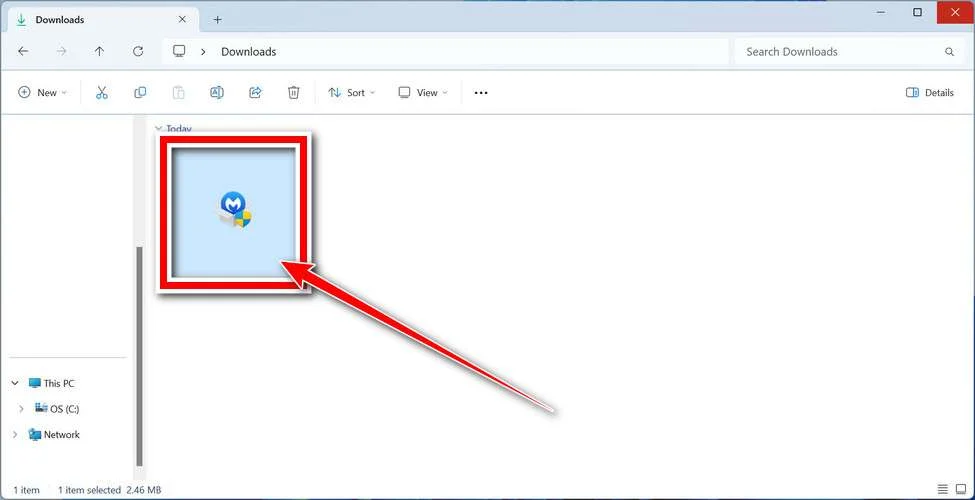
Follow the On-Screen Prompts to Install Malwarebytes
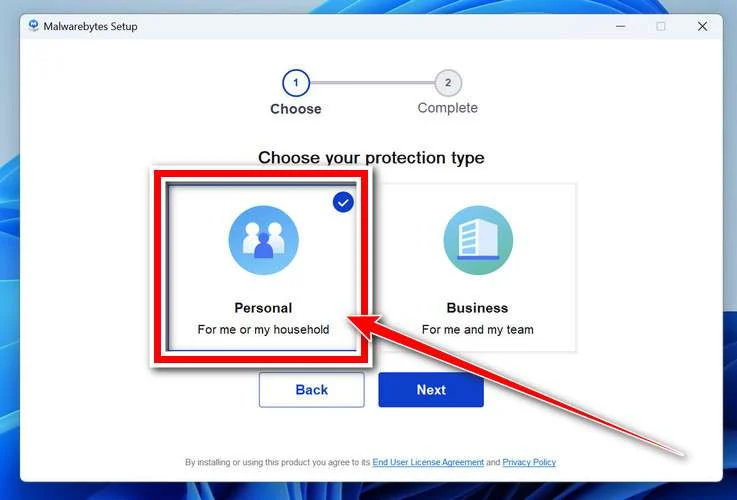
The setup wizard will walk you through a few quick screens:
-
Choose where you’re installing the program — “Personal Computer” or “Work Computer” — then click Next.
-
Malwarebytes will now install on your device. This usually takes under a minute.

-
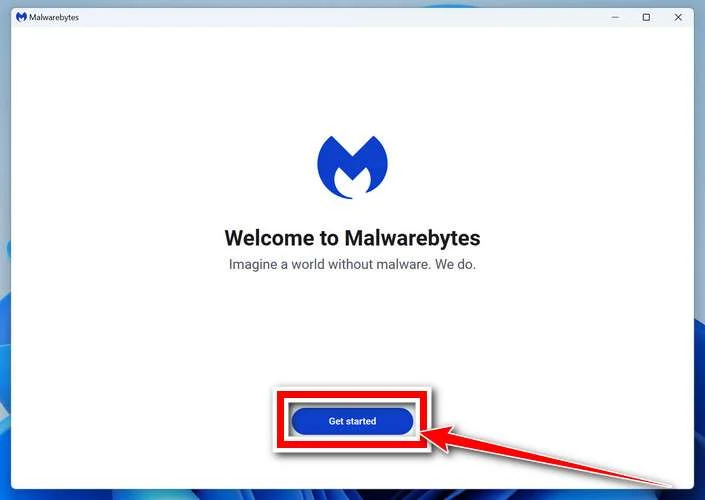
When installation is complete, the “Welcome to Malwarebytes” screen will open automatically.
-
On the final screen, click Open Malwarebytes to launch the program.

-
Enable “Scan for Rootkits”
Before scanning, turn on rootkit detection so Malwarebytes can find even the most hidden threats. Click the Settings gear icon on the left side of the screen.
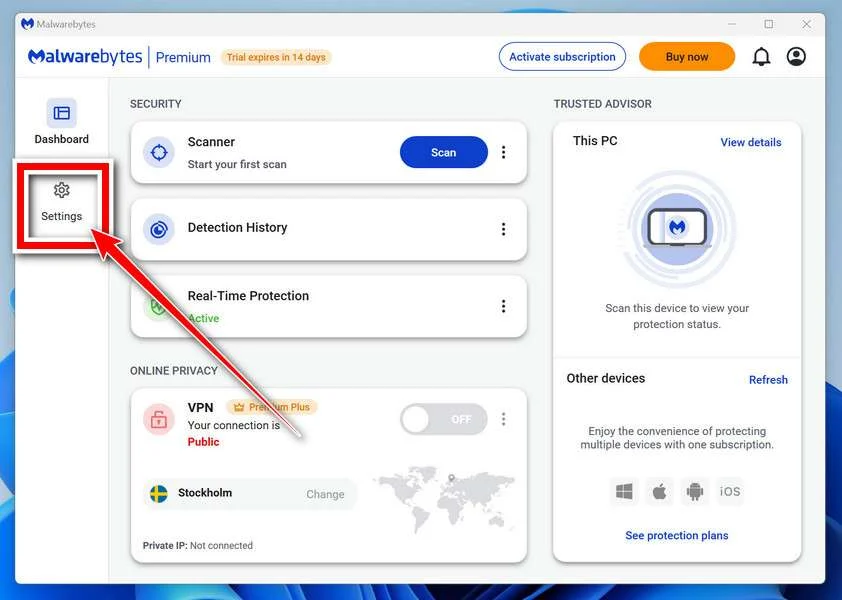
In the settings menu, find “Scan for rootkits” and click the toggle so it turns blue.

Done? Click “Dashboard” in the left pane to return to the main screen.
Start the Scan
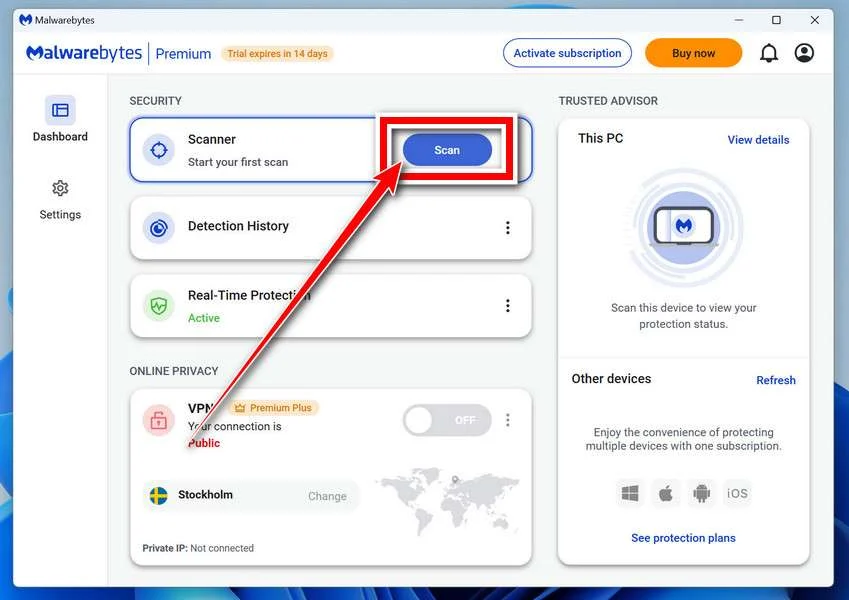
Click the blue Scan button. Malwarebytes will automatically update its virus database and start checking your computer for malware.
-
Wait for the Scan to Finish
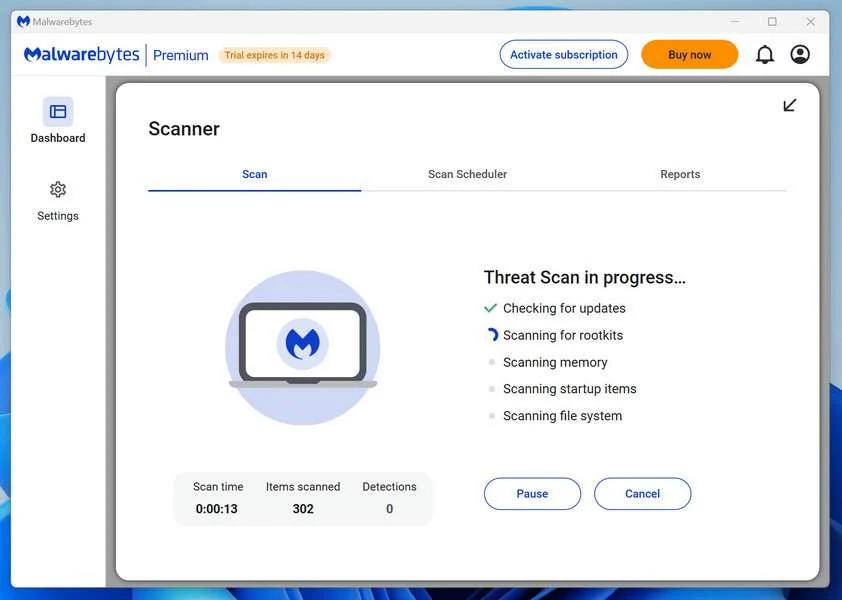
The scan checks your entire system for browser hijackers and other malicious programs, so it can take 5 to 20 minutes depending on your computer. Feel free to do something else — just check back occasionally to see the progress.
-
Quarantine the Detected Threats
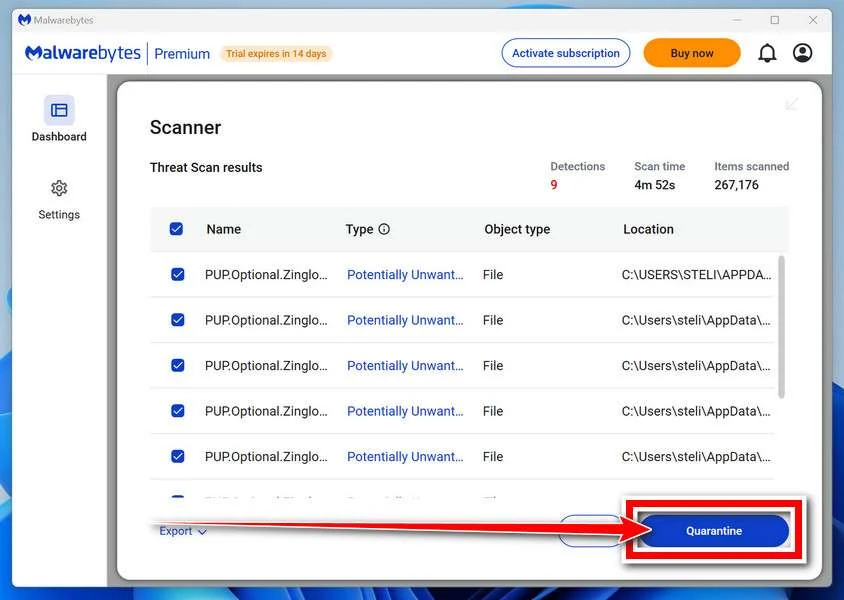
When the scan is done, you’ll see a list of everything Malwarebytes found — malware, adware, and potentially unwanted programs. Click the “Quarantine” button to remove all of them at once.
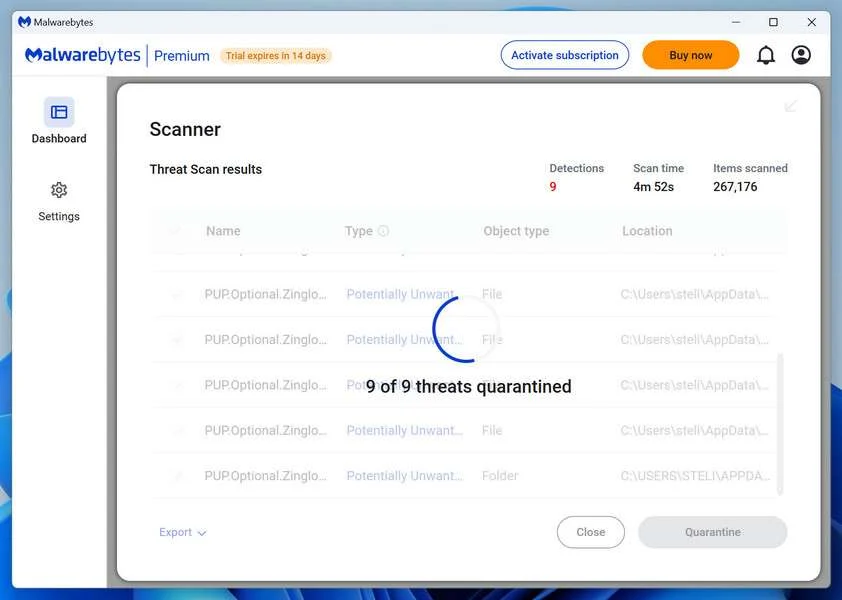
Malwarebytes will now remove the malicious files and registry entries and move them safely into quarantine.
-
Restart Your Computer
Some threats can only be fully removed after a reboot. If Malwarebytes asks you to restart, click Yes. Once you’re logged back in, Malwarebytes has finished removing the threats it found.
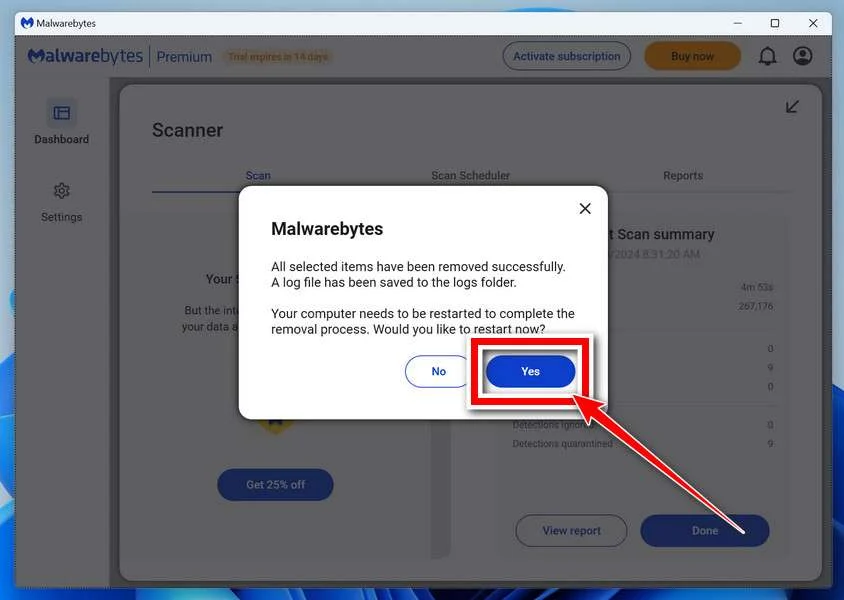
That’s it — your Windows PC is now clean of trojans, adware, and other malware, and should be back to running smoothly.
If you are still having problems with your computer after completing these instructions, then please follow one of the steps:
- Run a computer scan with ESET Online Scanner
- Ask for help in our Windows Malware Removal Help & Support forum.
Run a Malware Scan with Malwarebytes for Mac
Malwarebytes for Mac is a free on-demand scanner that removes the malware other security software tends to miss — adware, browser hijackers, and unwanted programs included. Cleaning an infected Mac with Malwarebytes has always been completely free, and it’s our go-to recommendation. Follow the steps below to scan and clean your Mac in just a few minutes.
-
Download Malwarebytes for Mac
Click the button below to download the latest version of Malwarebytes for Mac.
Download MalwarebytesOfficial installer for macOS. Your download starts right away.Want real-time protection? See Malwarebytes PremiumMalwarebytes Free for MacScans and removes malware at no cost -
Open the Malwarebytes setup file
When the download finishes, open your Downloads folder and double-click the setup file to begin the installation.
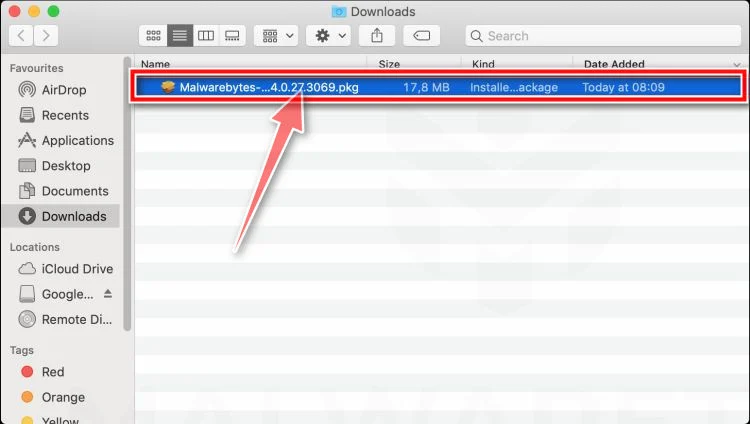
-
Follow the On-Screen Prompts to Install Malwarebytes
The Malwarebytes for Mac Installer will guide you through a few quick screens. Click “Continue” and keep following the prompts until the installation completes.
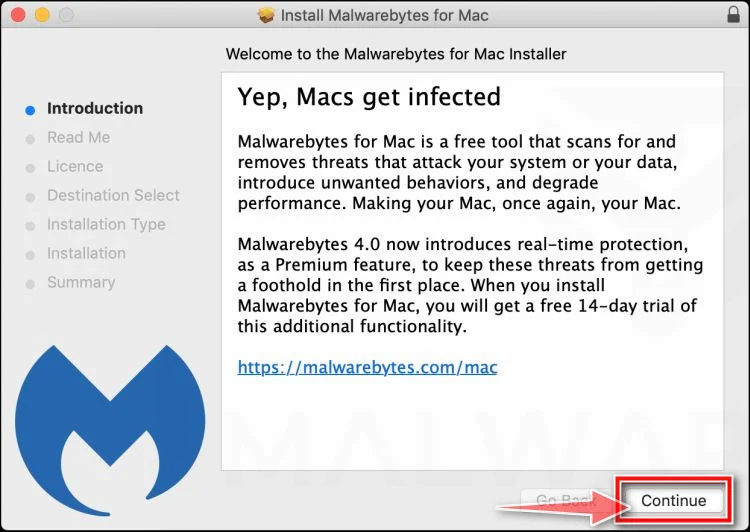
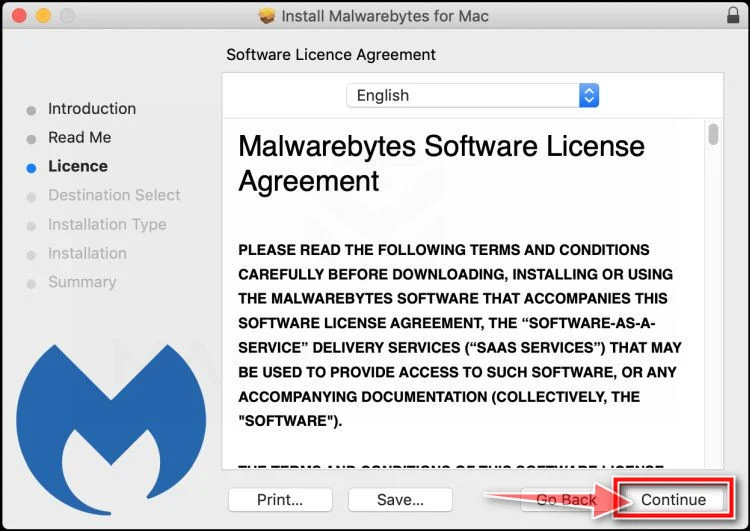
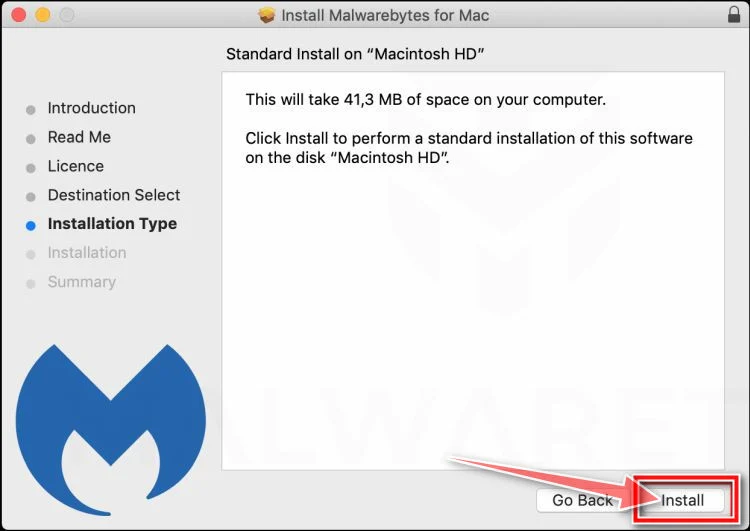
When the installation is complete, Malwarebytes opens to the Welcome to Malwarebytes screen. Click “Get started“.
-
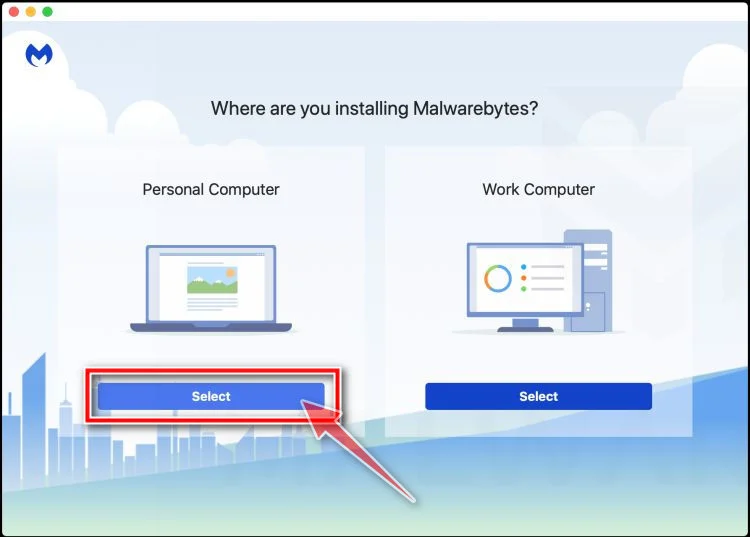
Select “Personal Computer” or “Work Computer”
Malwarebytes will ask what type of computer you’re installing it on. Click either Personal Computer or Work Computer, whichever applies.
-
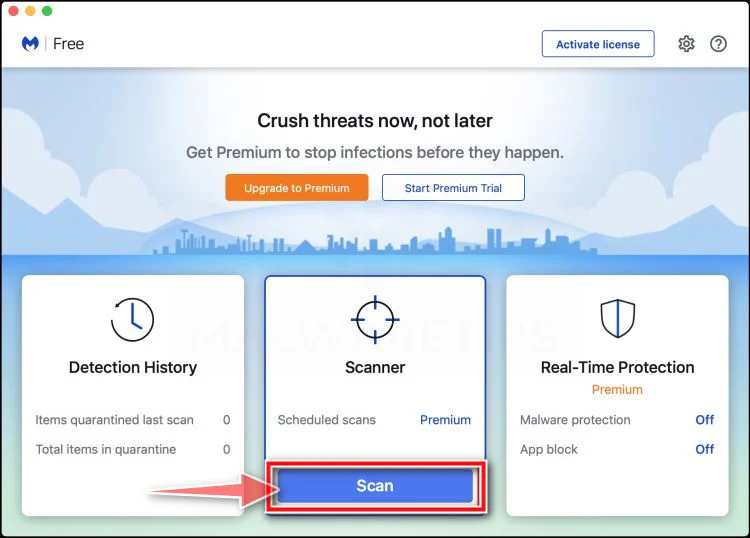
Start the Scan
Click the “Scan” button. Malwarebytes will automatically update its detection database and begin checking your Mac for malware.
-
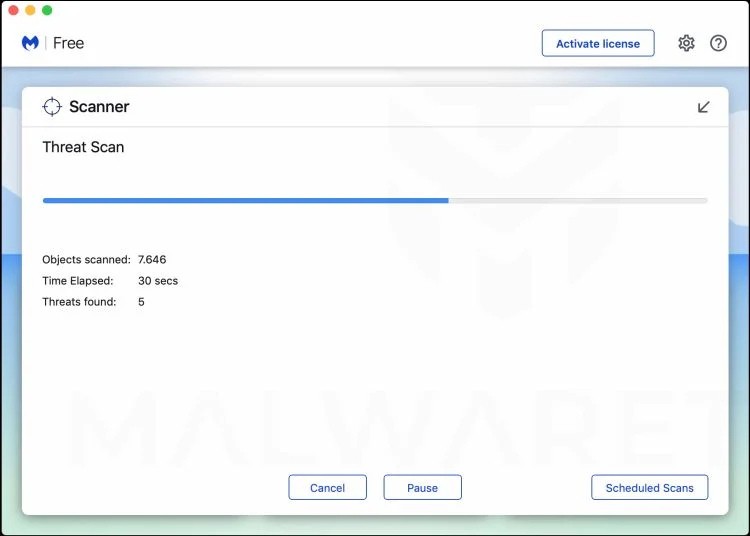
Wait for the Scan to Finish
Malwarebytes will scan your Mac for adware, browser hijackers, and other malicious programs. This can take a few minutes, so feel free to do something else — just check back occasionally to see the progress.
-
Quarantine the Detected Threats
When the scan is done, you’ll see a list of everything Malwarebytes found. Click the “Quarantine” button to remove all the threats at once.
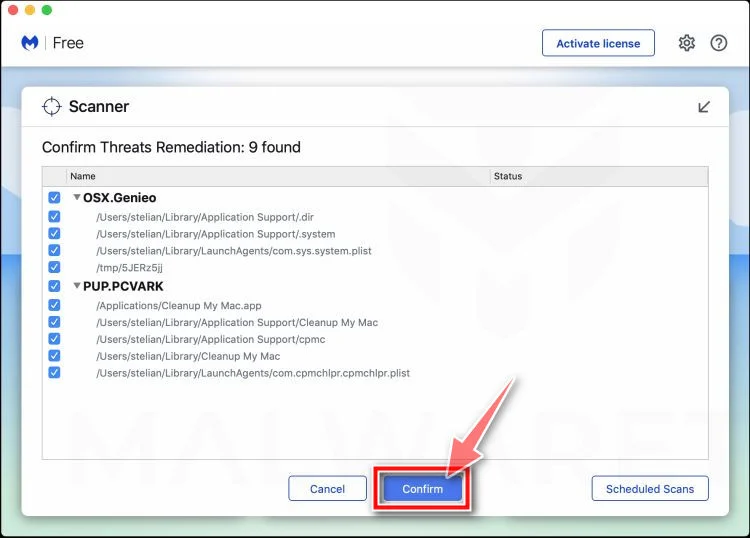
-
Restart Your Mac
Malwarebytes will now remove all the malicious files it found. Some threats can only be fully removed after a reboot — if Malwarebytes asks you to restart, allow it. Once you’re logged back in, your Mac is clean.
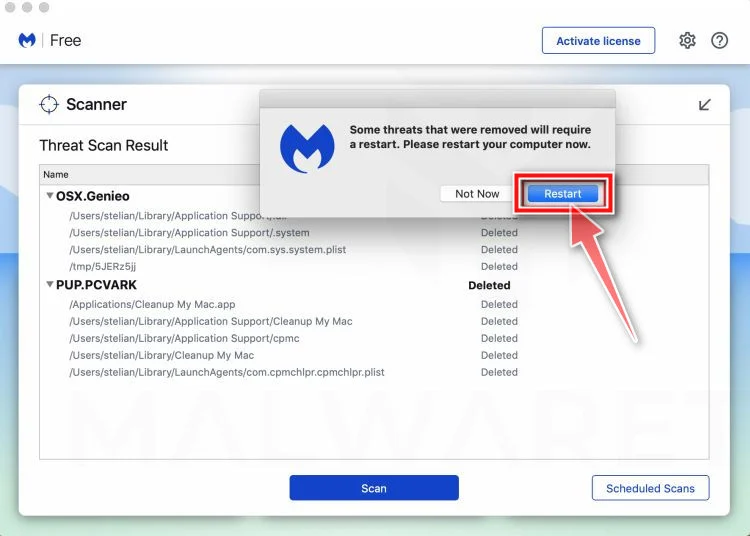
That’s it — your Mac is now free of adware, rogue browser extensions, and other potentially harmful software.
If you are still experiencing problems while trying to remove a malicious program from your computer, please ask for help in our Mac Malware Removal Help & Support forum.
Run a Malware Scan with Malwarebytes for Android
Malwarebytes for Android automatically detects and removes dangerous threats like malware and ransomware so you don’t have to worry about your most-used device being compromised. Aggressive detection of adware and potentially unwanted programs keeps your Android phone or tablet running smooth.
-
Download Malwarebytes for Android.
You can download Malwarebytes for Android by clicking the link below.
Get Malwarebytes for AndroidOpens Google Play in a new tab.Want real-time protection? See Malwarebytes Premium for AndroidMalwarebytes for AndroidScans your phone and removes malware at no cost -
Install Malwarebytes for Android on your phone.
In the Google Play Store, tap “Install” to install Malwarebytes for Android on your device.

When the installation process has finished, tap “Open” to begin using Malwarebytes for Android. You can also open Malwarebytes by tapping on its icon in your phone menu or home screen.

-
Follow the on-screen prompts to complete the setup process
When Malwarebytes will open, you will see the Malwarebytes Setup Wizard which will guide you through a series of permissions and other setup options.
This is the first of two screens that explain the difference between the Premium and Free versions. Swipe this screen to continue.
Tap on “Got it” to proceed to the next step.
Malwarebytes for Android will now ask for a set of permissions that are required to scan your device and protect it from malware. Tap on “Give permission” to continue.
Tap on “Allow” to permit Malwarebytes to access the files on your phone.
-
Update database and run a scan with Malwarebytes for Android
You will now be prompted to update the Malwarebytes database and run a full system scan.

Click on “Update database” to update the Malwarebytes for Android definitions to the latest version, then click on “Run full scan” to perform a system scan.

-
Wait for the Malwarebytes scan to complete.
Malwarebytes will now start scanning your phone for adware and other malicious apps. This process can take a few minutes, so we suggest you do something else and periodically check on the status of the scan to see when it is finished.

-
Click on “Remove Selected”.
When the scan has been completed, you will be presented with a screen showing the malware infections that Malwarebytes for Android has detected. To remove the malicious apps that Malwarebytes has found, tap on the “Remove Selected” button.

-
Restart your phone.
Malwarebytes for Android will now remove all the malicious apps that it has found. To complete the malware removal process, Malwarebytes may ask you to restart your device.
That’s it — your Android phone is now clean — no more malicious apps, adware, or browser redirects.
If you are still having problems with your phone after completing these instructions, then please follow one of the steps:
- Restore your phone to factory settings by going to Settings > General management > Reset > Factory data reset.
- Ask for help in our Mobile Malware Removal Help & Support forum.
Stay Protected: Block Ads and Malicious Sites
Now that your device is clean, keep it that way. Most infections start with a malicious ad or a fake download button — so blocking them at the source is your best defense.
We recommend AdGuard, which blocks malicious ads, phishing pages, and dangerous redirects before they can reach you.
👉 Download AdGuard and browse safely
Frequently Asked Questions
What is the Kohl’s Le Creuset scam email?
The Kohl’s Le Creuset scam email is a phishing email pretending to offer free Le Creuset cookware sets from Kohl’s. It aims to steal money and personal information from recipients.
How does the Kohl’s Le Creuset scam work?
The scam sends an email impersonating Kohl’s, claiming you won a free gift. Clicking links goes to fake Kohl’s websites that get your personal and payment details to enroll you in hidden monthly subscription fees.
What are signs of the Kohl’s Le Creuset scam email?
Warning signs include an unsolicited email, urgent calls to claim a prize, requests for personal information, mismatched links and domains, and fine print subscription fees.
Should I click on links or provide info to get the free set?
No, this is a scam tactic to steal your data and money. Never click unverified links or provide personal/financial information in unsolicited emails.
What happens if I provided my information to the scammers?
Contact your bank and credit card companies immediately to halt payments. Monitor your accounts and credit reports closely for fraudulent activity. Change any passwords reused on scam websites.
How can I avoid the Kohl’s Le Creuset scam?
Be wary of gift offers in emails from unknown senders. Verify legitimacy on Kohl’s official website before providing information. Check for mismatched domains and hidden fees. Report scam emails to Kohl’s.
Where can I report the Kohl’s Le Creuset scam?
Alert Kohl’s, your bank, credit card company, the FTC, and FBI. File complaints about scam emails with your email provider and their domain registrar. Provide details on scam reporting sites.
Conclusion
Scammers will continue dreaming up new variants of cons impersonating trusted brands like Kohl’s. But exposing their deceitful tactics helps neutralize their power to exploit others. Now that you know how to identify these Le Creuset gift scams, you can confidently delete the phishing attempts, warn loved ones, and report these malicious actors. With awareness and care, we can partake in the conveniences of modern life while keeping fraudsters at bay.

Join the discussion
0 commentsShare your experience or ask a question about this article.
Discussion
Start the conversation
Have a question or something useful to share? Add the first comment.