

The Kuyami Pillow is advertised as a “luxury hotel pillow” that promises cloud-like comfort and the kind of sleep you’d expect in a five-star suite. The ads make it sound like a game-changer, offering softness, durability, and the perfect balance of support.
But here’s the big question: Are Kuyami pillows really luxury hotel quality—or are they just another dropshipping scam wrapped in slick marketing?
In this in-depth review, we’ll take a closer look at what Kuyami claims, the red flags hidden in their website and terms, what real customers are saying, and whether this is a brand you can trust with your sleep—or your money.
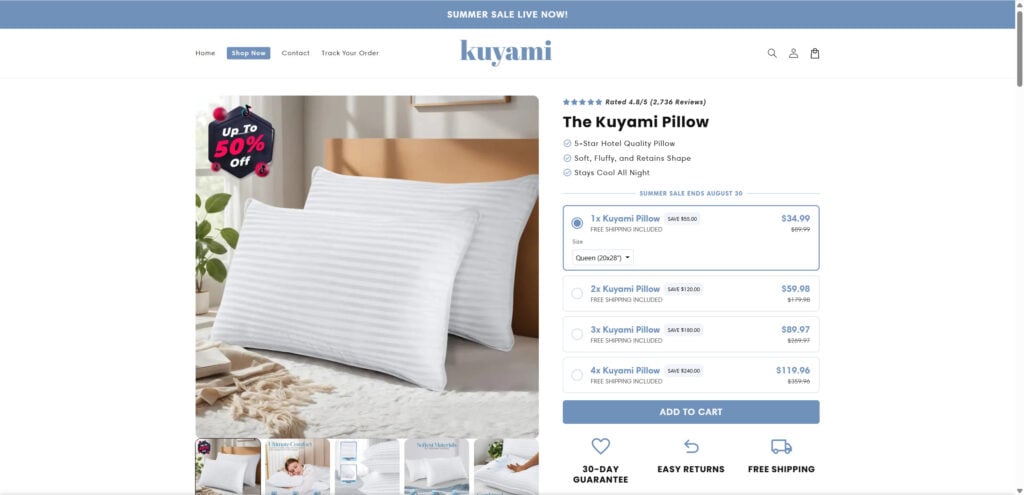
Overview of Kuyami Pillows
Kuyami markets its pillows as:
- Luxury hotel quality at an affordable price
- Designed for all sleep positions (back, side, and stomach)
- Made with premium filling for maximum comfort and breathability
- Endorsed by thousands of “happy customers” with a 4.8-star rating
On the surface, it looks appealing. Who wouldn’t want a pillow that replicates the feeling of sleeping in a high-end resort? The pricing seems reasonable too: around $35 for one pillow or $60 for two—a fraction of what true hotel-quality down pillows cost.
Why People Are Drawn In
- Hotel Luxury Promise – The idea of five-star quality at home is an attractive pitch.
- Affordable Price – Compared to brands like Marriott, Ritz-Carlton, or Brooklinen, Kuyami’s price seems like a steal.
- Polished Ads – Professional-looking social media ads create trust and make the product look high-end.
But beneath the glossy marketing, there are multiple warning signs that buyers should know about.
The Red Flags Behind Kuyami Pillows
1. Packaging Doesn’t Match “Luxury” Claims
Unboxing videos reveal the pillows arrive in plain brown cardboard boxes, sometimes labeled only as “2 Pack Bed Pillows.” No Kuyami branding, no luxury packaging, nothing that suggests premium quality.
2. Polyester Filling, Not Luxury Materials
Luxury hotel pillows are usually filled with down, feather, or high-grade gel fibers. Kuyami’s own fine print reveals the filling is 100% polyester—the cheapest material available. Polyester pillows are notorious for going flat quickly, trapping heat, and lacking the plushness that high-end pillows provide.
3. Suspiciously High Ratings
The Kuyami site flashes a 4.8-star rating from nearly 2,000 reviews, but these reviews cannot be verified. Independent platforms like Reddit and Facebook tell a different story, with complaints of thin, lumpy pillows that feel nothing like luxury.
4. Terms That Protect the Seller, Not the Buyer
Buried in their terms and conditions, Kuyami makes some concerning statements:
- Products may not match the pictures on the website.
- They provide no guarantees of quality.
- Cancellations may not be accommodated once payment is processed.
- They accept no responsibility for delivery delays or lost packages.
In short: once you buy, you’re taking all the risk.
5. Shipping and Sourcing Issues
Despite branding itself as a premium company, Kuyami often ships from China, not a local warehouse. Shipping times can take weeks or even months. Some customers report receiving the wrong size pillows or damaged packaging.
6. Customer Service Problems
Multiple buyers report that Kuyami’s customer service is nonexistent:
- Emails bounce back or go unanswered.
- There’s no phone number to call.
- Refund requests are ignored or denied.
7. Extreme Markup on Cheap Products
Searches on Alibaba reveal nearly identical pillows selling for under $2 each. Kuyami is likely sourcing these cheap polyester pillows in bulk and reselling them at over 1,000% markup.
How The Kuyami Pillow Operation Works
Like many online “luxury” products, Kuyami operates as a dropshipping business. Here’s how the process works:
Step 1: Source Cheap Products
Generic polyester pillows are purchased in bulk from suppliers on platforms like Alibaba for as little as $1–$2 per pillow.
Step 2: Rebrand and Repackage
The pillows are marketed under a new brand name, “Kuyami,” with advertising that positions them as luxury hotel-quality.
Step 3: Inflate the Price
The pillows are then sold online for $35–$60, creating the illusion of a “deal” compared to real luxury pillows that can cost over $200 each.
Step 4: Aggressive Social Media Advertising
Kuyami spends heavily on Facebook, Instagram, and TikTok ads that:
- Show models unboxing plain pillows but call them “luxury hotel quality.”
- Use mirrored videos or edited clips to hide details of cheap packaging.
- Display fake urgency tactics, like countdown timers and limited stock notices.
Step 5: Fake Reviews and Trust Signals
The website showcases suspicious 4.8-star reviews that cannot be verified. Logos of hotels or lifestyle brands may appear, but without any actual endorsements.
Step 6: Complicated Refunds and Poor Support
The terms make it extremely hard for customers to cancel orders, request refunds, or resolve shipping issues. Many end up disputing charges through their banks because customer service is unresponsive.
Step 7: Rebranding After Backlash
Like other dropshipping pillow brands (e.g., “Bondi Curls” with hair tools), Kuyami could easily shut down or rebrand under a new name if reviews turn too negative.
What To Do If You Bought Kuyami Pillows
If you’ve already purchased Kuyami pillows and feel misled, here’s what you should do:
1. Contact Kuyami Directly
- Send an email requesting a refund (keep screenshots of your order and communications).
- If the email bounces or they don’t reply, move to step 2.
2. File a Chargeback
- Contact your bank or credit card provider.
- Provide evidence: screenshots of misleading ads, fine print in the terms, and examples of similar pillows on Alibaba.
3. Report the Business
- US buyers: File a complaint with the Federal Trade Commission (FTC).
- Australian buyers: Report to the ACCC (Australian Competition & Consumer Commission).
- UK buyers: Report to Action Fraud.
4. Leave Honest Reviews
- Share your experience on Trustpilot, Reddit, and Facebook to warn other buyers.
- The more awareness, the harder it is for dropshipping sites to keep scamming customers.
5. Buy from Trusted Sources Next Time
If you want true hotel-quality pillows, look for reputable brands like:
- Marriott Hotels Signature Pillow (available on Marriott’s own shop).
- Brooklinen Down Pillow.
- Parachute Home Pillows.
- Tempur-Pedic Pillows for memory foam lovers.
These brands offer warranties, real customer service, and transparency in materials.
The Bottom Line
The Kuyami Pillow is marketed as a luxury hotel-quality product, but the reality is far less glamorous. Based on the evidence—cheap polyester filling, plain packaging, fake urgency tactics, poor customer service, and near-impossible refunds—Kuyami appears to be another dropshipping operation with more hype than substance.
Are they legit? Technically, you might receive a pillow. But will it be luxury? No. At best, you’re getting a cheap polyester pillow marked up 1,000%.
Verdict: Skip Kuyami. If you want real comfort and durability, invest in pillows from established, reputable brands that deliver what they promise.








