

A delivery order asks you to stop at a convenience store. The customer says they’ll cover the purchase and add something extra for your trouble.
Then comes a shortcut: send a photo and skip the delivery address. For a rider trying to finish the job, that offer deserves a pause.
Overview
A real delivery order becomes a request for redeemable codes
The Lalamove Roblox gift card scam targets delivery riders through “Buy For Me” orders. The customer asks the rider to purchase cards with an apparent reimbursement promise.
Instead of receiving the cards at an address, the customer wants the redemption information. The rider can lose the purchase cost before completing the trip.
The Singapore Police Force’s rider warning confirms this method. It describes at least 13 reported cases and S$2,000 in losses since September 2026.
Those figures belong to the October 6 warning, not a running count. Lalamove and Roblox are legitimate services being used in a customer’s deception.
The supposed shortcut is where the value leaves
The customer falsely claims that sending the codes allows remote completion, without traveling to the delivery location.
Once redeemed, the balance is no longer protected by the rider holding the physical cards. The valuable part was the information sent in the photo.
The documented pattern includes:
- An accepted purchase-and-delivery order rather than a random unsolicited job offer.
- A request to buy Roblox gift cards at a convenience store.
- Promises of later payment or an easier way to finish.
- Instructions to reveal and photograph redemption details.
- A customer who disappears or cancels after obtaining the codes.
Don’t let the customer redefine how the order is completed
Check unexpected instructions through the platform’s established support process. A customer’s chat message doesn’t create a reliable reimbursement guarantee.
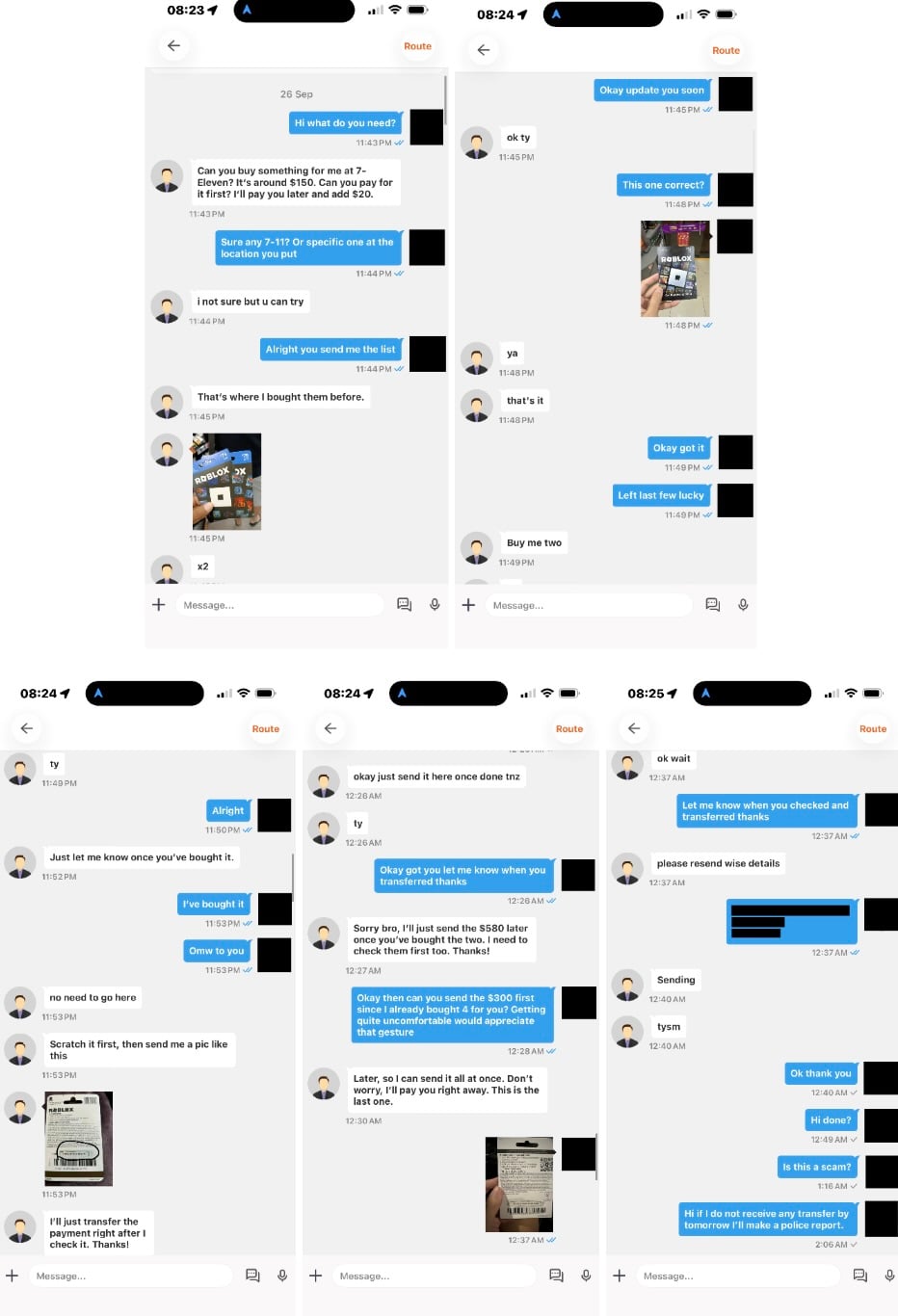
The original conversation above was published by police with identifying details obscured. It shows the progression from an ordinary purchase request to exposed codes.
This differs from a fake Lalamove payment page sent to a Marketplace seller. Here, the person taking the financial risk is the delivery rider.
Why a Rider Might Agree Before Recognizing the Risk
Buying something on a customer’s behalf can fit the purpose of a purchase-and-delivery job. The request doesn’t arrive completely outside the rider’s work.
The conversation can also remain polite. A customer promising to pay later may sound disorganized rather than dishonest.
What changes the situation is the request for usable codes before a verified payment or legitimate completion process. That transfers value away from the rider.
A suggested extra payment can make the job feel worthwhile. Don’t let the promised bonus distract from whose money is funding the cards.
The customer may also say no travel is needed after purchase. Saving time sounds helpful when you’re balancing multiple jobs.
But convenience isn’t payment protection. Sending a code can complete the customer’s real objective while leaving the rider’s expenses unsettled.
Keeping the conversation inside a real platform helps preserve evidence. It doesn’t make every customer instruction authorized by that platform.
You can report a suspicious request without accusing every purchase-and-delivery customer. The issue is this request for spendable information and unverified reimbursement.
How the Lalamove Roblox Gift Card Scam Works
Step 1: The customer places a purchase-and-delivery order
The rider encounters the request through a normal-looking job. It appears to involve buying items at one location and taking them to another.
That starting point matters. The rider has already accepted a work task before the customer introduces the gift-card instructions.
Don’t assume that accepting an order commits you to every later request. A material change still needs to fit the platform’s actual rules.
Step 2: The requested purchase becomes Roblox cards
The customer contacts the rider and asks for Roblox gift cards from a convenience store. The apparent plan is to reimburse the purchase.
Before spending personal funds, clarify how payment and completion are handled through the real service. Don’t rely solely on a stranger’s promise in chat.
If the request is unclear, contact support before buying. Having already reached the store isn’t a reason to take an unexplained financial risk.
A photograph of the front can identify a product without revealing redemption information. The sensitive details underneath the scratch area are a different matter.
Step 3: The customer offers remote completion
The rider is told there is no need to deliver the physical cards. Sharing their codes supposedly lets the job finish remotely.
This changes the transaction. You’re no longer just transporting a purchase; you’re sending the information that lets someone consume its value.
Check that claim with the platform instead of letting the customer explain the rules. The person benefiting from the shortcut isn’t an independent authority.
If you’re uncomfortable, pause the job through the appropriate support route. Don’t disclose a code simply to avoid an argument about completion.
Step 4: Scratched codes or photos provide the spendable balance
The customer asks the rider to reveal the hidden information and send it. A clear photo can supply everything needed to redeem the card.
The original police conversation pairs a scratch-and-photo request with promises of later payment. The photo supplies spendable information, not proof of delivery.
Earlier in that conversation, the rider asks whether the photographed product is correct. That is a normal product check, before redemption details enter the exchange.
The next instruction is different: no delivery is needed, but the scratch area must be revealed and photographed. The customer promises payment after checking it.
That distinction gives you a useful stopping point. A photo showing which item you found needn’t disclose the hidden information that spends its balance.
Don’t test a code by entering it into your own gaming account. That may consume or attach the balance and complicate the purchase further.
If the customer already received a usable photo, treat the code as exposed even if they claim it wasn’t received or didn’t work.
Step 5: The customer redeems the value and avoids repayment
Police describe customers becoming unreachable or canceling after the codes are redeemed. The rider remains responsible for money spent buying the cards.
A cancellation notice doesn’t rewind redemption. Nor does keeping the packaging put the balance back under the rider’s control.
Don’t purchase another card because the first supposedly failed. Stop the exchange and involve the platform and relevant card support immediately.
Refund possibilities depend on the transaction and redemption status. Nobody in the suspicious conversation can guarantee that your expenses will be restored.
The original exchange also shows the rider asking for partial payment while the customer postpones reimbursement. Later messages ask whether this is a scam.
You don’t need to reach that stage before involving support. Repeated promises of payment aren’t a replacement for funds actually received.
If several cards were bought, keep a private record of which details were shared. That helps support distinguish exposed cards from any still protected.
What the Card Photo Does and Doesn’t Prove
A receipt proves a purchase, not reimbursement
Your receipt helps establish when, where, and how much you paid. It does not show that the customer has settled the amount owed to you.
Check actual funds through your trusted payment records. A customer’s screenshot saying “sent” isn’t the same as money arriving.
If the platform displays a payment status, distinguish what that status covers. Don’t assume it includes every separate personal expense without checking.
The physical card can be empty while still in your hand
A redeemable code carries value independently of delivery. Someone doesn’t need to collect the plastic card to use the balance it represents.
That is why the request to expose the scratch area is so important. It isn’t ordinary proof that you’ve found the right product.
Keep photographs containing codes private when asking for help. Posting them in a rider group can expose the same value to additional people.
A real order doesn’t make a customer trustworthy
A platform can record a job without validating every statement made during its chat. Account presence isn’t a personal guarantee against deception.
Likewise, don’t assume the account holder’s displayed name identifies the criminal. Preserve it for investigation rather than publicly accusing someone with a matching name.
Report the account and order through the service. The useful evidence is what happened inside the transaction, including requests, purchases, and cancellations.
If You Bought the Cards but Haven’t Sent Anything
Stop before revealing the redemption information. A purchase already made doesn’t mean you must complete the customer’s proposed shortcut.
Keep the cards and receipts intact. Ask the store or issuer what options exist without assuming gift cards can always be returned.
Contact Lalamove through the actual app or its official Singapore website. Explain the code request and ask how to handle the order.
Don’t let the customer dictate a support number or move the dispute to another chat. That can separate the instruction from the platform’s record.
If the customer threatens a complaint, keep the messages. Provide them to support rather than sending codes to prevent a bad rating.
If reimbursement appears later, check the actual transaction before acting. Never send a separate “verification” payment to release money you are supposedly receiving.
For a genuine delivery, use the service’s established workflow. This warning doesn’t authorize ignoring legitimate customer property or bypassing platform procedures.
What to Do if You Have Fallen Victim to This Scam
-
Stop sending card information. Don’t provide additional photos, replacement codes, or another purchase because the customer says the previous card failed.
Save the conversation before blocking or leaving it. You may need the exact order reference to connect the report to the customer account.
-
Contact the card’s legitimate support promptly. Explain that redemption details were disclosed through a fraudulent delivery request and ask whether any value remains protectable.
Use contact information from the authentic card or issuer website. Keep purchase receipts available, but don’t assume support can reverse a completed redemption.
-
Report the order to Lalamove. Include the customer messages, requested items, purchase costs, and the point at which codes were disclosed.
Ask how to preserve the job record and handle any disputed cancellation. Platform compensation isn’t guaranteed by the existence of a police warning.
-
Discuss the purchase with your payment provider. If you used a bank card, explain that the underlying purchase funded a gift-card scam.
Be accurate about what you authorized. A real store purchase isn’t automatically an unauthorized bank transaction simply because the customer later deceived you.
-
Keep a clear financial record. Separate the card face value, any delivery earnings, promised extras, and actual reimbursements received.
Retain receipts and card packaging for private reporting. Don’t destroy them because the balance seems spent or because the customer canceled.
-
Report the fraud to police. Include the order details and any platform or issuer case numbers. In Singapore, ScamShield also provides official scam guidance.
The local ScamShield helpline is 1799. It can help check a suspicious approach, but urgent payment questions still belong with the relevant provider.
-
Reject anyone charging an upfront recovery fee. A stranger who says they can retrieve redeemed codes may be using the incident for another scam.
Continue through the platform, issuer, bank, and investigators you independently reached. Don’t hand over account access to someone contacting you privately.
A Better Rule for the Next Purchase Request
Before advancing personal money, know the approved purchase process and what happens if the customer changes the instructions. Resolve uncertainty before the money is spent.
Keep redemption information out of casual chat, even when the customer says a photo will save a trip. Codes are not ordinary delivery confirmation.
If a job suddenly changes from delivering an item to transferring its usable value, pause. That’s a financial change, not merely a different drop-off arrangement.
Discuss the pattern with other riders without circulating unredacted cards or customer identifiers. A safe description is enough to explain the warning.
Finally, make support verification part of the job rather than a personal confrontation. You can question an instruction without trying to investigate the customer yourself.
Frequently Asked Questions
Is every Lalamove Buy For Me order a scam?
No. This warning concerns deceptive gift-card requests and code disclosure. Use the platform’s real purchase and support procedures for legitimate orders.
Why does the customer want a photo instead of delivery?
A photo revealing the redemption details can let the customer use the balance without collecting the physical card. That’s the value-transfer point.
What if I still have all the cards?
Physical possession doesn’t protect exposed codes. Contact the legitimate issuer promptly and ask about their status without redeeming them yourself as a test.
Does canceling the delivery cancel the gift cards?
Don’t assume so. The delivery record and the gift-card purchase are separate. Report both to the appropriate platform and card provider.
Will Lalamove automatically reimburse the purchase?
The police advisory doesn’t establish a compensation entitlement. Report the job, provide the evidence, and ask the platform which options apply.
Must I send codes because I accepted the order?
Don’t let a customer’s later instruction override the platform’s established process. Pause the code request and ask genuine support how to handle the order.
The Bottom Line
Don’t send Roblox redemption codes to finish a delivery remotely. The Lalamove Roblox gift card scam turns a helpful purchase into the rider’s loss.
If codes were already shared, stop further purchases and contact card support and Lalamove promptly. Preserve receipts and report the customer instruction.

Join the discussion
0 commentsShare your experience or ask a question about this article.
Discussion
Start the conversation
Have a question or something useful to share? Add the first comment.