

You have probably seen the text already. It says a payment went through, that an account is in good standing, or that a loan you never asked for is waiting. The name on it is Lending Victory.
That is why people search Lending Victory after dinner. The message is not trying to book a consult. It is trying to get a tap, a reply, or four digits from a Social Security number.
This is a look at the live site behind that name, the form that starts with a phone number, and the unsolicited mail that uses the same brand. If you already typed those digits, keep the screenshot. The rest of this is what that page is actually doing.
Overview
The trap is a mill, not a loan. An unsolicited email or text talks about a payment that already went through, an account in good standing, or a loan you never applied for. A short form asks for a phone number and the last 4 digits of a Social Security number. A credit pull you did not expect can follow. Then the leftover lead is sold again, and the calls start.
Lending Victory is not a bank. It is not a credit union. The live site on lendingvictory.com says so in the footer: the operator is not a lender and not a broker. It does not make loan offers. It does not charge you for a product. What it does is take the information you type and send it into a network of lenders, advertisers, and other partners, including debt settlement companies. The legal pages never print an NMLS number. This is not Victory Lending LLC in Denton, Texas.
The text is about a loan you never filed
The inbound version is a message you never asked for. People reported unexpected notes claiming a payment submission was successful, that an account was in good standing, or that a loan they never applied for had been approved. The name on those notes was Lending Victory, or a link toward lendingvictory.com. The bait is fear or greed. Either your identity is already in motion, or free money is waiting. The reply they want is a tap, a “NO,” a “CANCEL,” or a call to a desk that is not a bank.
The Federal Trade Commission has already described that script without needing this brand. On 20 January 2026 it used a text about a $10,000 loan application you never filed. The message hopes you will call the number in the text, or reply NO to cancel, and hand over a Social Security number or a bank account to “finish” a file that does not exist. On 8 September 2025 the same agency described the voicemail version: a $52,000 loan you did not apply for, a request for a Social Security number or a bank account, and a line that offers to take you off the list if you call back. The instruction in both alerts is short. Do not reply. Do not call back. Do not trust caller ID.
That inbound pitch can be a straight phish that never touches the live mill. It can also be a partner, an affiliate, or a leftover lead from a form you filled months ago. The privacy policy on the live site says submitting a request is consent to share with the network. The SMS page says about 2 texts a week. The disclaimer says unmatched files can be offered to advertisers and generators. Once a number is known to be live, more names will use it. Lending Victory is one costume in that pile.
The form wants four digits
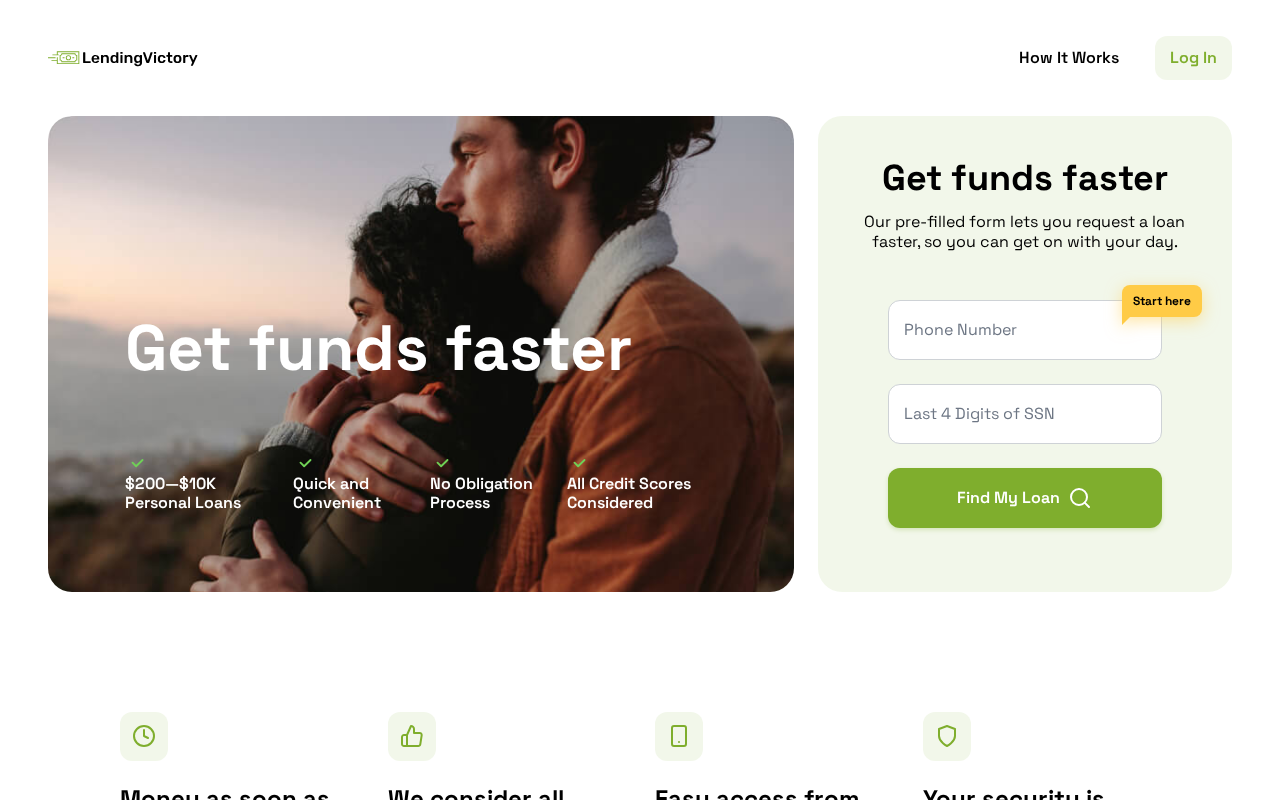
The other door is the green card on the homepage. The page title is “LendingVictory – Receive up to $10,000 – Start Now!” The meta line promised a loan of up to $10,000 as early as the next business day. Four checks sat on the photo: $200 to $10,000 personal loans, quick and convenient, no obligation process, all credit scores considered. The card asked for two fields before anything else: a phone number, and the last 4 digits of a Social Security number. The button said “Find My Loan.” That is a harvest form dressed as a search.
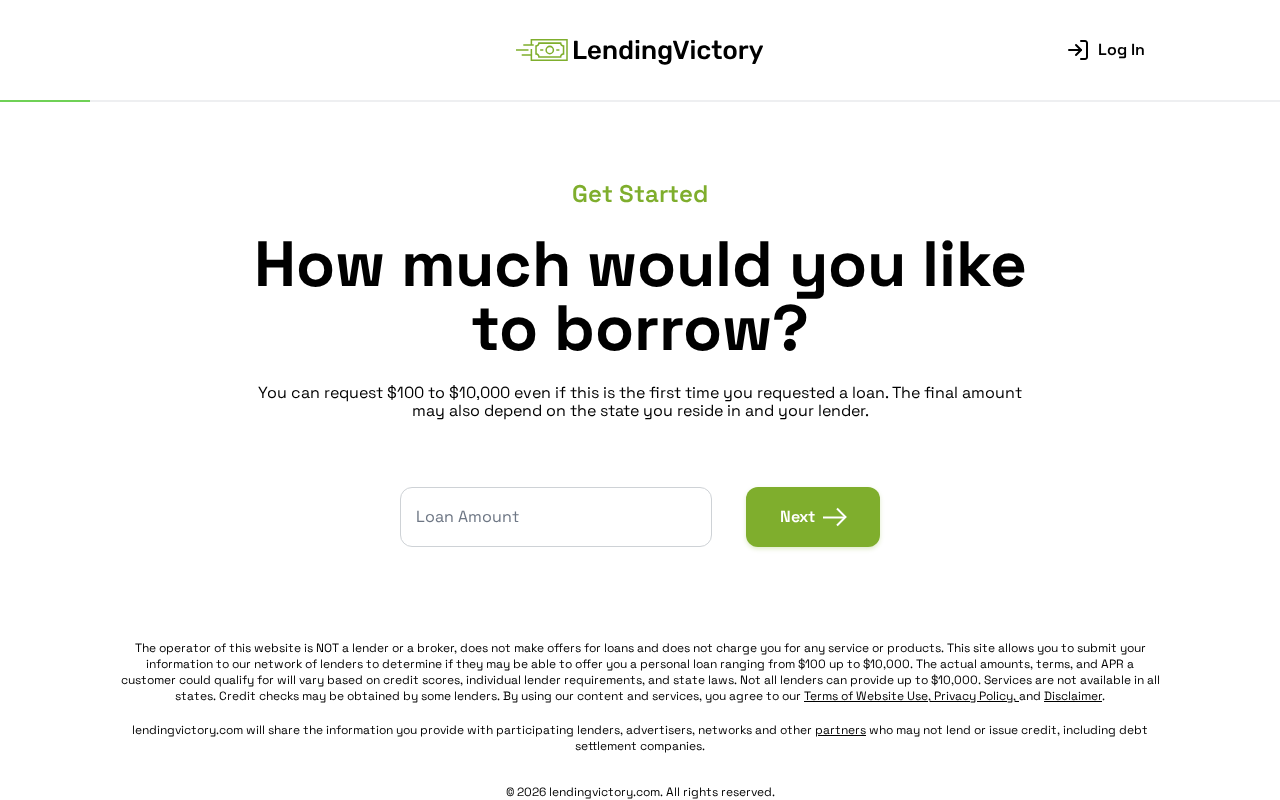
The Get Started page is the same mill with the first question changed. “How much would you like to borrow?” The line under it said you can request $100 to $10,000 even if this is the first time you asked. Already the numbers do not match the hero. The photo said $200 to $10,000. The start page and the footer said $100 to $10,000. A shop that cannot keep its own floor straight is not a bank quoting a product.
“Our pre-filled form lets you request a loan faster, so you can get on with your day.” Pre-filled is the tell. The page wants you to believe the file already exists. You are only confirming a phone and four digits so the system can “find” a loan that was supposedly waiting. A real lender does not start an unsecured personal loan with those two fields and a magnifying glass.
If you continue, the mill can ask for the rest of the privacy-policy list: full Social Security number, date of birth, driver’s license, employer, income, bank name, routing number, account number, and a credit-score band. You are not browsing a catalog. You are filling a ping tree. Your application is offered to a stack of buyers. The first one that bids, or the one that pays the most, gets the redirect. The site said it has done “due diligence” on lenders in the network and also said it cannot name them because it does not know which one you will hit.
The footer says credit checks may be obtained by some lenders. The disclaimer says LendingVictory itself does not run them, but network lenders might use Equifax, Experian, TransUnion, or “other alternate sources of consumer information.” A hard pull you did not expect is how a mill turns a curious click into a mark on a credit file. The page does not show you the inquiry before you tap Find My Loan.
The How It Works page said the service was created to make credit more convenient, then the sentence that matters: “We are not a lender, but if successfully lender approved, you can receive funding in as little as the next business day.” If a personal loan cannot be found, it will try another short-term, small-dollar product that may carry higher interest rates. There is no rate table on that page. The disclaimer still points readers to a Rates and Fees page. That URL returns a 404.
The leftover lead is the product
The same footer sits on every page. The site lets you submit information to a network of lenders that might offer a personal loan from $100 up to $10,000. Then the second paragraph: lendingvictory.com will share the information you provide with participating lenders, advertisers, networks, and other partners who may not lend or issue credit, including debt settlement companies. You think you asked for a loan. The page reserved the right to hand your file to advertisers and to debt settlement shops.
The disclaimer is louder. It says in capital letters that LendingVictory is not a lender. If no lender in the network chooses you, “your information may be offered to participating third party advertisers and generators for consideration.” That is leftover-lead language. The form does not go quiet when a match fails. It gets sold again. That is how a single form turns into a week of calls from names you never typed.
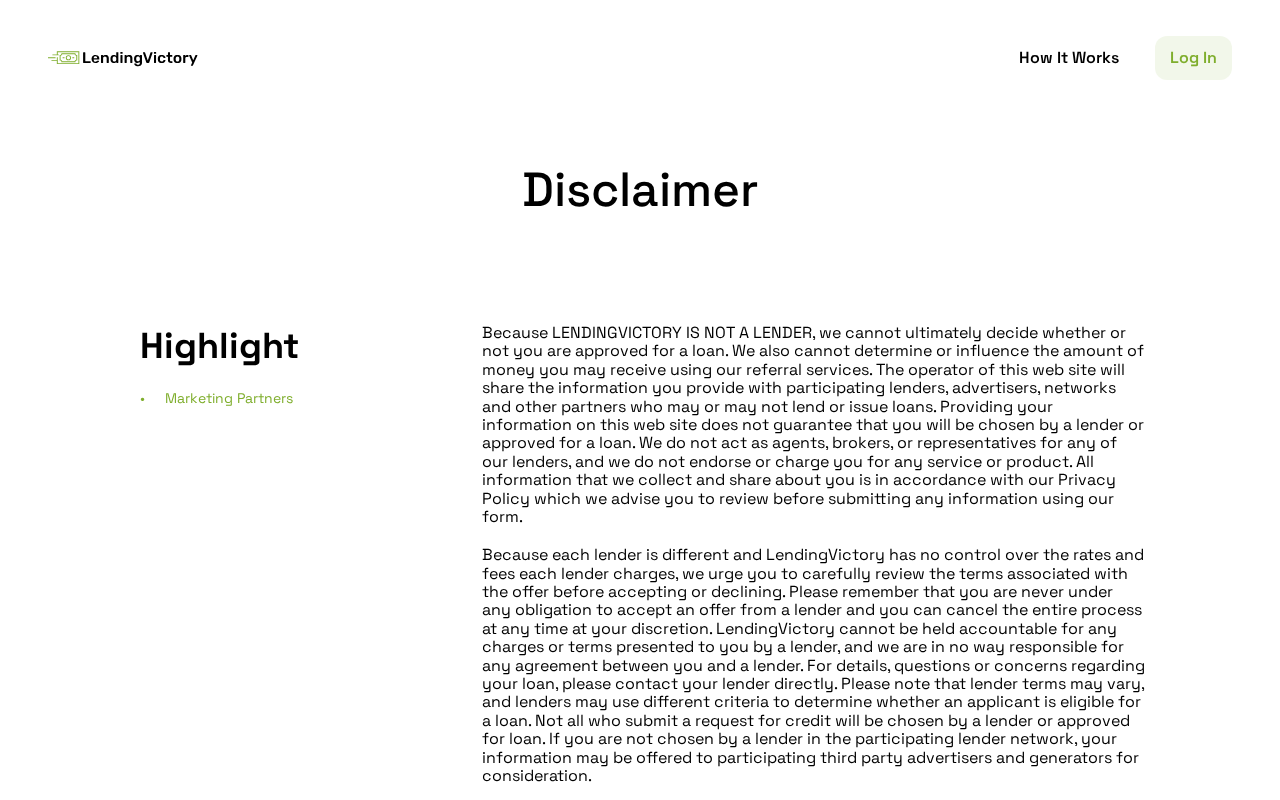
The same disclaimer says the loans that might be offered are expensive short-term credit. It mentions tribal lenders that may sit outside state rate caps. It tells you the testimonials are not real. “These are not actual testimonials, but they are representative of LendingVictory services.” The marketing-partners list on the live disclaimer in August 2026 included CashNetUSA, Speedy Cash, Lending Tree, Lending Club, Opportunity Financial (OppLoans), One Main Financial, Freedom Debt Relief, National Debt Relief, Accredited Debt Relief, and dozens of insurance, auto, and lead shops. The page does not say which one will get you. It says it cannot list them because it does not know.
There is also an advance-fee fork. In that version, the voice on the phone or the page after the form says the loan is guaranteed if you pay a processing fee, an insurance fee, or collateral through an app or a gift card. The live mill’s own footer says it does not charge you for a service. That sentence does not protect you from a buyer, a clone desk, or a text that only borrowed the name. The Federal Trade Commission has a short rule for this. A promised loan plus an upfront fee you pay out of pocket is a scam. Real loan costs come out of the proceeds. They are not a Cash App request, a gift-card code, or a wire to “release” money that does not exist.
The brand is LendingVictory. The legal pages never print an LLC, an Inc., or an NMLS number. The mailing address is 8 The Green, Dover, DE 19901, plus contact@lendingvictory.com. 8 The Green is a registered-agent block, not a loan office you can walk into. The privacy policy still said “Last Updated: 10-14-2019” in August 2026. The domain itself was registered on 4 November 2019, three weeks after that date. The privacy page is the inventory: name, address, email, phone, bank and account numbers, date of birth, Social Security number, driver’s license, military status, income, and employer information. The first screen only asks for a phone and four digits. The rest of the file is waiting one click later.
Search “Victory” and “lending” together and you will also hit Victory Lending LLC, a Denton, Texas mortgage shop with a Better Business Bureau file and an NMLS listing. That is a different business. Do not call that Texas office about a Lending Victory text, and do not treat its license as proof this mill is licensed. The Consumer Financial Protection Bureau’s public complaint database returned 0 complaints filed against a company named Lending Victory or LendingVictory. An empty company file is not a clean bill. A mill that never prints a legal entity name is hard to file against. It is also hard to find on NMLS Consumer Access, because the live pages never give you a number to search.
The privacy page tells you LendingVictory will not call. It also tells you each buyer has its own opt-out, and that you have to chase them one by one. The SMS terms keep the mill’s own texts coming at about 2 a week until you send STOP. That is the product. Not a loan. A live number, four Social Security digits, and a file that can be sold more than once.
How The Lead Mill Works
There are two doors into the same name. One is a text or an email you never asked for. The other is a page you opened after an ad, a search, or a “pre-filled” shortcut. Both want the same file: a phone, a Social Security number, and enough bank detail to sell the lead more than once.
1. The message you did not request
The inbound version is a message you never asked for. People reported unexpected notes claiming a payment submission was successful, that an account was in good standing, or that a loan they never applied for had been approved. The name on those notes was Lending Victory, or a link toward lendingvictory.com.
The bait is fear or greed. Either your identity is already in motion, or free money is waiting. The reply they want is a tap, a “NO,” a “CANCEL,” or a call to a desk that is not a bank.
The Federal Trade Commission has already described that script without needing this brand. On 20 January 2026 it used a text about a $10,000 loan application you never filed. The message hopes you will call the number in the text, or reply NO to cancel, and hand over a Social Security number or a bank account to “finish” a file that does not exist.
On 8 September 2025 the same agency described the voicemail version: a $52,000 loan you did not apply for, a request for a Social Security number or a bank account, and a line that offers to take you off the list if you call back. The instruction in both alerts is short. Do not reply. Do not call back. Do not trust caller ID.
That inbound pitch can be a straight phish that never touches the live mill. It can also be a partner, an affiliate, or a leftover lead from a form you filled months ago.
The privacy policy on the live site says submitting a request is consent to share with the network. The SMS page says about 2 texts a week. The disclaimer says unmatched files can be offered to advertisers and generators. Once a number is known to be live, more names will use it. Lending Victory is one costume in that pile.
2. The shortcut form
The other door is the green card. “Our pre-filled form lets you request a loan faster, so you can get on with your day.” Pre-filled is the tell. The page wants you to believe the file already exists. You are only confirming a phone and four digits so the system can “find” a loan that was supposedly waiting. A real lender does not start an unsecured personal loan with those two fields and a magnifying glass.
If you continue, the start page asks how much you want. The range on that screen is $100 to $10,000. Then the mill can ask for the rest of the privacy-policy list: full Social Security number, date of birth, driver’s license, employer, income, bank name, routing number, account number, and a credit-score band. You are not browsing a catalog. You are filling a ping tree.
A ping tree is a lead auction. Your application is offered to a stack of buyers. The first one that bids, or the one that pays the most, gets the redirect. The site said it has done “due diligence” on lenders in the network and also said it cannot name them because it does not know which one you will hit. Those two sentences do not sit well together.
The buyer you meet after Next may be a state-licensed lender, a tribal lender, a settlement shop, or an advertiser. The footer already told you the last two are in the mix.
3. The credit check you did not think you signed
The footer says credit checks may be obtained by some lenders. The disclaimer says LendingVictory itself does not run them, but network lenders might use Equifax, Experian, TransUnion, or “other alternate sources of consumer information.”
A hard pull you did not expect is how a mill turns a curious click into a mark on a credit file. A soft lookup sold as “no obligation” can still become a hard inquiry once a buyer takes the lead. The page does not show you the inquiry before you tap Find My Loan.
The privacy policy also claims the company does not rent, sell, or share information except with licensed lenders in the network. Then the footer and the disclaimer describe sharing with advertisers, networks, generators, and debt settlement companies. Read both. The narrower sentence is the comfort line. The wider sentence is the one that matches a leftover-lead mill.
4. The leftover lead and the call storm
If a lender does not take you, the disclaimer says the file can still be offered to third-party advertisers and generators. That is how a single form turns into a week of calls from names you never typed.
The privacy page tells you LendingVictory will not call. It also tells you each buyer has its own opt-out, and that you have to chase them one by one. The SMS terms keep the mill’s own texts coming at about 2 a week until you send STOP.
People who have used other loan marketplaces describe that storm even when the brand is a public company. This shopfront is smaller, quieter, and harder to pin. There is no published switchboard. The unsubscribe page asks for an email, a reason for leaving, and a “Human Check,” and it opens with “We’ll be sad to see you go, care to reconsider?” That is not a bank closing a file. That is a list trying to keep a row.
5. The fee that is not a loan
There is also an advance-fee fork. In that version, the voice on the phone or the page after the form says the loan is guaranteed if you pay a processing fee, an insurance fee, or collateral through an app or a gift card. The live mill’s own footer says it does not charge you for a service. That sentence does not protect you from a buyer, a clone desk, or a text that only borrowed the name.
The Federal Trade Commission has a short rule for this. A promised loan plus an upfront fee you pay out of pocket is a scam. Real loan costs come out of the proceeds or appear on a closing disclosure you can read. They are not a Cash App request, a gift-card code, or a wire to “release” money that does not exist.
The same fork asks for online banking passwords or one-time codes “to verify the deposit.” No lender needs your bank login to send you money. A code from your bank is for you. If someone wants it, they are trying to empty the account, not fund it.
6. Why the costume works
The shopfront looks finished. It uses a dollar-bill logo with speed lines, a sunset jump on How It Works, and a couple in a field on the home card. The lock icon is Let’s Encrypt. The domain dates to 2019, not a two-week phish. The Dover address is a real street. The partner list includes names you have seen in TV ads. That is enough costume for a person who needs $1,000 before Friday.
The tells sit on the same pages. The operator says it is not a lender. The testimonials are fake. The rates page is missing. The hero and the start page disagree on the minimum. The disclaimer has a leftover line that “not all lenders can provide up to $100,” which is the template talking, not a product.
The legal name is a brand, not an entity. The mailbox is 8 The Green. The first question is a phone and four Social Security digits. None of that is how a state-licensed lender opens a file.
A licensed consumer lender in the United States publishes a legal name you can search, an NMLS number or a state license, and a way to complain that is not only an email on a legal page. You can check that number on NMLS Consumer Access or with your state regulator before you send a Social Security number. Lending Victory’s live pages do not give you that number. They give you a Next button.
What To Do If You Already Submitted the Form
If you already replied to the text, typed the four digits, or paid a fee, do this in order. Do not wait for the mill to feel helpful.
- Stop talking to the name that contacted you. Do not reply to the text. Do not tap the link. Do not call a number that arrived inside the message. Do not send STOP to a short code you do not recognize if the note is a cold phish. For texts that clearly came after you used lendingvictory.com, the site’s own SMS page says STOP or QUIT on that thread. Block the inbound ID either way. Save a screenshot of the message.
- Write down what left the house. The exact name on the text. The URL you opened. The phone you typed. Whether you gave the last 4 digits or the full Social Security number. Bank routing and account numbers. A driver’s license. A fee, an app, a gift card, or a wire. The date and the amount. If a “lender” called after the form, keep that caller ID too.
- If you paid a fee, call the bank or card issuer the same day. Use the number on the card, not a number from the text. Ask them to reverse the charge, block the merchant, and watch for a second draft under a different name. If you sent a wire, a prepaid card, a gift card, or crypto, say so. Those are slower to recover. Speed still matters. The FTC’s advance-fee rule is the line to quote: you do not pay out of pocket to receive a loan.
- If you gave a Social Security number, a bank login, or a one-time code, lock the file. Place a fraud alert or a credit freeze at Equifax, Experian, and TransUnion. Change the bank password from a device you trust. Call the bank if a code was shared. Watch new accounts for at least a few months. IdentityTheft.gov is the federal start page if a new file opens in your name. Pull your reports at AnnualCreditReport.com, not through a link in the text.
- If you only filled the mill form, assume the lead was sold. Email contact@lendingvictory.com and use the Do Not Sell form if you want a deletion request on the record. That inbox is what the site prints. It is not a promise the buyers will stop. You still have to tell each caller to lose the number. Register on the National Do Not Call Registry. That list will not stop a mill, but it makes the next illegal call easier to describe.
- If a lender actually offered paper, read it as a new company. The mill is not the creditor. The terms page says so. Check the legal name, the NMLS number, and the state license before you sign. Tribal lenders, which the disclaimer mentions, may use rates above state caps and may push disputes into a tribal forum. If the offer is a $100 payday-style product after a $10,000 headline, that is the swap the How It Works page already warned about. You can walk away.
- File the reports. Use the FTC fraud report form and include the inbound number, the callback, and the URL. Add your state attorney general. Add a CFPB complaint if money left an account or a credit pull you did not expect showed up. BBB Scam Tracker is how other loan names got a public page. A report now helps the next person who searches this brand at 11 p.m.
- Ignore the recovery follow-up. Nobody legitimate will charge a second fee to get the first fee back. The Treasury, the FTC, and the CFPB do not text you from a fresh mobile number about a Lending Victory case file. If a new voice has your reference number from the first call, that is the same list.
If a relative forwarded the text, send them this page instead of the link. These names move through family group chats the same way they move through a dialer.
The Bottom Line
Lending Victory is a lead mill. The homepage asks for a phone number and the last 4 digits of a Social Security number. The footer says the operator is not a lender and will share your file with lenders, advertisers, networks, and debt settlement companies. The disclaimer says leftover leads can go to third-party advertisers and generators.
The testimonials are fake. The published address is 8 The Green in Dover. The legal name on the pages is a brand, not an entity you can look up with an NMLS number.
The inbound version of the same name is unsolicited mail about a payment, a standing account, or a loan you never filed. The FTC already told people to ignore unexpected loan texts and unexpected loan calls, and to treat an upfront fee as a fraud. A lock icon and a 2019 domain do not change that. They are the costume.
If the text is still on the screen, delete it. If the green card is still open, close it. If four digits already left, freeze the file and call the bank. A real lender does not find your loan with a magnifying glass and the last 4 of a Social Security number.

Reviews & discussion
0 commentsShare a firsthand experience, or ask a question.
Community reviews
Lending Victory
Moderated reader experiences, not an editorial verdict.
Start the conversation
Have a question or something useful to share? Add the first comment.