

The envelope looks serious, thick stock or a PDF dressed up to look that way. A law firm has written your last name next to a dead stranger and a life insurance policy nobody claimed. The figure is big enough that you read it twice.
That is why people search Harcourt LLP after dinner. The letter is not trying to book you a consult. It wants a reply, and it wants you to feel chosen, then quiet, then helpful.
This is the same pattern as the other unclaimed-insurance letters. A firm you did not hire offers a partnership you did not ask for, plus a charity slice so the split feels decent. Then they want your passport, then a fee that is called tax, customs, or legal clearance. The real Canadian firm that actually carries Harcourt in its name does not work like that.
Overview
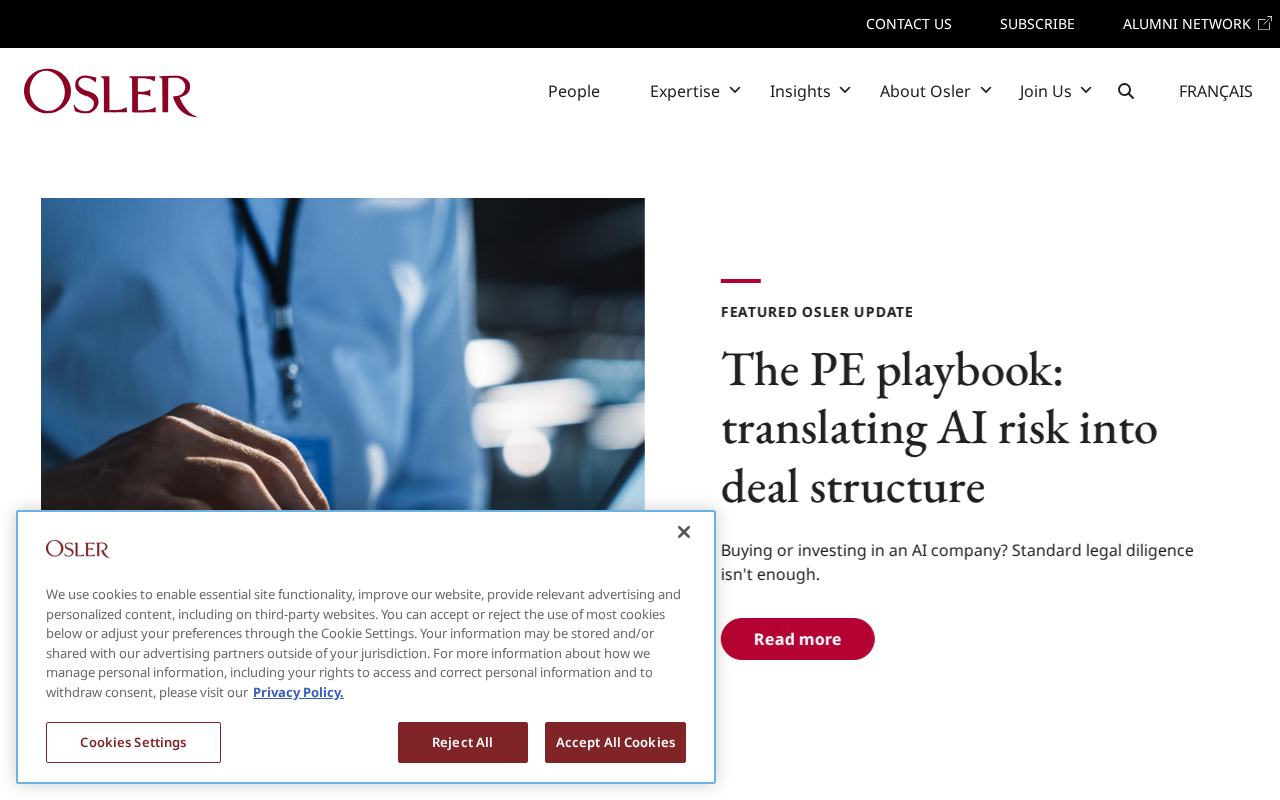
The trap is a 419 inheritance letter. A firm you did not hire writes your last name next to a dead stranger and a life insurance policy nobody claimed. Harcourt LLP on the letter is the costume. The real Toronto firm that carries Harcourt in its name is Osler, Hoskin & Harcourt LLP, and it is not the sender. The letter wants a reply. Then it wants your ID. Then it wants a fee.
That is the whole product. You are not being invited into an estate file. You are being invited to help fake a claim, hand over a passport, and prepay a tax, a customs bond, or a “legal clearance” on money that does not exist.
The inheritance that needs your ID
The story is built to make you feel chosen. A dead client left an unclaimed permanent life insurance policy. Relatives could not be found. The insurer is about to turn the money over to an abandoned-property desk. Your last name is close enough. If you stay quiet and write back, the “lawyer” will add you as a beneficiary and split the payout.
The archived Harcourt LLP sample used $45 million and a dead engineer named “Late Eng. Harris Blessing.” The split was printed like a virtue, with 10% to charity and the other 90% “shared between us.” Other letters in the same family flip the numbers so you feel like the winner. The charity is there so you do not feel greedy. The secrecy is there so you do not call a real firm.
Once you answer, the “file” needs you. They will ask for a passport, driver licence, Social Security number, national ID, bank routing, or a utility bill. They will call it KYC, probate, or anti-money-laundering. It is identity collection. A legitimate estate file does not recruit a civilian to impersonate a beneficiary.
The Federal Trade Commission has described this exact product twice without needing the Harcourt label. In August 2023, the FTC said people in Korean, Vietnamese, and Latino communities were getting mail from a supposed lawyer in Canada. The dead client had your last name and the policy was worth millions. The “lawyer” would add you, then split the money between you, the firm, and a charity, and tell you to keep it secret and email immediately.
On 9 July 2026 the same agency came back and called it a bad sequel. People were still reporting law-firm letters about unclaimed life insurance. The FTC’s line did not soften: this is not a letter from a lawyer. If you contact them, they will try for your Social Security number, your bank details, your money, or all three. The policy does not exist.
Comments under the 2023 alert read like a stack of the same envelope. A firm in Canada writes someone in the United States. A firm in Atlanta writes someone in Canada. The names change: Linhoff, Sporer and Partners, Barnett Crowe & Partners LLP, plus Sean Barnett, David Griffin, and Neil Adams. One telling used $10,550,300. The plot does not change. Harcourt LLP is one more costume in that pile, not a new kind of law.
The Gmail partner
The person who signed the letter is the next costume. On 8 July 2020, an email went out from “MR JAMES EDWARD,” with a different reply-to, claiming the sender was “Barr James Edward,” a partner at Harcourt LLP, “a London based Law Firm.” The 419 archive still hosts the full text. The archive’s own scanner flagged the reply-to, the free inbox, the mobile, and the “100% risk free” line.
The contact stack was not a solicitor’s practice address in any useful sense:
- jamesedward2290@gmail.com, a free Gmail inbox the archive said had already been used in known fraud
- +447452181863, a UK mobile, not a published firm switchboard
- 1 Canada Square, Canary Wharf, London E14 5AB, a real tower dropped in as costume
The sender even signed “B.A. Attorney.” That is not how a London solicitor identifies themselves to a stranger. A real England and Wales firm sits on the SRA Solicitors Register. The register’s own help text is blunt: no results means it is not safe to assume the person or firm is regulated. Public lookups for the exact name Harcourt LLP did not surface a matching authorised firm. A different London practice, Harcourt Stirling Solicitors Ltd, is SRA-regulated under number 668045. Harcourt Chambers is a real family-law barristers’ set. Neither one is this Gmail partnership.
Osler, Hoskin & Harcourt LLP is a real Toronto business-law firm. It publishes on osler.com and answers on published office lines, including Toronto at 416.362.2111. A shortened “Harcourt LLP” note about a stranger’s policy is not that firm writing you. Scammers keep Harcourt and drop Osler and Hoskin because three names are harder to type on a cheap letterhead and easier for a reader to half-recognize. The FTC has already said the “lawyer” in this genre is not a lawyer, and the policy is not real either.
Ontario lawyers are licensed by the Law Society of Ontario, not by a letterhead. If the signer is not in that directory, the Law Society says they may not be licensed in Ontario. Staff mail on real Osler filings used the osler.com domain, not Gmail. If a note about an unclaimed policy arrives from a free inbox and a mobile number, it is already failing the first check.
Search the same name and you may also hit other shops that use Harcourt in a title, including a live page that calls itself Harcourt Partners LLP. That page is not Osler. It is also not proof that the Gmail letter came from that shop. A search result is not the sender. Check the Law Society of Ontario directory, or the SRA register if the letter claims London, before you treat any Harcourt-named page as the writer of the letter.
The fee after the documents
Identity is the first harvest. Money is the second. After the passport or the Social Security number lands, the gift becomes a bill. The policy cannot be released until you pay a tax, a solicitor’s certificate, a customs bond as if cash were a crate on a dock, or an “inheritance tax” on money that never sat in an estate.
Payment instructions leave the firm’s world for a wire, gift cards, crypto, Zelle, or Western Union. The 2023 FTC alert listed those rails on purpose. Legitimate law firms do not unlock a stranger’s fortune that way. The number will be small next to $45 million, or $10,550,300, or whatever the letter printed. A few hundred or a few thousand feels rational if you have already swallowed the policy.
If you pay, the file does not close. A second tax appears, then a bank compliance hold, a “judge’s seal,” or a courier who will not pick up the cheque until you cover insurance. Advance-fee loops do not run out of vocabulary. The fortune never moves. The only money that moves is yours, toward them.
Some versions add a threat after the sweetness. Reply or the policy goes to the state. Reply or another heir takes it. Reply or you will be in trouble for wasting the firm’s time. That is still the same letter. Fear is just the backup engine when greed stalls. The first page is not a collections notice. It is a gift. You are not told you owe a court. You are told you can share a policy if you stay quiet. The 419 email already asked you to let them add your name to someone else’s policy, which is the fraud, not a service.
How The 419 Letter Works
1. The letter finds you first
It arrives as paper, a PDF, a fax, a Facebook message, or a cheap Gmail. The 2023 FTC alert said some of those envelopes were aimed at Korean, Vietnamese, and Latino households and pretended the lawyer sat in Canada. The 2020 Harcourt LLP sample pretended London. The tone is the same: confidential, urgent, and flattering. You did not open a file. They opened one on you.
There is no intake call, no conflict check, and no court file number you can type into a public docket and get a real case. There is a story, and a request to write back.
2. Your last name does the rest
The deceased, they say, has your surname. Sometimes they add a nationality. Sometimes they leave the dead person’s name off and let the dollar figure do the work. One commenter on the FTC page noticed the missing names. Another said both names were filled in. Either way, the hook is kinship you cannot disprove in thirty seconds.
You cannot legally cash in a stranger’s life insurance policy because the last names line up. Insurers pay beneficiaries who are actually on the policy. They do not run a side deal with a cold-called cousin and a “partner” who wants 45% for walking the file to the bank. If a real estate existed, a licensed lawyer would not need you to pretend to be family.
3. The partnership and the charity slice
The letter asks for consent, not a retainer you can take to another lawyer. It wants consent to add you, share the money, and keep it off the record. The Harcourt LLP sample wanted 10% for charity and the rest split. Other letters in the same family use 90% for you, so you feel like the winner. The charity is there so you do not feel greedy. The secrecy is there so you do not call a real firm.
That partnership is the scam. A legitimate estate file does not recruit a civilian to impersonate a beneficiary. The FTC said it in 2023 and said it again in 2026. You are not being invited into a clever closing. You are being invited to help fake a claim.
4. The inbox that is not a law firm
If you reply, you are not in Osler’s mail system. You are in a free inbox. The 2020 sample used one Gmail to send and another to receive. The archive noted that trick: when the sending account dies, the reply-to still lives. A UK mobile can be answered from anywhere. A Canary Wharf address can be copied off a map. None of that is a practising certificate.
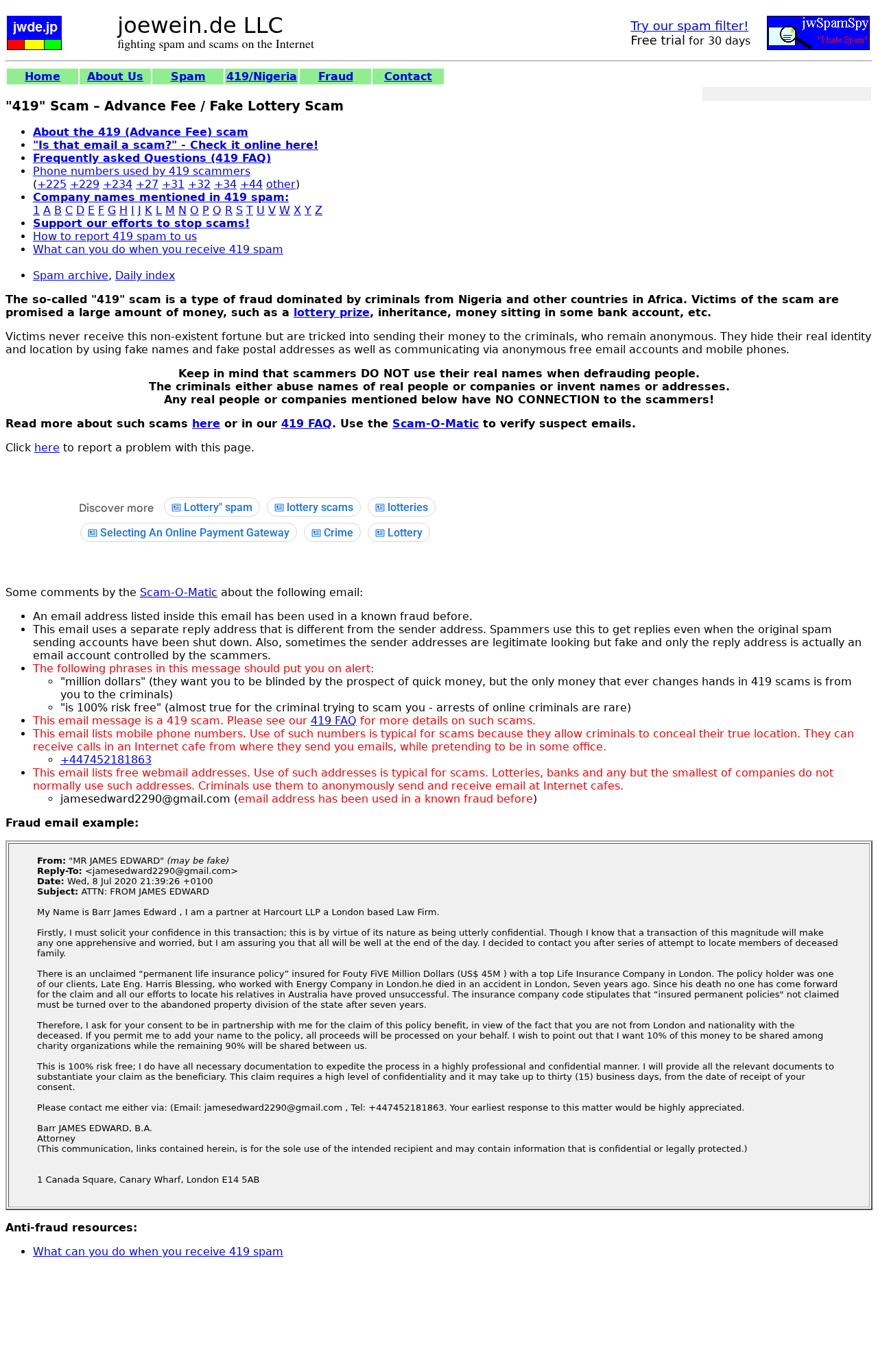
Look at that archive page before you look at the letter again. The scanner called it a 419. It highlighted “million dollars,” “100% risk free,” the mobile, and the Gmail.
It also printed a line every reader should keep: scammers abuse names of real people and companies. Real people and companies named in the paste have no connection to the criminals. That includes anyone at Osler, and anyone at a real Harcourt-named chambers or finance shop you might find in a later search.
5. A search result is not the sender
Some people do the right first move and search. That is when other Harcourt-named pages appear. A live page that calls itself Harcourt Partners LLP is not Osler. It is also not a published docket tying that shop to the 419 letter. Do not collapse a Google result into the Gmail costume, and do not treat it as a second official Osler.
The check is a licence directory, not a letterhead. Ontario lawyers are licensed by the Law Society of Ontario. If the letter claims London, the check is the SRA Solicitors Register. The 226 number on a search-result page does not match Osler’s published 416 switchboard. None of that makes the search-result shop the sender of the letter.
A real check is slower and blunter. Type osler.com yourself and call 416.362.2111 from that page, not from the letter. Search the Law Society of Ontario directory for the person who signed. If the letter claims London, search the SRA register. If the person is not there, stop. Do not call a number on a search-result page to “confirm” the letter.
6. The documents, then the first fee
Once you answer, the “file” needs you. They will ask for a passport, driver licence, Social Security number, national ID, bank routing, or a utility bill. They will call it KYC, probate, or anti-money-laundering. It is identity collection. The 2026 FTC alert said that plainly: they want your information, your money, or both.
Then the gift becomes a bill. The policy cannot be released until you pay a tax, a solicitor’s certificate, a customs bond as if cash were a crate on a dock, or an “inheritance tax” on money that never sat in an estate.
Payment instructions leave the firm’s world for a wire, gift cards, crypto, Zelle, or Western Union. The 2023 FTC alert listed those rails on purpose. Legitimate law firms do not unlock a stranger’s fortune that way.
This is the debt-and-tax costume. You are not being collected on a loan you took. You are being told a made-up government or court will not release a made-up payout until you prepay. The number will be small next to $45 million, or $10,550,300, or whatever the letter printed. A few hundred or a few thousand feels rational if you have already swallowed the policy.
7. The next fee, and the next
If you pay, the file does not close. A second tax appears, then a bank compliance hold, a “judge’s seal,” or a courier who will not pick up the cheque until you cover insurance. Advance-fee loops do not run out of vocabulary. The 419 archive’s own FAQ is the short version: the fortune never moves. The only money that moves is yours, toward them.
Some versions add a threat after the sweetness. Reply or the policy goes to the state. Reply or another heir takes it. Reply or you will be in trouble for wasting the firm’s time. That is still the same letter. Fear is just the backup engine when greed stalls.
By the time someone searches Harcourt LLP scam, they have usually already written back. They want to know if the building is real. The building can be real. The policy is not, the partner in Gmail is not, and the fee is the job.
What To Do If You Already Replied
The letter is built to pull people in. If you already answered, or already paid, work in this order.
- Stop the conversation. Do not send another document. Do not pay a “last” fee to unlock the last fee. Do not argue the estate on the phone. Every reply teaches them you are still live.
- Save the evidence. Photograph the envelope and the letter. Save the email headers, the Gmail address, the mobile, the PDF, the payment receipts, and the name as it printed on your bank line. Write down dates and amounts. If a site was involved, screenshot the contact page before it dies.
- Verify on official pages, not on theirs. Type Osler’s contact page yourself and use 416.362.2111 only if you need to ask whether a letter used the firm name. Search the signer in the Law Society of Ontario directory. If the letter claimed London, search the SRA Solicitors Register. Do not call the number inside the letter to “confirm” the letter.
- If you sent money, call the rail you used. Bank wire, card, remittance shop, or crypto exchange: report fraud the same day and ask about a recall or a freeze. Chargebacks have deadlines. Gift cards and most crypto moves will not come back. Still make the call so the account is flagged.
- If you sent ID, treat it as stolen. Passport, Social Security number, driver’s licence, and bank routing are enough for a second crime. Put a fraud alert on your credit. Watch the next statements. If you are in the United States, use the federal identity-theft steps after you file the fraud report. If you are in Canada, tell your bank and the credit bureaus the same week.
- Report the letter. In the United States, file at the FTC fraud report form. In Canada, use the Canadian Anti-Fraud Centre and, if a name was used as a lawyer, tell the Law Society of Ontario. In the United Kingdom, use Action Fraud and, if a solicitor’s name was used, tell the SRA. Your report is how the next envelope gets easier to spot.
- Do not hire a “recovery” firm that found you. The second shop that promises to get the tax back is often the same loop with a new letterhead. If you want counsel, pick a licensed lawyer from the directory yourself.
- Cut the next pitch. Install Malwarebytes and run a full scan if you opened a PDF or a link. Use AdGuard so the follow-up ads are less likely to find you. Neither tool returns a wire. They cut the junk that sometimes rides along with this kind of click. If a family chat forwarded the letter, send them this page instead of the PDF.
If you only got the letter and did nothing, you can stop at save, report, and delete. You do not owe the sender a courtesy reply. You do not need to “decline the estate.” There is no estate.
The Bottom Line
Osler, Hoskin & Harcourt LLP is a real Toronto business-law firm. It did not send the 419 letter. Harcourt LLP, as it appears on unsolicited insurance and inheritance letters, is the costume. The archived London sample used Gmail, a mobile, and a $45 million policy. The FTC has been describing that same partnership letter since 2023 and was still describing it in July 2026. Other Harcourt-named pages can appear in a search. They are not Osler, and they are not automatically the letter.
You cannot cash a stranger’s life insurance because a letter said so. A real firm will not ask you to help fake a beneficiary and then invoice you in gift cards for the privilege. Search the directory, call the number on the official site, and leave the envelope on the table.

Join the discussion
0 commentsShare your experience or ask a question about this article.
Discussion
Start the conversation
Have a question or something useful to share? Add the first comment.