

The voicemail is already waiting when you pick up the phone. A calm voice talks about a file that has been “flagged,” then a line about back taxes, or missed filings, or a window that is about to close. Then the name lands: New Fresh Start Tax Associates. It sounds like a department, not a sales desk.
That is why people sit at the kitchen table and search the name before they call back. The words are doing two jobs at once. Fresh Start is language the Internal Revenue Service used for a real set of collection changes. Associates is the costume of a firm. Together they make an unexpected call feel like help that was already approved.
This is the same pattern as the other tax-relief pitches. A scare about a balance. A program that sounds official. A clock that is not on any IRS notice you can hold. Then a request for money, or for a Social Security number, before anyone has opened your file.
Overview
The trap is a voicemail that borrows the IRS phrase Fresh Start so you call a private desk. The voice talks like a file already exists. There is no published price list, staff page, or invoice under this exact name. The tax-relief genre that uses this kind of line often asks next for a fee, or a Social Security number, before anyone has opened a return. Treat the callback as the pitch, not as a filed case.
New Fresh Start Tax Associates is the name on that pitch, not a government office and not a company you can walk into. The IRS used Fresh Start for collection changes in 2011 and 2012. It did not hire a private “associates” shop to enroll you from a robocall.
The IRS name on the call
The name is the hook. Fresh Start is a phrase people already trust because the IRS used it. Associates is a word that sounds like someone licensed is already on the file. Put them together and a stranger on a robocall can sound like a program you were supposed to join.
The IRS did run a Fresh Start effort. It was not a secret portal and it was not a private company. On February 24, 2011, the agency issued IR-2011-20, announcing collection changes it described as a fresh start. On March 7, 2012, it issued IR-2012-31, expanding installment-agreement thresholds and adding limited penalty relief. Those releases talk about liens, payment plans, and offers in compromise. They do not tell you to call a private “associates” desk after a voicemail.
IRS.gov still hosts a later explainer titled IRS Fresh Start Program Helps Taxpayers Who Owe the IRS. That page is IRS Tax Tip 2013-57, dated April 17, 2013. At the top it carries a notice that the document is historical and may not reflect current law, policies, or procedures. The agency kept the archive. It did not turn the archive into a 2026 enrollment campaign.
That is the whole costume. The caller is not offering the 2011 collection changes. The caller is offering a name you have already heard, plus a clock that is not on any IRS notice you can hold.
There is no company to call back
The second half of the trap is the missing shop. There is no live company site under this exact name, no published phone, and no Better Business Bureau profile you can use as a callback. The voicemail is the office. If you dial the number in the message, you are calling the pitch, not a receptionist who can pull a case.
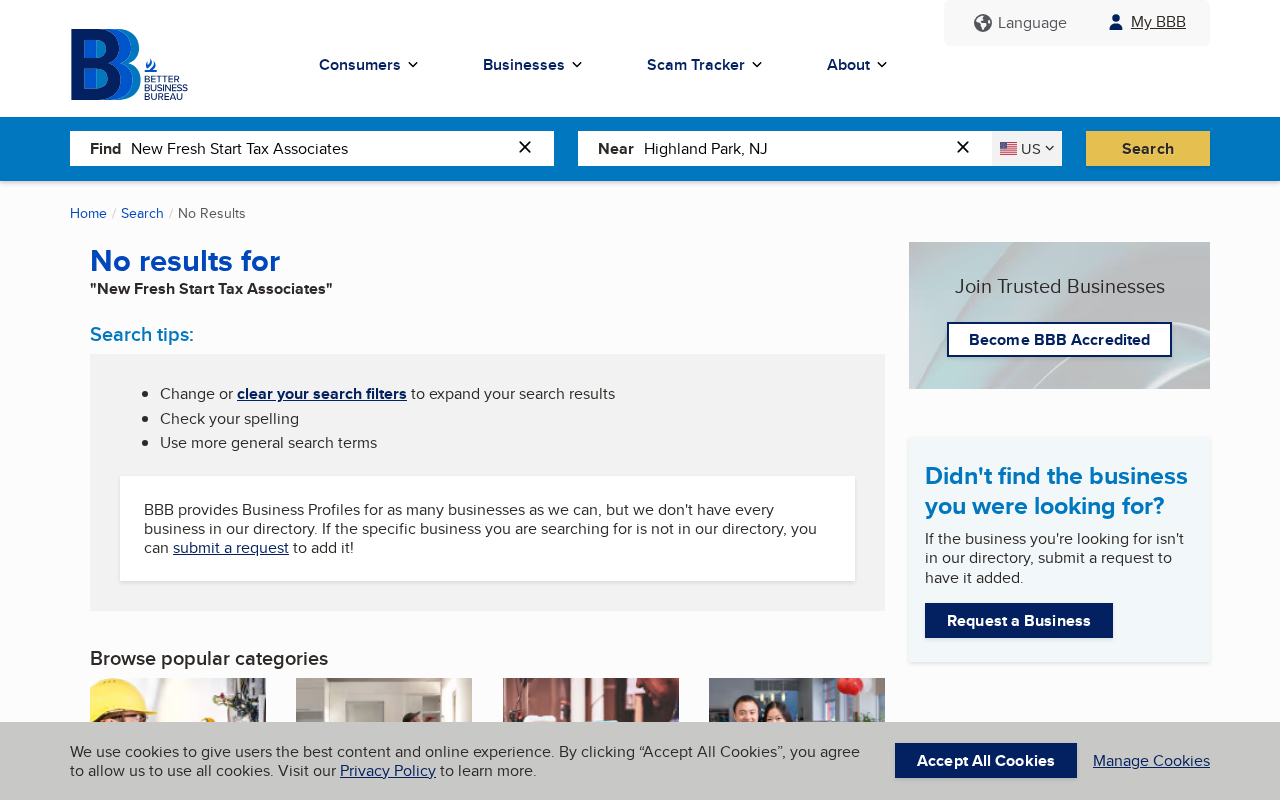
The Better Business Bureau business directory returned no profile for New Fresh Start Tax Associates. The search page said there were no results for that exact name. BBB does not list every firm that exists. A missing profile is still a missing profile. There was no accreditation badge, no published address, and no complaint file under that string to quote.
Public court and registry files do not name New Fresh Start Tax Associates as a defendant or a filer. That silence is not a clean bill of health, and it is not a docket number either. There is no case to look up, no phone tree, and no refund desk in public to quote. Do not invent one.
Do not mix this voicemail with other private firms that also use Fresh Start in a trade name. A Costa Mesa or Fort Lauderdale tax shop with a similar phrase is not automatically the voice on your phone. Those shops are not this recording. Judge the call, the fee, and the documents, not the two words that keep getting reused.
The fee comes before the work
This is the part the Federal Trade Commission keeps repeating for the tax-relief genre: walk away if the whole fee is due before the work. That is the Commission’s line, not a published New Fresh Start Tax Associates invoice.
In its consumer article Trouble Paying Your Taxes?, the FTC says tax-relief companies advertise help in exchange for an upfront fee that can be thousands of dollars. It says they claim they will apply for IRS hardship programs and stop collection. It also says most taxpayers are unlikely to qualify for the programs those companies advertise, and that some firms do not even send the paperwork.
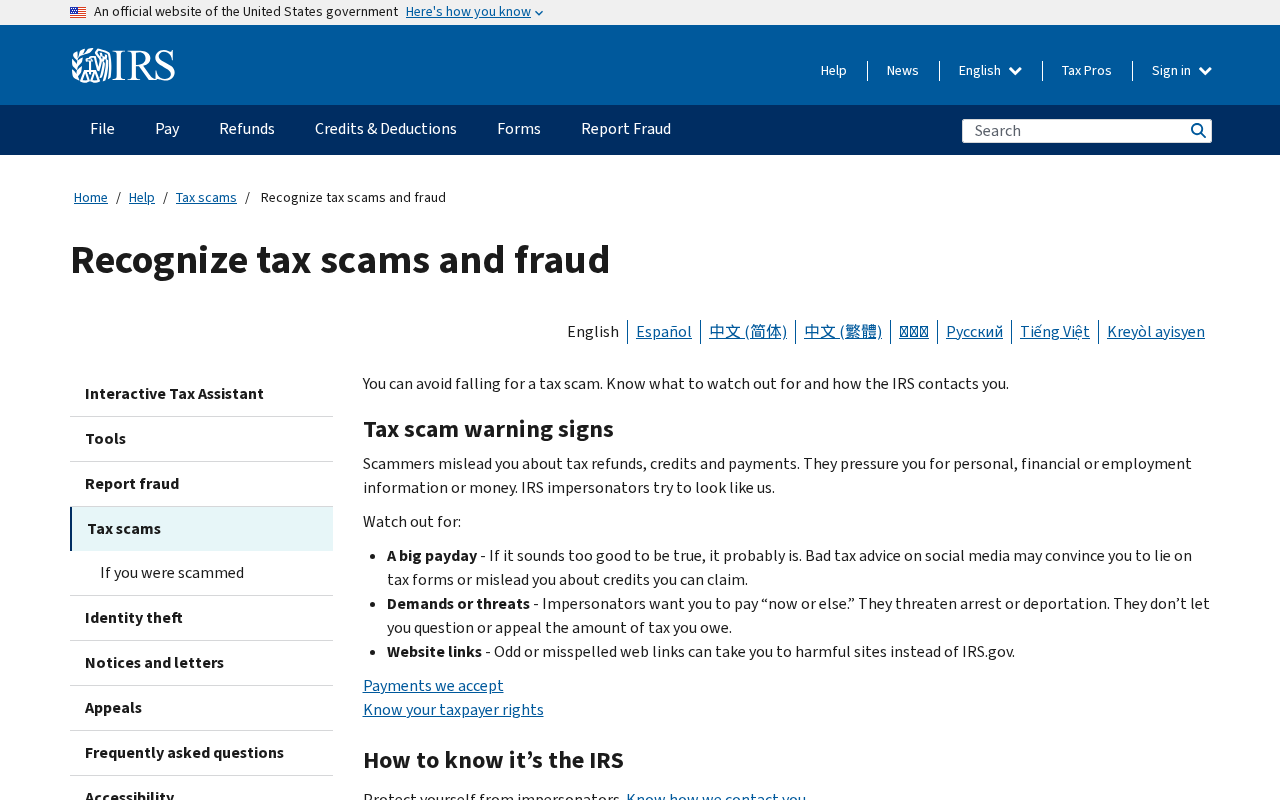
The IRS has a current consumer page on how to recognize tax scams and fraud. Under tax debt settlement or relief services, it describes people who pressure you to use their help, promise to relieve tax debt for “pennies-on-the-dollar,” and rush you to pay for that service. The same page says you can settle directly with the IRS if you are eligible for an offer in compromise.
That Dirty Dozen item is still posted as an IRS newsroom article on offer-in-compromise mills. The article says an offer in compromise is a real program between the taxpayer and the IRS. It also says mills make exaggerated claims about settling tax debts inexpensively, then charge fees for a service many people could request on IRS.gov.
On January 15, 2026, the FTC published a separate alert: hang up on unexpected calls saying you owe back taxes. The examples in that alert use names such as Tax Resolution Oversight Department and Tax Mediation and Resolution Agency. The FTC did not list New Fresh Start Tax Associates in that piece. The pattern it described is the same class of call: an official-sounding name, a claim that you have not paid, and a push to call back now. In the Commission’s examples the goal was a Social Security number, or an upfront fee for tax-debt relief that did not help. That is the genre. It is not a docket against this brand.
On August 13, 2026, the FTC posted Struggling with tax debt? Here’s what to know. That alert says dishonest companies promise to get rid of debt for “pennies on the dollar” before looking at your situation, then charge fees without doing the work. It points to the Commission’s nearly $10 million settlement with the owners of American Tax Service. That settlement is a different company. It is still the current federal example of what this sales model looks like when it reaches a courtroom.
There is no published price list for New Fresh Start Tax Associates. What can be priced is the official alternative the pitch is selling against. The IRS payment-plan page, updated March 3, 2026, lists these setup fees for a long-term installment agreement:
- Direct debit, apply online: $29
- Direct debit, apply by phone, mail, or in person: $107
- Direct debit, low income: setup fee waived
- Other monthly methods, apply online: $69
- Other monthly methods, apply by phone, mail, or in person: $178
- Other monthly methods, low income: $43, which may be reimbursed if conditions are met
- Short-term plan of 180 days or less: $0 setup fee
Individuals who owe $50,000 or less in combined tax, penalties, and interest, and who have filed required returns, may be able to set up a long-term plan online. A short-term plan can be available if the balance is under $100,000. An offer in compromise, the “pennies on the dollar” program the ads keep renaming, has a $205 application fee on the IRS offer-in-compromise page unless low-income rules waive it. A private retainer of thousands of dollars, taken before anyone has pulled transcripts, is not those fees. It is a sale.
The product is the lead, not tax relief
Some of these operations never represent you. They collect a name, a number, an email, a rough balance, and a Social Security number, then pass the file. You think you hired a tax firm. You joined a list. The next week, three other “resolution” desks call with the same Fresh Start story.
There is no staff page, Form 2848 sample, or named enrolled agent under this brand in public. A legitimate representative can tell you who will sign the power of attorney and where that person is licensed. A lead desk talks about the program instead. Treat any number in the voicemail as part of the pitch. The IRS tells people who need a human to use a number they find on IRS.gov or on a notice they already have.
Official numbers that are published, and that are not this company:
- IRS individual line: 800-829-1040
- IRS business line: 800-829-4933
- Taxpayer Advocate Service: 877-777-4778
- Treasury Inspector General for Tax Administration impersonation line: 800-366-4484
There is also no published refund policy under this name. If someone already paid, the path back is the card, the bank, and a written demand, not a guarantee page that does not exist. The badges a real tax representative can show are an attorney bar number, a CPA license, or an Enrolled Agent PTIN in the IRS directory of federal tax return preparers. A salesperson who will not give a full name and a credential you can type into that directory is not a representative. They are a voice.
How The Tax-Relief Pitch Works
1. The call finds you first
It starts on the phone, not in a waiting room. A robocall or a live opener. Sometimes a text. The script is built to sound like a file already exists: pre-qualified, flagged, a final attempt, a limited window. The FTC’s January 2026 alert describes that last-attempt voicemail as a hook to make you call back immediately.
You are not sold a plan in the first ten seconds. You are sold a feeling that the IRS is already moving and that this number is the way to stop it.
The IRS’s own guidance is the opposite of that feeling. First contact about a balance is supposed to arrive as mail. A later call from a real IRS employee, when it happens, follows notices you can hold. It does not arrive as a nameless recording about a private Fresh Start desk.
2. Fresh Start does the selling
Once you are on the line, the program name does the work the documents cannot do. Fresh Start is treated as a single door you have to walk through today. There is no IRS form titled Fresh Start. There is no enrollment certificate. There is no secret portal. The 2011 and 2012 changes were policy shifts. They were folded into ordinary collection tools years ago.
What still exists are installment agreements, offers in compromise, penalty relief, currently-not-collectible status, and lien rules. Those sit on IRS.gov. A private caller who talks as if Fresh Start is a 2026 product, with a closing date, is selling access to forms you can already request.
3. The deadline is the closer
The next move is speed: a levy today, a lien tomorrow, wage garnishment this week, arrest if you hang up.
The IRS page on how to know it is really the IRS says the agency does not threaten to bring local police, immigration officers, or other law enforcement to arrest you for not paying. It also says the IRS cannot revoke a driver’s license, a business license, or immigration status as a phone threat. Those lines show up in impersonation scripts because they work on people who are already scared.
A real IRS notice has a CP or LTR number, an amount, and a mail address. A robocall has a callback and a clock. If the person on the phone cannot point you to a notice you already received, the deadline is theirs, not the Treasury’s.
4. The fee comes before the work
This is the part the FTC keeps repeating for the genre. The January 2026 alert says some upfront fees are illegal when they are charged for tax-debt relief that does not actually help. The older tax-relief article says walk away if the whole fee is due before the work. Neither page names New Fresh Start Tax Associates.
There is no posted New Fresh Start Tax Associates invoice. The official price of the programs the pitch is naming is public. A direct-debit installment plan can cost $29 to set up online. An offer in compromise application fee is $205 unless low-income rules waive it. A private retainer that is thousands of dollars, taken before anyone has pulled transcripts, is not those fees. It is a sale.
On June 2, 2026, the FTC and Nevada announced a settlement with the operators of American Tax Service. The press release says the defendants claimed they could settle back taxes for pennies on the dollar or a fraction of what was owed, often before evaluating the taxpayer.
The proposed order includes a $77.7 million judgment, with more than $8 million in cash and other assets turned over, and a ban on debt-relief services and most outbound telemarketing. That case is not this brand. It is the documented end of the same promise.
5. The lead is the product
Some of these operations never represent you. They collect a name, a number, an email, a rough balance, and a Social Security number, then pass the file. You think you hired a tax firm. You joined a list. The next week, three other “resolution” desks call with the same Fresh Start story.
There is no staff page, Form 2848 sample, or named enrolled agent under this brand in public. A legitimate representative can tell you who will sign the power of attorney and where that person is licensed. A lead desk talks about the program instead.
6. The IRS math does not change
An offer in compromise is not a coupon. The IRS says it generally approves an offer when the amount is the most it can expect to collect in a reasonable time. Income, assets, and allowable expenses do that math. Who filled out the forms does not rewrite the numbers.
That is why a guarantee before review is the tell. The FTC says ignore businesses that tell you that you “qualify” or that they will settle for a fraction of what you owe. Only the IRS or a state revenue department can decide what you qualify for. A caller who already knows your settlement, without your 1040s or your bank statements, is guessing in your direction.
7. Getting out is slower than getting in
By the time someone searches New Fresh Start Tax Associates scam, they have usually already talked, or already paid, or already given a Social Security number. There is no public cancel button. There is no published refund window. The merchant name on the card may not even match the name on the voicemail.
If the money left, the clock is the bank’s chargeback deadline, not a Fresh Start countdown. If the data left, the work is a credit freeze and an IRS identity-theft PIN, not another callback to the same desk. The pitch was built to move you in one sitting. The cleanup is not.
What To Do If You Already Paid or Called Back
If you already called back, paid, or shared a Social Security number, do this in order. Do not call the number on the voicemail again to argue.
- Save the evidence. Write down the name they used, the callback number, the date, and the time. Screenshot the voicemail transcription if your phone keeps one. Save texts, emails, payment confirmations, and the merchant name as it printed on the card. If they sent a contract, keep the PDF.
- Stop the next payment. Call the bank or card issuer the same day. Ask them to block the merchant and dispute any charge you did not authorize, or any fee that was taken after a promise they did not keep. Chargebacks have deadlines. Do not wait for a refund page that is not posted.
- Cancel in writing if you have an email or a mail address. Say you want the agreement canceled, no more charges, and a refund to the original payment method. Ask who actually has your file and whether it was sold. Keep the sent mail. Do not send new tax transcripts with that letter.
- Verify the tax story on IRS.gov, not with the caller. Open an IRS Online Account, or call 800-829-1040, or use the number printed on a notice you already have. If there is a real balance, the options are the ones on the IRS payment-plan page and the offer-in-compromise page. If there is no balance, you were sold a file that was not yours.
- If you gave a Social Security number or bank login, treat it as identity theft. Follow the IRS page on what to do if you were scammed. Get an Identity Protection PIN if you can. Watch tax transcripts and the next two credit reports. Freeze the credit files if the number is out.
- Report the call and the payment. File at the FTC fraud report form. Report IRS impersonation to the Treasury Inspector General for Tax Administration at 800-366-4484, and send the callback number to phishing@irs.gov with the subject IRS Phone Scam. If a private firm took a fee for a scheme, the IRS also takes Form 14242 for suspected abusive tax promotions or preparers.
- If you still need a human, hire one you can look up. Use the IRS preparer directory, a state bar search, or a Low Income Taxpayer Clinic. The Taxpayer Advocate Service is inside the IRS and is free if you qualify. Call 877-777-4778. A local CPA or tax attorney you found yourself is still a better first hire than a voicemail that found you.
- If the call pushed a link or a file, treat the device as dirty until you check it. Install Malwarebytes and run a full scan. Use AdGuard so the next clip or number-spoofed page is harder to serve. Neither tool reverses a wire. They cut the follow-up.
If a relative forwarded the voicemail, send them this page instead of the callback. These names move through family chats because the word Fresh Start sounds like relief. That is part of how they travel.
The Bottom Line
New Fresh Start Tax Associates is a name on a tax-relief pitch, not a page of the Internal Revenue Code. There is no live company site, BBB profile, published phone, or refund policy under that exact string.
The IRS and the FTC already describe the same Fresh Start costume: pennies on the dollar, a clock, and a fee before anyone has read a return.
The real Fresh Start work is from 2011 and 2012. The IRS left a 2013 tax tip in the archive and marked it historical. The tools that remain are ordinary: a $29 online direct-debit plan, a $205 offer-in-compromise fee, a free pre-qualifier, and a notice that arrives in the mail.
If you are still holding the phone, hang up and open IRS.gov. If the charge already landed, write the bank first. A voicemail cannot enroll you in a program that does not take enrollment.

Reviews & discussion
0 commentsShare a firsthand experience, or ask a question.
Community reviews
New Fresh Start Tax Associates
Moderated reader experiences, not an editorial verdict.
Start the conversation
Have a question or something useful to share? Add the first comment.