

Online shoppers are increasingly targeted by sophisticated fake boutiques that promise massive discounts, emotional farewell sales, and exclusive anniversary events. One recent example is the Linda and Rachel Boutique Anniversary Sale, a site claiming to offer timeless women’s clothing with savings of up to 80%. At first glance, the boutique appears legitimate, showing warm photos of a mother and daughter, heartfelt origin stories, and thousands of glowing reviews. However, many shoppers later discover the harsh reality. Orders never arrive, items are extremely low quality, returns are rejected, and the business traces back to anonymous operators in China who vanish once complaints grow.
This article investigates the Linda and Rachel Boutique Anniversary Sale Scam in depth, exposing the tactics behind it, how the scam works step by step, and what victims can do to protect themselves.
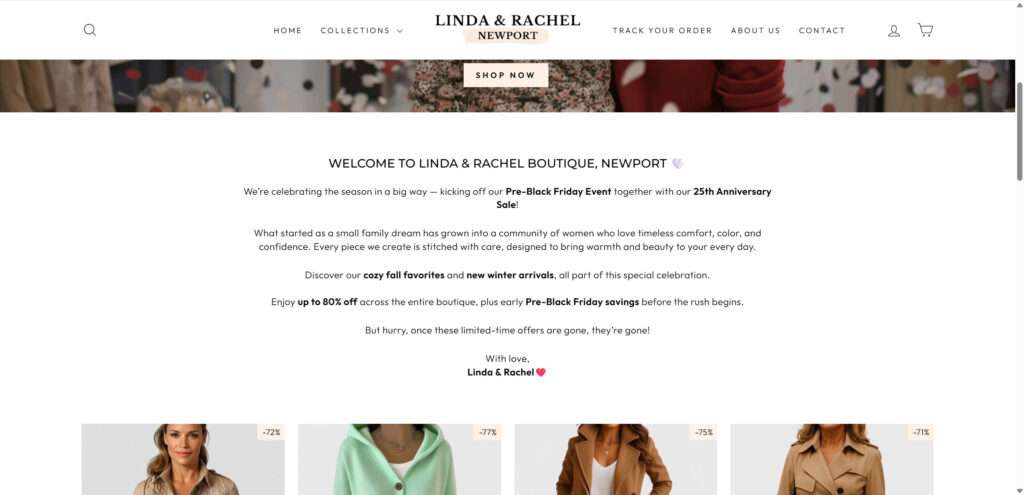
Scam Overview
The Linda and Rachel Boutique Anniversary Sale Scam follows a formula now repeated across social networks and online advertising platforms. The site features a polished layout, emotional storytelling, and lifestyle photography to mimic a genuine small family boutique. The first red flag appears in the banner promoting discounts of up to 80% off across the entire product catalog. Real boutiques rarely discount all products at once for an entire season, let alone an entire store. This tactic is an effort to generate urgency and impulse purchases from shoppers looking for holiday deals or unique seasonal items.
Another noticeable pattern is the boutique’s extensive use of AI generated images and videos. The homepage displays a touching story about a mother and daughter who run the shop in Newport. The visuals are designed to appear candid and authentic, but on closer inspection, they reveal signs of AI production. Shadows appear inconsistent, faces have smoothing artifacts, and backgrounds blend in unnatural ways. Scammers use AI to fabricate owners, employees, and local shops. The story claims the boutique began twenty five years ago, but domain registration records show the site was created very recently. This discrepancy is common among fraudulent stores, which often claim decades of heritage while their websites are less than a year old.
The product line itself provides major indicators of a scam. Many listings show cashmere or wool items allegedly worth $200 or more, slashed down to $49 or $59. The materials are mislabeled and are in fact synthetic blends sourced from mass production wholesalers. The product photos are sourced from other sites, sometimes from older collections of popular brands, but cropped and edited to hide watermarks. When customers receive their package, the items resemble cheap, thin, fast fashion garments. Stitching is uneven, buttons are loose, and fit is inconsistent. It becomes clear that the boutique never produced the items shown in the images. They are drop shipped from low cost suppliers that do not match the advertised quality in any capacity.
The emotional branding plays a pivotal role in disguising the scam. Stories about family legacies, hand stitched craftsmanship, or heartfelt dedication to customers are scripted to make shoppers lower their guard. The site claims to be based in Newport, yet no physical address, business registry entry, or legitimate contact information can be found. The customer service email directs to an anonymous inbox without a traceable identity. When buyers request refunds or returns, they are asked to ship the items back to China at their own cost, usually between $20 and $40 for even small packages. Because of this cost barrier, most victims abandon the return request entirely, leaving the scammers with nearly pure profit.
The review section is another fabricated element. Thousands of positive reviews appear with polished headshots, generic American names, and repeated patterns in wording. For example, reviews often mention perfect fit or compliments from coworkers across many unrelated products. The similarity is evidence of autogenerated text or synthetic reviews purchased from offshore agencies. There is no verified purchase system to confirm legitimacy. Some shoppers even notice that the same review photo appears multiple times under different names.
Beyond the store itself, scammers promote Linda and Rachel Boutique heavily on social media using paid ads. They target women searching for fall fashion, cozy sweaters, or boutique jackets. Each ad highlights the alleged Pre Black Friday event, 25th anniversary sale, or gratitude discount. These ads use warm photography, confetti filled celebration scenes, and emotional farewell messages that resemble legitimate small business postings. This consistent use of sentiment and nostalgia is a manipulation strategy to create instant trust.
Once the shopper places an order, the scam expands through a systematic pattern. Payment is accepted through major processors like credit cards or PayPal, which gives buyers a false sense of safety. However, scammers then delay shipments, provide fake tracking numbers, or mark items as delivered even when they never arrived. When items do arrive, they look nothing like the photos. Fabrics feel synthetic, colors differ dramatically from the images, and quality is significantly lower. Many shoppers report receiving random garments unrelated to what they ordered.
Customer support responses are templated. They often request photos of the items, offer tiny partial refunds of $5 or $10, or claim that high return shipping costs apply. Some victims report being ignored entirely after asking for assistance. The scam thrives because it operates across large platforms that cannot quickly verify every advertiser.
One of the most telling signs of fraud is the sudden disappearance or rebranding of the store once negative reviews accumulate. The operators then reopen under a new boutique name with identical ads, identical designs, and identical product lines. This cycle suggests a coordinated operation, likely supported by a network of drop shippers, fake marketing agencies, and offshore customer service providers.
The Linda and Rachel Boutique Anniversary Sale Scam reveals how modern scammers blend AI content, emotional branding, and aggressive discount advertising into a highly effective consumer trap. Understanding these markers is essential for preventing future losses and recognizing similar boutique scams that continue to spread online.
How the Scam Works
The Linda and Rachel Boutique Anniversary Sale Scam follows a multi stage operational system designed to deceive shoppers from the first click to the final interaction. This section breaks down the process step by step to show exactly how the scam functions, how the operators profit, and how they avoid detection.
Step 1. Creation of a Fake Brand Identity
Scammers begin by fabricating a boutique with a heartwarming backstory. For Linda and Rachel Boutique, the narrative involves a mother and daughter who run a coastal shop in Newport. This emotional foundation creates trust. The website uses AI generated photos to portray smiling owners, cozy boutiques, and handmade fabrics. None of these images depict real people or real stores.
Domain registration reveals that the site was created recently. However, the About Us page claims the boutique has existed for twenty five years. This discrepancy is hidden by the depth of the fabricated story. Scammers understand that shoppers trust small boutiques more than large corporations, especially those with family centered branding.
Step 2. Importing or Stealing Product Photos
The next stage involves stocking the site with attractive product listings. Scammers steal images from legitimate brands or suppliers. They source material from wholesalers that sell cheap fast fashion garments. They edit photos to remove labels, change lighting, or adjust colors so the images look unique. This gives an illusion of premium craftsmanship.
The product descriptions include claims such as cashmere blend, hand sewn fabric, or limited seasonal availability. These phrases are designed to appeal to shoppers searching for high quality clothing, while the actual items are synthetic and mass produced.
Step 3. Launching Emotional Discount Events
This scam specifically focuses on an Anniversary Sale, but operators also rotate through Pre Black Friday Sales, Moving Sales, or Closing Sale Events. The site highlights discounts of up to 80% across the entire catalog. This alone is unrealistic for a boutique claiming handcrafted textiles, but it triggers impulse buying behavior.
Banners like “Once these limited time offers are gone, they are gone” or “Celebrate our family’s milestone with exclusive savings” reinforce urgency. Scammers rely heavily on psychological triggers like scarcity, community loyalty, and emotional gratitude.
Step 4. Running Paid Social Media Campaigns
Fake boutiques invest aggressively in Meta ads. They target demographics based on age, browsing history, and interest in boutique fashion. Ads show warm lifestyle images of smiling owners celebrating an anniversary event. They often display confetti, celebratory text, and heart symbols to make the event feel genuine.
The campaigns run under dozens of fake pages to avoid detection. When one page gets banned or receives negative comments, scammers simply launch a new one with identical content.
Step 5. Accepting Payments and Harvesting Orders
Once shoppers add items to the cart, the site processes payments instantly. It displays trust badges like Pay Securely with Visa, MasterCard, or PayPal. While the payment processors are legitimate, scammers use them until fraud reports accumulate and accounts are shut down.
Immediately after purchase, shoppers receive a confirmation email that appears professional. The shipping timeline is vague but usually states that items will arrive in 7 to 15 days.
Step 6. Delaying Shipments and Providing Fake Tracking
The next stage involves creating delays. Scammers either:
- assign tracking numbers that do not update
- assign recycled tracking numbers from unrelated packages
- claim that the warehouse is experiencing high demand
- say that items have shipped when they have not
These delays are intentional. They extend the window in which shoppers can file chargebacks, allowing scammers to keep the funds longer.
Step 7. Delivering Cheap or Incorrect Goods
When packages eventually arrive, they contain low quality items unrelated to the advertised photos. Fabrics are thin, design details are missing, and sizing is inaccurate. Some victims report receiving items worth less than $5 despite paying $50 or more.
This mismatch is the core profit mechanism. Scammers pay very little for bulk clothing while charging retail prices based on fake product descriptions.
Step 8. Blocking Returns and Refunds
When victims attempt to return items, scammers use several tactics:
- demanding photos of the items from multiple angles
- offering small partial refunds such as $5 or $8
- insisting that returns must be shipped to China at the buyer’s cost
- ignoring emails altogether
- delaying responses until the refund window closes
The return shipping cost to China often exceeds the price of the item, making refunds impractical.
Step 9. Abandoning the Brand and Repeating the Scam
Once a boutique accumulates complaints, scammers deactivate the site or change the domain name. They then launch a new boutique using the same template, same product photos, and same emotional backstory. This makes the scam highly scalable.
What to Do if You Have Fallen Victim to This Scam
If you purchased from Linda and Rachel Boutique and now realize it is a scam, take the following steps as quickly as possible.
1. Contact Your Bank or Credit Card Provider Immediately
Explain that you purchased from an online store that misrepresented the products and refused legitimate returns. Most banks allow chargebacks for goods that are significantly not as described. Act fast before time limits expire.
2. Open a Dispute Through PayPal if You Used It
PayPal Buyer Protection may cover cases where items are fake or not as described. Provide screenshots, photos of the received items, and links to evidence that the store is fraudulent.
3. Document Everything
Save emails, order confirmations, website screenshots, product descriptions, and tracking information. Take photos of the items you received. Documentation strengthens your case during disputes.
4. Report the Store to Your Local Consumer Protection Agency
Many regions have online fraud reporting systems. These reports help authorities track repeat offenders.
5. Report the Website to Meta, Google, and Other Ad Platforms
Scammers rely on cheap paid ads. Reporting the ads helps limit their reach and can lead to account penalties.
6. Warn Others by Posting Reviews
Legitimate review platforms such as Trustpilot can help other shoppers avoid the same scam. Share your experience with accurate details.
7. Scan Your Devices for Malware or Tracking Scripts
Scam websites sometimes inject malicious trackers. Install tools like Malwarebytes ScamGuard and run a full scan. Use AdGuard or similar tools to block fraudulent ads in the future.
8. Monitor Your Bank Statements
Scammers sometimes attempt unauthorized charges. Check your statements regularly for any suspicious activity.
9. Do Not Ship Items Back to China
Return shipping costs are intentionally high and designed to discourage refunds. Shipping items back provides no guarantee of reimbursement.
10. Learn to Recognize Boutique Scams
Understanding the signs can help you avoid future losses. Massive discounts, emotional stories, and AI generated imagery are major red flags.
The Bottom Line
The Linda and Rachel Boutique Anniversary Sale Scam is part of a growing trend of fraudulent online stores that use AI imagery, emotional storytelling, and unrealistic discounts to lure shoppers. These operations rely on psychological manipulation, misleading advertising, and return policies designed to make refunds impossible. Recognizing the warning signs is essential for protecting yourself. Always research a new store before purchasing, verify domain age, check real reviews, and ensure the business provides transparent contact information. If an offer seems too good to be true, it usually is.

Join the discussion
0 commentsShare your experience or ask a question about this article.
Discussion
Start the conversation
Have a question or something useful to share? Add the first comment.